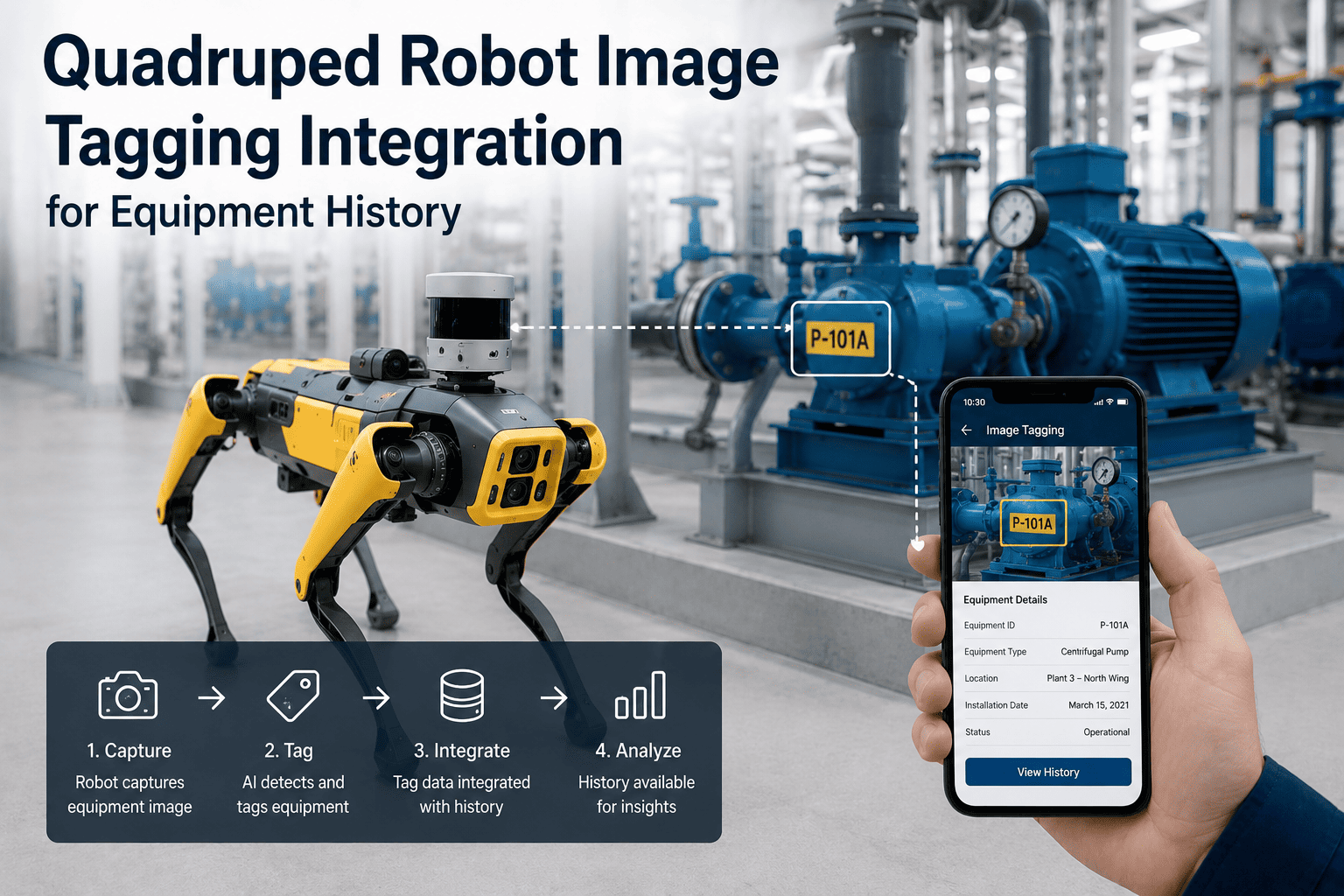
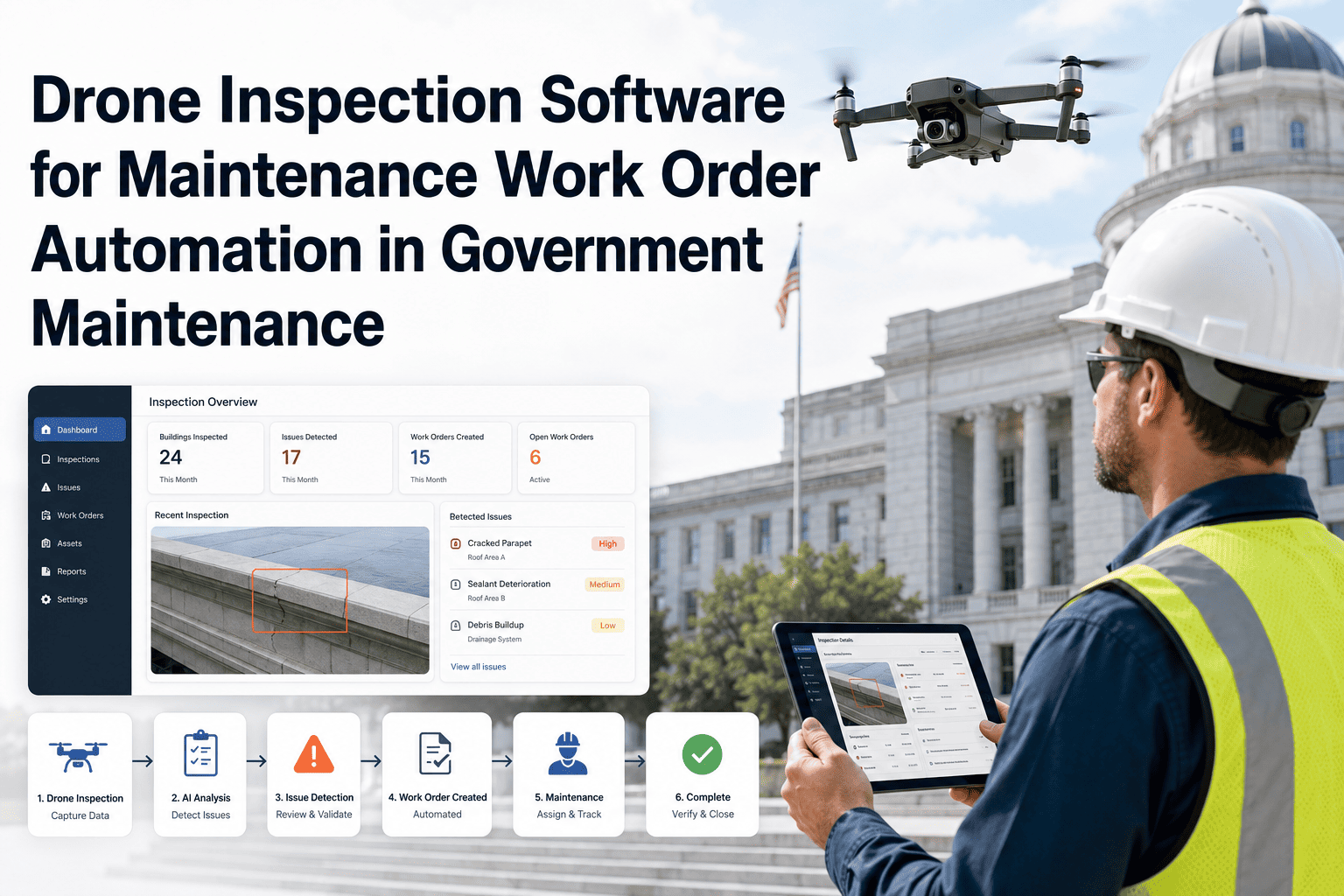
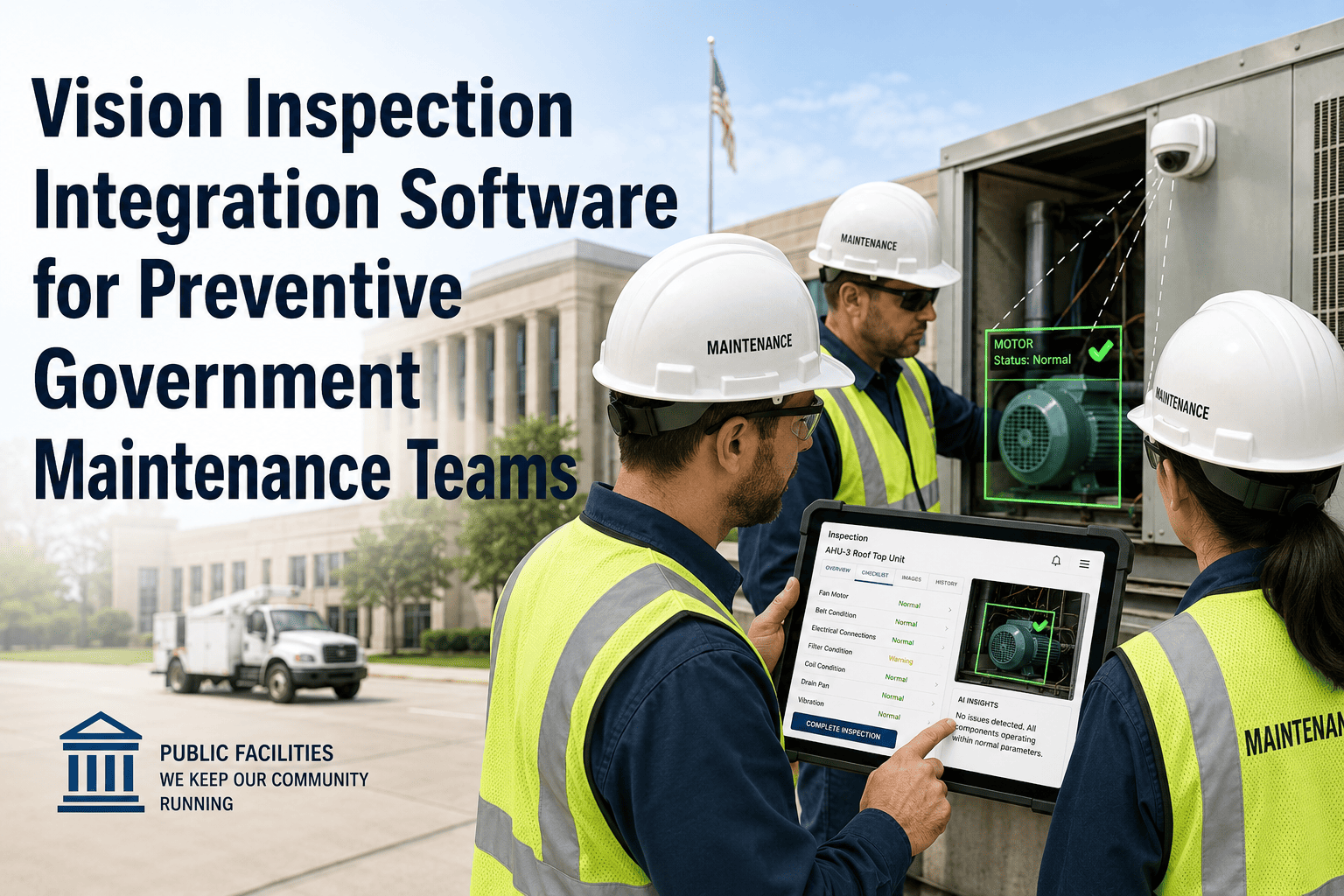
When a quadruped robot photographs a corroded pipe bracket during a night patrol, that image is only useful if it's instantly linked to the right asset record, inspection date, and maintenance history — not buried in a folder or emailed to a supervisor who's off-shift. Public-sector maintenance teams adopting quadruped robot image tagging integration with CMMS equipment history are transforming isolated visual captures into a continuous, searchable record of every asset's physical condition over time. Oxmaint's AI-vision inspection platform connects robot-captured images to asset IDs automatically — so when an auditor asks what condition Pump Station 7 was in last quarter, the answer is three clicks away, not three filing cabinets deep. For government maintenance supervisors who sign off on compliance reports, automated image tagging isn't a convenience — it's the difference between a passed audit and an expensive finding.
AI Vision · Government Maintenance · Equipment History
Robot Image Tagging for Government Equipment History
How quadruped robot image capture combined with automated CMMS tagging builds the most reliable equipment history record government maintenance teams have ever had.
94%
of government asset defects captured visually — only 6% detected by manual feel or sound alone
8x
more images per shift captured by robot vs. a human inspector carrying a camera
0 min
manual tagging time when Oxmaint auto-links robot images to asset records
100%
image traceability per asset — every photo date-stamped and inspection-linked in CMMS
The Equipment History Problem Robot Imaging Solves
Without Image Tagging
Inspection photo taken — stored in inspector's phone
Image emailed to supervisor — subject line unlinked to asset ID
Asset history record remains blank — no visual evidence attached
Audit arrives — images cannot be retrieved or linked to specific dates
Finding issued — agency cannot prove inspection occurred
With Oxmaint Robot Image Tagging
Robot captures image at inspection checkpoint
Oxmaint auto-tags image to asset ID, GPS point, and timestamp
Image linked to equipment history record — instantly searchable
Audit arrives — full visual history exportable in minutes
Zero findings — complete, traceable inspection documentation
01
Images Without Context Are Useless
A photo of a cracked seal only serves maintenance planning when it's linked to an asset ID, inspection date, and the last repair record. Without automated tagging, most robot images end up in unstructured folders — visible to no one who matters.
02
Equipment History Without Images is Incomplete
Written condition notes describe problems in words. Images show them in reality. Government agencies facing insurance reviews or capital planning cycles need both — and only automated robot tagging delivers image evidence at scale.
03
Manual Tagging Doesn't Scale
A robot inspecting 40 assets per route produces hundreds of images per week. Manually tagging that volume to the right asset records is a full-time job — one that most government maintenance teams cannot staff.
What Oxmaint Tags Automatically for Every Robot Image
ID
Asset ID
Each image is linked to the specific asset record in Oxmaint — pump, valve, bridge span, HVAC unit — with full maintenance history attached.
T
Timestamp
Date and time of capture are auto-embedded — creating an unbroken inspection timeline that satisfies council and regulatory audit requirements.
GPS
GPS Location
Exact coordinates are attached to each image — enabling site supervisors to locate the defect on a facility map without visiting the asset.
SEV
Severity Score
AI analysis assigns a severity rating to each image — flagging high-priority anomalies for immediate work order generation vs. monitoring queue.
WO
Work Order Link
If the image triggers a work order, it's automatically attached to the work order record — giving repair technicians visual context before they arrive on site.
RT
Route Reference
Images are tagged to the specific inspection route that generated them — enabling route-by-route performance analysis and coverage verification.
Equipment History Depth: Before and After Robot Tagging
| History Dimension |
Manual Inspection Record |
Robot + Oxmaint Image Tagging |
| Visual Condition Evidence |
Photos exist in inspector's device — not linked to asset |
Auto-attached to asset ID on capture |
| Inspection Frequency |
Weekly or bi-weekly maximum |
Daily — robot routes run overnight |
| Date & Time Accuracy |
Estimated from paper log entries |
Millisecond-precision timestamp per image |
| Defect Progression Tracking |
Not possible without consistent image record |
Visual trend visible across inspection dates |
| Audit Retrieval Time |
Hours to days — files scattered across systems |
Under 5 minutes — searchable by asset or date |
| Work Order Visual Context |
Technician arrives without defect image |
Robot image attached to every triggered work order |
Expert Review — AI Vision for Public Infrastructure
The most overlooked failure in government maintenance programs isn't the absence of inspections — it's the absence of linked evidence. Teams inspect constantly but can't prove it when auditors ask for timestamped visual records per asset. Quadruped robots paired with automated image tagging in a CMMS close that gap permanently. The image becomes a legal-grade record: tied to an asset, a date, and an inspection route — not sitting in someone's phone gallery.
Senior Infrastructure Compliance Advisor, State Government Asset Management Program
Stop Losing Inspection Evidence in Untagged Photo Folders
Oxmaint connects robot inspection images to equipment history automatically — so every photo is an asset record, not just a file.
12 mo
average ROI window for robot image tagging — driven by audit fine avoidance and repair cost reduction
97%
tagging accuracy when Oxmaint's AI links robot images to the correct asset record
5 min
average time to export a full visual equipment history report for any government asset
Frequently Asked Questions
How does Oxmaint link robot images to the correct equipment history record?
Oxmaint uses route mapping to know which asset a robot is inspecting at each checkpoint. When a robot captures an image at checkpoint 7 of Route B, Oxmaint automatically tags it to the asset registered at that location — no human review required. The tag includes asset ID, GPS coordinates, timestamp, and route reference, making the image immediately retrievable from the asset's equipment history page. AI severity scoring runs simultaneously to flag anomalies for work order generation.
Can image tagging integrate with our existing government asset management system?
Oxmaint's API supports integration with standard government asset management and GIS platforms. Robot image data flows into Oxmaint and can be mirrored or exported to existing systems via structured API feeds. For agencies already using legacy CMMS or municipal ERP platforms, Oxmaint can operate as the inspection and image layer while syncing records upstream.
Book a demo to map the integration to your current stack.
How long is robot image and equipment history data retained in Oxmaint?
Oxmaint retains inspection images and equipment history records for the duration of your subscription, with configurable archiving options for long-term storage. Government teams typically configure retention policies aligned with their statutory record-keeping requirements — commonly 5 to 10 years for infrastructure assets. Records are exportable at any time in standard formats, ensuring compliance even if the agency migrates to a different platform. Data sovereignty and regional storage options are available for public-sector accounts.
What happens when a robot image shows a high-severity defect?
When Oxmaint's AI rates an image above the configured severity threshold, a work order is auto-generated immediately — tagged to the asset, prioritized by severity level, and assigned to the relevant maintenance crew. The triggering image is automatically attached to the work order, so the technician dispatched to repair the defect sees exactly what the robot found before arriving on site. Supervisors receive a notification, and the event is recorded in the equipment history with a full defect-to-repair audit trail.
Build the Equipment History Your Auditors Will Never Question
Oxmaint's robot image tagging gives government maintenance teams a continuous, auto-linked visual record of every asset — from daily patrols to work order closure. Every image is evidence. Every audit is answered.