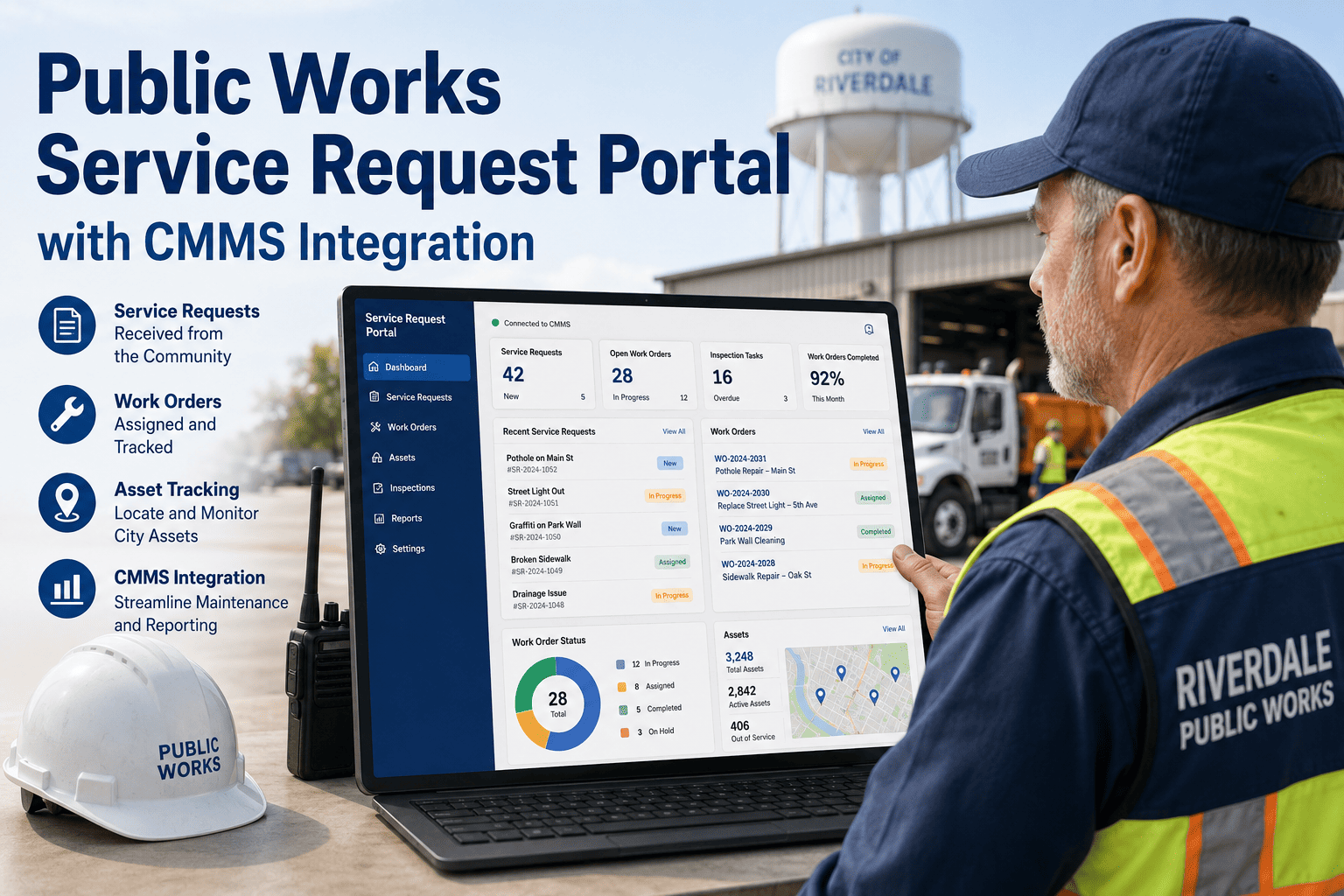
Public water facilities run on SCADA systems that monitor thousands of data points — but when an alarm fires, the path from signal to resolved work order is still manual, slow, and paper-dependent for most utilities. OxMaint bridges that gap: when your SCADA detects a pump fault, pressure drop, or chlorine deviation, OxMaint automatically converts that signal into a structured work order, dispatches the right technician, and closes the loop with completion proof and compliance documentation. Water utilities using digital work order management report 45–60% faster response times, 30% fewer missed inspections, and audit-ready records without manual data entry. Start free on OxMaint and connect your water facility's SCADA alarms to automated maintenance dispatch in days, not months.
Water Utilities · SCADA Integration · Maintenance Dispatch
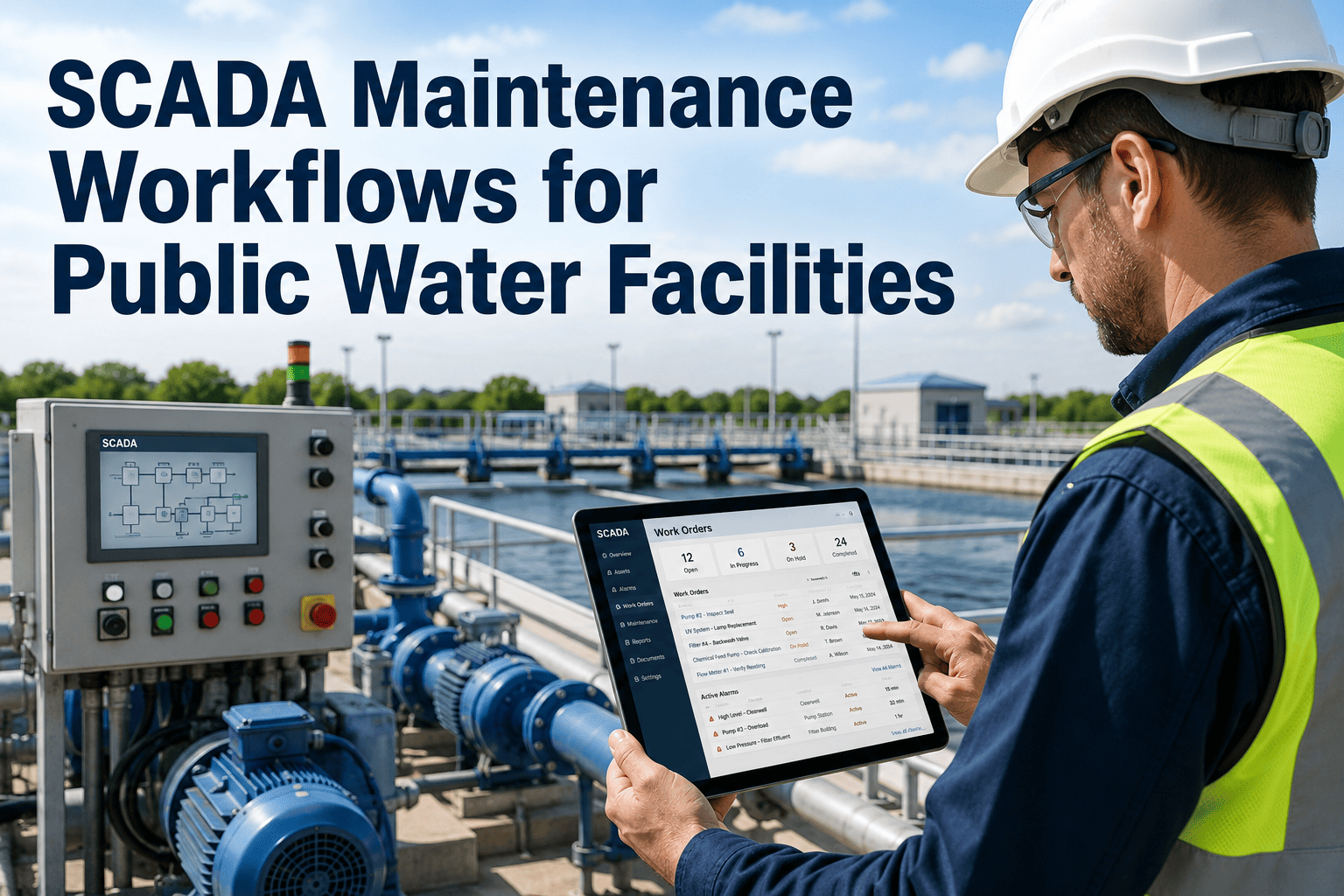
SCADA Maintenance Workflows for Public Water Facilities
Turn SCADA alarms into dispatched work orders in seconds. Track every repair. Prove compliance without paper trails.
45%
Faster work order response when SCADA alarms auto-generate dispatch tickets
3.2×
More inspections completed on schedule with mobile work order checklists
62%
Reduction in compliance documentation time using digital closure records
$180K
Average annual savings per mid-sized utility from reduced overtime and emergency repairs
The Core Problem
Why SCADA Alone Isn't Enough for Water Maintenance
SCADA systems are exceptional at detecting anomalies — but they were never designed to manage the human response chain that follows. The gap between alarm and action is where water utilities lose time, money, and compliance standing.
What SCADA Does
- Detects pressure drops, pump faults, chemical deviations
- Fires alarms to control room operators
- Logs raw telemetry data
- Displays real-time sensor values
What Water Teams Still Need Manually
- Converting alarms into work orders for field crews
- Dispatching and tracking technician assignments
- Recording repair steps and parts used
- Generating compliance documentation
How It Works
SCADA to Resolved Work Order — The Full Workflow
OxMaint sits between your SCADA layer and your field teams, automating every step from alarm detection to documented closure.
01
SCADA Alarm Fires
Pump fault, pressure deviation, chlorine threshold breach, or flow anomaly triggers an alert in your SCADA or supervisory system.
02
Auto Work Order Created
OxMaint receives the alarm signal via API or webhook and instantly generates a structured work order with asset ID, fault type, priority tier, and location pre-populated.
03
Technician Dispatched
The work order is assigned to the qualified technician on shift. Mobile app notification is sent immediately with full asset history, schematic access, and checklist.
04
Field Completion + Proof
Technician completes the checklist, logs parts used, uploads photos, and submits digital sign-off — all from mobile, even offline at remote pump stations.
05
Compliance Record Closed
OxMaint generates a timestamped, audit-ready closure record linked to the original SCADA alarm — ready for EPA, state primacy agency, or ISO 55001 audits.
See This Workflow Running Live
Our team will walk you through a live OxMaint demo configured for water utility SCADA integration — from alarm intake to closed work order in under 90 seconds.
Asset Coverage
Water Infrastructure Assets OxMaint Tracks
Every asset type in a public water system has a different maintenance profile. OxMaint maintains separate asset records, maintenance histories, and compliance checklists for each.
| Asset Type |
Common SCADA Alarm |
OxMaint Work Order Type |
Compliance Record |
| Booster Pump Station |
Motor overtemp, flow below setpoint |
Corrective — pump inspection |
EPA Safe Drinking Water Act log |
| Water Treatment Plant |
Chlorine residual deviation |
Chemical dosing adjustment WO |
State primacy agency daily log |
| Elevated Storage Tank |
Level sensor out of range |
Inspection + valve check WO |
Annual tank inspection record |
| PRV / Flow Control Station |
Pressure zone breach |
Valve calibration work order |
Pressure management log |
| SCADA RTU / Field Device |
Communication loss, battery low |
Preventive — device inspection |
Instrumentation calibration record |
| UV Disinfection Unit |
UV intensity alarm |
Lamp replacement work order |
Disinfection efficacy log |
Mobile Work Orders
Field Crews Work From Their Phone — No Paperwork
01
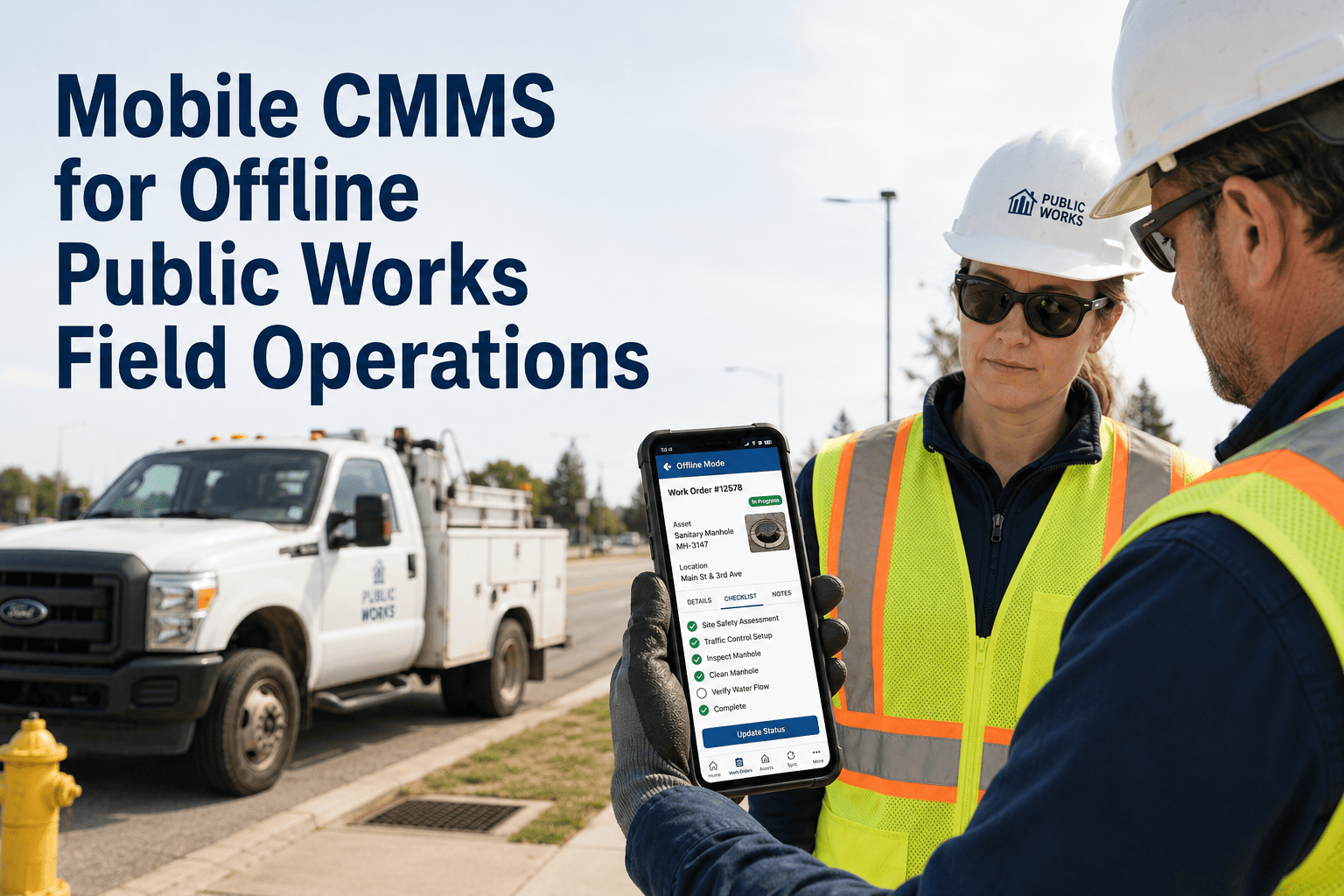
Offline-First Field Access
Technicians at remote pump stations complete work orders and checklists without cell service. Data syncs when connectivity resumes — no lost records.
02
Photo Evidence Capture
Technicians photograph the fault condition, repair in progress, and completed fix. Images are automatically attached to the work order and stored against the asset record.
03
Parts and Labor Logging
Parts consumed and labor hours are logged at closure. OxMaint feeds this data to maintenance cost tracking and inventory reorder triggers automatically.
04
Digital Sign-Off and Timestamp
Technician digital signature and GPS timestamp are captured at closure — creating an unambiguous compliance record tied to the originating SCADA alarm event.
Operations Dashboard
What Water Utility Supervisors See in OxMaint
Response Time by Priority
Critical (target: 1hr)
47 min
High (target: 4hr)
2.2 hr
Routine (target: 24hr)
17 hr
Expert Review
Industry Perspective
Water utilities are under increasing regulatory pressure to demonstrate not just that they responded to an alarm, but that they responded within defined SLAs, with documented evidence, and with a qualified technician. SCADA systems capture the event — but without an integrated CMMS, the response chain is invisible to regulators and utility managers alike. Digital work order management connected to SCADA is no longer optional for utilities serious about compliance and operational resilience.
Common Questions
Frequently Asked Questions
How does OxMaint connect to our existing SCADA system?
OxMaint integrates with SCADA platforms via REST API, webhook, or Modbus/OPC-UA data bridge — no replacement of existing infrastructure required. When a SCADA alarm condition is met, the integration pushes the alarm type, asset tag, and priority level directly into OxMaint, which auto-generates the work order. Most water utility integrations are live within 2–4 weeks.
Talk to our integration team in a demo.
Can field technicians use OxMaint at remote sites without internet?
Yes — OxMaint's mobile app is built offline-first. Technicians at rural pump stations, groundwater wells, or remote storage tanks can receive work orders, complete inspection checklists, log parts, and capture photos without connectivity. All data syncs automatically when a network connection is restored, maintaining full timestamping and record integrity.
Sign up and test the mobile app today.
What compliance standards does OxMaint documentation support for water utilities?
OxMaint work order records are structured to support EPA Safe Drinking Water Act reporting, state primacy agency inspection requirements, AWWA asset management guidelines, and ISO 55001 documentation standards. Closure records include technician identity, timestamp, GPS location, photo evidence, parts used, and the originating alarm reference — covering the documentation requirements for most state regulatory audits.
See a compliance record sample in our demo.
How long does it take to set up OxMaint for a water utility?
Most public water systems are running basic work order management within 3–5 business days of sign-up — importing asset lists, configuring priority tiers, and activating mobile access for field crews. SCADA integration with automated work order creation typically takes 2–4 additional weeks depending on your SCADA platform and IT environment.
Start your free account now and connect your team before the next inspection cycle.
Ready to Modernize Your Water Utility Maintenance?
From SCADA Alarm to Closed Work Order — Automated.
OxMaint connects your water facility's SCADA signals to dispatched, documented, and compliance-ready work orders — without replacing any existing infrastructure.