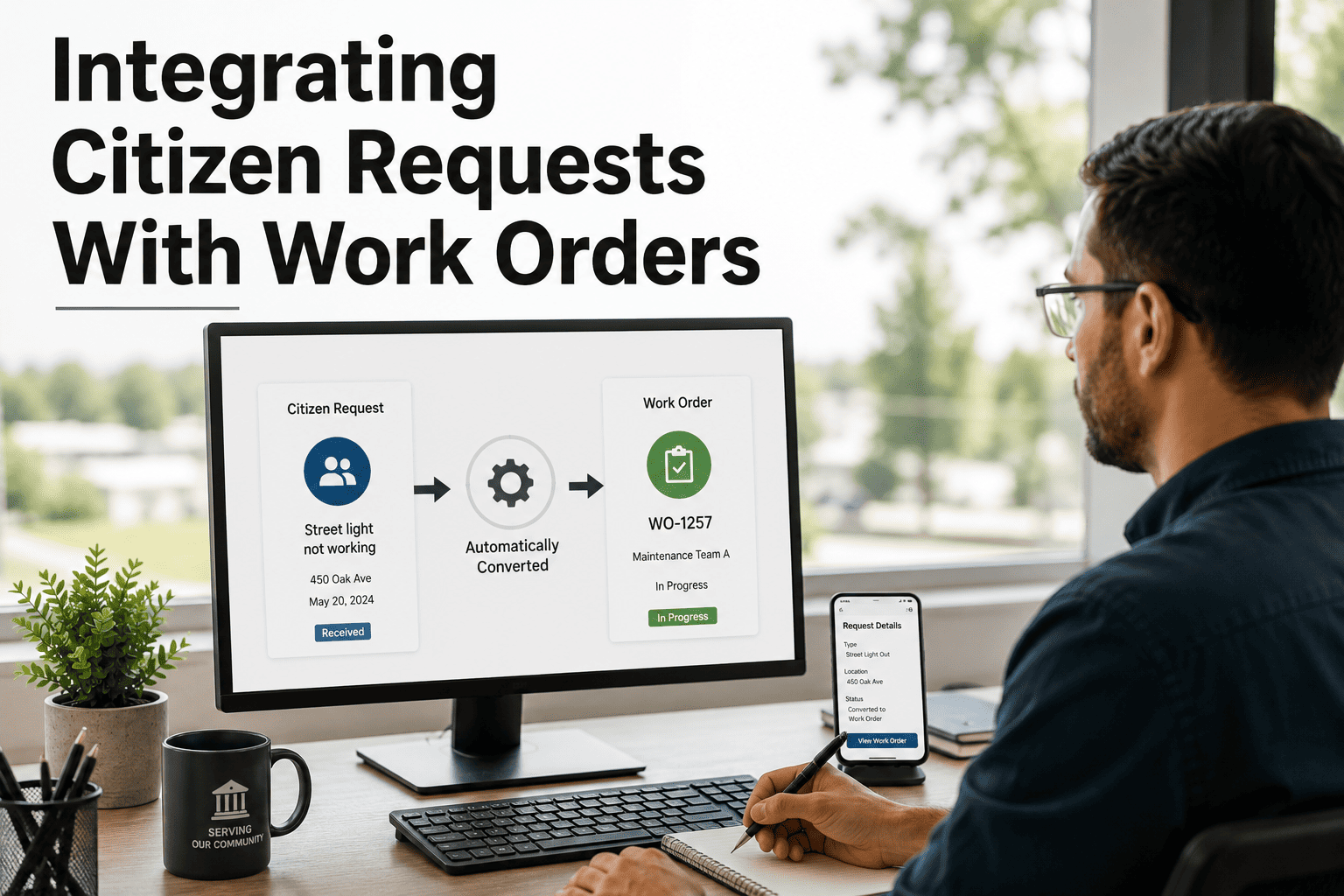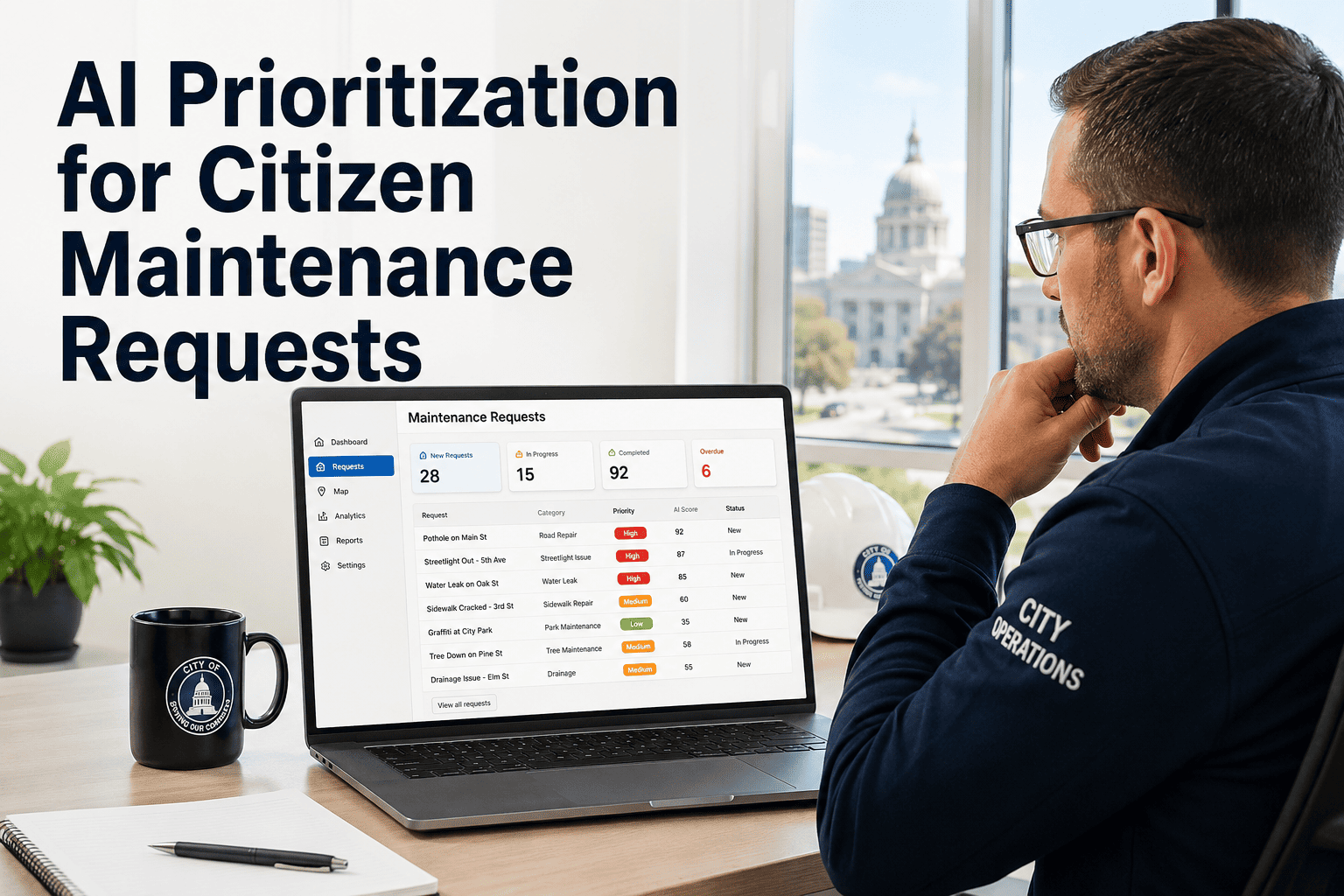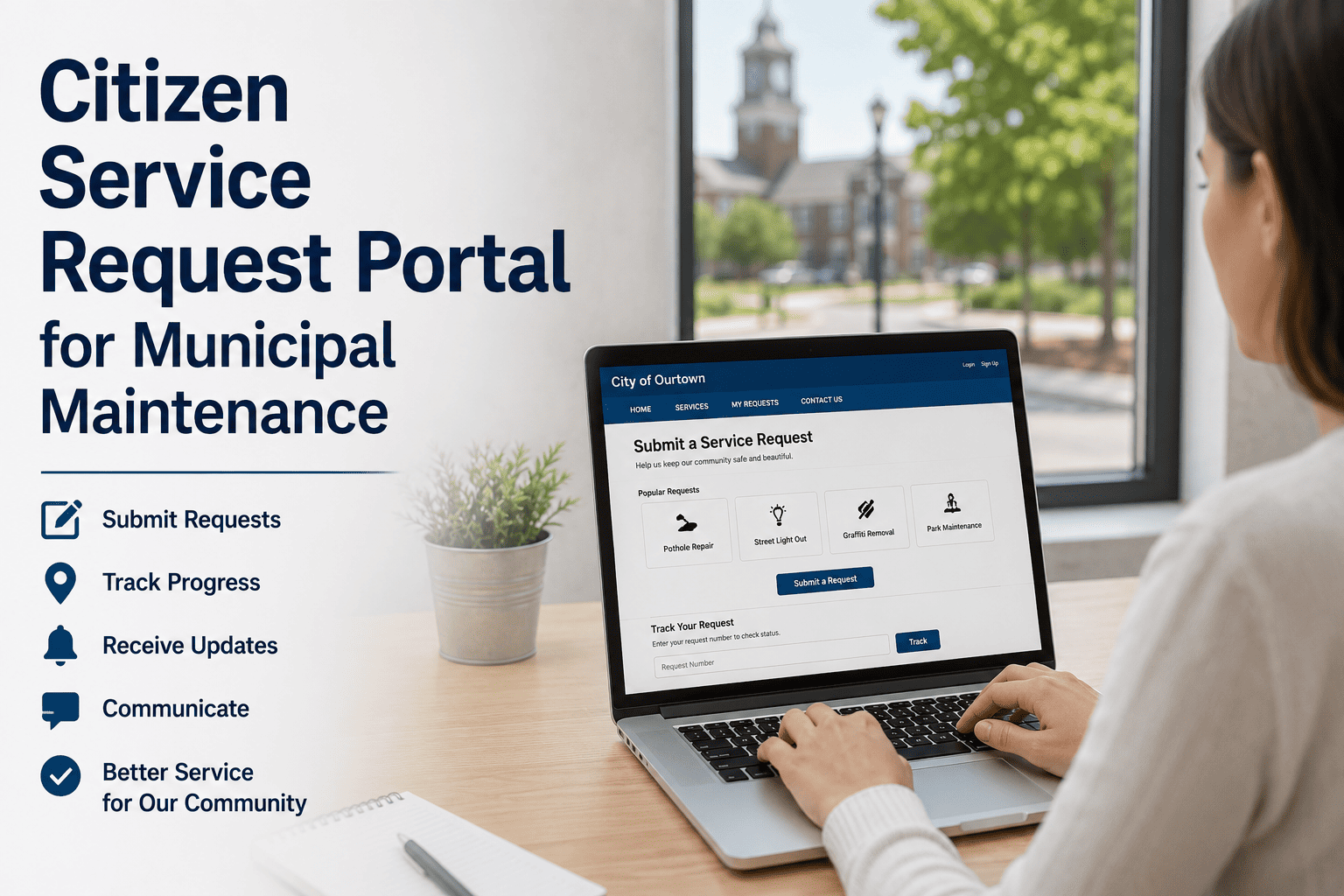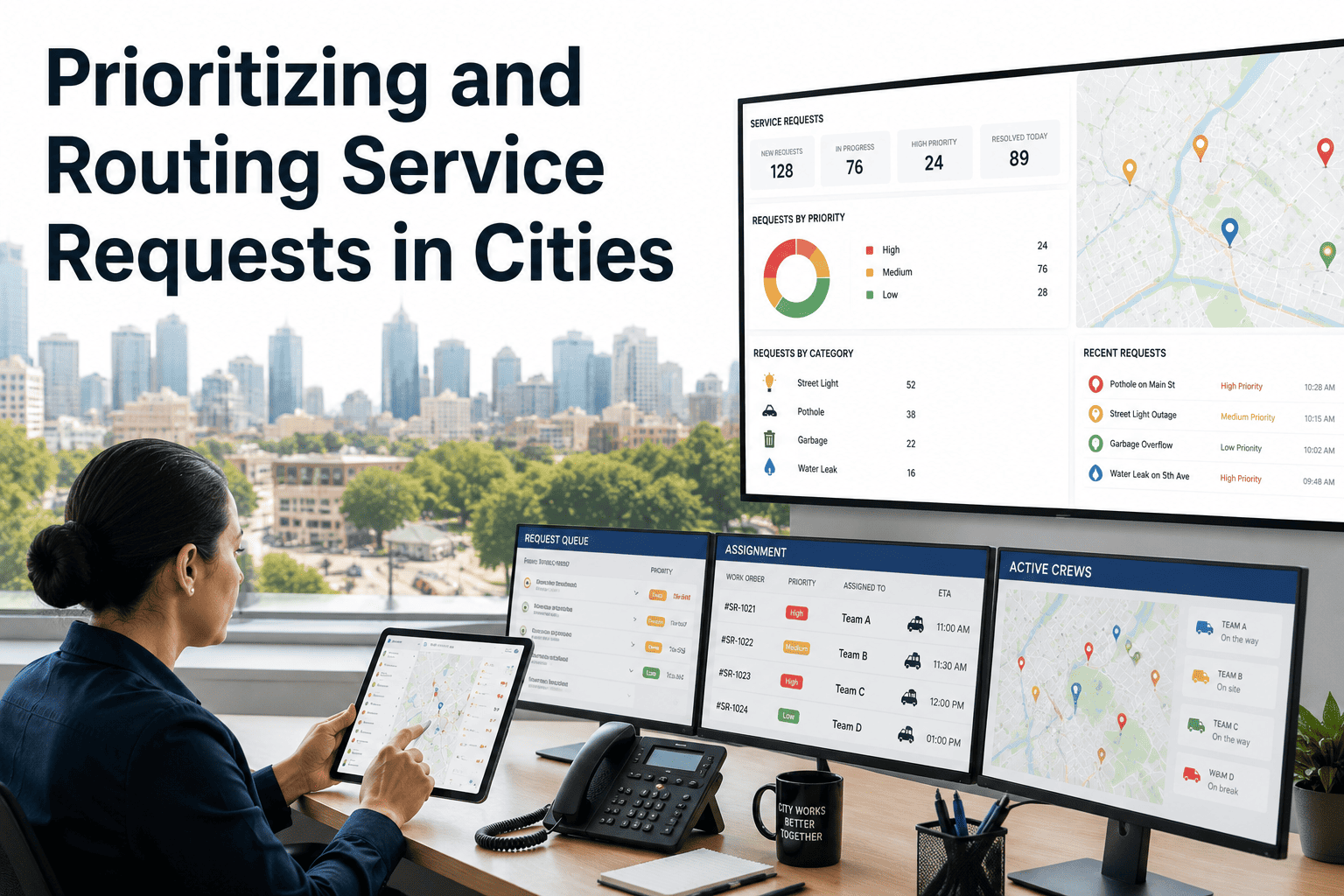
Service request prioritization and routing determines whether municipal operations serve citizens equitably or by squeaky-wheel dynamics. When a pothole request lands in the parks department queue, or a streetlight outage waits behind routine landscaping tickets, resolution times stretch from hours into weeks. Municipal service request routing solves this by automatically categorizing, prioritizing, and assigning citizen requests to the precise crew with the right skills and equipment. Government agencies using a CMMS-driven approach to service request triage consistently cut response times by 30–50% while improving transparency. See how OxMaint modernizes public works request management when you Start Free Trial today.
Is the right request reaching the wrong department?
When service request prioritization in government relies on inbox order and sticky notes, critical infrastructure issues sit behind minor complaints. Routing citizen service requests by category, priority tier, and crew skill set eliminates the bottleneck—restoring equitable, measurable response times across your municipality.
How to design service request priority tiers for government
Effective service request prioritization for public works starts with a standardized priority matrix. Without clear tiers, municipal request prioritization defaults to whoever complains loudest. A four-tier system—benchmarked against ISO 55000 asset management principles—ensures objective, defensible routing.
Response: Under 2 hours
- Water main breaks
- Downed traffic signals
- Sewer backups
- Bridge structural damage
Response: Under 24 hours
- Potholes on arterial roads
- Streetlight outages (major intersections)
- Storm drain blockages
- Signage missing at crossings
Response: 3–5 business days
- Potholes on residential streets
- Tree trimming requests
- Park facility repairs
- Crosswalk fading
Response: 10–14 business days
- Routine landscaping
- Bench painting
- Non-critical signage
- Aesthetic enhancements
Why citizen request routing must be equitable, not just fast
Squeaky-wheel dynamics disproportionately harm underserved neighborhoods. Citizens who lack the time or digital access to file multiple complaints often experience the longest wait times. Modern citizen request prioritization software tracks service-level equity by mapping open tickets against demographic and geographic data—ensuring government service request routing serves the entire community fairly.
This weighted model prevents low-volume neighborhoods from being permanently deprioritized. Municipalities applying an equity adjustment factor report a 22% improvement in uniform resolution times across all districts.
Skill-based routing for municipal service requests
Sending a request to the right department is only half the battle. Service request assignment in municipal environments requires matching the ticket to a crew with the correct certifications, equipment, and geographic proximity. A 180-asset public works yard spending $42K annually on wasted dispatch hours can recover those costs by implementing automated, skill-based request routing.
| Request Category | Routing Logic | Required Crew Skills | Avg. Dispatch Time |
|---|---|---|---|
| Water Infrastructure | Geo-fenced to nearest valve crew | Class B CDL, Confined Space | 18 minutes |
| Traffic Signal | Routed to certified electrician | IMSA Traffic Signal Tech | 32 minutes |
| Roadway Surface | Asphalt crew availability check | Hot-mix certification | 2.5 hours |
| Urban Forestry | Arborist bucket truck dispatched | Tree Risk Assessment Qual. | 4 hours |
| Fleet & Facilities | Routed to internal maintenance | HVAC / Plumbing license | 1 business day |
How OxMaint solves municipal service request management
OxMaint brings AI-powered CMMS and EAM capabilities to government operations, transforming how municipalities handle citizen service routing. By replacing paper work orders and spreadsheet trackers with automated service request triage, public works teams achieve measurable ROI through reduced downtime, compliance readiness, and equitable service delivery.
Automated Request Triage
AI categorizes incoming citizen requests, assigns priority tiers, and routes them to the correct department instantly—cutting manual dispatch time by up to 70%.
SLA & Equity Tracking
Monitor service-level agreements in real-time with geographic heat maps. Identify underserved districts and rebalance work order assignments to ensure equitable resolution.
Skill-Based Work Orders
Match service requests to crews based on certifications, equipment availability, and proximity. Eliminate misrouted tickets and eliminate 30–50% of unplanned overtime.
Maintenance Analytics
Track resolution times, recurring asset failures, and crew utilization rates. Build a defensible, audit-ready compliance trail for every government service request.
Migrating to CMMS-driven service request routing
Transitioning from reactive maintenance and spreadsheets to a structured service request management system takes weeks, not months. Here is a standard 4-month implementation timeline for a mid-sized municipality handling 10,000+ annual citizen requests.
Data Audit & Asset Import
Consolidate legacy spreadsheets, map asset locations via GIS integration, and import historical service request data to establish baseline resolution metrics.
Priority Matrix Configuration
Define your four-tier priority system, configure automated routing rules based on request category, and map crew skills and certifications into the OxMaint platform.
Pilot & Field Training
Launch a controlled pilot in one district or department. Train dispatchers and field crews on mobile work order apps, capturing real-time feedback to refine routing logic.
Citywide Rollout
Go live across all public works divisions. Activate citizen-facing portals, enable SLA tracking, and begin generating equity and performance analytics dashboards.
See OxMaint route citizen requests on your assets
Stop losing hours to misrouted tickets and manual dispatching. Book a 30-minute demo and watch how AI-powered prioritization transforms your municipality's response times.
Government service request routing questions, answered
What is service request prioritization in municipal government?
Service request prioritization is the process of ranking citizen service requests by urgency, safety risk, and operational impact. Instead of handling tickets on a first-in, first-out basis, municipalities use a priority matrix to ensure critical issues—like water main breaks—are resolved before low-priority aesthetic requests. To see this in action, you can Start Free Trial of OxMaint.
How does CMMS software improve citizen request routing?
A CMMS uses automated rules to read incoming requests, categorize them, and route them directly to the correct crew based on skills, location, and equipment availability. This eliminates manual data entry and prevents requests from sitting in the wrong department's inbox for days.
Can service request routing be made equitable for all neighborhoods?
Yes. Modern government request routing software includes equity adjustment factors that track resolution times across different geographic and demographic zones. If underserved neighborhoods show slower response rates, the system rebalances work order assignments to close the service gap.
How long does it take to implement municipal service request software?
A typical implementation takes 3 to 4 months. This includes auditing legacy data, configuring the priority matrix, running a pilot district, and training field crews. You can accelerate this timeline by booking a demo with our team to map your exact requirements at Book a Demo.
What are the ROI benefits of automated request triage in government?
Municipalities typically see a 30–50% reduction in response times, a 70% drop in manual dispatch hours, and significant reductions in unplanned overtime. Additionally, digital audit trails improve compliance and reduce liability for public works departments.
Ready to modernize your municipal service requests?
Join the public works teams using OxMaint to prioritize, route, and resolve citizen requests faster and more fairly. Start your free trial or book a personalized demo today.
Free 14-day trial · No credit card