Regional Water Authority faced a growing crisis in plant operations: critical pump failures were increasing 35% year-over-year due to missed shift handoff communications, while regulatory compliance gaps averaged 23 citations annually. With no centralized logbook system, shift-to-shift information transfer was ad-hoc, leading to overlooked equipment anomalies, repeated troubleshooting efforts, and catastrophic pump failures that could have been prevented. The turning point came when a high-service pump failed during peak demand due to a vibration issue noted by night shift but never communicated to day shift maintenance—costing $47,000 in emergency repairs and triggering a boil-water advisory affecting 12,000 residents. By implementing Oxmaint CMMS to digitize shift logbooks, automate handoff protocols, and integrate real-time equipment monitoring, the authority reduced unplanned pump downtime by 72%, achieved 100% regulatory compliance, and eliminated shift communication failures entirely. This case study illustrates how water treatment pump teams can transition from fragmented handoffs to systematic operational continuity using digital logbook workflows.
Client Profile: Regional Water Authority
Treatment Capacity
45 MGD, 3 treatment plants
Operations Team
42 operators, 3 shifts/24-7
Critical Pumps
127 pumps across facilities
Service Population
185,000 residents
The Challenge: Communication Gaps Causing Operational Failures
Before implementing a structured digital logbook workflow, the Regional Water Authority's pump operations relied on handwritten logbooks, verbal briefings, and institutional memory. Shift-to-shift information transfer was inconsistent at best, with critical equipment observations frequently lost during handoffs—creating dangerous blind spots in 24/7 operations.
✗
Lost Shift Observations: Without standardized digital logging, 45% of equipment anomalies noted by one shift were never communicated to the next. Vibration changes, unusual sounds, and minor leaks went unaddressed until catastrophic failures occurred.
✗
Repeated Troubleshooting: Incoming shifts frequently repeated diagnostic work already completed by previous shifts. Without access to prior observations, operators spent hours re-investigating issues that had already been identified and documented—somewhere.
✗
Regulatory Documentation Gaps: EPA and state regulators require comprehensive operational logs. Paper-based systems created gaps in documentation, illegible entries, and missing timestamps—resulting in 23 compliance citations over two years.
✗
No Accountability Trail: When equipment failures occurred, determining what was observed, when, and by whom was nearly impossible. Incident investigations became finger-pointing exercises rather than root cause analyses.
"We had experienced operators who knew the plants inside and out, but that knowledge walked out the door at the end of every shift. When our high-service pump failed during peak demand, we discovered that night shift had noted the vibration issue three days earlier—it was written in a logbook that day shift never saw. That failure cost us $47,000 and our community's trust. We needed a system that made shift communication automatic, not optional."
— Maria Santos
Operations Director, Regional Water Authority
If your water treatment facility is struggling with shift communication gaps and compliance documentation, schedule a 30-minute consultation to learn how digital logbook workflows can ensure operational continuity and regulatory compliance.
Modernize shift operations using digital logbook workflows
The authority deployed Oxmaint CMMS to digitize their entire shift logbook operation, focusing on standardized entry templates, automated handoff notifications, real-time equipment status integration, and comprehensive audit trails for regulatory compliance.
✓
Standardized Digital Logbook Templates: Custom templates for each pump station ensure operators capture all critical parameters—flow rates, pressures, vibration observations, chemical dosing, and equipment anomalies. Required fields prevent incomplete entries, and dropdown menus standardize terminology across all shifts.
✓
Automated Shift Handoff Protocol: 30 minutes before shift change, outgoing operators complete a mandatory handoff summary highlighting critical issues, pending work orders, and equipment requiring monitoring. Incoming operators must acknowledge receipt before assuming responsibility—creating verified information transfer.
✓
Real-Time Equipment Integration: SCADA data feeds directly into logbook entries, auto-populating pump runtime hours, flow rates, and alarm events. Operators add contextual observations to system-generated data, creating comprehensive operational records without duplicate data entry.
✓
Instant Work Order Generation: When operators log equipment anomalies, one-tap work order creation routes issues to maintenance with full context—photos, readings, and historical observations attached. No more "I mentioned it in the logbook" followed by "maintenance never saw it."
✓
Regulatory Compliance Automation: System automatically generates EPA-required operational reports, tracks permit parameters, and flags any readings approaching compliance thresholds. Audit-ready documentation is always one click away, with complete timestamp and operator attribution.
Water treatment facilities ready to digitize their shift operations can start with a free 30-day trial, gaining access to water treatment-specific logbook templates, SCADA integration tools, and mobile operator apps.
Designing a data-driven program — a shift logbook framework with integrations
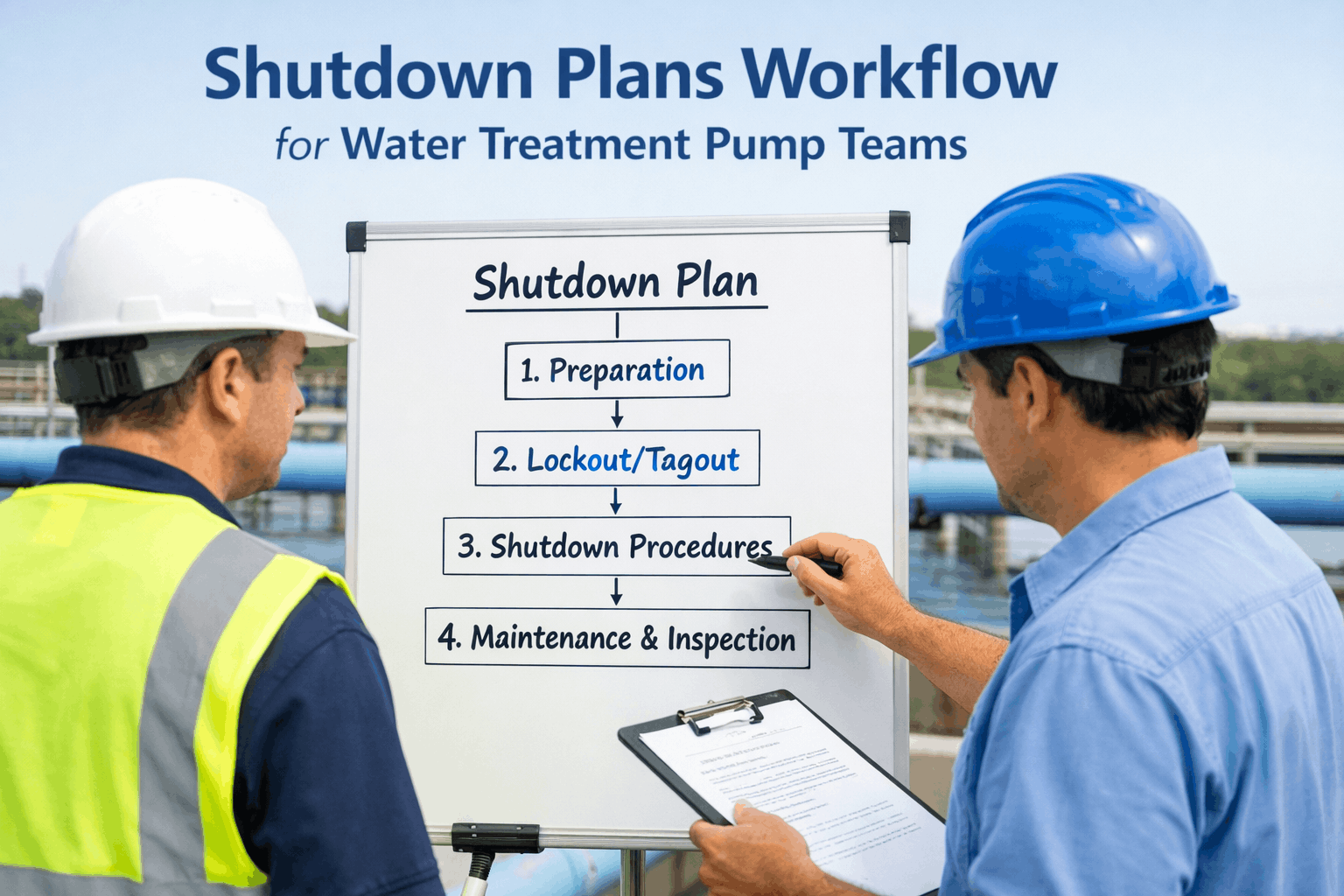
The Authority's new workflow creates a closed-loop communication system: (1) Operators make hourly logbook entries with equipment observations → (2) SCADA data auto-populates operational parameters → (3) Anomalies flagged for maintenance generate instant work orders → (4) Shift handoff summary compiles all entries with priority flags → (5) Incoming shift acknowledges and reviews before assuming control → (6) All entries archived with full audit trail for regulatory reporting.
Example impact: High-Service Pump #7 showed a 15% increase in vibration amplitude during night shift rounds. The operator logged the observation with a photo of the vibration reading and flagged it as "monitor closely." The system auto-generated a work order for predictive maintenance review. Day shift received the handoff summary highlighting the issue. Maintenance performed vibration analysis that afternoon, identifying a bearing beginning to fail. The bearing was replaced during a planned 4-hour maintenance window. Cost: $1,200 for bearing replacement. Avoided cost: $47,000 emergency repair + boil-water advisory + regulatory fines + reputational damage. This proactive approach is now standard across all 127 pumps.
To set up digital shift logbooks for your water treatment facility, schedule a technical consultation. Our experts will help you design logbook templates, configure SCADA integrations, and establish handoff protocols for your specific operational requirements.
Results: Measurable Operations Transformation
72%
Downtime Reduction
Unplanned pump outages dropped from 18/year to 5/year through early detection and verified handoffs
100%
Regulatory Compliance
Zero compliance citations in 18 months vs. 23 citations in previous two years combined
100%
Handoff Completion
Every shift change includes verified information transfer with acknowledged receipt
$340K
Annual Savings
Reduced emergency repairs, eliminated repeat diagnostics, and avoided regulatory fines
89%
Faster Issue Resolution
Average time from anomaly detection to maintenance action reduced from 72 hours to 8 hours
520%
ROI in Year 1
Software investment recovered in 2.5 months through avoided failures and compliance savings
"The transformation has been remarkable. Every operator now knows exactly what happened on previous shifts—not just what was written down, but what was observed, measured, and flagged. Our maintenance team gets work orders with complete context instead of vague 'pump sounds funny' notes. Regulators love our documentation. But most importantly, we haven't had a single preventable pump failure since implementation. Our community depends on us for safe water, and now we have the systems to deliver that reliability 24/7."
— Maria Santos
Operations Director, Regional Water Authority
Water treatment facilities of any size can achieve these results. Start your free 30-day trial to begin building your digital shift logbook program today—complete with mobile apps, SCADA integration, and regulatory reporting tools.
Key Takeaways for Water Treatment Operations
→
Verified handoffs > verbal briefings: Requiring acknowledgment of shift summaries ensures critical information actually transfers between shifts, eliminating "I told them about it" disputes.
→
Standardized templates enforce completeness: Required fields and dropdown menus ensure every operator captures the same critical parameters, creating consistent documentation across all shifts and experience levels.
→
SCADA integration eliminates duplicate entry: Auto-populating operational data from control systems reduces operator workload while ensuring accuracy—operators add observations, not transcriptions.
→
Logbook-to-work-order integration is critical: One-tap work order generation from logbook entries ensures maintenance receives complete context and nothing falls through the cracks.
→
Audit trails protect the organization: Timestamped, attributed entries with photo documentation create defensible records for regulatory audits, incident investigations, and liability protection.
Ready to Optimize Your Shift Logbook Workflow?
See how water treatment facilities achieve operational continuity and regulatory compliance using Oxmaint CMMS—digital logbooks, automated handoffs, SCADA integration, and mobile operator apps in one platform.