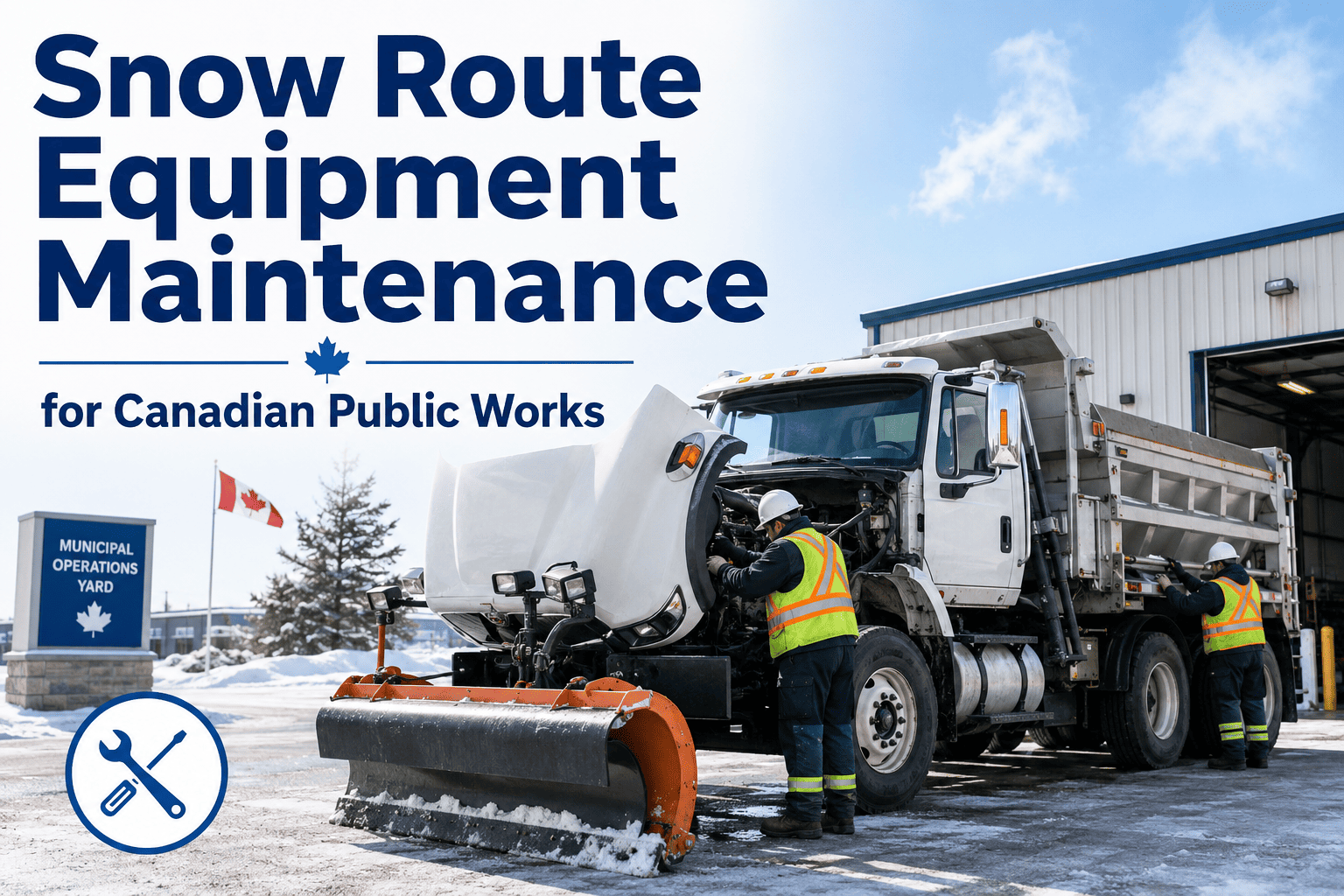
When a major snowstorm hit a mid-sized municipality in the Northeast US in January 2024, their public works department discovered 40% of their snow removal fleet had maintenance issues that should have been caught weeks earlier. The result: 18-hour response times instead of 4 hours, citizen complaints flooding city hall, and emergency contracts with private contractors costing 3x normal rates.
Modern government maintenance management systems now enable proactive seasonal readiness through connected sensors, automated inspections, and predictive analytics. Digital CMMS platforms designed for public works ensure equipment readiness before the first snowflake falls.
68%
Public Works Departments
Report equipment failures during first major snow event
3-5x
Response Time Increase
When equipment isn't pre-season verified
$180K
Average Emergency Cost
Per major storm with inadequate preparation
94%
Readiness with Digital CMMS
Equipment operational when needed
Core Issue: Manual tracking fails to verify equipment readiness systematically. Digital systems with connected sensors catch issues before emergencies.
Phase 1
Pre-Season Assessment
September - October
□ Hydraulic systems tested and certified
□ Plow blades measured, replaced if <30% life
□ Salt spreader calibration verified
□ Backup generator load tested
□ Vehicle batteries load tested
□ Maintenance records updated in CMMS
□ Equipment deficiencies logged
□ Parts inventory verified
Deliverable: Equipment readiness report with pass/fail status for each vehicle
Phase 2
Resource Mobilization
November
□ Operator certifications renewed
□ On-call schedule published
□ Backup operators identified
□ Emergency contact list updated
□ Salt/sand stockpiles at target levels
□ Fuel contracts confirmed
□ Critical spare parts stocked
Deliverable: Resource readiness dashboard showing capacity vs. historical demand
Phase 3
Operational Activation
December - March
□ Fleet GPS tracking active
□ IoT sensors reporting status
□ Weather alerts configured
□ Automated work orders enabled
□ Priority route maps loaded
□ Communication channels tested
□ Citizen reporting system ready
Deliverable: Live operational dashboard with fleet status and completion metrics
Identify and prioritize risks before winter operations begin. Each risk requires documented mitigation strategy.
| Risk Category |
Probability |
Impact |
Priority |
Mitigation Strategy |
| Equipment Failure During Event |
High (60%) |
Severe |
Critical |
Pre-season inspections + IoT monitoring + backup fleet |
| Operator Shortage |
Medium (40%) |
High |
High |
Cross-training + contractor agreements + on-call roster |
| Material Depletion |
Medium (35%) |
High |
High |
200% of avg storm supply + emergency supplier contracts |
| Communication Breakdown |
Low (20%) |
Medium |
Medium |
Redundant systems + satellite backup + radio network |
| Route Coverage Gaps |
Medium (30%) |
Medium |
Medium |
GPS tracking + automated routing + real-time adjustments |
Critical Priority Actions
- Implement predictive maintenance with IoT sensors
- Establish backup equipment protocols
- Create automated failure alerts
High Priority Actions
- Develop contractor call-out agreements
- Stock critical spare parts
- Implement material tracking system
Evaluate your department's preparedness across 40+ criteria. Get automated readiness score and priority action list.
Equipment Health Monitoring
What it tracks: Engine temperature, hydraulic pressure, battery voltage, vibration patterns
Benefit: Predicts failures 72+ hours before breakdown. Prevents mid-storm equipment loss.
Example: Alert triggered when plow hydraulic pressure drops 15%—repair scheduled before deployment
Real-Time Fleet GPS
What it tracks: Vehicle location, speed, route completion, idle time, coverage patterns
Benefit: Verifies service delivery, identifies gaps, enables real-time route adjustments.
Example: Dashboard shows Priority 1 routes 87% complete, Priority 2 routes 42% complete with ETAs
Weather Integration
What it tracks: Real-time precipitation, temperature, forecast models, storm probability
Benefit: Triggers automated pre-deployment protocols, adjusts staffing levels proactively.
Example: 80% snow probability in 12 hours auto-generates equipment readiness checklist
Automated Snow Event Response
1
Trigger Event
Weather forecast: 4+ inches snow in next 12 hours
↓
2
Automated Actions
- Equipment readiness check work orders auto-generated
- Staff notifications sent via SMS/email
- Material inventory levels verified
- Pre-storm inspection checklist deployed
↓
3
Real-Time Deployment
- Route assignments pushed to mobile devices
- GPS tracking activated
- Progress monitored on live dashboard
- Citizen inquiries routed automatically
↓
4
Post-Event Documentation
- Completion times recorded automatically
- Material usage documented
- Equipment hours logged
- Audit trail generated for FEMA compliance
Snow removal operations require documented evidence for FEMA reimbursement, citizen complaints, liability claims, and budget justification. Digital CMMS creates automatic audit trails.
✓ Timestamped deployment records
✓ Equipment usage hours by vehicle
✓ Material quantities and costs
✓ Labor hours and overtime documentation
✓ Route maps with GPS verification
CMMS Advantage: Auto-generates FEMA-compliant reports from operational data
✓ Proof of service delivery by location/time
✓ Equipment maintenance records
✓ Operator certification documentation
✓ Response time verification
✓ Communication logs
CMMS Advantage: Immutable records defend against false claims
✓ Cost tracking by storm event
✓ Historical spending analysis
✓ Equipment utilization rates
✓ Material consumption trends
✓ Overtime hours justification
CMMS Advantage: Real-time budget tracking prevents overruns
Measure winter operations effectiveness with standardized KPIs. Digital CMMS calculates automatically from operational data.
Equipment Readiness Rate
Formula: (Operational Vehicles / Total Fleet) × 100
Target:
≥95%
Example: 38 of 40 vehicles pass pre-season inspection = 95% readiness
Average Response Time
Formula: Time from storm start to first truck deployed
Target:
≤2 hours
Example: Snow begins 3:00 AM, trucks deployed 4:45 AM = 1.75 hour response
Priority Route Completion
Formula: (Completed Priority Routes / Total Priority Routes) × 100
Target:
100% in 6hr
Example: 45 of 45 priority routes cleared within 6 hours = 100% completion
Cost Per Lane Mile
Formula: Total Storm Cost / Total Lane Miles Cleared
Target:
Benchmark
Example: $48,000 storm cost / 320 lane miles = $150 per lane mile
Equipment Uptime During Event
Formula: (Operational Hours / Deployed Hours) × 100
Target:
≥92%
Example: 368 operational hours / 400 deployed hours = 92% uptime
Material Efficiency
Formula: Tons Salt Used / Lane Miles Cleared
Target:
Industry Avg
Example: 180 tons salt / 320 lane miles = 0.56 tons per mile
Months 1-2
System Setup & Data Migration
- Import equipment inventory into CMMS
- Configure maintenance schedules
- Map routes into system
- Train core staff
→
Months 3-4
IoT Sensor Deployment
- Install GPS trackers on fleet
- Deploy equipment health sensors
- Configure automated alerts
- Test data flow
→
Months 5-6
Pre-Season Validation
- Execute digital readiness assessment
- Run simulated snow event
- Validate automated workflows
- Go-live for winter season
Snow removal effectiveness isn't determined during the storm—it's determined during September and October. Digital maintenance management systems enable systematic readiness verification, predictive equipment monitoring, and automated emergency response.
The difference between reactive and proactive winter operations is measurable: 95% vs 68% equipment readiness, 2-hour vs 5-hour response times, and documented compliance vs scrambling for records during audits.
Modern CMMS platforms designed for government operations provide the tools for systematic seasonal readiness. Don't wait for first snow to discover equipment issues.
For Public Works Directors: Free winter readiness assessment included with demo
How long does CMMS implementation take?
Typical deployment: 4-6 months from kickoff to full winter operations readiness. Phased approach allows testing before critical season. Core features operational within 8 weeks.
What's the cost for a mid-size municipality?
Depends on fleet size and feature requirements. Typical range: $15K-45K annually for 30-50 vehicles including IoT sensors.
Request custom quote.
Can we integrate with existing systems?
Yes—modern CMMS platforms integrate with most ERP, GIS, and citizen request systems via API. Existing equipment and maintenance data can be migrated during implementation.
Do operators need special training?
Mobile interface designed for field use requires minimal training. 2-hour session covers basics. Most operators proficient within 1 week. System includes built-in guides and support.
How does this help with FEMA reimbursement?
System automatically captures all required documentation: equipment hours, labor, material usage, GPS verification of service delivery. Export FEMA-compliant reports with one click instead of weeks compiling records.
What if internet goes down during storm?
Mobile apps work offline. Data syncs automatically when connectivity restored. Core operations continue without interruption. Critical for rural areas with spotty coverage.