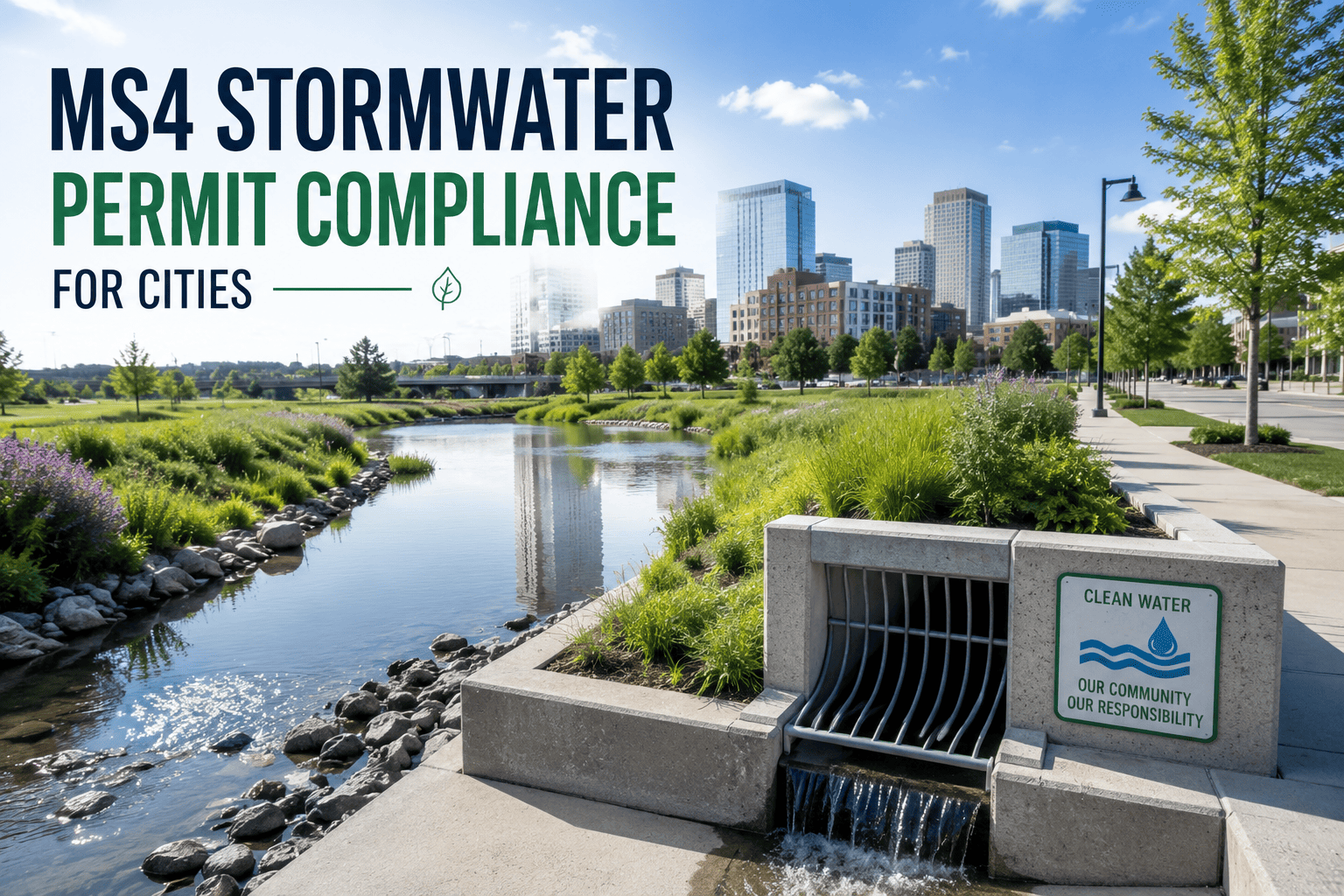
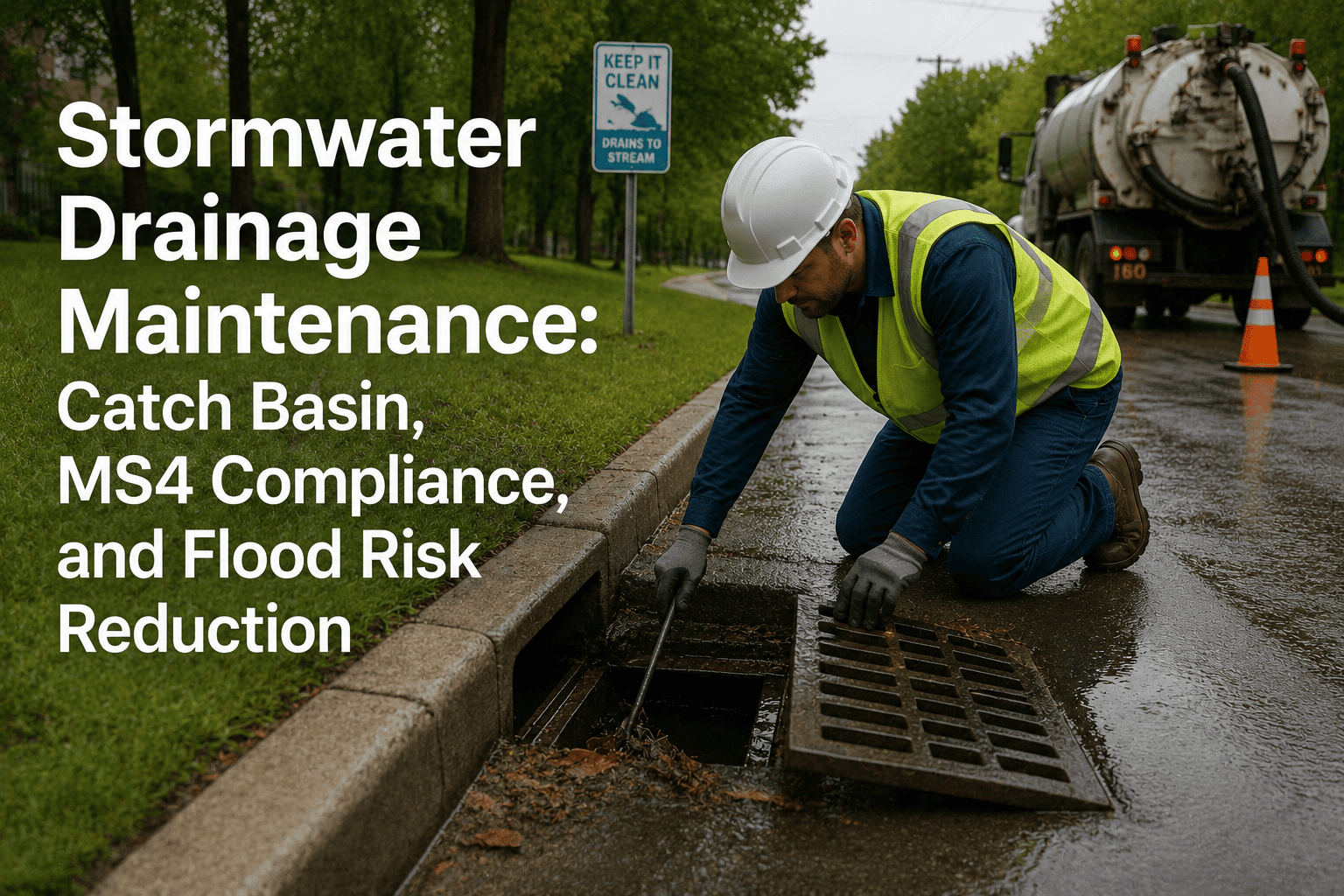
Every municipal separate storm sewer system operator in the United States is bound by a Clean Water Act permit that turns stormwater management into a documented legal obligation, not just a public works task. Missing an inspection cycle, losing a maintenance record, or failing to log an illicit discharge investigation can become a Notice of Violation long before the next storm exposes the gap publicly. Cities and counties running Phase I and Phase II MS4 programs are expected to track hundreds of outfalls, structural controls, and construction sites against a single stormwater management program every single reporting year. Regulators inspect the paperwork trail as closely as they inspect the pipes and detention ponds themselves. See how OxMaint keeps MS4 permit records organized and audit ready.
MS4 Compliance · Stormwater Permit Management · Municipal Utilities · OxMaint
Six Minimum Control Measures. One Five-Year Permit Cycle. Zero Room For A Missed Inspection Record.
OxMaint gives water and public works departments a single system to schedule outfall inspections, log BMP maintenance, track illicit discharge cases, and assemble the annual report your MS4 permit requires — without digging through spreadsheets the week before it is due.
50,000
residents in an urbanized area is the population threshold that pulls a small MS4 into Phase II permit obligations
6
minimum control measures every MS4 stormwater management program must implement together, not in isolation
5 years
is the typical MS4 permit term before reissuance — and every year in between needs its own annual report
MS4
Annual reports are not optional paperwork — they are the primary record a regulator reviews to judge whether a municipality is controlling pollutants to the maximum extent practicable. A program that cannot produce inspection dates, maintenance actions, and outfall status on demand is a program that struggles at renewal time and during audits. OxMaint keeps every inspection, work order, and BMP record tied to its permit obligation so the annual report writes itself instead of becoming a scramble.
The Six Minimum Control Measures OxMaint Helps You Track
MCM 1
Public Education and Outreach
Distributing stormwater pollution materials and running awareness campaigns only counts toward compliance if the outreach activity, audience reached, and date are recorded. OxMaint logs every education activity against the permit year it applies to.
Public Involvement and Participation
MCM 2
Public meetings, volunteer cleanups, and comment periods need documentation just like field inspections do. OxMaint stores attendance records and program updates alongside the rest of your MS4 evidence trail.
MCM 3
Illicit Discharge Detection and Elimination
Outfall screening, dry-weather flow checks, and tracing an illegal connection back to its source depend on a searchable case history. OxMaint links each IDDE investigation to the outfall, the resolution, and the follow-up inspection.
MCM 4
Construction Site Runoff Control
Every active construction site over the permit threshold needs periodic erosion and sediment control inspections. OxMaint schedules recurring site visits and flags overdue inspections before they become a violation.
MCM 5
Post-Construction Stormwater Management
Detention ponds, bioretention cells, and permeable pavement installed on private and public property need long-term maintenance verification. OxMaint tracks each structural control asset and its inspection due date for the life of the permit.
MCM 6
Pollution Prevention and Good Housekeeping
Street sweeping schedules, catch basin cleaning, and municipal facility inspections all feed into this measure. OxMaint records the work order, the crew, and the completion date in one place your team can search anytime.
OxMaint MS4 Compliance Tracking
Your Next Audit Should Not Depend On Someone Remembering Where The Spreadsheet Is
OxMaint centralizes outfall inspections, BMP maintenance history, illicit discharge cases, and annual report data so your stormwater program is defensible on any given day, not just in the weeks before it is due.
What Happens When MS4 Documentation Falls Behind
Enforcement Risk
Notice of Violation
A gap in inspection records or an unresolved illicit discharge case is one of the fastest ways a program draws a formal Notice of Violation from its permitting authority.
Water Quality Risk
Missed TMDL Obligations
Municipalities discharging to an impaired waterway carry a wasteload allocation tied to a Total Maximum Daily Load. Untracked progress toward that allocation is difficult to defend at reporting time.
Reporting Risk
Incomplete Annual Reports
Annual reports must show measurable progress against every minimum control measure. Missing inspection dates or maintenance records leave visible gaps a reviewer will flag.
Renewal Risk
Difficult Permit Reissuance
Permit reissuance review looks back across the full five-year term. A program with thin documentation history starts its next permit term already behind.
MS4 Compliance Areas OxMaint Tracks For Your Program
Frequently Asked Questions — MS4 Permit Compliance
What is the difference between a Phase I and a Phase II MS4 permit?
Phase I generally covers larger, more populous municipalities under individual permits issued since the early 1990s. Phase II covers smaller MS4s in urbanized areas and runs on general permits built around the six minimum control measures.
See how OxMaint supports both permit types.
What are the six minimum control measures in an MS4 permit?
They are public education and outreach, public involvement, illicit discharge detection and elimination, construction site runoff control, post-construction stormwater management, and pollution prevention through good housekeeping. All six are tracked together in OxMaint.
How often do stormwater control measures need to be inspected?
Inspection frequency depends on the specific permit and the type of structural control, but most programs require recurring inspections rather than a one-time check.
Book a demo to see how OxMaint schedules recurring inspections automatically.
What happens if a municipality receives a Notice of Violation?
A Notice of Violation typically requires a corrective action response and closer regulatory scrutiny going forward. Strong documentation of past inspections and maintenance is often the deciding factor in how that response is received.
Can OxMaint help assemble the MS4 annual report?
Yes. OxMaint keeps inspection, maintenance, and case records organized by permit year so the data needed for an annual report is already structured and ready to export.
Activate OxMaint to see your program's records in one place.
Stormwater Compliance Should Not Live In A Shared Drive Nobody Opens Until Renewal Season
Give your team one system for MS4 inspections, maintenance history, and annual reporting — built for the way public works and water utilities actually work.