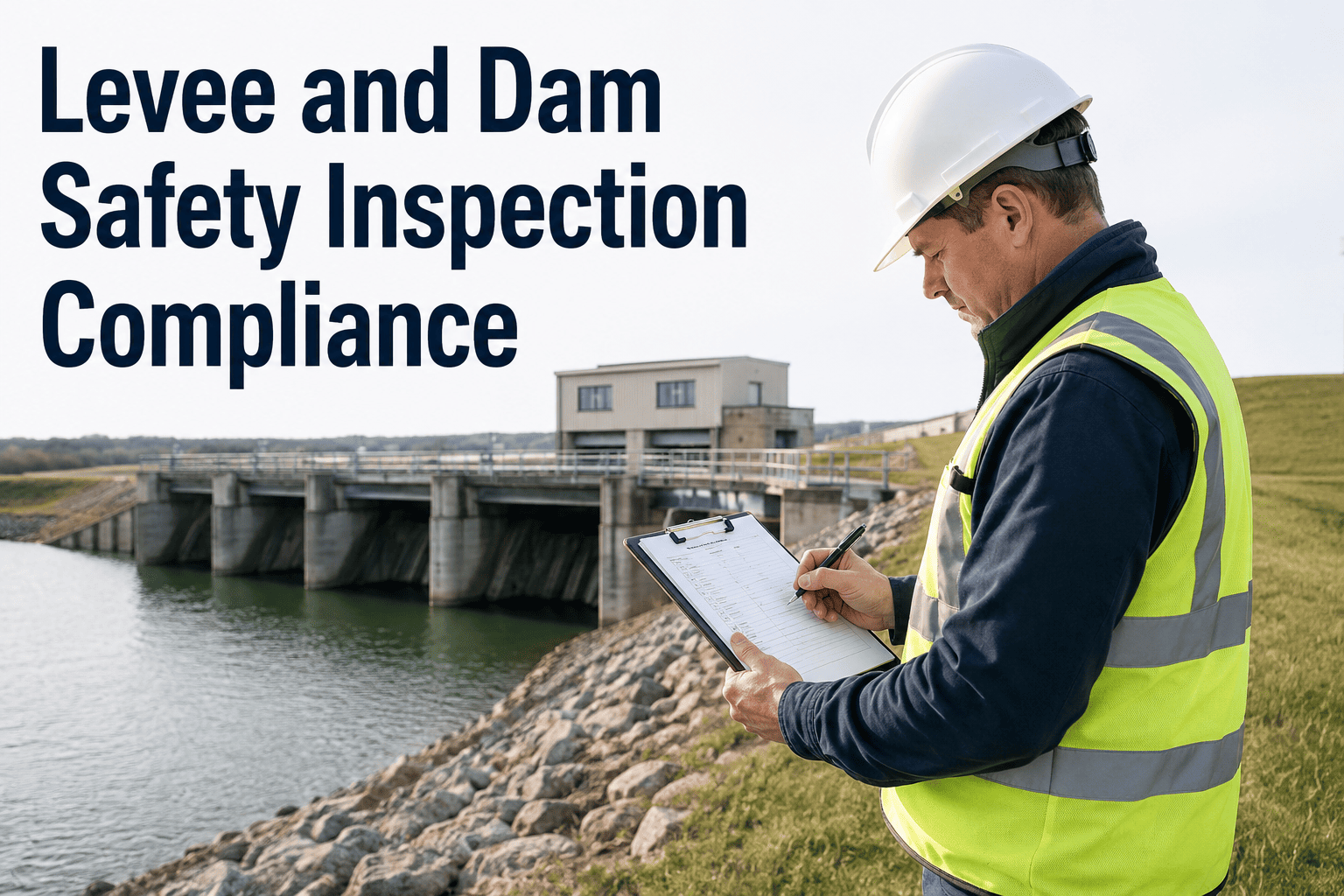
Levee and dam safety inspection compliance is the life-safety backbone of every public works agency, flood control district, and municipal water authority operating under FEMA, USACE, and state dam safety programs. A single missed deficiency in a levee inspection program can trigger catastrophic flooding, billions in damages, and severe regulatory penalties. By digitizing flood control inspection workflows, condition assessments, and deficiency remediation into a centralized CMMS, agencies eliminate paper-based blind spots and maintain continuous audit readiness. See how OxMaint transforms your public dam safety program by requesting a Start Free Trial or booking a personalized demo today.
Public Infrastructure Life-Safety
Are your levee and dam inspection records audit-ready, or a liability?
Over 17,000 dams in the U.S. are classified as high-hazard potential, yet nearly 30% lack updated Emergency Action Plans. Spreadsheets and paper logs fail under regulatory scrutiny. OxMaint digitizes your entire levee safety compliance program — from automated inspection cadences to real-time deficiency tracking — so your flood control assets protect communities, not endanger them.
Regulatory Framework
What drives levee safety inspection and dam safety compliance?
Public levee and dam safety inspections are mandated under a complex framework of federal and state regulations. FEMA's National Dam Safety Program (NDSP), the USACE Levee Safety Program, and state-level dam safety acts require agencies to perform regular visual inspections, structural assessments, and hydrological evaluations. Failing a state or federal audit doesn't just mean a fine — it means potential loss of funding, increased liability, and existential risk to downstream communities.
Federal Oversight (FEMA & USACE)
FEMA provides guidelines and grants for the National Dam Safety Program, while the USACE inspects over 2,500 federally-owned levees. Agencies must adhere to strict documentation standards proving structural integrity, vegetation management, and seepage control.
State Dam Safety Acts
State regulators classify dams by hazard potential (Low, Significant, High). High-hazard dams typically require annual or biennial inspections. State laws mandate written Emergency Action Plans (EAPs) and immediate reporting of deficiencies.
Documentation & Audit Readiness
Inspectors must capture geotagged photos, condition ratings, and recommended remediations. Paper logs and disconnected spreadsheets routinely fail compliance audits due to missing data, outdated records, and poor traceability.
Inspection Checklist
Public dam safety inspection checklist for municipal agencies
A defensible flood control inspection program evaluates structural, hydraulic, and mechanical components across the entire levee or dam system. Use this tiered checklist to ensure your municipal dam inspection covers the critical failure points regulators scrutinize most.
Structural Integrity
- Embankment crest cracking and settlement
- Seepage, boils, and sand boils at toe
- Slope instability, sliding, or depression
- Concrete spillway surface deterioration
Hydraulic & Mechanical
- Gate operation and hoist functionality
- Debris blockage in inlet/outlet channels
- Riprap erosion and scour protection
- Emergency spillway capacity verification
Compliance & Operations
- Vegetation overgrowth and root intrusion
- Burrowing animal damage
- Encroachment and unauthorized grading
- Updated Emergency Action Plan (EAP) on file
Risk & ROI Analysis
The cost of non-compliance in levee maintenance programs
When a levee fails, the economic impact is staggering. The average dam failure causes over $50B in downstream damages and takes lives. Even without a catastrophic failure, poor levee maintenance compliance costs agencies millions in emergency repairs, FEMA reimbursement denials, and legal liability. Investing in a CMMS-driven inspection program pays for itself by preventing a single major deficiency escalation.
Annual Compliance Risk Formula
Total Risk = (Probability of Deficiency Escalation) × (Emergency Repair Cost) + (Regulatory Penalty) + (FEMA Reimbursement Loss)
A high-hazard dam with undocumented seepage issues faces a potential $4.2M emergency grouting bill, plus a 15-30% chance of denied federal disaster aid due to inspection gaps.
| Compliance Scenario | Annual Cost (Reactive) | Annual Cost (OxMaint CMMS) | Avoided Risk |
|---|---|---|---|
| Routine Levee Inspection (10 miles) | $48,000 | $12,000 | $36,000 |
| Deficiency Remediation Tracking | $85,000 | $22,000 | $63,000 |
| Emergency Spillway Repair (Prevented) | $1,200,000 | $45,000 | $1,155,000 |
| Audit Preparation & Documentation | $30,000 | $4,500 | $25,500 |
Software Solution
How OxMaint digitizes levee and dam safety compliance
OxMaint replaces clipboards, fragmented spreadsheets, and delayed reporting with a centralized AI-powered CMMS built for public works and flood control asset management. From the field to the regulator's desk, every inspection, work order, and component is tracked, scored, and documented.
Mobile Geotagged Inspections
Field crews conduct levee inspections on mobile devices with offline capability. Photos, condition ratings, and GPS coordinates attach directly to the asset record, eliminating data entry and ensuring 100% audit traceability.
Automated Deficiency Work Orders
When an inspector flags a deficiency, OxMaint automatically generates a prioritized work order, assigns it to the right crew, and tracks remediation to completion — cutting response times by up to 60%.
Predictive Maintenance Analytics
AI models analyze historical seepage rates, settlement data, and rainfall events to predict embankment or spillway failures months before they occur, shifting maintenance from reactive to predictive.
One-Click Regulatory Reporting
Generate FEMA, USACE, and state-level compliance reports in seconds. OxMaint compiles inspection histories, condition scores, and remediation logs into formatted documents ready for regulatory submission.
Stop risking your community's safety on paper logs
Join the public works agencies using OxMaint to maintain 100% audit readiness, cut remediation response times in half, and protect critical flood control infrastructure.
Implementation Timeline
From spreadsheets to CMMS-driven levee compliance in 30 days
Switching from fragmented paper logs to a centralized dam safety government platform doesn't require a multi-year IT project. Here is how a typical 180-asset flood control district implements OxMaint and passes its next state audit with zero findings.
Asset Registry Setup (Days 1-7)
Import all dam segments, levee miles, gates, and pump stations into OxMaint. Define criticality ratings and inspection cadences based on hazard classifications. Bulk import historical inspection data from existing spreadsheets.
Mobile Field Deployment (Days 8-14)
Configure digital inspection forms mapped to USACE and state standards. Deploy the OxMaint mobile app to field inspectors. Conduct a pilot inspection on a single levee segment to validate offline sync and photo capture.
Deficiency Automation (Days 15-21)
Build automated triggers that generate prioritized work orders when condition ratings drop below acceptable thresholds. Configure approval workflows for remediation tasks and emergency actions.
Audit-Ready Go Live (Days 22-30)
Generate the first compliance report portfolio. Train maintenance supervisors on dashboard analytics. The district is now fully operational, with every inspection digitally recorded and every deficiency tracked to closure.
Frequently Asked Questions
Levee and dam safety inspection compliance FAQs
How often must public dams and levees be inspected?
High-hazard potential dams must be inspected at least once a year by most state dam safety programs, while significant-hazard dams require inspections every 2-3 years. USACE levee inspections are typically conducted annually, with comprehensive periodic inspections every 5 years. OxMaint automates these cadences, ensuring no inspection deadline is ever missed.
What happens if a municipal agency fails a dam safety inspection?
Failing a state or federal dam safety inspection can result in restricted reservoir operations, mandated emergency repairs, and loss of federal funding. Agencies may also face increased liability if a failure occurs after a documented deficiency was ignored. You can Book a Demo to see how OxMaint's automated deficiency tracking ensures critical repairs are completed before regulators return.
Can a CMMS improve levee maintenance compliance for government agencies?
Yes. A CMMS centralizes all inspection records, work orders, and asset histories into a single auditable system. It eliminates the gaps caused by paper logs and spreadsheets, ensures inspections occur on schedule via automated reminders, and provides real-time visibility into asset conditions for regulators and stakeholders.
Does OxMaint support offline inspections in remote flood control areas?
Absolutely. OxMaint's mobile app allows field inspectors to conduct levee and dam safety inspections entirely offline. Data, photos, and geotagged observations are cached locally and automatically sync to the central database once a connection is re-established, ensuring no data is lost in remote locations.
How much does flood control inspection software cost?
The cost of a CMMS for flood control inspection varies based on the number of assets and users, but most municipal agencies see a positive ROI within the first 3 months by eliminating paper costs, reducing administrative overhead, and preventing a single emergency repair. You can explore pricing and features with a Start Free Trial.
Protect your community with audit-ready infrastructure
See how OxMaint's AI-powered CMMS streamlines levee and dam safety compliance, eliminates paper-based blind spots, and ensures every deficiency is tracked to closure.
Free 14-day trial · No credit card