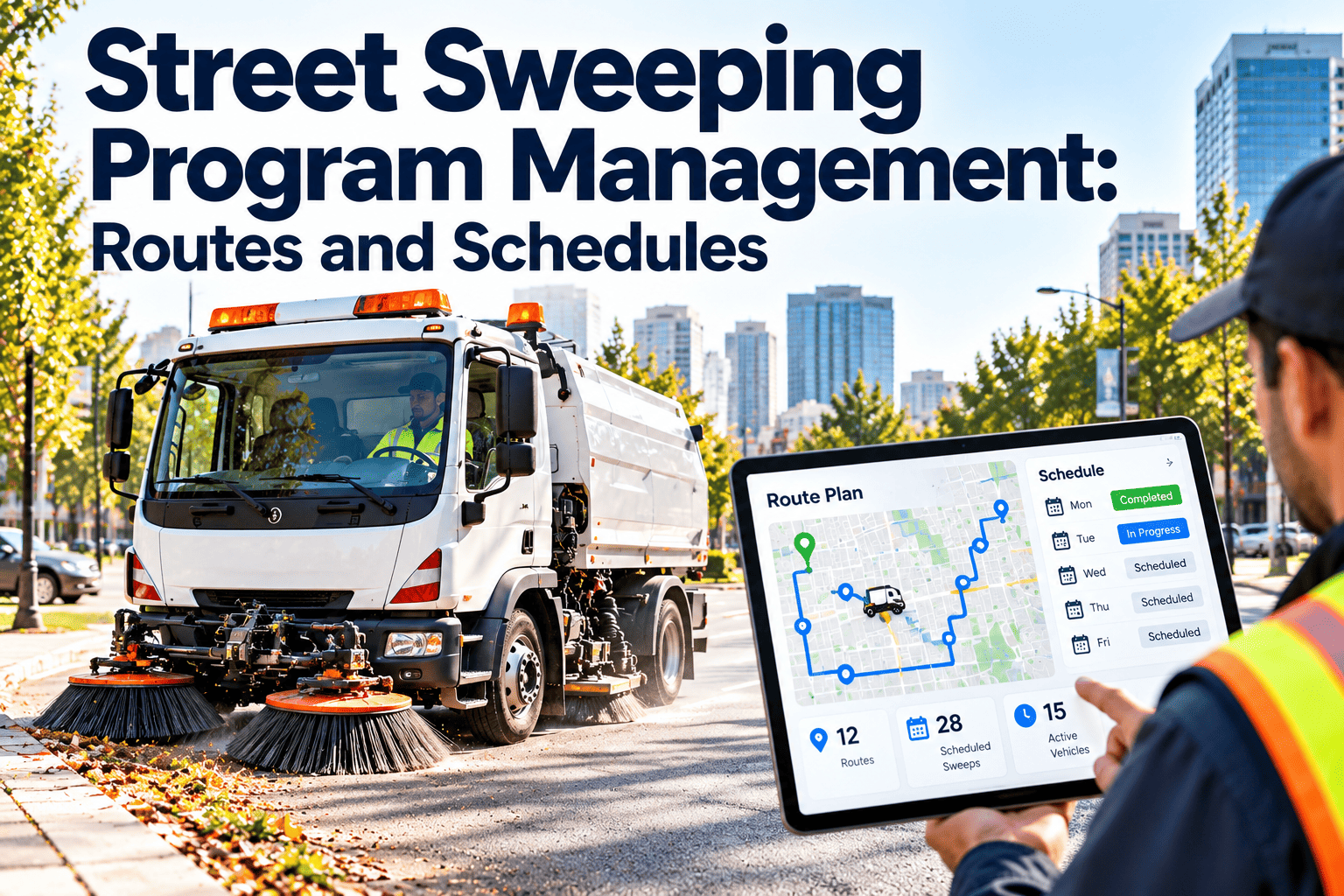
Residents see sweepers pass by and assume the job is done, but the city often has little proof of what was actually swept, when, or how well. Routes are drawn on paper maps, curb miles are tallied at month end, and a broken broom or hydraulic leak can sideline a machine for days without anyone noticing the route gap. Sweeping also feeds stormwater goals, since removing debris before rain keeps it out of inlets and waterways. A program built on shared route and equipment records makes service visible. This post covers route planning, curb mile tracking, and equipment care, and you can track sweeping work in Oxmaint alongside the rest of your public works assets.
Street Sweeping Program Management
Know what was swept, where, and with what equipment
Plan routes, track curb miles and sweeper condition, and document results for stormwater and community goals.
Visibility Problem
Why sweeping service is hard to see and defend
Route Planning
Build routes around service goals, not habit
Inputs that shape a route
- Street classification: arterial, collector, residential, downtown
- Parking restrictions and posted sweeping days
- Leaf fall, winter sand, and construction debris seasons
- Proximity to storm drains, creeks, and sensitive waterways
- Equipment type and hopper capacity
Outputs to record
- Route name, date, operator, and machine
- Curb miles completed against the plan
- Debris volume or loads hauled, if tracked
- Skipped segments and the reason
- Time on route and time spent dumping or refilling water
Frequency
Match sweeping frequency to street type and season
The matrix below is a starting framework. Set actual frequencies with your council policy, stormwater permit, and budget.
| Area | Why it matters | Planning approach |
|---|---|---|
| Downtown and commercial | High visibility and heavy litter | More frequent, often scheduled around quiet hours |
| Arterials and collectors | Higher speeds and debris from traffic | Regular cycle with attention to safety and traffic control |
| Residential | Leaves, grass clippings, and parked cars | Fixed schedule with posted days and seasonal surges |
| Near drainage and waterways | Debris reaches inlets and receiving waters | Prioritize before forecast rain and after leaf fall |
Make Service Visible
Turn every route into a record you can show
See how recurring sweeping routes and completion notes work as scheduled work orders.
Seasonal Calendar
A year of sweeping priorities
Equipment Care
Sweeper condition decides whether the route gets done
- Brooms, gutter brooms, and broom wear
- Water spray system and nozzles
- Hydraulic hoses, fluid levels, and leaks
- Hopper, conveyor, and dust control
- Engine hours for service intervals
- Auxiliary engine and hydraulic systems
- Greasing points and chain or belt inspection
- Wear parts replaced on a planned basis
- Defects reported at pre-trip become work orders
- Repeat failures flagged by machine
- Parts and labor recorded per sweeper
- Downtime tied to missed route miles
Stormwater Goals
Document sweeping for stormwater and community reporting
- Monthly totals without route detail
- No record of skipped streets
- Equipment issues not linked to service gaps
- Dated route completion by segment
- Skipped segments with reasons and make-up work
- Machine history behind every service interruption
Reporting needs vary by permit. Check your MS4 permit and state requirements for what must be documented, and design your records to match.
Performance Measures
Track a short list of sweeping measures
How Oxmaint supports sweeping programs
- Recurring work orders for sweeping routes with completion notes
- Equipment records with hour-based preventive maintenance
- Pre-trip inspections that create repair work orders
- Parts inventory, cost tracking, and reporting dashboards
FAQ
Street sweeping program: common questions
What should a street sweeping program track?
Routes, dates, curb miles, skipped segments, debris volume, equipment hours, and repair history for each sweeper.
How do we plan sweeping routes?
Group streets by classification, parking rules, and debris seasons, then size routes to machine capacity. Oxmaint can schedule them as recurring work.
How does sweeping support stormwater goals?
Removing debris before rain reduces what reaches inlets and waterways, and records show the effort made.
How do we prevent sweeper downtime?
Use daily checks, hour-based PM, and tracked repairs so wear is caught before it stops a route.
Can operators log routes from the cab?
Mobile entry lets operators record completion and defects on the job. Book a demo to see the workflow.
Service You Can Show
Run your sweeping program on records instead of memory
Plan routes, keep sweepers running, and document results with Oxmaint.