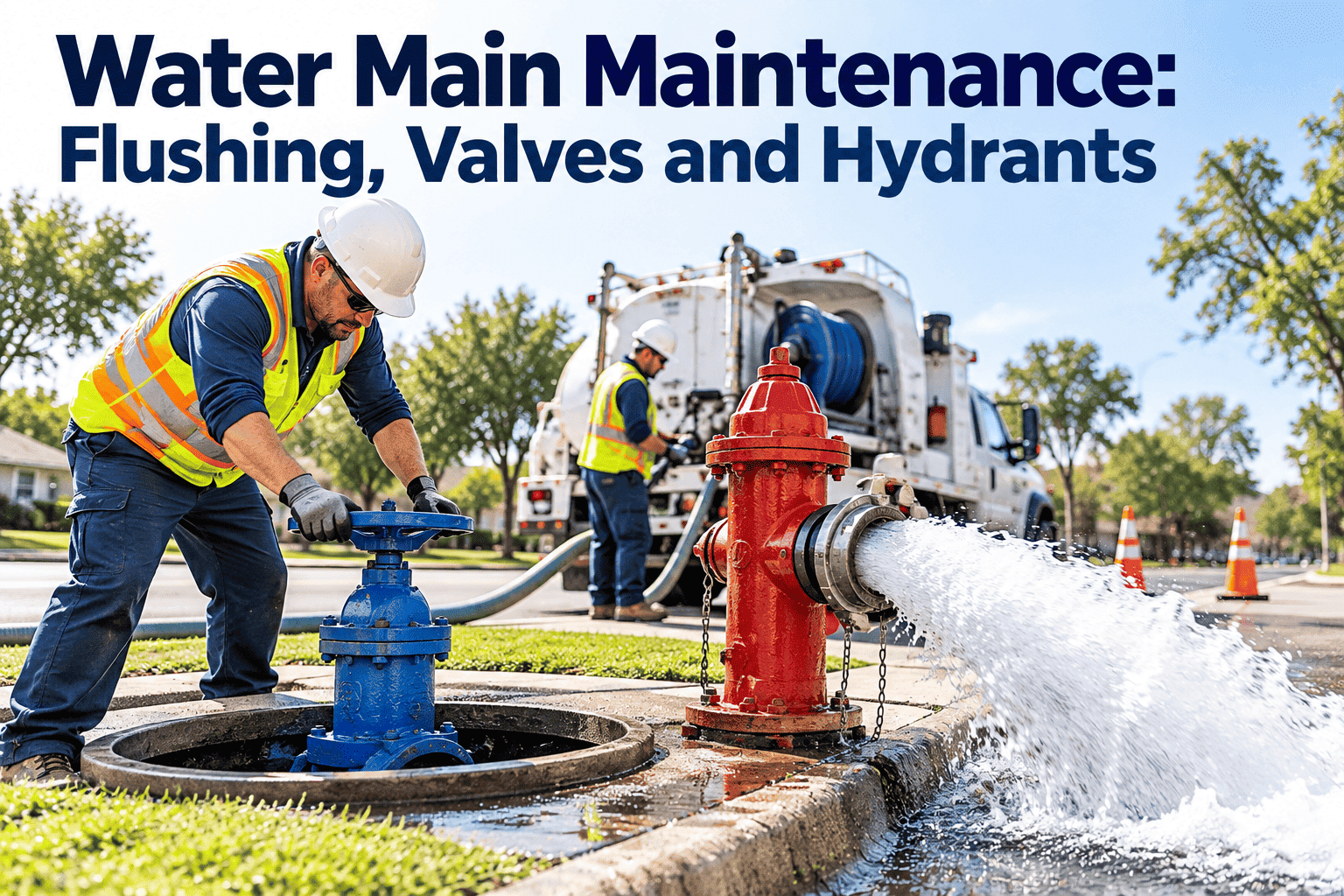
Most of a water system is buried, so the work that keeps it healthy is easy to postpone. Flushing, valve exercising, and hydrant maintenance rarely make headlines, yet they decide whether crews can isolate a break quickly and whether customers see clear water. As mains age, sediment builds up, valves seize, and hydrants fail when firefighters need them. Utilities that plan this work by zone and record the results can see what is actually improving. This guide explains how to structure the program, what to record, and how to schedule and track water main maintenance in one system.
Water Main Maintenance
Plan flushing, valves, and hydrants by zone, then prove the results
One maintenance record for every main, valve, and hydrant, so water quality complaints and main breaks can be traced to the work behind them.
Why It Matters
What deferred main maintenance looks like in the field
Program Design
Three activities, one zone-based program
| Activity | Purpose | What to record | Trigger to follow up |
|---|---|---|---|
| Flushing | Move sediment and stale water out of the system and restore water quality | Location, duration, observations, field water quality readings | Repeated complaints or poor readings after flushing |
| Valve exercising | Confirm isolation valves operate and can shut down a break quickly | Turns to close, direction, condition, inoperable status | Valve will not turn, leaks, or is buried or paved over |
| Hydrant maintenance | Keep hydrants reliable for firefighting and flushing | Inspection findings, leaks, caps, drainage, repairs made | Out-of-service status, repeat failures, access problems |
Seasonal Plan
Sequence the work so one activity supports the next
Prepare
- Confirm zone boundaries and asset lists
- Review last cycle's failed valves and hydrants
- Check notification and discharge requirements
Valves and hydrants first
- Exercise valves in the zone before flushing
- Repair or flag hydrants needed for flushing
- Raise corrective work orders for failures
Flush
- Flush in planned sequence, usually from source outward
- Record observations and field readings
- Repeat where results are poor
Review
- Compare complaints before and after
- Update frequency for problem areas
- Carry unfinished work into the next cycle
From Spreadsheet to Program
Schedule every zone and see what is overdue at a glance
See how Oxmaint turns flushing, valve, and hydrant routines into trackable work orders.
Valve Exercising
Valve exercising schedule: prioritize what you rely on most
Rank valves for earlier attention
- Valves feeding critical customers such as hospitals and schools
- Valves on large transmission and trunk mains
- Valves in areas with a history of main breaks
- Valves with no recent operation record
Capture useful field data
- Number of turns and whether it matches expected
- Direction to close and any packing leaks
- Box condition and access issues
- Photos for buried or damaged valves
Valve exerciser and operating practices vary by valve size and manufacturer. Follow your utility's procedure and the manufacturer's guidance.
Hydrant Program
Hydrant maintenance program checklist
- Visible damage, paint, and obstructions
- Cap and nozzle condition
- Operation of main valve and stem
- Leaks at joints or barrel
- Drainage after operation
- Flow observations during flushing
- Connection to the main and auxiliary valve
- Out-of-service tagging and notice
- Repair work order created from failed items
- Parts used and labor recorded
- Notification to fire department where required
- Re-inspection after repair
Risk Prioritization
Use a simple matrix to decide where to focus first
Tracking Results
Measures that show whether the program is working
How Oxmaint supports the program
- Recurring preventive work orders by zone and asset type
- Mobile inspections for valves and hydrants with photos
- Corrective work orders raised directly from failed findings
- Asset history, inventory for repair parts, and reporting dashboards
FAQ
Water main maintenance: common questions
What is included in water main maintenance?
Typically flushing, valve exercising, hydrant inspection and repair, leak response, and condition tracking for mains and appurtenances.
How often should valves be exercised?
Frequency depends on valve size, criticality, and local policy. Oxmaint can schedule different intervals for different valve classes.
Why exercise valves before flushing?
Working valves let you control flow paths during flushing and isolate problems found along the way.
How can records reduce complaints?
Records show which areas were flushed, when, and with what result, so repeat problem areas get attention sooner.
Can we start with only hydrants?
Yes. Many utilities begin with one asset type and expand. Book a demo to plan a phased rollout.
Start With One Zone
Build a water main maintenance program you can verify
Schedule the work, capture the results, and see where to focus next.