Water and Wastewater Utility Maintenance Checklist for Pumps Valves and Distribution Systems
By alice on March 24, 2026
Pump failures, missed valve exercises, and undocumented chemical calibrations are the three most common causes of water and wastewater utility regulatory violations — and 71% of those failures show detectable precursor conditions at the prior inspection that were not escalated before the compliance event. This checklist gives utility operators and maintenance supervisors a structured equipment-class assessment protocol covering 88 inspection items across six equipment zones. Each item is a single observable or measurable condition. Complete it at every scheduled PM cycle and as a running-system walkdown using pressure gauge, flow meter, and SCADA data. For digital completion with automatic work order routing, deploy via Oxmaint's utility-specific inspection module. Book a demo to see how Oxmaint converts this checklist into live digital work orders assigned to your utility asset hierarchy.
43%
of water utility emergency repairs caused by pump and rotating equipment failures that structured PM programs prevent
72 hrs
EPA maximum reporting window for treatment plant incidents — requiring timestamped maintenance records on demand
6
equipment zones covered — pumps and motors, chemical systems, filters and membranes, valves and hydrants, storage tanks, and SCADA instrumentation
88
individual inspection items structured across Critical, Monitor, and Routine priority tiers with PASS / FLAG / STOP status classification
Checklist Scope and Usage
This checklist covers six equipment zones: pumps and motors (raw water, high-service, booster, and chemical metering), chemical dosing and feed systems, filters and membrane systems, valves and hydrant distribution, water storage tanks and reservoirs, and SCADA instrumentation and controls. Priority ratings are assigned per item based on failure consequence and regulatory detection window. Critical items have a short detection window to unrecoverable failure or compliance violation. Monitor items require a work order and defined re-inspection interval. Routine items are documented and trended over time. All FLAG and STOP findings require photo documentation before the work order is raised.
Zone 1 — Pumps and Motors: Daily, Weekly, and Monthly PM
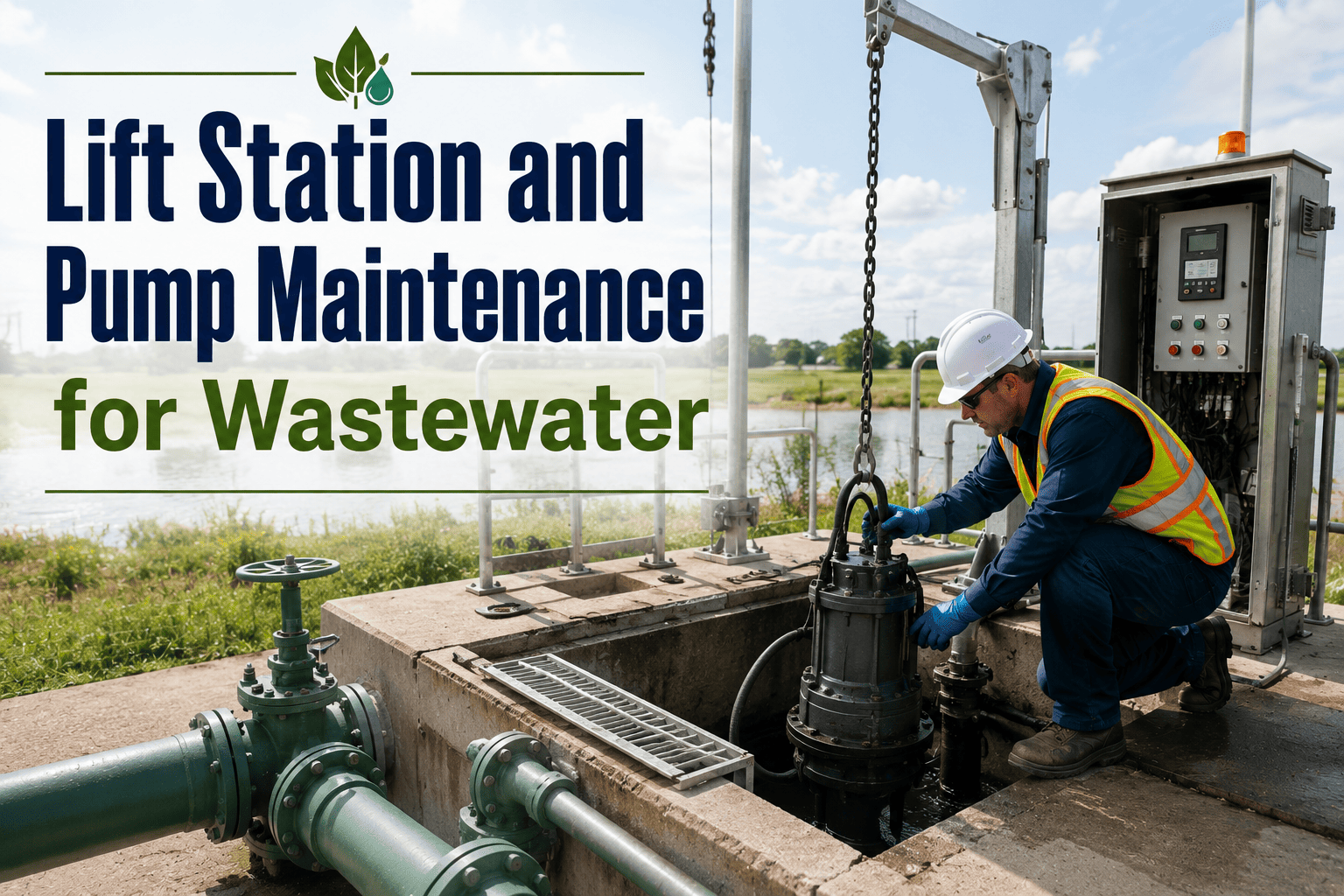
Pump failures account for 43% of unplanned water utility outages. High-service and booster pump failures without PM programs cost 4 to 6 times a planned rebuild. Shell temperature and bearing condition are the primary running-system indicators. Impeller clearance and seal condition require hands-on inspection at scheduled PM intervals and cannot be substituted by SCADA data review alone.
Operational Checks — Every Shift
Lubrication and Mechanical — Weekly
Overhaul and Performance — Annual
Zone 2 — Chemical Dosing and Feed Systems
The EPA Safe Drinking Water Act and state primacy agencies require documented maintenance records for all chemical feed systems. Dosing pump calibration deviations of more than 3% from setpoint constitute a treatment technique violation under SDWA requirements. Chemical system PM failures are the second most common cause of Notice of Violations at community water systems during state primacy audits.
Filter turbidity is a continuous compliance measurement under the EPA Surface Water Treatment Rule — any filter exceeding 0.3 NTU in 95% of measurements within a month, or any single reading above 1.0 NTU, constitutes a treatment technique violation. Filter media condition and backwash performance are the primary PM drivers. Membrane integrity test failure can result in suspension of the log removal credit that the membrane is providing for Cryptosporidium and Giardia removal.
Daily Filter Monitoring
Media and Membrane Condition — Monthly and Annual
Zone 4 — Valves, Hydrants, and Distribution Infrastructure
Distribution system valve failures and unexercised valves are the leading cause of water main isolation failures during emergencies. AWWA M44 requires all distribution system valves to be exercised at minimum annually, with critical transmission main valves exercised every 6 months. Hydrant flow test records are required by NFPA 291 and must be available to the local fire authority on demand. These measurements must be recorded quantitatively with valve ID, not entered as general inspection notes.
Valve Exercise Program — Annual Rotation
Hydrant Inspection and Flow Testing — Annual
Zone 5 — Water Storage Tanks and Reservoirs
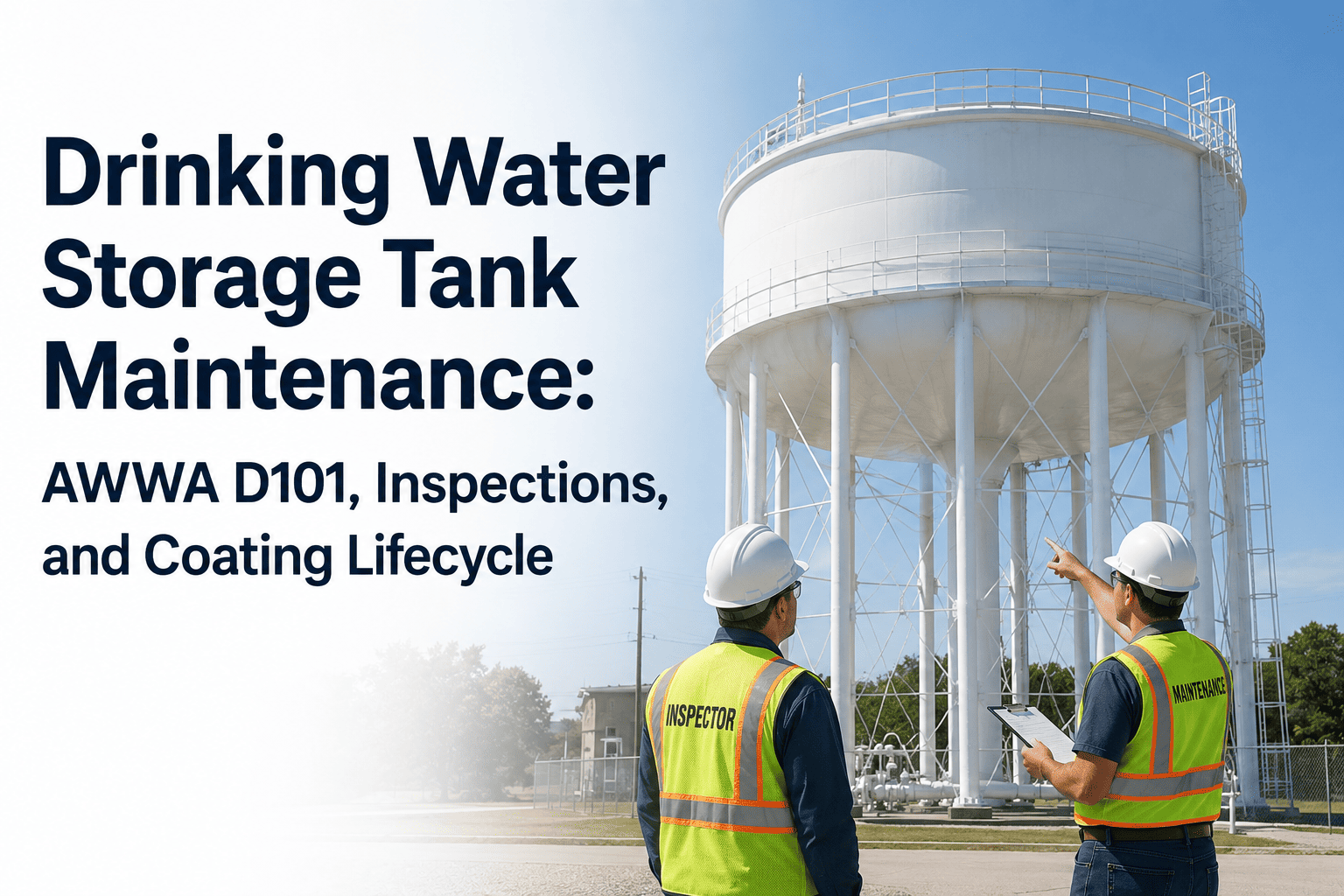
Water storage tank condition failures — coating breakdown, structural compromise, and water quality deterioration from inadequate turnover — are the most underinspected risk category in distribution system asset management. Interior inspection by a certified inspector is required under AWWA D100 every 3 to 5 years, but monthly exterior observation and water quality sampling are the early-warning tools that determine whether a tank reaches its next interior inspection cycle or requires emergency intervention.
Exterior Condition — Monthly
Water Quality and Interior — Quarterly and 3–5 Year
Zone 6 — SCADA, Instrumentation, and Control Systems
SCADA alarm conditions that generate no maintenance record are the most common documentation gap in water utility EPA audits. Flow meter and pressure transducer calibration drift above acceptable tolerances produce inaccurate NPDES discharge monitoring reports — a regulatory violation that persists silently until the annual DMR audit. Instrumentation PM must be treated with the same compliance priority as chemical dosing calibration.
Analyzer Verification — Weekly
Calibration and Communication — Annual
Inspection Zone Summary by Frequency and Priority Distribution
Inspection Zone
Every Shift
Weekly
Critical Items
Monitor Items
Total Items
Zone 1 — Pumps & Motors
Pressure, temp, amps
Lube, standby test
4
8
17
Zone 2 — Chemical Systems
Residual, feed rates
Analyzer check
3
5
10
Zone 3 — Filters & Membranes
Turbidity, DP
Backwash logs
3
5
10
Zone 4 — Valves & Hydrants
Spot checks
Main flushing
4
7
11
Zone 5 — Storage Tanks
Level controls
Exterior visual
4
5
10
Zone 6 — SCADA & Instrumentation
Alarm review
Analyzer verify
2
5
9
Total Checklist Items
Selected
Selected
20
35
88
Oxmaint Compliance Coverage for Water Utility Inspection Records
Regulatory Framework
Applicable Standards and Requirements
Oxmaint Inspection Record Output
EPA Safe Drinking Water Act
Total Coliform Rule, Disinfection Rule, SWTR, LT2ESWTR, Lead and Copper Rule, treatment technique requirements
Timestamped chemical dosing calibration records, filter turbidity logs, disinfection PM completion records, MOR data exports, and corrective action work order linkage
EPA NPDES / Clean Water Act
Discharge Monitoring Reports, effluent permit limits, pretreatment program documentation, biosolids management records
Flow meter calibration records, effluent monitoring documentation, DMR-ready data export with chain of custody, permit exceedance tracking and corrective action trails
OSHA Regulatory Standards
OSHA 1910.146 Confined Space Entry, 1910.119 PSM (chlorine gas facilities), 1910.147 Lockout/Tagout, 29 CFR Part 1910 General Industry
Confined space entry permit records, PSM mechanical integrity PM documentation, LOTO procedure completion records, and safety inspection audit trail exportable for OSHA compliance
AWWA-calibrated PM interval scheduling, valve exercise records by ID and location, storage tank inspection documentation by certified inspector, AWIA cybersecurity audit trail
NFPA Standards
NFPA 291 hydrant flow testing, NFPA 110 emergency generator, NFPA 25 water-based fire protection, NFPA 72 fire alarm systems
Hydrant flow test records with static and residual pressure data, generator load test documentation, inspection certificate expiry tracking, fire authority record submission documentation
Inspection Records That Satisfy Every Regulatory Framework
Oxmaint structures utility inspection records to satisfy audit requirements across all frameworks above — timestamped findings, photo evidence, corrective action linkage, and compliance export without post-processing or manual assembly after each inspection event.
Oxmaint Zone Inspection Results at Water Utility Sites
89%
PM Compliance Rate
Zone checklist completion rate on critical utility equipment items across Oxmaint-deployed water utility sites
68%
Fewer Emergency Repairs
Reduction in emergency pump and equipment repairs at 12 months post structured zone PM deployment at Oxmaint-deployed utility sites
4 hrs
Audit Documentation
Average time to produce complete EPA and state primacy agency audit documentation packages from the Oxmaint compliance dashboard
100%
Work Order Linkage
FLAG and STOP findings automatically routed to corrective work orders with photo evidence attached from the inspection event in real time
Frequently Asked Questions
QHow often should water utility pumps be serviced under AWWA standards?
AWWA M17 recommends bearing lubrication every 2,000 operating hours or quarterly, whichever comes first. Mechanical seal inspection should be monthly visual with replacement at 18 to 24 months. A full performance curve test is required annually and compared against the factory baseline to detect efficiency degradation. Critical high-service pumps should also receive quarterly vibration analysis and an annual motor insulation resistance test. Standby pump automatic start should be tested weekly to confirm transfer within emergency response requirements.
QWhat EPA documentation is required for water treatment plant maintenance records?
The EPA Safe Drinking Water Act requires timestamped, operator-attributed records for all treatment technique activities — chemical dosing calibrations, filter turbidity monitoring, and disinfection equipment PM. Records must be retained for a minimum of 3 years and must be producible within 72 hours of an incident or audit request. State primacy agencies may impose additional retention requirements. The government facility maintenance management software guide covers how Oxmaint generates EPA-compliant documentation automatically at task completion without manual post-processing.
QHow often should fire hydrants be flow tested and what records are required?
NFPA 291 requires annual flow testing for all fire hydrants. Each test must record static pressure, residual pressure at full flow, and calculated flow rate at the test hydrant. These records must be available to the local fire authority on request and should be retained by the utility. In addition to annual flow testing, hydrants should receive annual lubrication and O-ring inspection, with quarterly visual accessibility checks. Any hydrant failing minimum flow test requirements should be flagged for repair and the fire department notified of the reduced capacity location.
QWhat is the required frequency for distribution system valve exercise under AWWA M44?
AWWA M44 recommends exercising all distribution system valves at least annually, with critical isolation valves on transmission mains exercised every 6 months. Each exercise event must document the valve ID, GIS location reference, number of turns to fully close, operating condition observed, and any hard spots or binding noted. Valves that fail to operate through full travel range should be flagged for repair and classified as a critical deficiency until repaired. A valve that cannot fully close is a liability during main breaks and emergency isolation events. See the municipal CMMS implementation guide for managing valve exercise programs across a full distribution system.
QCan this checklist replace a specialist utility inspection by a certified engineer?
No. This checklist is an operational PM tool designed for use by trained utility operators and maintenance technicians as part of the standard maintenance programme. It does not replace the specialist condition assessments conducted by certified engineers at major inspection intervals — including AWWA D100 storage tank interior inspection, licensed tester backflow preventer testing, or NFPA 291 hydrant flow testing requiring certified equipment. The outputs of this checklist should feed directly into those specialist assessments, providing quantified trending data across multiple inspection cycles that makes specialist findings significantly more actionable and defensible in regulatory audits.
Deploy This Checklist as Live Digital Zone Inspections in Oxmaint
Every zone and every item in this checklist is available as a structured digital work order in Oxmaint — assigned to your utility asset hierarchy, triggered by PM schedule, and completed on mobile at the inspection location with photo capture and automatic work order routing for every abnormal finding.