Sterile manufacturing facilities lose an average of $500,000 per contamination event — and most trace back to missed maintenance steps, skipped intervention logs, or delayed QA approvals on aseptic filling lines. OxMaint helps fill-finish teams maintain readiness with structured PM workflows, real-time QA sign-off, and complete audit trails built for GMP compliance.
Sterile Manufacturing · Fill-Finish · GMP Compliance
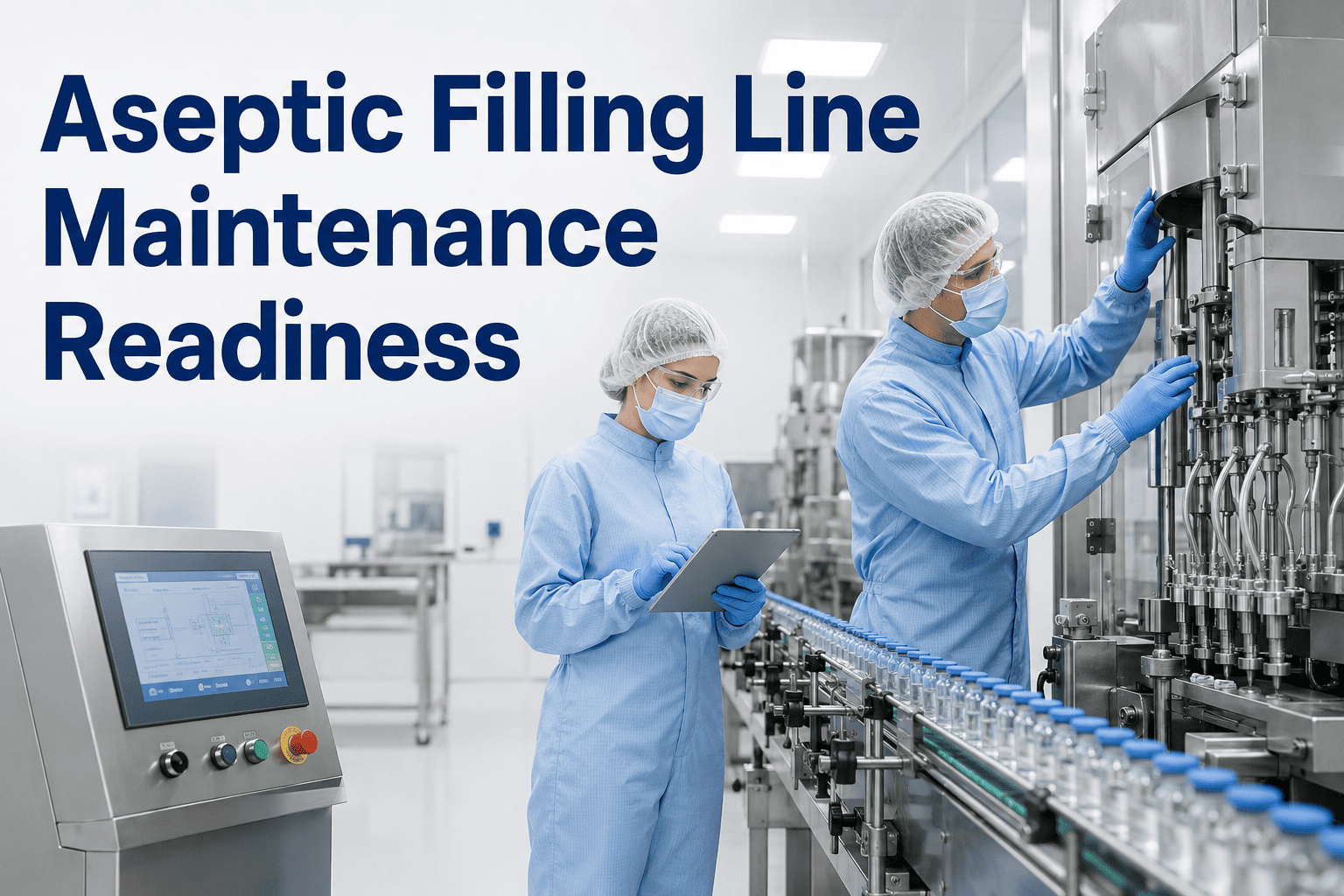
Aseptic Filling Line Maintenance Readiness
From PM scheduling to intervention logs and QA approval — every step your filling line needs to stay compliant, sterile, and production-ready.
74%
of sterile product recalls involve equipment-related failures in fill-finish
48 hrs
average delay caused by incomplete maintenance records before batch release
3x
more FDA observations in facilities without digital maintenance logs
Why It Matters
The Readiness Gap in Aseptic Filling
Aseptic filling lines operate at the intersection of precision engineering and microbial risk. A single lubrication interval missed, a stopper bowl vibration ignored, or an intervention not logged on time can invalidate an entire batch. Regulatory bodies expect documented evidence — not verbal confirmation — that every component was checked, every PM was completed, and every QA gate was passed before production started.
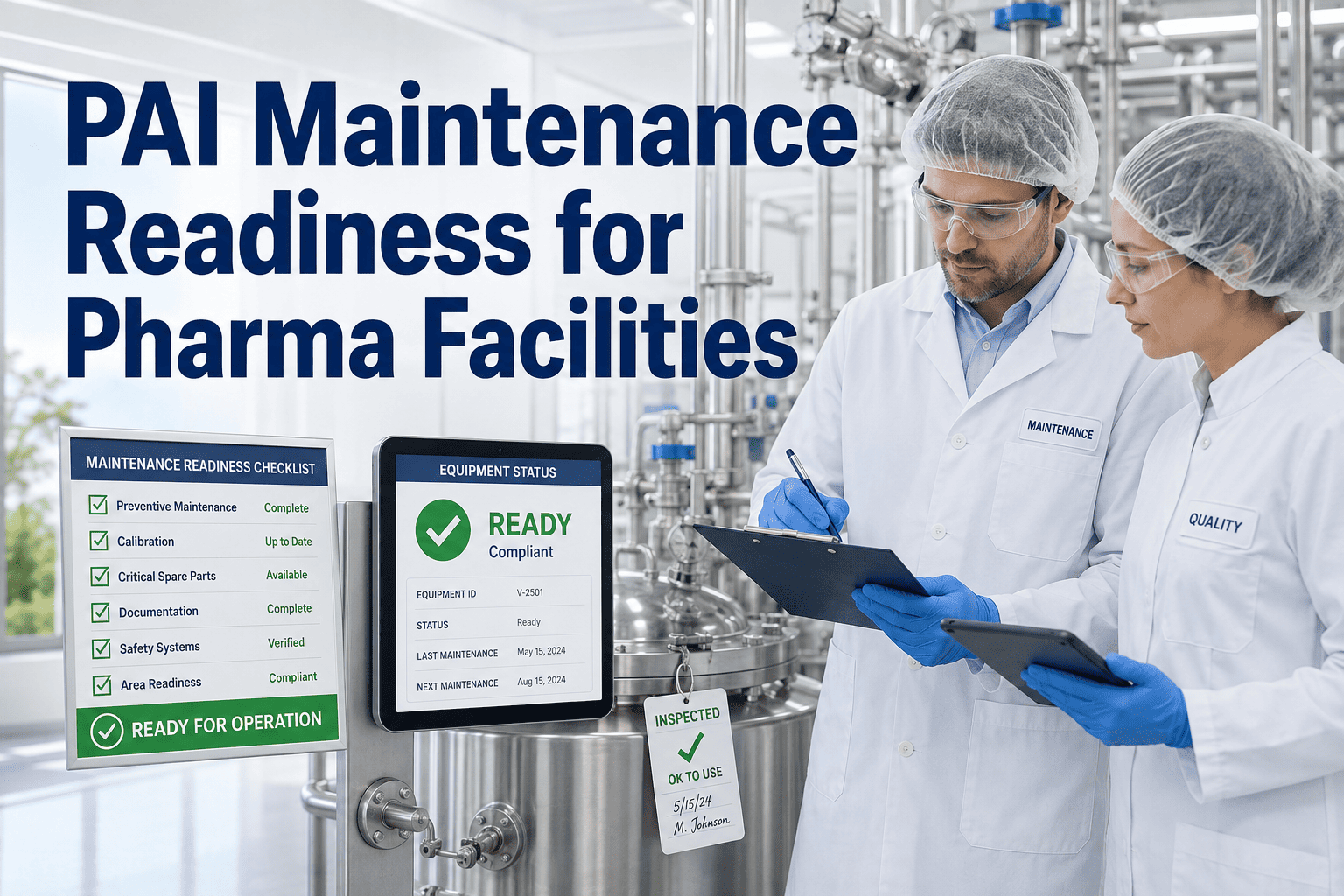
Pre-Production PM Checklist
Filling needle alignment verification
Stopper bowl and track inspection
Peristaltic pump tubing integrity check
In-process weight check calibration
Conveyor belt tension and speed test
HVAC differential pressure log review
Component Readiness Verification
Vials: visual inspection, dimensional check
Stoppers: autoclave log cross-reference
Caps: crimp force validation record
Filter integrity test result attached
Filling pump O-ring replacement log
Needle wash system flush — overdue
Intervention Logging
Every Intervention Must Be Tracked — Here's What That Looks Like
FDA 21 CFR Part 211 and EU GMP Annex 1 require that every human intervention inside the aseptic zone be documented with time, operator ID, action taken, and subsequent environmental monitoring result. Here's the intervention types that most commonly appear in filling line CMMS records:
| Intervention Type |
Trigger |
Required Documentation |
GMP Risk Level |
| Vial jam clearance |
Sensor alert |
Time, operator, glove integrity post-event |
Medium |
| Filling needle replacement |
Scheduled PM |
Part lot number, torque value, test fill result |
High |
| Stopper bowl refill |
Low-level alarm |
Container ID, operator, time, airlock log |
High |
| Pump tubing swap |
Wear interval |
Replacement log, flush confirmation, IPC check |
High |
| Weight check adjustment |
IPC out of spec |
Before/after weights, operator sign-off, QA review |
Medium |
QA Approval Workflow
From Maintenance Complete to Batch Release — The 4-Gate Process
01
Technician Completes PM
All checklist items signed off. Intervention log submitted. Parts replaced tagged with lot numbers and timestamps.
02
Line Clearance Verification
Shift supervisor confirms no residual materials from previous batch. Environmental monitoring baseline recorded.
03
QA Digital Sign-Off
QA reviews all PM records, intervention logs, and calibration certificates. Electronic approval with timestamp and audit trail.
04
Production Authorized
Batch record opened. Equipment status updated to "Released." All maintenance evidence archived to batch record automatically.
Ready to digitize your aseptic line maintenance records?
OxMaint connects PM schedules, intervention logs, and QA approvals in one GMP-compliant platform — live in under 60 minutes.
Expert Review
What Validation Engineers Say About Filling Line Readiness
"The biggest gap we see during pre-approval inspections is not missing PMs — it is missing evidence that the PM was reviewed by QA before the batch started. Digital QA sign-off workflows close that gap instantly."
— Senior Validation Engineer, Parenteral Contract Manufacturer, EU GMP-certified facility
"Intervention logging is where most aseptic filling facilities fail during FDA inspections. If the intervention happened and there is no log entry with timestamp and operator ID, regulators treat it as if proper aseptic technique was not maintained."
— Director of Quality Assurance, Biologics Fill-Finish Site, FDA-inspected facility
Common Questions
Aseptic Filling Line Maintenance — FAQ
What PM intervals are required for aseptic filling equipment?
PM intervals for aseptic filling equipment are defined by a combination of OEM recommendations, validated maintenance procedures, and risk assessments documented in the site's maintenance master plan. Typically, critical components like filling needles, pump tubing, and stopper tracks require inspection every batch or weekly, while mechanical assemblies follow monthly or quarterly intervals. Your validated maintenance schedule must be part of your site's quality system and any deviation must be documented with a risk justification reviewed by QA.
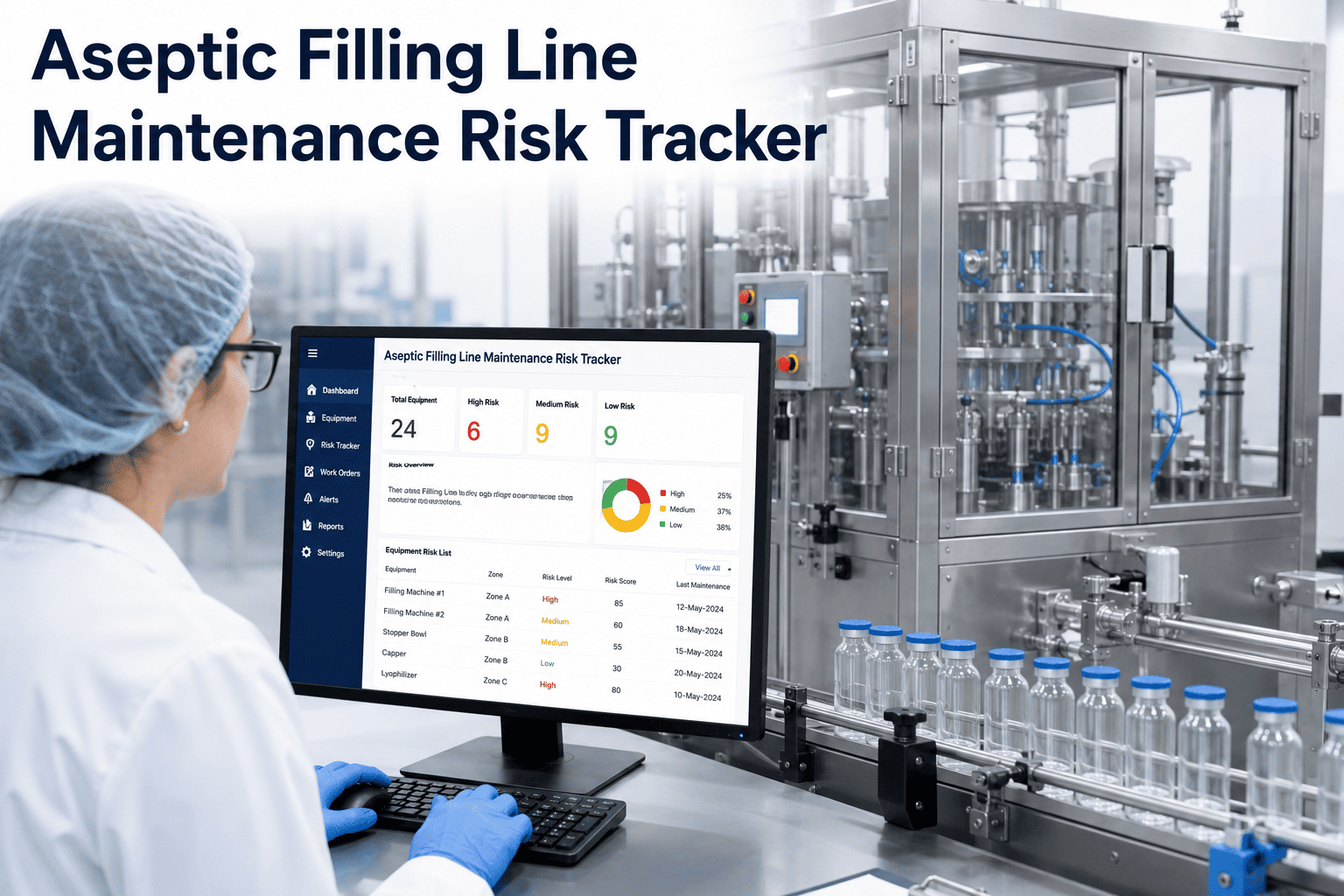
OxMaint automates interval tracking and flags overdue PMs before they become compliance findings.
How should intervention logs be structured for Annex 1 compliance?
Under EU GMP Annex 1 (2022 revision), intervention logs must capture the type of intervention, the exact time, the operator identity, the location within the aseptic zone, and any environmental monitoring result following the event. Logs should be completed in real time — not reconstructed afterward — and must be reviewed as part of batch record review before product release. A gap in intervention documentation is treated as a process breach regardless of whether contamination was detected.
Book a demo to see how OxMaint captures interventions with mobile forms at the point of work.
Can maintenance records be used as audit evidence for FDA inspections?
Yes — maintenance records are primary evidence during FDA 483 investigations and warning letter responses. Investigators specifically review PM completion rates, overdue work order histories, calibration records, and intervention logs to assess whether equipment was in a state of control during production. Digital records with timestamps, operator IDs, and QA approval signatures are far more defensible than paper logs, particularly when traceability to specific batch numbers is required.
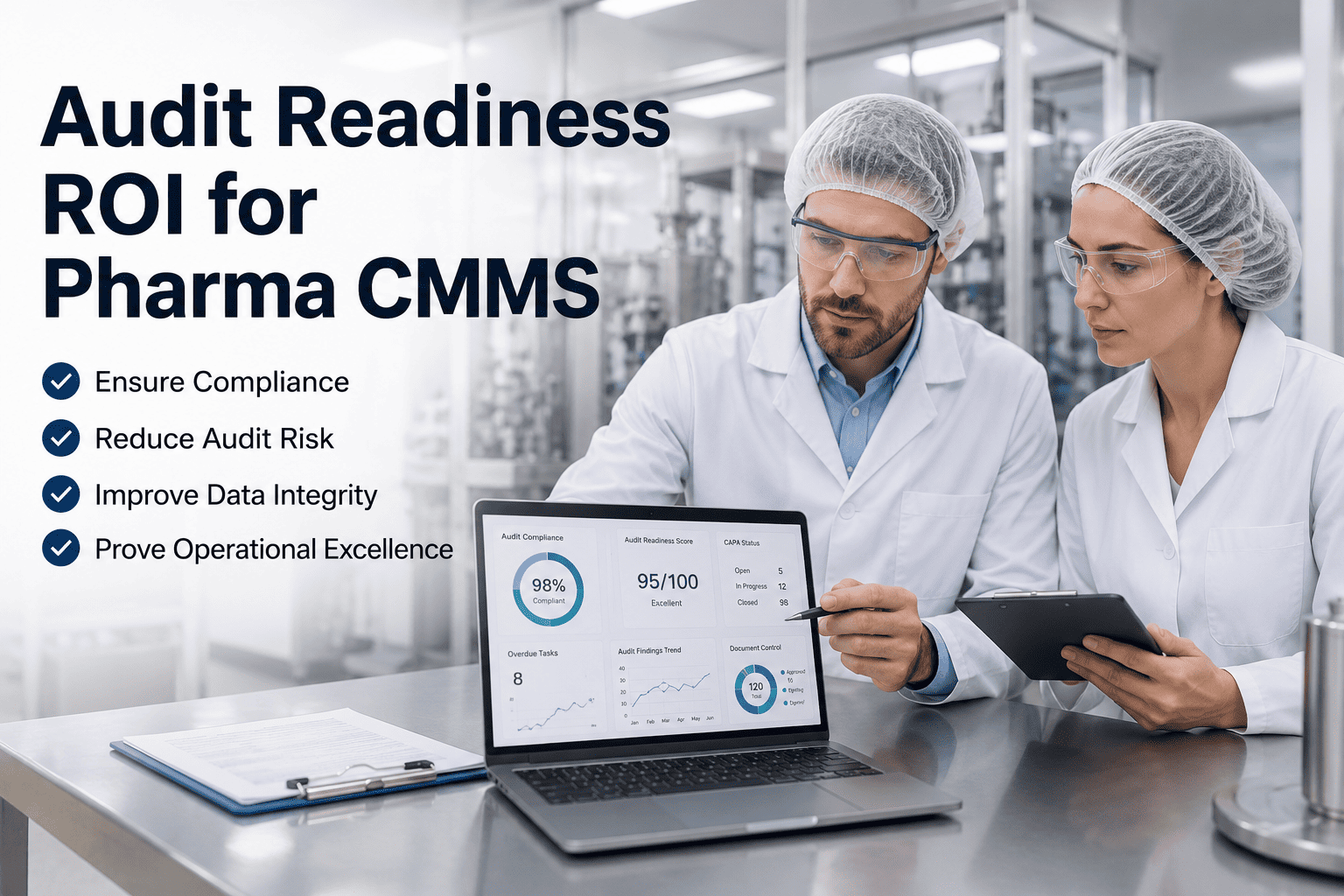
OxMaint generates audit-ready maintenance evidence packages on demand.
What is the difference between line clearance and maintenance readiness verification?
Line clearance confirms that no residual materials, labels, or components from a previous batch remain on the production line — it is primarily a contamination and mix-up control. Maintenance readiness verification confirms that all scheduled PMs have been completed, equipment is functioning within validated parameters, and all maintenance records have received QA approval. Both are required before starting a new batch, but they address different risk categories and must be documented separately in the batch record. OxMaint supports both workflows with distinct digital checklists and approval gates linked to each batch record.
GMP-Ready · Aseptic Filling · Fill-Finish CMMS
Stop Losing Batch Release Time to Missing Maintenance Records
OxMaint gives your aseptic filling team structured PM workflows, real-time intervention logging, and QA approval gates — all linked to your batch records and audit-ready from day one.