
In a hospital, every second of equipment downtime carries consequences that extend far beyond the maintenance budget. A failed ventilator at 2 AM, an offline MRI scanner before a scheduled diagnostic, or an out-of-service sterilization autoclave ahead of a surgical suite — these are not just operational disruptions. They are patient safety events. Maintenance Directors, Biomedical Engineers, and Hospital Facility Managers now face an unavoidable strategic question: is a fixed calendar schedule still the right way to maintain critical medical equipment, or should real-time condition data determine when maintenance happens? This guide breaks down the core differences between condition-based maintenance and time-based preventive maintenance, provides the hard data behind both approaches, and shows which strategy — or smart combination — delivers the best results for reliability, regulatory compliance, and total cost of ownership across your hospital.
Stop Maintaining Equipment on a Calendar. Start Maintaining on Condition.
Oxmaint gives hospital maintenance teams real-time asset condition visibility, automated PM scheduling, condition-triggered work orders, and audit-ready compliance documentation — all in one platform built for healthcare operations. Trusted by facility teams managing critical medical equipment across multi-site portfolios.
Two Philosophies. One Critical Decision.
Before comparing outcomes, understand exactly what each strategy means in a real hospital environment — and what triggers a maintenance action under each model.
Maintenance When Data Says So
Condition-based maintenance uses real-time sensor readings — vibration, temperature, electrical current, pressure, ultrasound — to determine when a medical asset actually needs attention. The calendar is irrelevant. Maintenance is triggered only when a measurable threshold is crossed, indicating genuine equipment degradation.
Maintenance on a Fixed Schedule
Time-based preventive maintenance services equipment at predetermined intervals — every 30, 90, or 180 days — regardless of actual usage load or current condition. It remains the dominant model in most hospitals today, often mandated by manufacturer guidelines and regulatory bodies including The Joint Commission and the FDA.
The answer for most hospitals is never one or the other. Leading healthcare systems deploy CBM for high-value, failure-critical assets and time-based PM for compliance-governed, lower-risk equipment. If you want to see how a hybrid strategy works in practice, start a free 30-day trial with Oxmaint or book a demo with our healthcare maintenance specialists today.
Four Factors That Determine the Right Strategy for Each Asset
Not every piece of hospital equipment has the same failure profile, capital value, or patient safety consequence. The right maintenance model depends on evaluating these four factors for each asset class in your registry.
Patient Safety Criticality
Life-support systems — ventilators, cardiac monitors, infusion pumps, anesthesia machines — demand zero unplanned downtime. These assets cannot wait for a quarterly check. They need continuous condition visibility, not a calendar entry.
Capital Asset Value
MRI systems, CT scanners, PET scanners, and surgical robots often exceed $1M in replacement value. CBM on these assets extends useful life by 15–25% and avoids emergency repair events that can cost $30K–$150K per incident.
Failure Mode Predictability
Equipment with measurable degradation patterns — HVAC chillers, compressors, autoclaves, boilers — generates detectable signals weeks before failure. These signals are precisely what CBM is built to intercept and convert into planned work orders.
Regulatory Mandate Coverage
Some medical devices carry FDA and manufacturer-mandated PM intervals that cannot be replaced by CBM alone. For these assets, a dual-layer strategy — using CBM between mandatory cycles — maximizes both compliance integrity and failure prevention.
The Real Cost of Getting Maintenance Strategy Wrong in Hospitals
Every maintenance model has failure modes. The hospitals that understand these blind spots are the ones that build strategies to close them — before the equipment does it for them.
Servicing Equipment That Does Not Need It
Studies show up to 40% of scheduled PM tasks are carried out on equipment with no measurable wear or degradation. This wastes technician hours, pulls assets from service unnecessarily, and inflates labor costs by an estimated 20–30% annually — across every site in your portfolio.
Missing Failures Between Scheduled Checks
A 90-day PM cycle cannot detect a component that starts failing on day 15. Hospitals running purely on time-based schedules operate blind between inspections. The cost penalty: reactive repairs run 4.8x more expensive than planned maintenance — and in critical care units, the downtime risk is exponentially higher.
Sensor Infrastructure Without Workflow Integration
Many hospitals invest in IoT sensors and condition monitoring hardware, then discover there is no system to convert data into work orders, assign technicians, and track resolution. Real-time asset data without workflow integration generates alerts — not outcomes. The investment never delivers its full return.
High Upfront Deployment Costs Without Prioritization
Deploying CBM across every asset in a hospital is neither practical nor necessary. The highest return comes from selective deployment — targeting the 15–20% of assets responsible for the majority of downtime and cost risk. Without this prioritization, CBM implementation budgets are spread too thin to deliver measurable ROI.
How Oxmaint Turns Condition Data Into Maintenance Action
Oxmaint is the maintenance management platform built to support both CBM and time-based PM in a single unified system. It connects real-time condition data to automated work orders, gives technicians full asset history on mobile, and keeps compliance documentation current without manual effort. See it in action — start a free 30-day trial or book a demo with our healthcare team.
Real-Time Asset Condition Monitoring
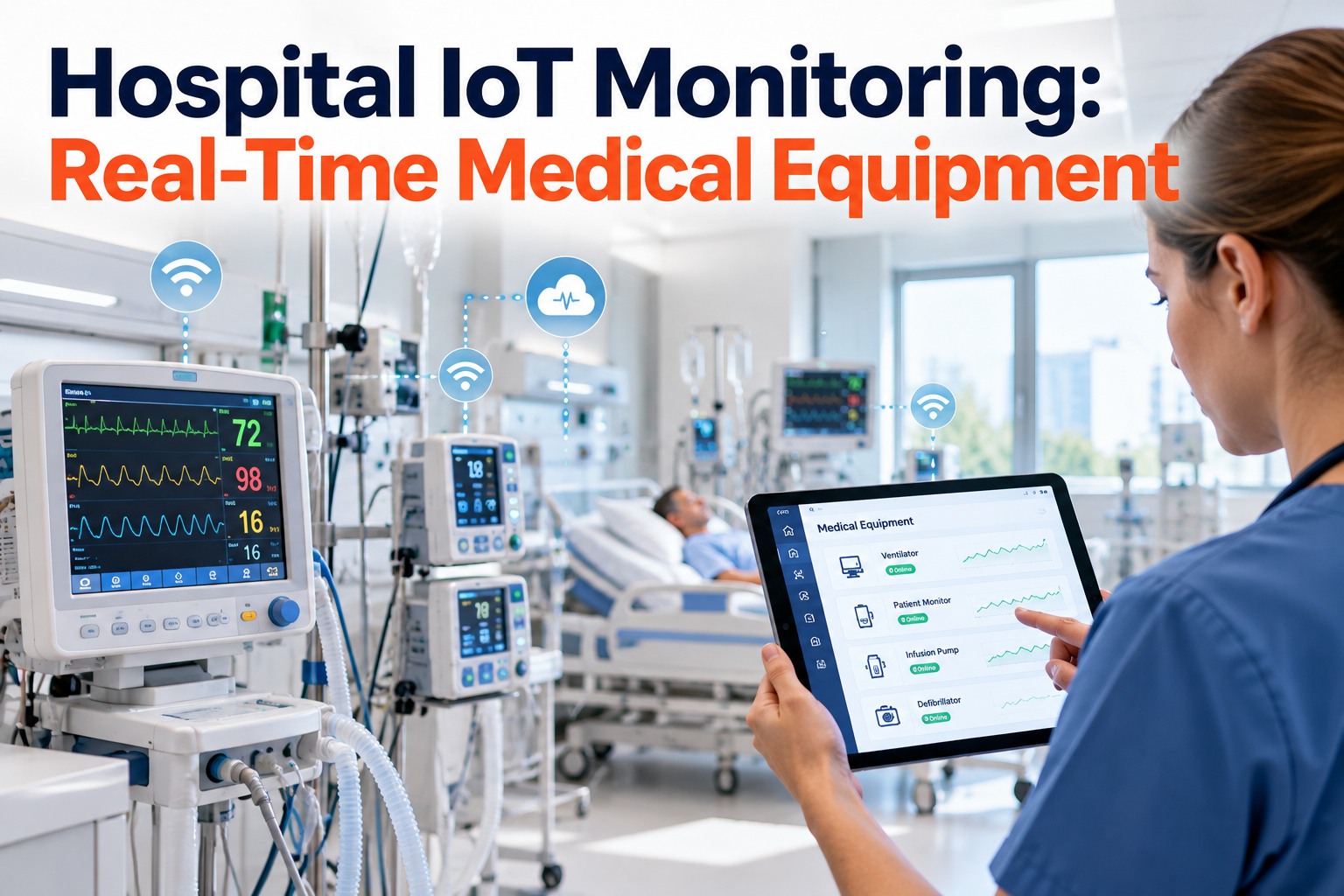
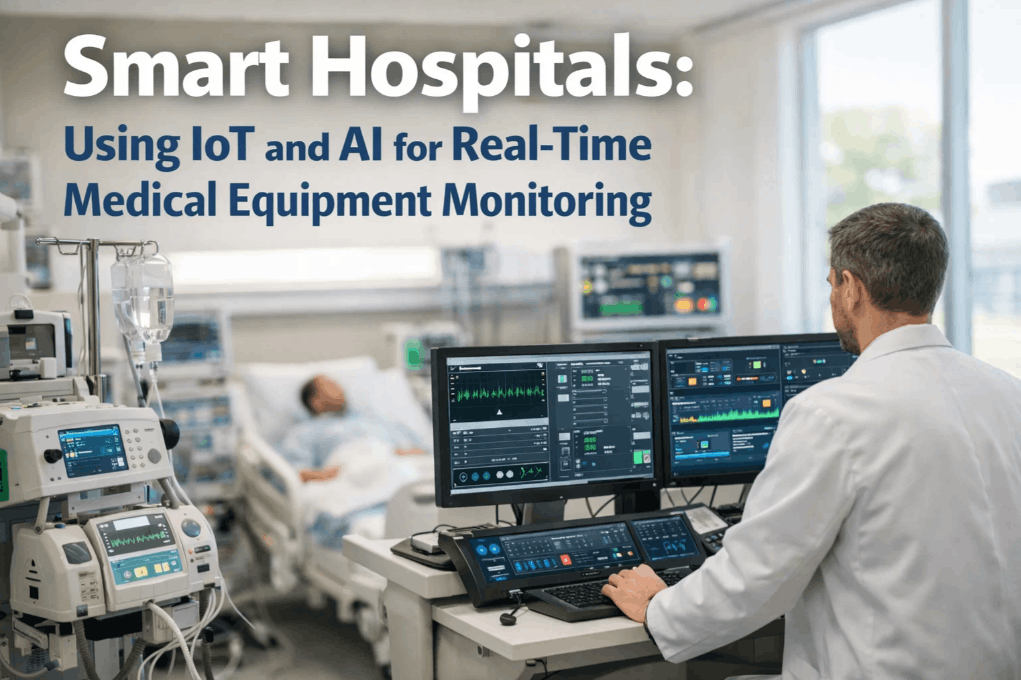
Oxmaint connects to IoT sensors and SCADA systems to pull real-time condition readings directly into each asset record. Temperature spikes, vibration anomalies, and pressure deviations are captured and logged automatically — turning raw data into actionable maintenance intelligence.
From Condition Alert to Work Order in Seconds
When a condition threshold is crossed, Oxmaint automatically creates a work order, assigns it to the appropriate technician, and begins tracking time-to-resolution. No manual intervention. No data is missed. Every alert becomes an action with a documented outcome.
Time, Usage, and Condition-Triggered PM in One System
Build maintenance schedules tied to calendar intervals, operating hours, production cycles, or real-time condition data — or any combination. Oxmaint supports all trigger types simultaneously, so hybrid maintenance strategies are easy to configure, manage, and report on across every site.
Every Action Logged With Technician Sign-Off
Planned and condition-triggered maintenance actions are logged with timestamps, part records, and digital technician sign-off. Joint Commission surveys, FDA audits, and internal compliance reviews are covered automatically — no paper chase before inspection day.
CBM vs Time-Based PM: The Full Comparison
A direct comparison across every dimension that matters to hospital maintenance operations, facility management, and healthcare compliance teams.
| Dimension | Time-Based Preventive Maintenance | Condition-Based Maintenance |
|---|---|---|
| Maintenance Trigger | Fixed calendar interval — 30, 90, or 180 days | Real-time sensor reading crossing a defined threshold |
| Failure Prediction | Limited — failures between PM intervals are not detected | High — degradation trends detected weeks before failure |
| Unnecessary Servicing | High — up to 40% of tasks performed on fine equipment | Low — maintenance only when equipment condition requires it |
| Implementation Complexity | Low — easy to schedule, widely understood by all teams | Moderate-High — requires sensors, IoT infrastructure, CMMS |
| Regulatory Compliance | Strong — recognized by TJC, FDA, and most manufacturers | Strong — when all condition-triggered actions are CMMS-documented |
| Cost Profile Over 5 Years | Predictable but includes 20–30% over-servicing waste annually | Higher upfront, significantly lower total cost over a 3–5 year horizon |
| Ideal Equipment Type | IV pumps, patient beds, portable diagnostics, lower-value assets | MRI, CT, HVAC, ventilators, autoclaves, surgical systems |
| Unplanned Downtime Risk | Moderate — failures still occur between scheduled checks | Low — condition trends intercepted and resolved proactively |
| Best Deployment Model | Compliance-governed assets, lower-criticality equipment | High-value, high-risk assets with detectable degradation signals |
The data points to a clear conclusion: time-based PM is the right foundation for compliance and lower-risk assets, while CBM delivers the highest return on high-value, failure-critical equipment. A hybrid strategy, managed in a single platform, closes every gap. To build your hospital's hybrid maintenance strategy, start a free 30-day trial with Oxmaint or book a demo with our healthcare maintenance specialists.
The ROI Case for Smarter Hospital Maintenance
These figures represent documented outcomes from hospitals and healthcare facilities that shifted from purely calendar-driven maintenance to data-informed strategies — supported by a CMMS that connects condition data to workflow.
Frequently Asked Questions
Is condition-based maintenance suitable for all hospital equipment?
No — and that clarity is important for building a realistic strategy. CBM delivers its highest ROI on high-value, high-criticality equipment with measurable degradation patterns: MRI systems, CT scanners, HVAC infrastructure, surgical robots, sterilization autoclaves, and ventilators. For lower-cost, lower-risk assets governed by manufacturer PM intervals — IV pumps, patient beds, portable diagnostic tools — time-based PM remains the appropriate and compliant approach. A hybrid model, applied with asset criticality as the primary filter, delivers the best outcomes across a full hospital asset registry.
Does condition-based maintenance satisfy hospital regulatory compliance requirements?
Not on its own for all asset classes. The Joint Commission, FDA, and most medical device manufacturers still require documented PM at defined intervals for certain equipment categories. CBM does not replace these mandates — it augments them. By monitoring asset condition between mandatory PM cycles, hospitals detect and address issues that scheduled checks alone would miss, improving both equipment safety and compliance documentation depth. Oxmaint supports both in one system, so every action — scheduled or condition-triggered — is captured in a single audit-ready record with full technician sign-off.
How do hospitals build the ROI case for condition-based maintenance investment?
The business case is most straightforward for high-value assets. A single avoided failure on an MRI system — which can cost $30,000 to $150,000 in emergency repair and lost scan revenue — can recoup the full cost of a CBM deployment. When combined with cumulative savings from eliminated over-servicing waste (20–30% of PM labor annually), reduced reactive repair premiums (4.8x multiplier), and extended asset useful life (15–25% longer under CBM), the ROI calculation becomes compelling even for mid-sized hospital facilities managing constrained maintenance budgets.
How does Oxmaint support a hybrid maintenance strategy across a hospital portfolio?
Oxmaint is built to manage both strategies in parallel within a single platform. Time-based PM schedules can be configured for compliance-governed and lower-risk assets, while condition thresholds are set for IoT-connected critical equipment — all managed from one interface. When a condition alert fires, Oxmaint automatically creates and assigns a work order. When a PM interval falls due, it is queued for the technician with the full asset maintenance history attached. Every action is logged with timestamps, part records, and digital sign-off — ready for any audit at any time. No dual systems. No data silos. One platform for your entire hospital asset portfolio. To see it live, start a free 30-day trial or book a demo with our healthcare maintenance team.
Make Every Maintenance Decision Count
Whether you manage a single hospital facility or a multi-site healthcare portfolio, Oxmaint gives your team the condition visibility, workflow automation, and audit-ready documentation to run a smarter, safer, and more cost-effective maintenance operation. No heavy implementation fees. No long onboarding cycles. Results from day one.



.jpg)
