Every unfilled OR slot, every over-crowded ED bay, and every idle recovery room is a quantified revenue loss — yet most hospital executives make space allocation decisions from floor plans that are months out of date and occupancy reports assembled manually the week before the board meeting. IoT-based space utilization monitoring closes that gap in real time, giving your facility operations team the data to right-size department footprints, eliminate scheduling waste, and justify capital decisions with documented utilization evidence — not assumptions. Start a free trial or book a strategy session to see how Oxmaint maps real-time occupancy across your facility.
Hospital space utilization optimization uses IoT occupancy sensors, real-time room monitoring, and department flow analytics to match physical capacity to actual clinical demand. Oxmaint connects sensor data to a live facility dashboard — giving VPs of Operations and CFOs the utilization evidence needed to redeploy underused space, reduce capital expenditure on expansion, and demonstrate efficiency to accreditation bodies and board-level stakeholders.
The Space Problem Costing Your Hospital Revenue Right Now
You likely already know that some departments are overcrowded while others sit half-empty. The problem is not space — it is the absence of data that proves it and enables action. Book a strategy session to see how Oxmaint surfaces your facility's utilization gaps within 30 days of deployment.
Operating rooms generating $2,000–$6,000 per hour sit unused between cases due to scheduling gaps that are invisible until reviewed retrospectively. Oxmaint's real-time occupancy data feeds directly into scheduling optimization — reducing turnaround gaps and recapturing billable procedure time without adding physical capacity.
Emergency department boarding — patients waiting for inpatient beds in ED bays — ties up acute care space while inpatient rooms elsewhere sit in a cleaning or administrative hold. Oxmaint's real-time bed and room status monitoring eliminates the lag between room availability and bed assignment, compressing boarding time and reducing LWBS (left without being seen) rates that directly impact revenue and Press Ganey scores.
Post-pandemic hybrid work patterns leave physician offices, administrative suites, and conference rooms occupied at 20–35% of their licensed capacity — yet capital plans still budget for expansion of those same footprints. Oxmaint occupancy data gives your CFO the utilization evidence to defer or redirect capital spending based on documented room-level occupancy, not departmental headcount assumptions.
Joint Commission Environment of Care standards and CMS Conditions of Participation require documented space management evidence — including occupancy loads, evacuation capacity, and infection control zone utilization records. Manual tracking creates audit exposure. Oxmaint auto-generates the occupancy utilization logs, department flow records, and room-status audit trails required for Joint Commission surveys and state health department facility reviews.
Your Space Data Should Drive Decisions — Not Justify Them After the Fact
Oxmaint's IoT-connected facility platform gives hospital executives a live view of occupancy, room status, and department flow — replacing outdated floor plan assumptions with documented utilization evidence. Book a 30-minute strategy session to see your facility's utilization gap quantified.
What Oxmaint Delivers Across Your Facility
Each capability is designed for a specific operational or financial outcome — not for the sake of technology adoption.
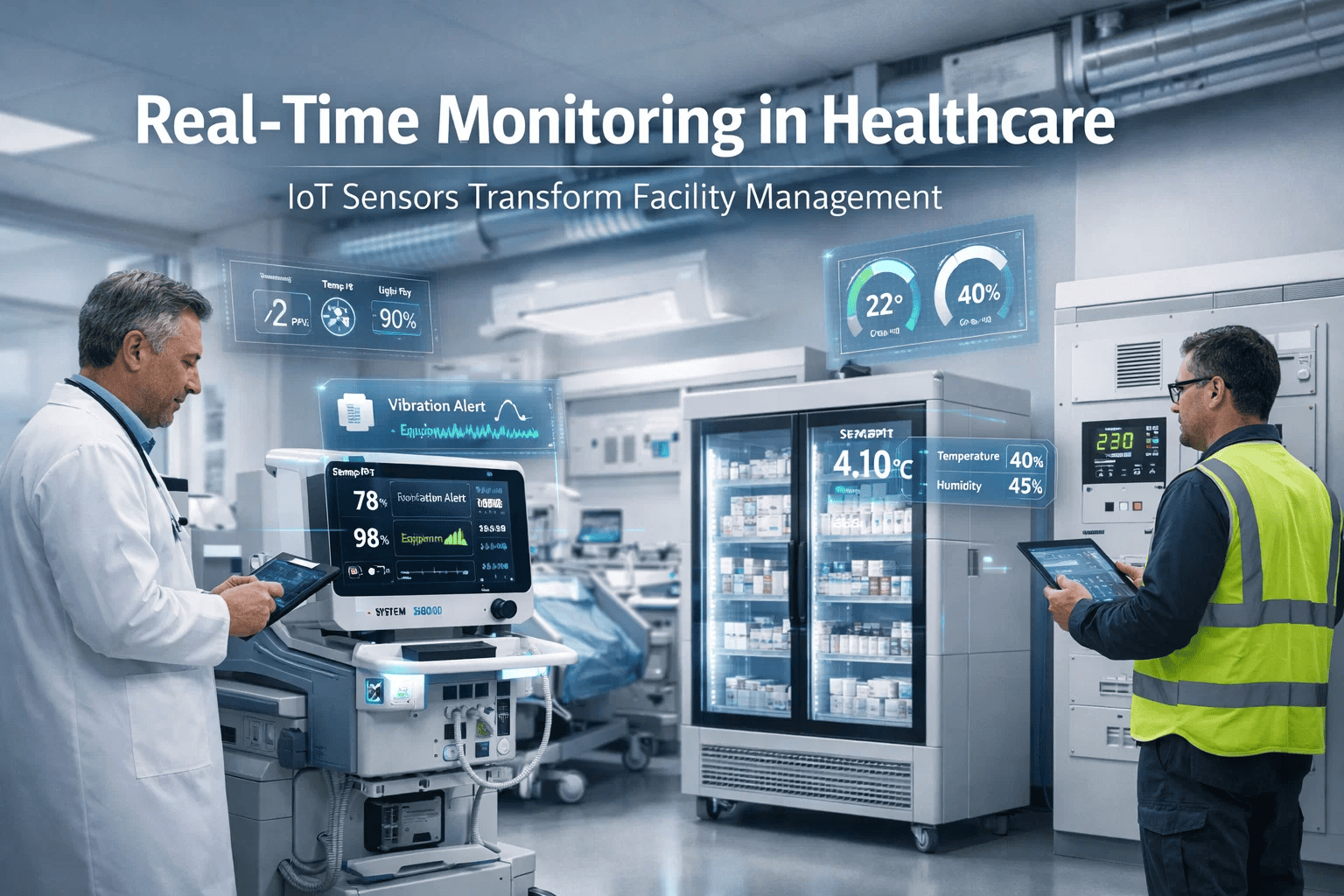
Live occupancy status across every department — OR suites, ED bays, inpatient rooms, ICU beds, outpatient clinics, and administrative areas — updated continuously from IoT sensors. Your ops team acts on current data, not yesterday's booking report.
Peak demand curves, hourly utilization heatmaps, and bottleneck identification by department — giving your VP of Operations the evidence to rebalance staffing schedules and space allocation around documented patient flow patterns rather than historical assumptions.
Case-by-case utilization logs, turnaround time tracking, and idle time alerts for every OR and procedure suite. Gives your surgical services director and CFO the data to negotiate block scheduling changes, recover revenue leakage, and prioritize high-demand specialties in space allocation planning.
Joint Commission Environment of Care, CMS, and state health department facility records auto-generated from Oxmaint sensor data. Audit packages assembled in under 2 hours — not 3 weeks of manual record gathering before the surveyor arrives.
12-month utilization trend reports by department, floor, and building — exportable in formats your CFO and board need for capital investment decisions. Replace "we feel we need more space" with "utilization data shows we need 8,000 sq ft reallocated, not built."
Real-time occupancy load tracking against infection control zone thresholds — with automatic alerts when patient density in isolation corridors, procedure rooms, or waiting areas approaches protocol limits. Documented compliance evidence for IPAC reviews and Joint Commission infection control tracers.
Deployment Roadmap — From Sensor Installation to Executive Dashboard
Every room, bay, suite, and zone registered in Oxmaint's facility asset hierarchy — categorized by department, utilization type, accreditation zone classification, and revenue-generating status. IoT sensor placement mapped per room type with installation coordinated around patient care schedules. No downtime, no IT infrastructure changes required.
Real-time occupancy feeds activated in Oxmaint — with executive, department director, and facilities manager views configured for role-appropriate data scope. Utilization threshold alerts configured per department: idle OR alerts, ED bay boarding alerts, and infection control zone density warnings delivered to designated roles without manual monitoring. Book a demo to see the live dashboard configured for your department structure.
30-day utilization baseline established per department — with peak demand analysis, underutilization identification, and reallocation opportunity reports delivered to VP of Operations and CFO. Capital planning evidence package configured for board-ready presentation formats. OR utilization gap analysis produced for surgical services leadership review.
Joint Commission Environment of Care and CMS facility utilization records exportable on demand — no manual assembly before surveys. Quarterly utilization trend reports flagging space reallocation opportunities. Integration with CMMS work order system so space modifications, room reconfigurations, and infrastructure maintenance are tracked against utilization outcomes.
Space Utilization KPI Benchmarks — Healthcare Sector
Operational Results — Hospitals Using Oxmaint Space Analytics
See Your Hospital's Utilization Gap Quantified in 30 Days
The revenue and capital opportunity in your existing space is already there. Oxmaint makes it visible, measurable, and actionable — without an IT project, without a consultant engagement, and without disrupting patient care. Book a 30-minute strategy session with our healthcare facility team.
Frequently Asked Questions
Your Space Is Already Generating or Wasting Revenue — Oxmaint Tells You Which
IoT-connected space utilization monitoring, real-time department flow analytics, OR performance tracking, and accreditation-ready utilization records — live across your facility within 6 weeks, no infrastructure project required. Book a strategy session with our healthcare facility team and receive a facility-specific utilization ROI analysis in your first meeting.