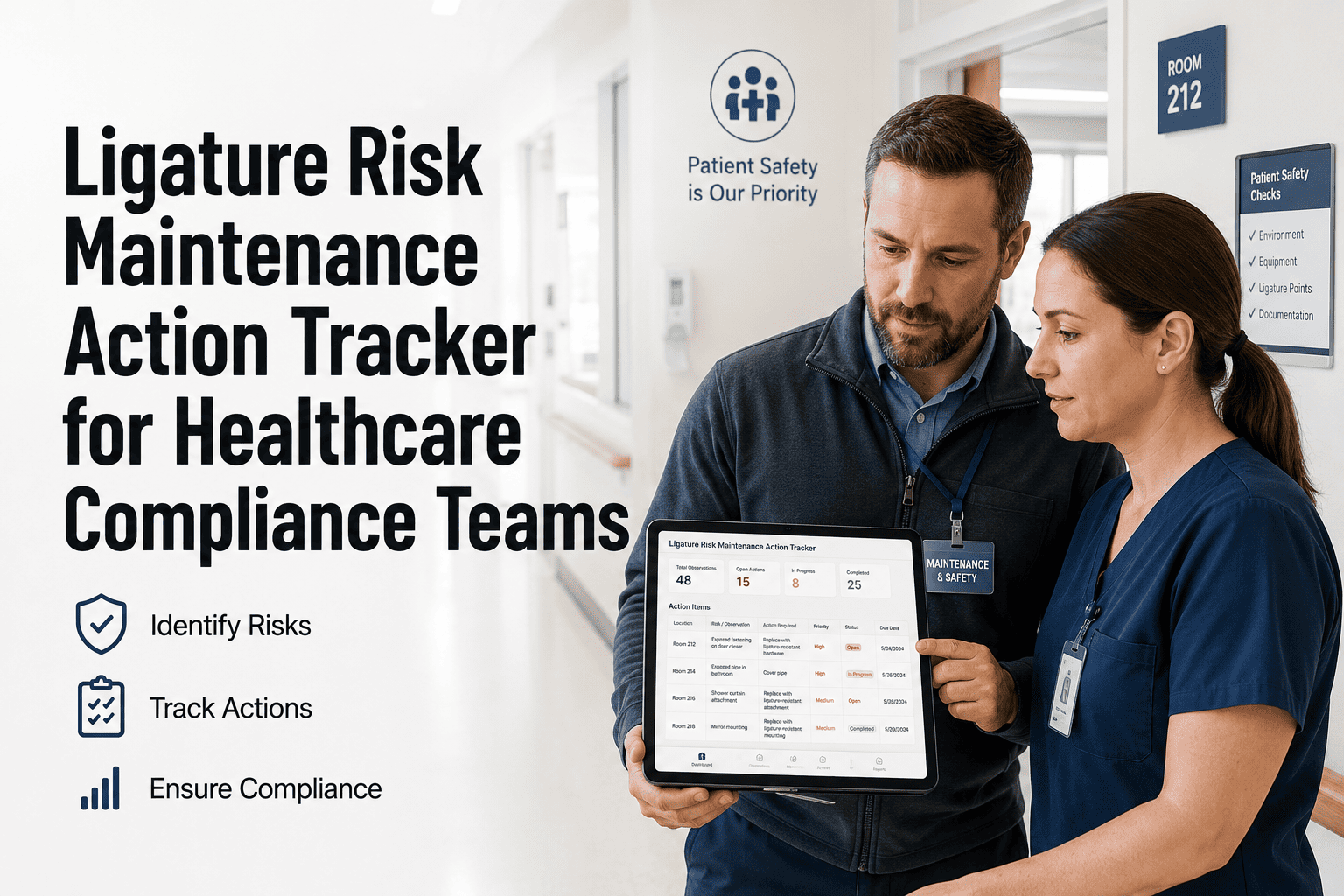
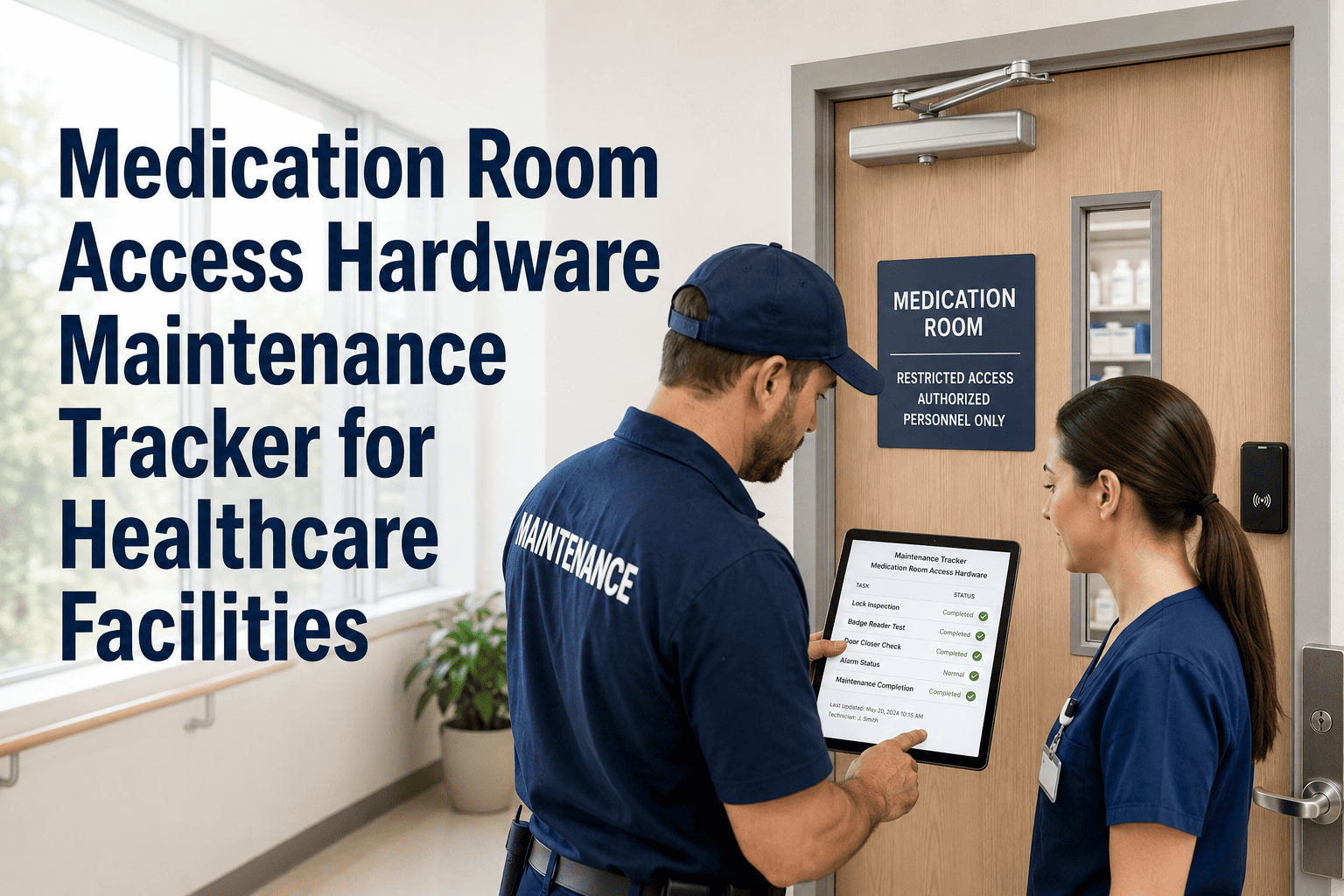
Your behavioral health facility passed its last Joint Commission survey. The anti-ligature risk assessment was filed. The preventive maintenance schedule exists in a spreadsheet. The ligature-resistant hardware was installed two years ago — and has not had a documented inspection since. That gap is not a paperwork problem. It is a patient safety liability and a CMS Conditions of Participation exposure that no behavioral health VP can afford to leave unmanaged in 2025. Oxmaint closes it — digitizing every ligature risk inspection, every anti-barricade hardware check, every safety glazing verification, and every environmental risk record into a single audit-ready system deployed across your entire behavioral health portfolio. Book a Strategic Safety Audit Session to see exactly where your facility's documentation gaps are — before a CMS surveyor does.
Mental health and behavioral health facilities carry a unique maintenance obligation that general CMMS platforms are not configured to manage: ligature risk point inspections across patient rooms, seclusion spaces, bathrooms, and corridors; anti-barricade hardware verification on all patient-accessible doors; safety glazing condition records; and environmental safety risk assessment (ESRA) documentation required by CMS and The Joint Commission. Oxmaint digitizes every one of these inspection categories — generating scheduled work orders, capturing field sign-off on mobile, and building the continuous audit trail that surveyors require. Deployed across your behavioral health network in 4 to 6 weeks, no IT project required.
The Four Safety Systems Where Behavioral Health Facilities Carry the Highest Compliance Risk
Each system has a specific CMS and Joint Commission documentation obligation — and a specific failure mode when that documentation is managed on paper or in disconnected spreadsheets. Book a Strategic Safety Audit Session to see how Oxmaint structures all four into a unified compliance program.
Every patient room, bathroom, seclusion room, corridor, and common area in an inpatient psychiatric or behavioral health unit contains potential ligature attachment points — door hinges, plumbing fixtures, window hardware, bed frames, towel bars, and lighting fixtures. CMS directed inpatient psychiatric facilities to address ligature risk as part of the Conditions of Participation requirement that all hospitals provide care in a safe setting. The obligation is not a one-time renovation — it is a continuous documented inspection program. Oxmaint schedules ligature risk inspections by room type and zone, captures inspector sign-off and photographic evidence on mobile, and flags unresolved findings for escalation before the next survey cycle.
Patient-accessible doors throughout behavioral health units require anti-barricade hardware specifically designed to prevent patients from obstructing staff entry in a psychiatric emergency. This hardware must be inspected on a defined schedule — verifying function, resistance to tampering, and structural integrity. Anti-barricade door hardware that fails silently between inspections creates both a life-safety risk and a documented maintenance program deficiency. Oxmaint generates door hardware inspection work orders by wing and floor, routes them to the appropriate technician, and captures pass/fail status with technician identity and timestamp — building the continuous record TJC surveyors require.
Windows, observation panels, and interior glazing in high-risk zones — patient rooms, seclusion suites, bathrooms — must be safety-rated, impact-resistant, and free of breakage, delamination, or surface damage that could create a self-harm instrument. Walls in behavioral health settings require documented condition assessments to confirm they cannot be cracked or splintered into sharp pieces. These are not static post-installation certifications — they are recurring inspection obligations. Oxmaint structures glazing and surface condition inspections into scheduled PM work orders, captures inspection evidence by room and zone, and flags degraded surfaces for immediate corrective work orders before they become survey findings.
CMS formalized the environmental safety risk assessment framework for psychiatric units in QSO 18-21 — requiring facilities to conduct, document, and act on systematic ESRA reviews covering every patient care area. The ESRA matrix categorizes spaces by patient supervision level and identifies required safety feature specifications per zone. Most behavioral health facilities complete an ESRA at accreditation — and then have no documented process for verifying that identified mitigations remain in place on an ongoing basis. Oxmaint converts ESRA findings into recurring inspection work orders by zone, tracks mitigation status, and generates the continuous record required to demonstrate ongoing compliance between survey cycles.
Every Ligature Risk Zone. Every Anti-Barricade Door. Every Safety Glazing Panel. Documented and Escalated Automatically.
Oxmaint generates inspection work orders by room, zone, and risk category — completing the documentation in the field at the point of inspection, not reconstructed from memory before the next survey. Book a Strategic Safety Audit Session to see the inspection workflow configured for your behavioral health unit layout.
Current State vs. Future State: Behavioral Health Facility Safety Documentation
The operational and compliance gap between paper-based and digital safety management in behavioral health facilities is measurable — in survey preparation time, in citation exposure, and in the cost of avoidable corrective action cycles.
| Safety Documentation Area | Current State — Paper / Disconnected Systems | Future State — Oxmaint Digital Safety Management |
|---|---|---|
| Ligature risk inspection scheduling | Performed ad hoc before surveys — no ongoing documented schedule | Recurring PM work orders generated automatically by room type and zone on defined frequency |
| Anti-barricade hardware verification | Annual contractor inspection only — no interim facility-level records | Quarterly technician inspections with digital pass/fail, timestamp, and technician identity per door |
| Safety glazing condition records | Installation certification on file — no post-installation inspection record | Scheduled surface condition inspections with photographic evidence archived per room and zone |
| ESRA mitigation tracking | ESRA completed at survey — findings not converted to ongoing inspection tasks | ESRA findings converted to recurring work orders — mitigation status tracked continuously with escalation alerts |
| Survey preparation timeline | 3 to 6 weeks of manual record assembly before each TJC or CMS survey | Complete audit package assembled from Oxmaint in under 2 hours at any point in the survey cycle |
| Corrective action tracking | Findings logged in email threads — no systematic closure tracking or escalation | Corrective actions routed, tracked, and escalated automatically — average closure reduced from 47 to 12 days |
| Multi-facility visibility | No portfolio-level view — each facility manages documentation independently | VP-level dashboard showing compliance status, overdue inspections, and open findings across every facility in the network |
| Unannounced survey readiness | 60 to 90 days of preparation required to achieve survey-ready documentation state | Continuous survey-ready state maintained by design — no preparation scramble required |
Oxmaint Implementation Roadmap — Behavioral Health Facilities
A structured 6-week deployment moves your behavioral health network from fragmented paper records to a fully operational digital safety management system — without disrupting active patient care areas or existing inspection protocols.
Every patient room, seclusion suite, bathroom, corridor zone, and common area registered in Oxmaint's asset hierarchy with its ESRA risk category, required inspection type, and regulatory standard reference. Anti-ligature hardware inventory built by room. Anti-barricade door hardware registered by wing and floor. Safety glazing panels catalogued by location and installation date. Existing ligature risk assessments and ESRA matrices used as the baseline input to pre-populate the Oxmaint inspection register. Book a Strategic Safety Audit Session to see how your existing ESRA documentation maps into the Oxmaint registry.
Ligature risk inspection checklists, anti-barricade hardware verification forms, safety glazing condition records, and ESRA zone confirmation templates configured as mobile-first digital work orders in Oxmaint. Field technicians access inspections by scanning QR-coded room tags — no paper, no manual routing, no missing signatures. Photographic evidence captured at the inspection point and archived automatically against the room record. Corrective work orders generated directly from failed inspection items — no manual handoff required.
Oxmaint compliance dashboard activated showing ligature risk inspection currency, anti-barricade hardware verification status, open corrective action counts, and ESRA mitigation completion rates — by facility and at the portfolio level. VP and Director views configured with multi-facility scope. Automated escalation alerts when inspection frequencies are overdue or when open findings exceed defined age thresholds. Audit-ready export packages tested against the evidence format required for TJC EC.02.06.01, CMS QSO 18-21, and state behavioral health licensure surveys. Book a Strategic Safety Audit Session to see the dashboard configured for your portfolio structure.
ESRA Documentation. Ligature Risk Tracking. Anti-Barricade Hardware Records. One System. Continuous Survey Readiness.
Behavioral health VPs running multi-facility portfolios use Oxmaint to maintain a continuous survey-ready documentation state — eliminating the pre-survey scramble and the citation exposure that comes with gaps in the ongoing inspection record. Book a Strategic Safety Audit Session to see multi-facility compliance visibility for your behavioral health network.
Clinical Impact — How Oxmaint Changes Operational Outcomes Across Your Behavioral Health Portfolio
The operational impact of digital safety management in behavioral health facilities extends beyond survey compliance — into patient safety outcomes, workforce efficiency, and capital planning visibility.
Continuous documented ligature risk inspections eliminate the silent deterioration of anti-ligature fixtures between surveys — the precise failure mode documented in the majority of CMS Immediate Jeopardy citations at inpatient psychiatric facilities. Every inspection on record. Every unresolved finding escalated automatically.
Continuous audit-ready documentation eliminates the $2–5M annual Medicare and Medicaid reimbursement exposure that CMS Conditions of Participation violations create for inpatient psychiatric facilities. Oxmaint provides the evidence record that transforms a potential citation into a documented corrective action already closed.
Structured mobile inspection workflows eliminate the unproductive time technicians spend locating paper forms, transcribing field observations, and chasing supervisor signatures. Inspection time is spent at the equipment — not at a desk. Average productive field time increases 30 to 40 percent in the first 90 days post-deployment.
VPs and Directors running networks of behavioral health facilities gain a single dashboard view of inspection currency, open findings, and corrective action status across every site — without waiting for facility-level reports that arrive days before the survey. Real-time visibility replaces quarterly reporting cycles.
The 3 to 6 weeks of pre-survey record assembly that consumes facility management teams before every TJC triennial or CMS inspection is eliminated by design. Oxmaint maintains a continuous audit-ready documentation state — the complete evidence package is assembled in under 2 hours at any point in the compliance cycle.
Anti-ligature hardware, safety glazing, and impact-resistant surface condition data collected in Oxmaint over time builds the asset deterioration trend that finance and facilities leadership need to plan proactive capital renovation cycles — rather than responding to surveyor-mandated emergency upgrades on compressed timelines.
Safety Management KPI Benchmarks — Behavioral Health Facilities
Results — Behavioral Health Facilities Using Oxmaint
Outcomes drawn from behavioral health and inpatient psychiatric facility deployments where Oxmaint replaced paper-based ligature risk, anti-barricade, and safety inspection programs within the first year.
From 58% to 96% Inspection Compliance. Zero TJC Findings. In 90 Days.
Behavioral health facilities that move from paper inspection records to Oxmaint close the documentation gap before the next CMS or Joint Commission survey — eliminating the citation exposure and the emergency corrective action cost that comes after. Book a Strategic Safety Audit Session to identify your current compliance gap in the first session.
Oxmaint Platform Capabilities — Behavioral Health and Psychiatric Facilities
Room-level and zone-level ligature risk inspection work orders generated automatically on defined frequency — covering patient rooms, seclusion suites, bathrooms, and corridors with inspection checklists pre-configured for each space type.
Door-level hardware inspection records with technician identity, timestamp, pass/fail status, and corrective action routing — covering every patient-accessible door in the unit, with automatic escalation when hardware fails functional testing.
Environmental Safety Risk Assessment findings converted directly into recurring PM work orders — each finding tracked from identification through closure with automated escalation when mitigation deadlines are missed or inspections become overdue.
Every safety-rated glazing panel, impact-resistant surface, and tamper-resistant fixture registered with inspection schedule, condition history, and photographic documentation — available to surveyors on demand without physical file retrieval.
VP and Director-level visibility across every facility in the behavioral health network — inspection compliance rates, open corrective actions, overdue mitigation counts, and survey-readiness scores by site, updated in real time without manual reporting cycles.
Complete survey evidence packages — ligature risk inspection logs, hardware verification records, ESRA mitigation history, and corrective action closure documentation — exportable in the format CMS and Joint Commission surveyors require, assembled in under 2 hours at any point in the compliance cycle.
Frequently Asked Questions
Close the Behavioral Health Safety Documentation Gap — Before the Next Survey
Digital ligature risk inspections, anti-barricade hardware tracking, ESRA mitigation management, and CMS-ready audit exports — all live in Oxmaint within 4 to 6 weeks, no IT project required. Book a Strategic Safety Audit Session with your behavioral health facility management team and see the full inspection workflow configured for your patient unit layout, campus structure, and survey schedule.