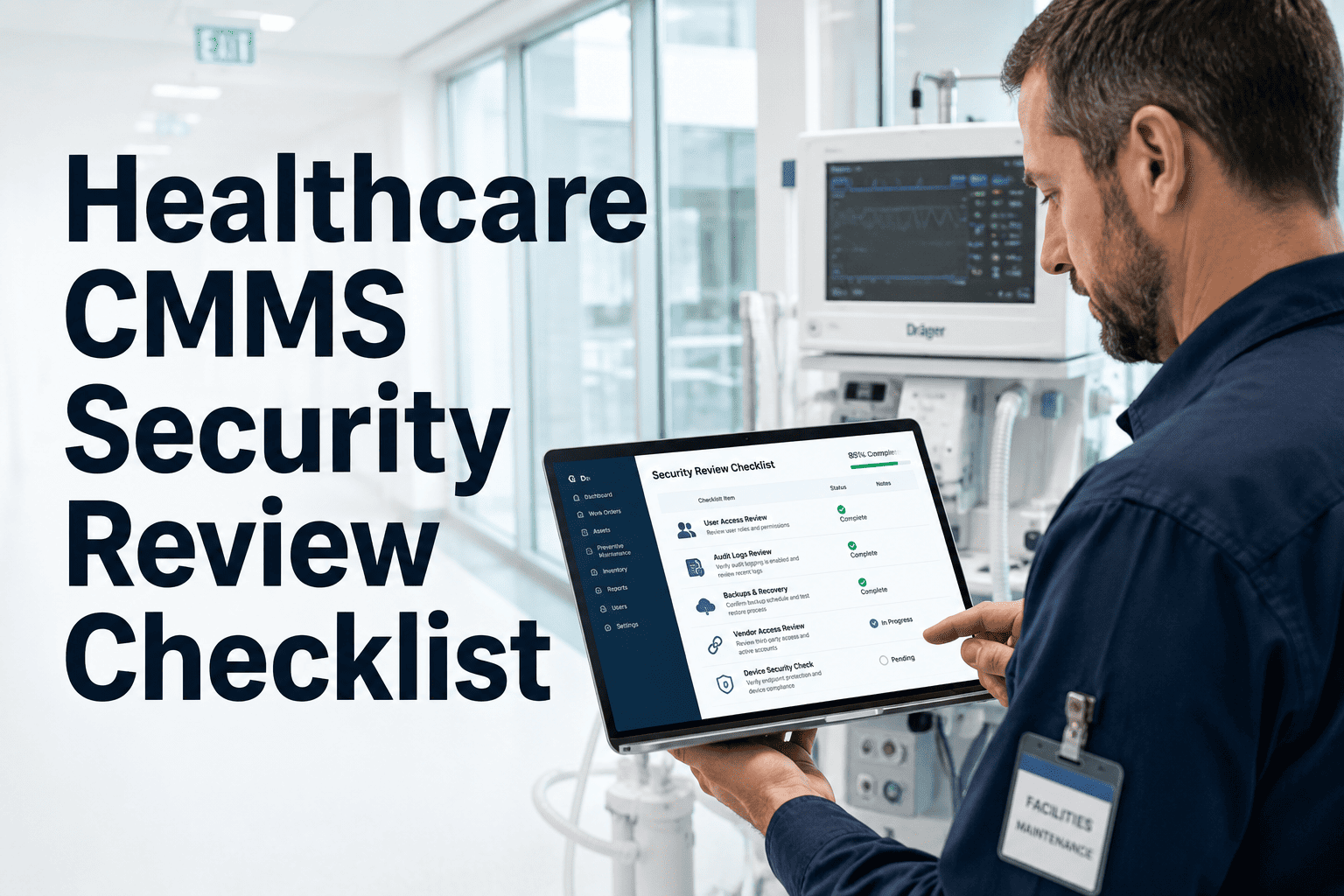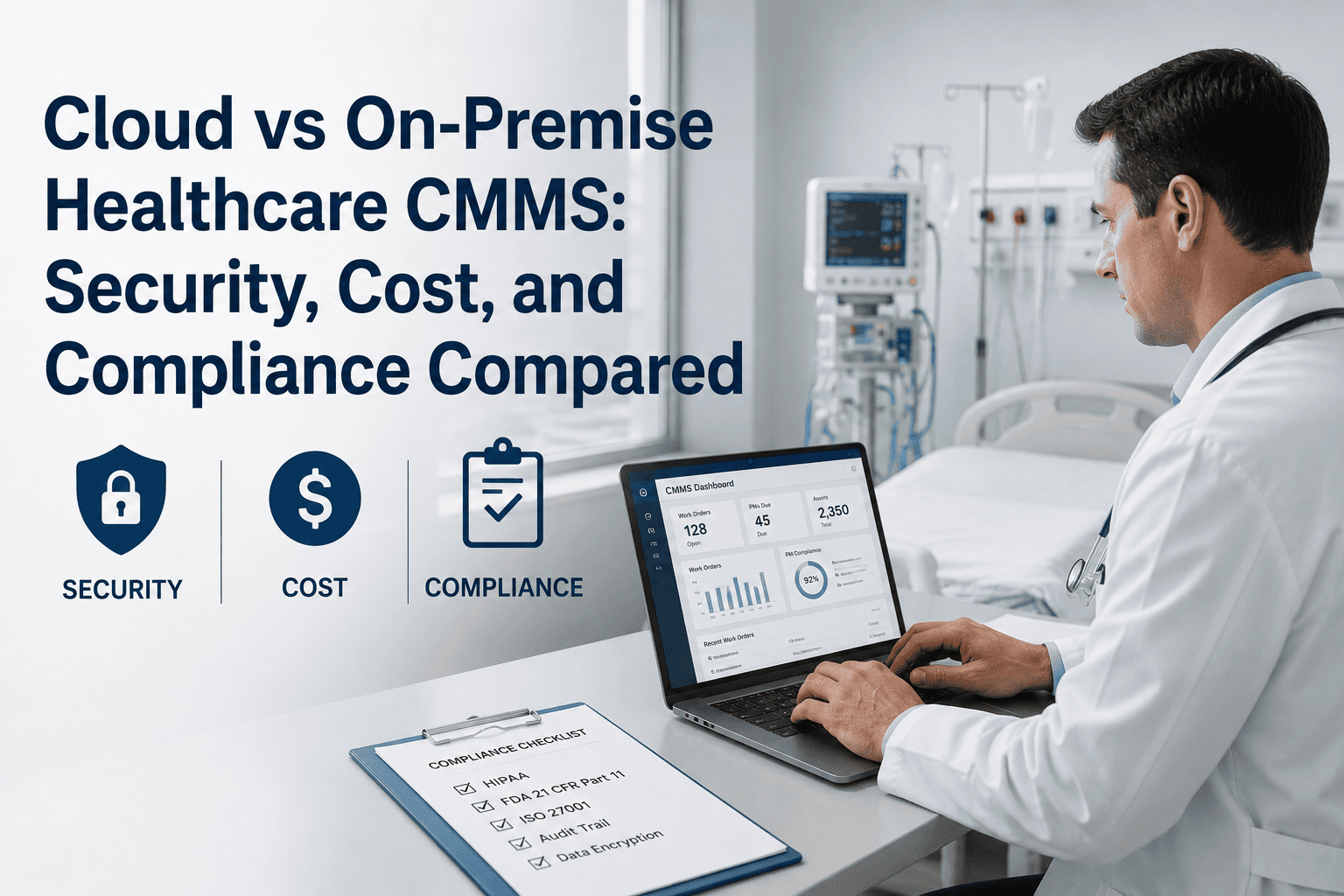
Healthcare organizations face a compliance blind spot that most legal and compliance teams don't see until an OCR investigator does: the maintenance layer. Every biomedical technician entering a patient room, every contractor servicing a connected infusion pump, every HVAC vendor accessing a pharmacy — these activities generate access records, equipment logs, and service data that fall squarely under HIPAA's physical and technical safeguard requirements. When those records exist on paper clipboards and shared spreadsheets, the exposure is not theoretical. OCR resolution agreements routinely cite access control failures and missing Business Associate documentation sourced directly from facility maintenance systems. Oxmaint eliminates that exposure. Book a 30-minute executive briefing to see exactly where your maintenance data creates HIPAA liability — and how Oxmaint closes it.
HIPAA liability in maintenance operations concentrates in four areas: equipment records in patient treatment zones, facility access logs during maintenance entry, connected medical device service documentation, and contractor Business Associate Agreement tracking. Most healthcare organizations manage all four on paper or in disconnected spreadsheets — creating audit trail gaps that OCR investigators find, Joint Commission surveyors flag, and cyber liability insurers increasingly penalize. Oxmaint digitizes and automates the entire maintenance compliance layer in six weeks.
Where HIPAA Risk Lives in Your Maintenance Operation
Four data categories in your maintenance operation carry direct HIPAA liability. Each has a documented OCR penalty history. Each is routinely mismanaged on paper.
Service records that log room numbers, bed identifiers, or unit designations alongside device serial numbers create PHI-adjacent data requiring HIPAA physical safeguard controls. Without documented access restrictions and audit trails on these records, your maintenance system is a compliance gap waiting for an OCR inquiry.
Every maintenance technician entry into a clinical area, pharmacy, or restricted treatment zone must generate a documented, identity-verified access log. Paper gatehouse registers fail this requirement. OCR auditors treat the absence of a systematic facility access control record as a willful safeguard violation.
Infusion pumps, patient monitors, ventilators, and nurse call systems connected to hospital networks are covered by HIPAA technical safeguard requirements. Service records for these devices require access controls, audit controls, integrity controls, and encrypted transmission — obligations that spreadsheet-based biomedical records cannot satisfy.
Every third-party biomedical engineer, HVAC contractor, elevator vendor, and OEM service technician accessing patient areas is a Business Associate. A missing or expired BAA at the time of access is a §164.308(b)(1) violation — regardless of whether a breach occurred. Most large-breach OCR investigations cite undocumented BA relationships as a contributing factor.
Most Healthcare Organizations Don't Know Their Maintenance Compliance Gap Until OCR Does
Oxmaint runs a maintenance compliance gap assessment in the first deployment session — identifying undocumented vendor BAAs, access log failures, and device audit trail gaps before they appear in an investigation. Book an executive briefing to see your facility's current exposure identified in real time.
What Changes When Oxmaint Replaces Paper Maintenance Records
| HIPAA Documentation Area | Current State — Paper Systems | After Oxmaint |
|---|---|---|
| Patient area access log for OCR | 4–6 days searching gatehouse registers — records often incomplete or illegible | Under 10 minutes from Oxmaint audit trail — identity, timestamp, area, purpose captured automatically |
| Vendor BAA currency at time of work order | Not verified — expired BAAs routinely discovered post-access or post-investigation | Hard gate — work order cannot be assigned until BAA is confirmed current in Oxmaint |
| Connected device service audit trail | Departmental spreadsheets — no centralized 6-year archive, no access controls | Encrypted, role-restricted per-device audit trail with automatic HIPAA 6-year retention |
| OCR investigation response preparation | 3–4 weeks of manual cross-department record assembly under investigation pressure | 2-hour automated export — complete, formatted, auditor-ready |
| Joint Commission EC survey readiness | 3–4 weeks of pre-survey document gathering — high internal labor cost every cycle | Continuous readiness — survey package exportable at any time in under 2 hours |
| HIPAA corrective action closure | Average 52 days — no escalation visibility, no tracking across departments | Average 10 days — automated escalation at day 15, closure documented in Oxmaint |
The Financial Case for HIPAA Maintenance Compliance Investment
At $32K–$55K Per Year, Oxmaint Pays Back on the First OCR Finding It Prevents
A single resolution agreement averages $1.9M to $6.5M. The Joint Commission EC survey preparation cycle costs $60K–$120K in internal labor each time. Oxmaint eliminates both exposures. Book an executive briefing to build the compliance ROI case for your next budget approval.
Oxmaint vs Competing CMMS Platforms — Healthcare HIPAA Compliance
General-purpose CMMS platforms manage work orders. They were not designed for HIPAA-compliant access logging, BAA enforcement, or connected medical device audit trail management.
| HIPAA Capability | Oxmaint | MaintainX | UpKeep | Fiix | Limble | IBM Maximo | Hippo CMMS | Infor EAM |
|---|---|---|---|---|---|---|---|---|
| PHI-adjacent equipment access controls | Yes | No | No | No | No | Custom | No | Custom |
| Patient area access log — identity + timestamp | Yes | Generic | No | No | Generic | Yes | Generic | Yes |
| BAA gate on work order assignment | Yes | No | No | No | No | Yes | No | Partial |
| Connected device HIPAA audit trail | Yes | No | No | No | No | Custom | No | Custom |
| 6-year retention enforced automatically | Yes | No | No | No | No | Custom | No | Custom |
| OCR audit export in under 2 hours | Yes | Partial | Partial | Partial | Partial | Yes | Partial | Yes |
| Joint Commission EC documentation | Yes | Generic | No | No | No | Yes | No | Partial |
| Deployment without IT project or consultant | Yes | Yes | Yes | Varies | Yes | No | Yes | No |
Frequently Asked Questions — Executive Level
Close the HIPAA Maintenance Gap Before the Next OCR Investigation
HIPAA-compliant maintenance records, BAA contractor tracking, connected device audit trails, and Joint Commission EC documentation — operational in 6 weeks, no IT project required. The compliance gap in your maintenance operation exists today. Book a 30-minute executive briefing with your compliance and facilities leadership and see the full liability picture — and how Oxmaint closes it.