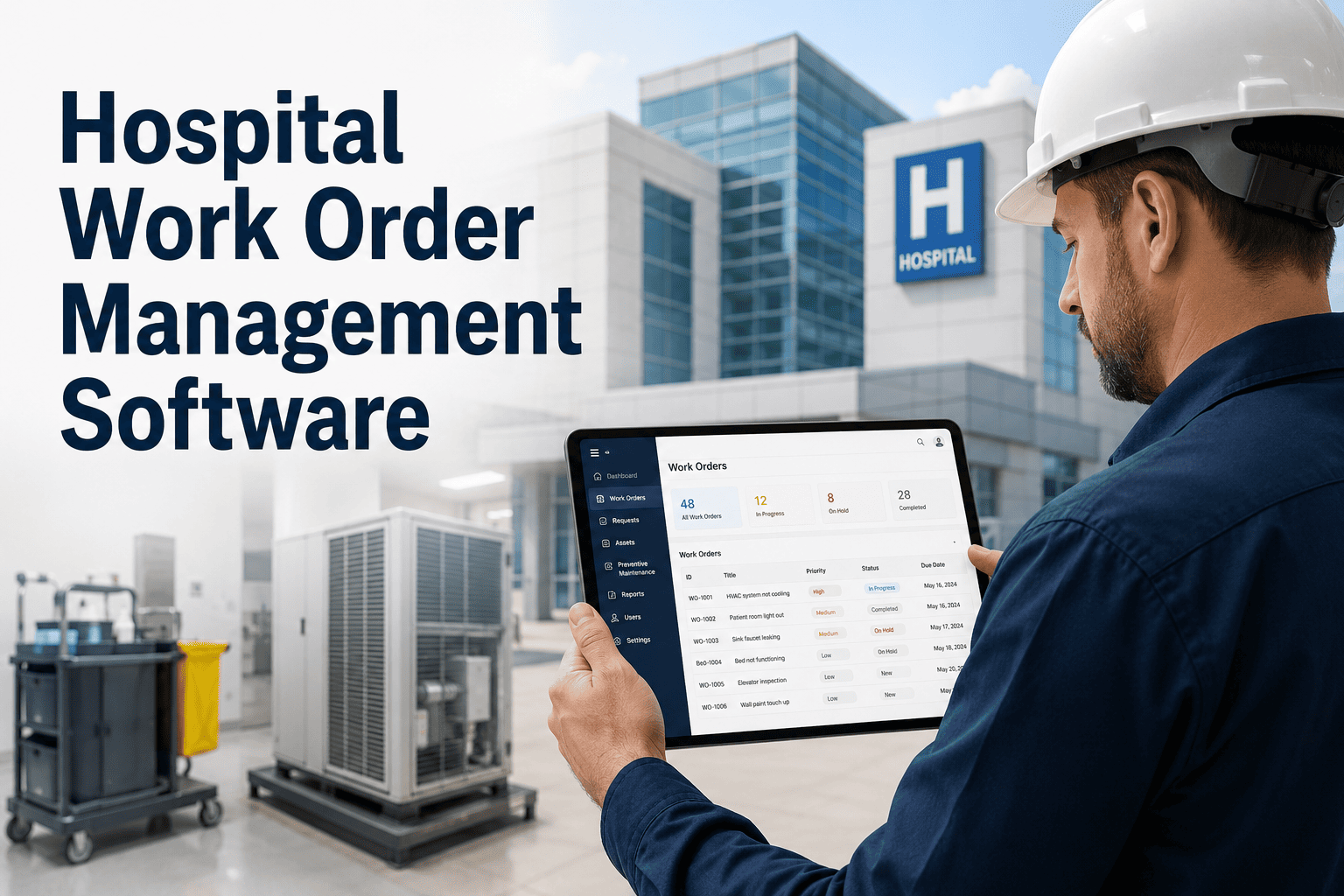
In most hospitals, a maintenance request still travels a broken path: a nurse calls the maintenance office, someone writes it on a whiteboard or sticky note, the job eventually gets assigned, and three days later no one is certain whether it was actually completed or just forgotten. That gap between request and resolution — untracked, undocumented, and invisible to management — is not a minor workflow inefficiency. It is a patient safety risk, a Joint Commission liability, and a direct cost to the department budget every single time. Facilities using digital work order management with automated dispatch and SLA timers close high-priority jobs 60 to 80 percent faster than those still relying on phone calls and paper logs. OxMaint gives hospital facilities teams a mobile-first work order platform where every request is captured, prioritized, tracked, and documented from first submission through technician sign-off — with SLA timers, QR asset scans, and compliance-ready audit trails that are always current.
Hospital Work Order Management Software That Closes Jobs, Not Just Tickets
Mobile submission, QR asset scanning, SLA tracking, and automated technician dispatch — from the moment a request is logged to the second it is closed and documented.
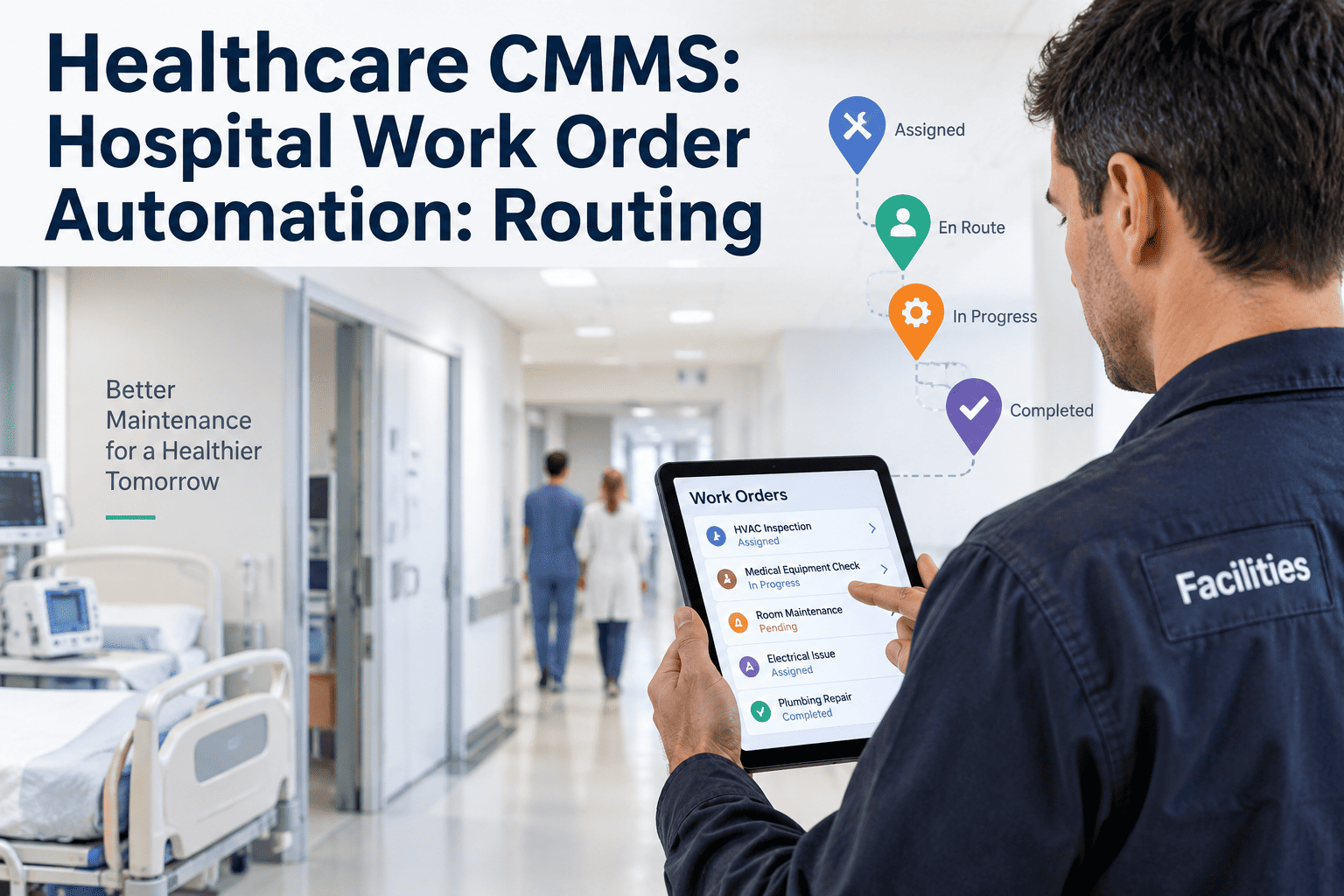
How a Work Order Moves Through OxMaint in a Hospital
Nurses, clinicians, housekeeping, or anyone on staff scans a QR code at the asset or submits from any smartphone — photo attached, location tagged, asset identified. No calls to the maintenance desk.
4-tier priority system assigns Critical, High, Medium, or Low automatically based on asset type and department. SLA timers start immediately. No manual triage queue.
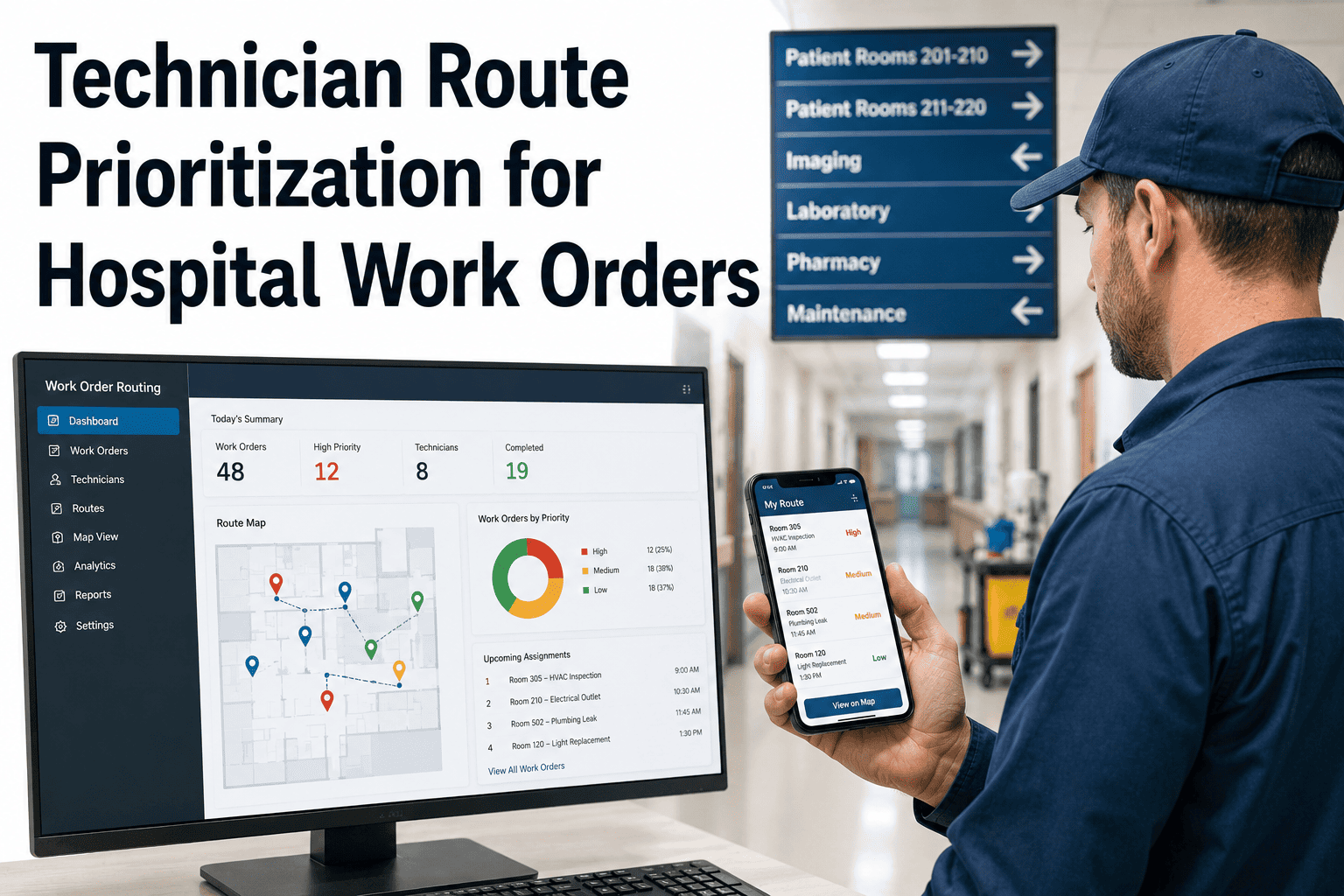
Work order routes to the technician with the correct certification, current availability, and closest proximity. Assignment is pushed to their mobile device instantly.
Technician pulls up the asset history, completes the job, photographs the result, records parts used, and signs off digitally — all without returning to the office.
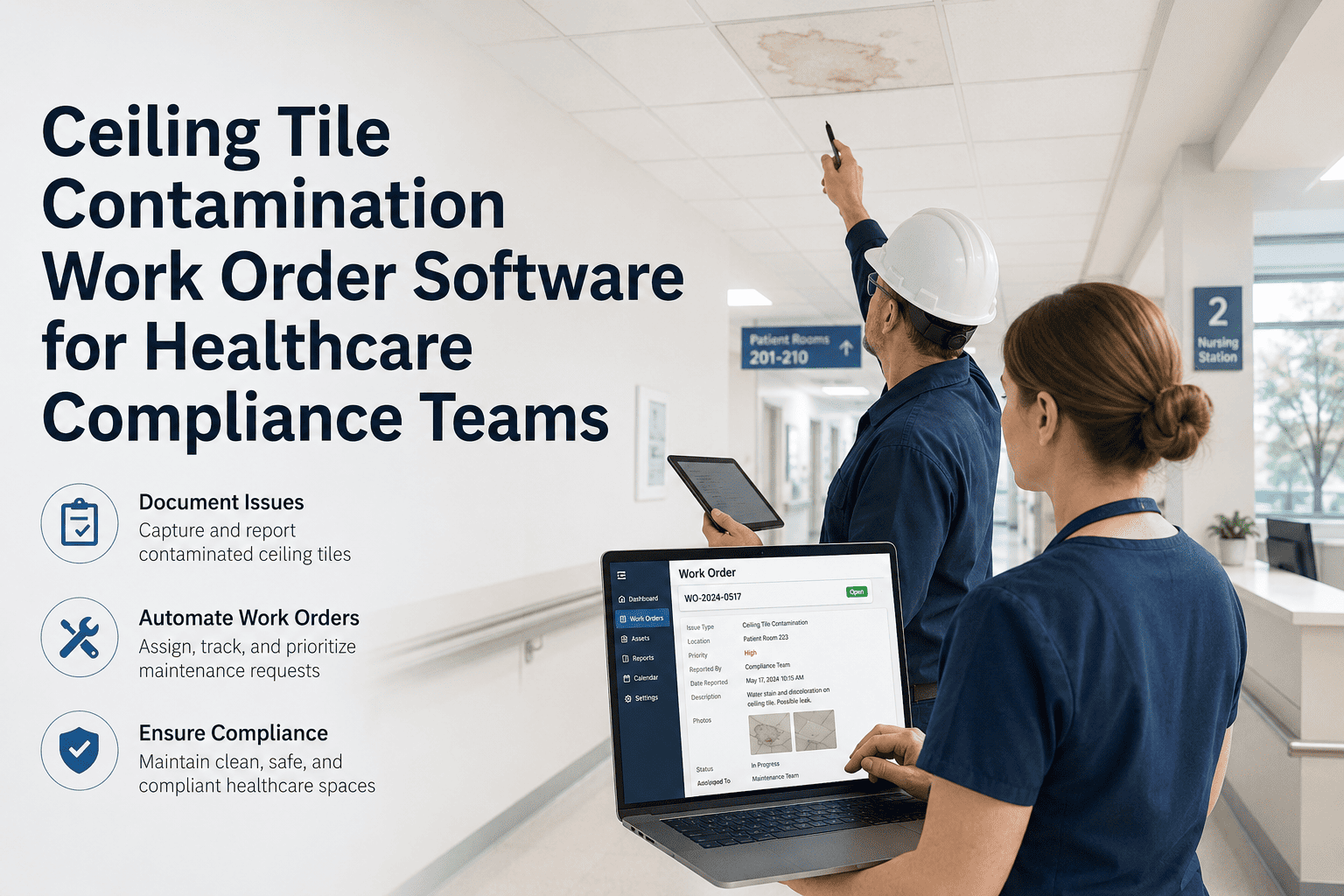
Submission timestamp, technician assignment, response time, resolution notes, and digital signature locked to the work order record — available for Joint Commission review on demand.
Stop Losing Work Orders Between the Call and the Clipboard
OxMaint replaces phone trees, whiteboards, and paper logs with a digital work order system designed specifically for hospital operational complexity — ward by ward, priority by priority.
The Tools Hospital Maintenance Teams Actually Need
SLA Timers That Escalate Automatically
Configure SLA targets by priority level and department. Automatic alerts notify supervisors at 50% elapsed time. Breach notifications go to facility managers before the deadline passes — not after. No high-priority request goes untracked.
Scan any tagged asset to submit a request or pull up its full service record in under 3 seconds.
Preventive maintenance work orders generate and dispatch automatically — no manual scheduling, no missed intervals.
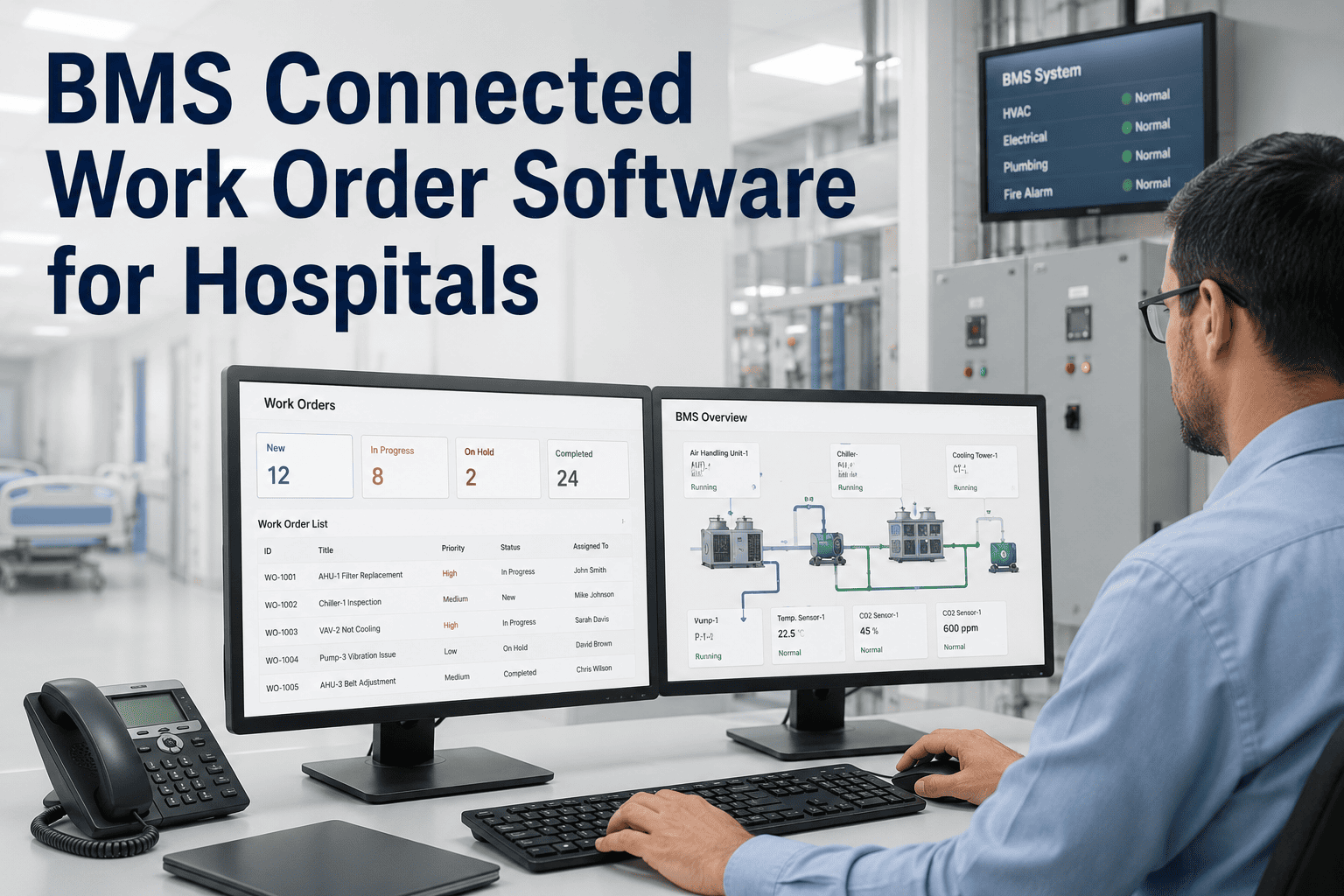
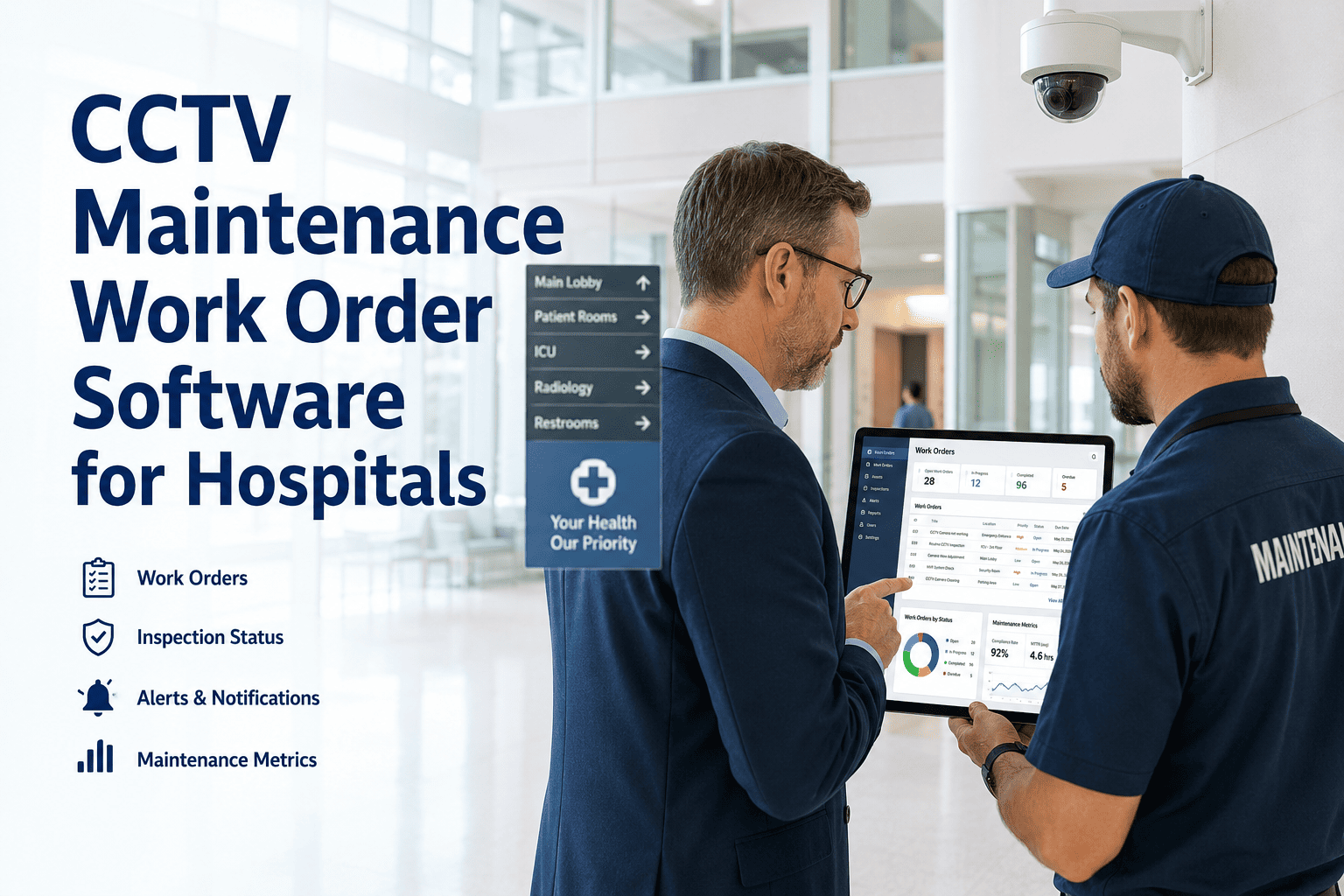
Live view of all open work orders by priority, department, and technician. Response times, SLA compliance rates, and backlog trends visible to managers without pulling a report — updated in real time as jobs close in the field.
Full offline capability. Technicians complete and sign off jobs without connectivity. Syncs automatically on reconnection.
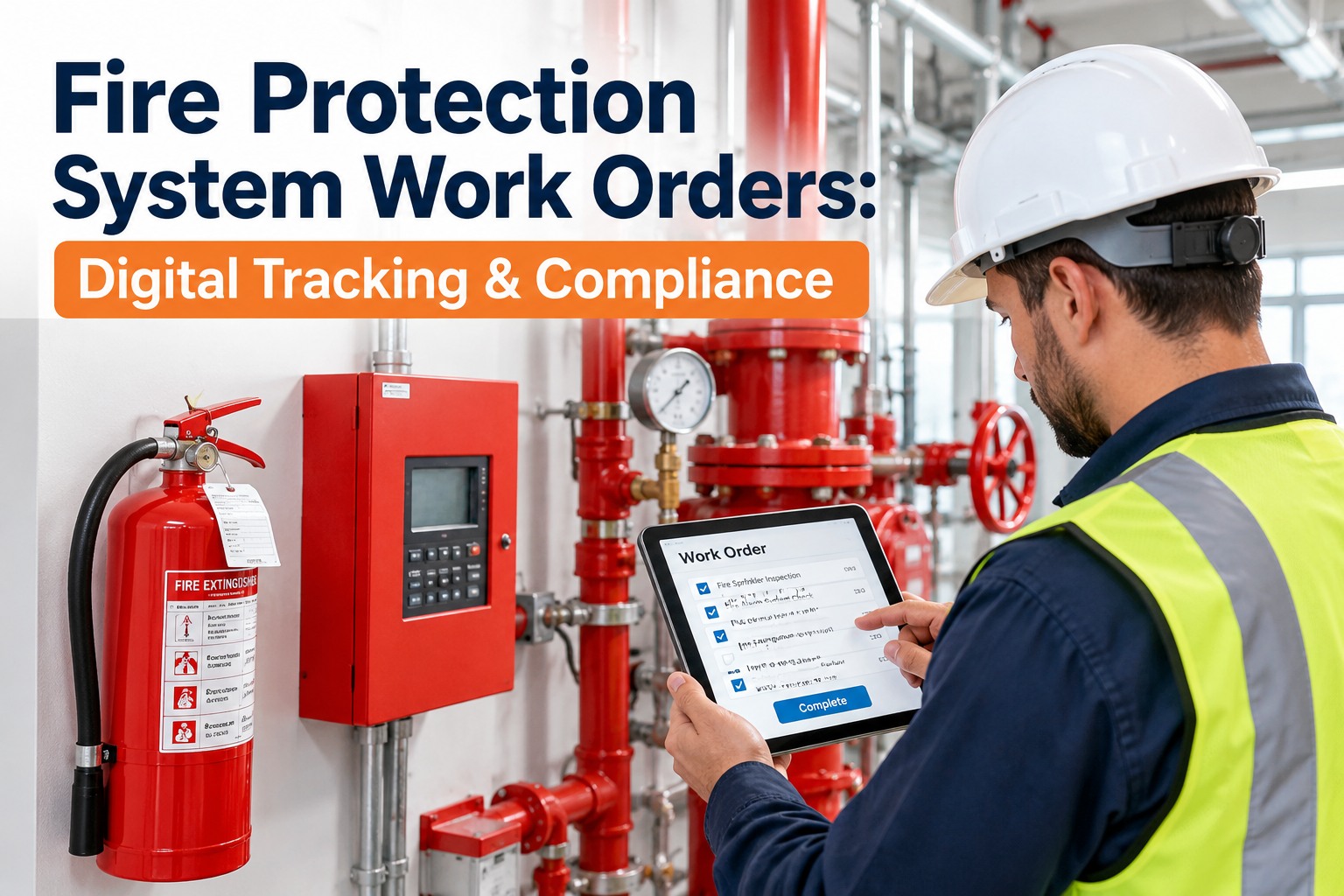
Immutable work order records with technician names, timestamps, and resolution notes — Joint Commission survey ready at any time.
Recommended Hospital Work Order Response Targets
| Priority Level | Example Scenario | Response Target | Resolution Target |
|---|---|---|---|
| Critical | Life safety system failure, clinical equipment down | 15 minutes | 2 hours |
| High | Patient care area equipment fault, HVAC failure | 1 hour | 8 hours |
| Medium | Non-critical equipment repair, routine building fault | 4 hours | 48 hours |
| Low | Cosmetic repairs, scheduled replacements | 24 hours | 5 business days |
Response and resolution targets are configurable in OxMaint by department, equipment class, and shift. SLA timers begin the moment a work order is submitted.
Hospital Work Order Software — FAQ
Can clinical staff submit work orders without training or a login?
Yes. QR codes can be placed on any asset or in any room. Scanning the code opens a simple submission form that requires no login — the requester adds a description and photo, and the work order is created and timestamped instantly. Maintenance staff handle triage and dispatch from their managed accounts. Start a free trial to set up your QR submission workflow.
How does OxMaint handle work orders that breach their SLA?
SLA timers are visible to supervisors in the live dashboard. Automated alerts notify supervisors at the 50% time mark, and facility managers receive a breach notification if the deadline is missed. Every SLA breach is logged in the work order record — creating an accountability trail that managers can review in weekly reporting.
Does OxMaint integrate with hospital asset registers or existing systems?
OxMaint accepts asset imports from spreadsheets and most existing CMMS exports. For hospitals with ERP environments, OxMaint can operate as a maintenance execution layer while pushing cost and closure data upstream. Book a demo to review integration options for your environment.
How are work order records used during a Joint Commission survey?
OxMaint work orders include submission timestamp, assigned technician, response time, resolution notes, parts used, and digital sign-off — all locked and immutable. During a survey, compliance documentation for any asset can be exported on demand, covering the full maintenance history surveyors require under EC.02.04 and Life Safety standards.
How long does deployment take for a mid-size hospital?
Most mid-size hospitals are fully live within 2 to 4 weeks. Asset data import, QR tag configuration, technician accounts, and SLA setup are all supported during onboarding. No infrastructure changes or IT project required — OxMaint is cloud-based and mobile-ready from day one.
Every Work Order Tracked. Every Job Documented. Every SLA Visible.
Replace your phone tree with a system that closes work orders in minutes, not days — and gives your compliance team the audit trail they need when surveyors ask.
.jpg)