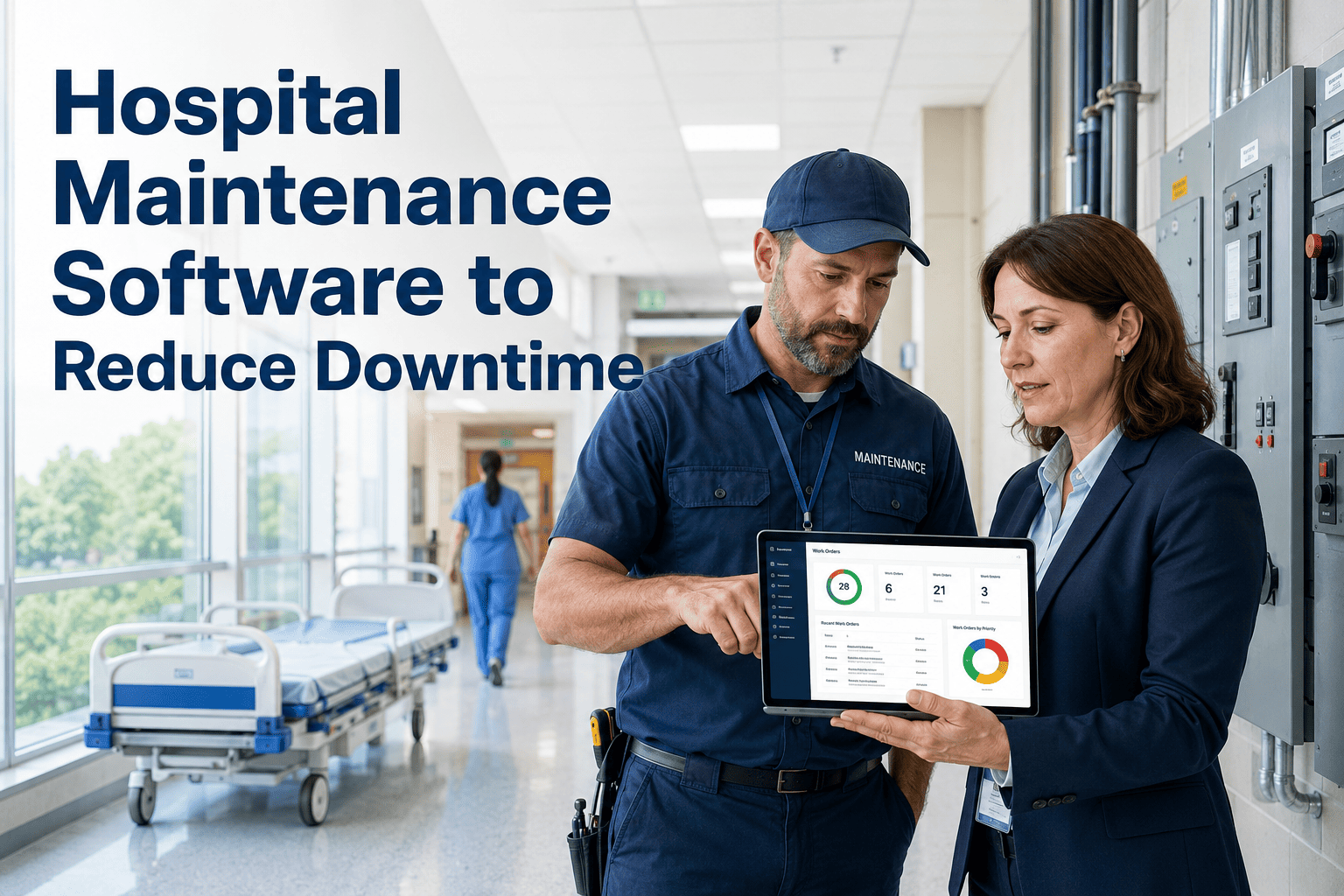
Unplanned equipment downtime in hospitals costs more than operational delays — it puts patient care at direct risk. A non-functional ventilator, a failed sterilization unit, or an out-of-service imaging system does not pause care; it redirects it under pressure. OxMaint hospital maintenance software replaces reactive maintenance cycles with AI-driven work orders, automated preventive maintenance, full asset history, and compliance dashboards — so your team spends time preventing failures, not chasing them. Healthcare facilities using structured CMMS platforms have cut unplanned equipment downtime by 32% and improved PM compliance by 41%. Book a demo to see OxMaint's downtime reduction model in action.
The Cost of Hospital Equipment Downtime
Every unplanned failure carries a measurable cost — in time, budget, and patient care quality.
32%
Higher downtime without CMMS
60-70%
Time spent on reactive repairs (no CMMS)
11.4 days
Avg work order close time — paper-based
3.2 days
Avg work order close time — OxMaint
Why Hospital Equipment Keeps Going Down Unexpectedly
Downtime is rarely accidental. It is almost always the result of a predictable maintenance failure.
01
No Automated PM Triggers
When PM schedules live in spreadsheets or on paper, services get skipped during busy clinical periods. Equipment runs past manufacturer service intervals without anyone noticing until a failure occurs.
Impact
18 days → 34 days MTBF improvement when PM is structured
02
No Asset History to Spot Patterns
Without a central repair and PM history log, maintenance teams cannot identify which assets are high-failure-risk or approaching end of serviceable life. Every failure feels like the first.
Impact
82% backlog reduction achieved through visible history-driven prioritization
03
Slow Work Order Response
Paper-based work request systems introduce hours of delay between fault report and technician dispatch. Equipment sits offline while paperwork routes through planners.
Impact
Mobile dispatch cuts average response time by over 70% in documented deployments
04
Parts Not Available When Needed
Without spare parts consumption tracking and reorder thresholds, critical parts run out exactly when they are most needed — extending repair time from hours to days while procurement runs emergency orders.
Impact
Parts-linked work orders reduce parts-delay downtime by 25%+
OxMaint · Hospital Downtime Reduction
Every hour of unplanned equipment downtime is a hospital problem that a structured maintenance platform can prevent. See how OxMaint delivers measurable downtime reduction in 60 days.
OxMaint Features That Directly Reduce Hospital Downtime
AI Work Orders
Intelligent Work Order Generation
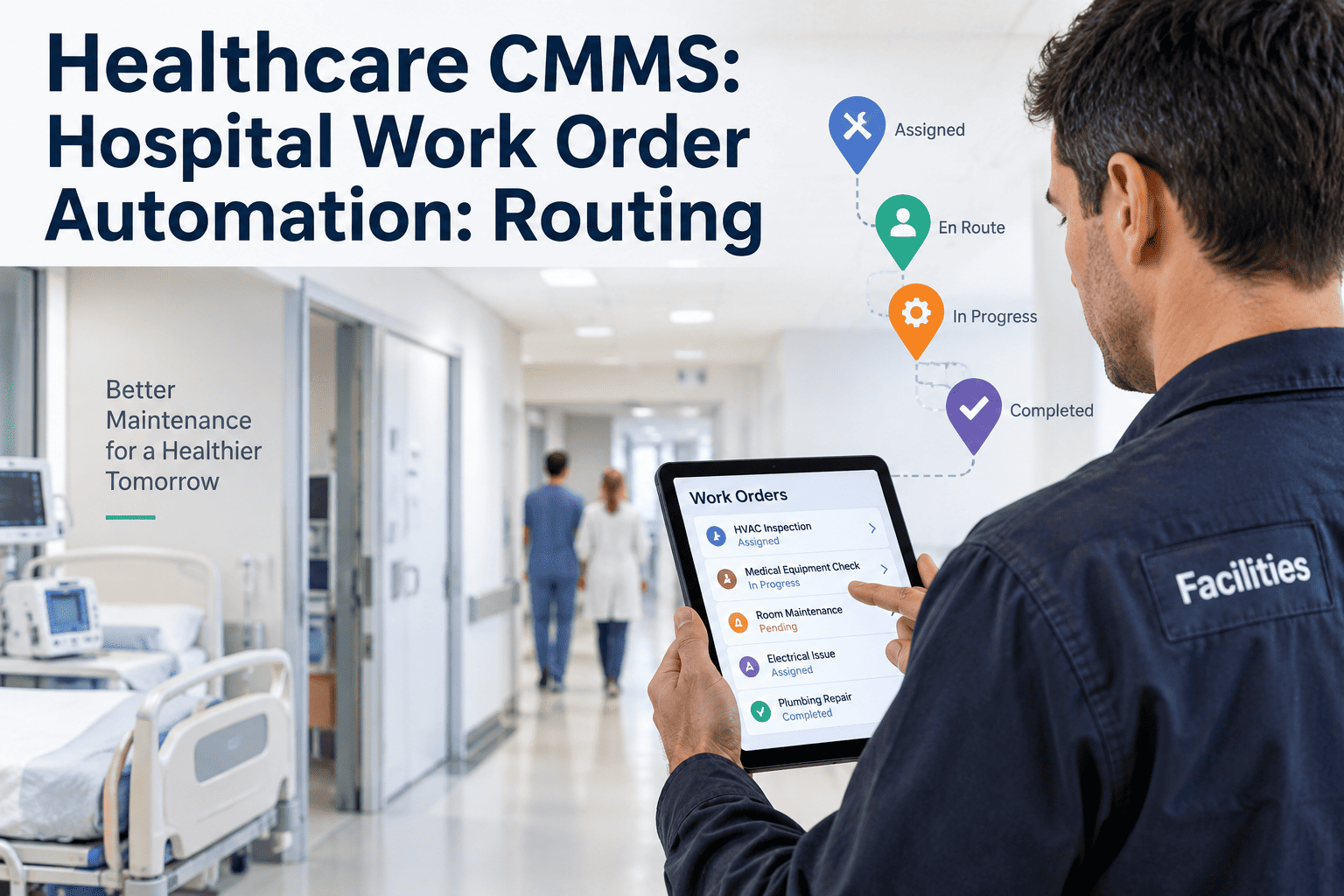
OxMaint auto-generates work orders from PM schedules, sensor triggers, and inspection findings. No manual creation. No planning gap. Technicians receive actionable tasks before equipment reaches failure point.
PM Automation
Preventive Maintenance Scheduling
Automated PM triggers by calendar, meter reading, or condition threshold. Overdue PMs escalate by criticality. PM compliance rates move from sub-60% to 91%+ within 60 days of deployment.
Asset History
Complete Repair and PM History
Every work order, inspection, and part replacement is logged against the asset record. Maintenance managers can identify failure patterns, high-cost assets, and end-of-life equipment before the next unplanned stop.
Live Dashboards
Real-Time Compliance and KPI Monitoring
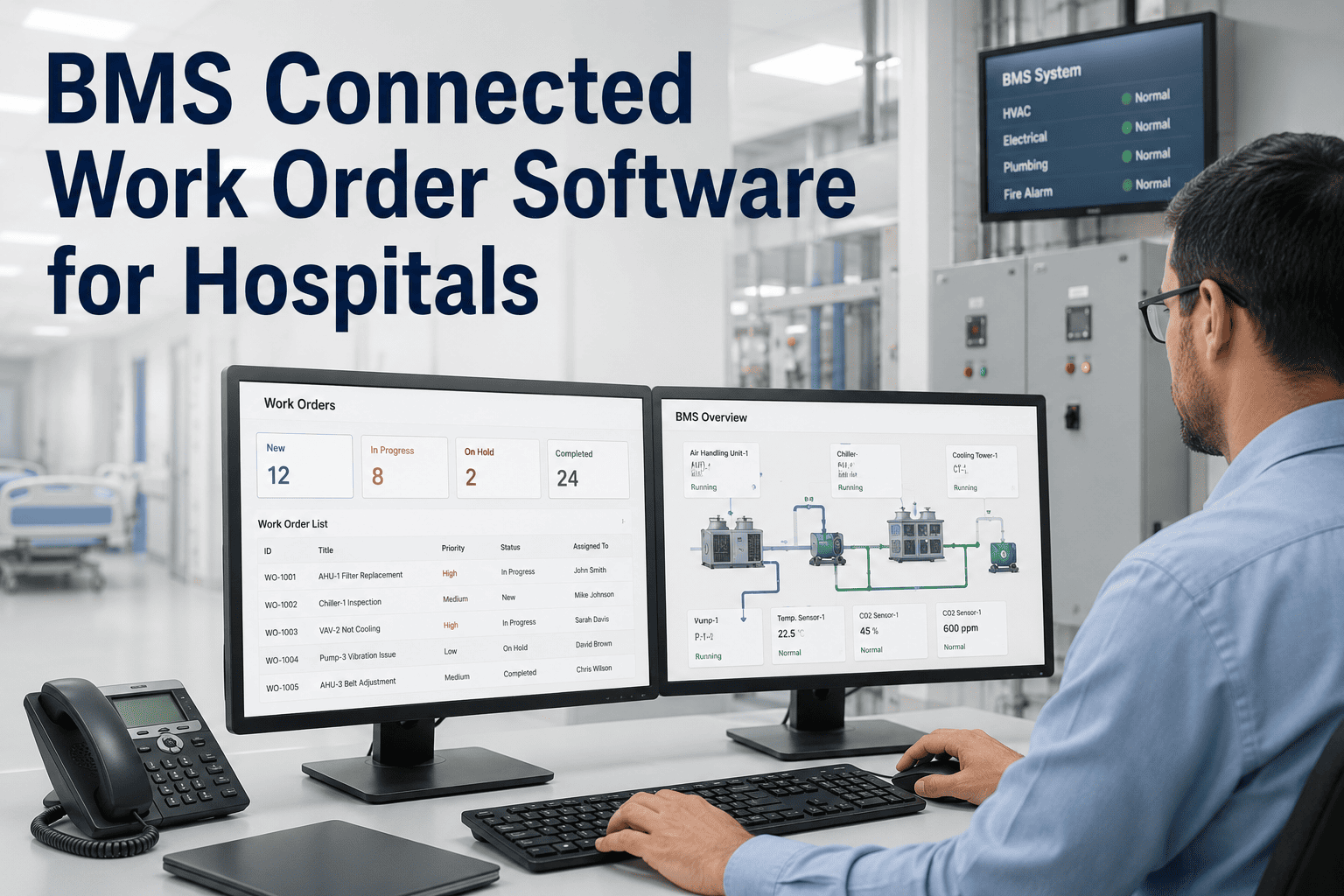
OEE, MTBF, PM compliance rate, and backlog age update in real time as technicians close work orders on mobile. Operations directors see the current maintenance health of every department on one screen.
Downtime Reduction Outcomes — Measured
Outcomes recorded at day 60 and 12 months post-deployment across OxMaint hospital implementations.
| Metric |
Before OxMaint |
After OxMaint (Day 60) |
Change |
| PM Compliance Rate |
58% |
91% |
+33 pts |
| Overdue Work Order Backlog |
214 open WOs |
38 open WOs |
-82% |
| Avg Work Order Close Time |
11.4 days |
3.2 days |
-72% |
| Equipment MTBF (Unplanned) |
18 days |
34 days |
+89% |
| Unplanned Downtime Events |
Baseline |
32% reduction |
-32% |
| Annual Savings (Downtime + Parts) |
— |
$1.4M documented |
+ROI |
Preventive maintenance is the single highest-ROI investment a hospital facilities team can make. When PM compliance rises from 60% to 90%, MTBF improvements follow within two to three maintenance cycles. The hospitals that have made this transition using structured CMMS platforms consistently report both the operational and financial case closing faster than leadership expected — typically within the first 90 days of deployment.
Healthcare Operations Management Review
2025 Analysis — 150+ hospital maintenance platform deployments
Frequently Asked Questions
OxMaint · Hospital Maintenance Software
Unplanned equipment downtime is a maintenance planning problem — and it is solvable. OxMaint gives hospital teams the AI work orders, PM automation, and real-time dashboards to prevent failures before they happen.
AI work order generation. Automated PM scheduling. Asset failure history. Live OEE and MTBF dashboards. Deployed in 60 days with zero production shutdown.
.png)
.jpg)
