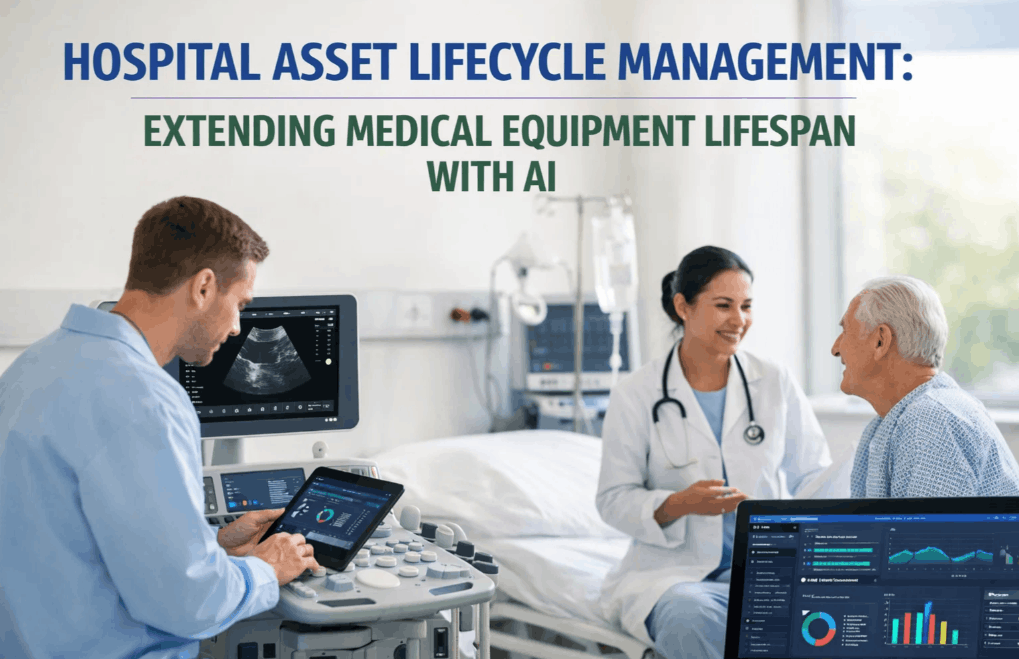
Hospital networks face a silent but costly challenge: medical equipment that ages poorly, breaks down unexpectedly, and gets replaced far sooner than necessary. The root cause is rarely the equipment itself. It's the absence of intelligent lifecycle oversight. Hospital asset lifecycle management, powered by AI, transforms the way healthcare organizations track, maintain, and optimize their medical equipment from acquisition to retirement. With the right medical equipment lifecycle software in place, facilities can dramatically extend device lifespans, improve reliability, reduce capital expenditure, and ensure every asset delivers its full intended value. This is not just a technology upgrade. It's a fundamental shift in how hospitals think about their equipment portfolio.
Ready to Extend Your Medical Equipment Lifespan with AI?
Join 1,000+ healthcare organizations using OxMaint to optimize equipment lifecycle performance, reduce capital expenditure, and maintain continuous compliance readiness across every facility.
Understanding the Medical Equipment Lifecycle
Every piece of medical equipment moves through a defined lifecycle: acquisition, deployment, active use, maintenance, performance decline, and ultimately retirement or replacement. In hospitals without centralized lifecycle tracking, these stages are invisible. Equipment is purchased reactively, maintained inconsistently, and replaced based on guesswork rather than data. The result is a portfolio riddled with premature replacements, unexpected failures, and missed maintenance windows that compound into significant financial and clinical risk.
Hospital asset lifecycle management provides complete visibility into every stage of this journey. From the moment a device is registered in the system, every service event, usage pattern, calibration record, and performance metric is captured and analyzed. This longitudinal data becomes the foundation for AI-powered decisions about when to service, when to redistribute, and when to retire equipment — decisions that collectively extend device lifespans, reduce total cost of ownership, and eliminate the guesswork that plagues traditional equipment management.
The Six Stages of Medical Equipment Lifecycle
How AI Transforms Healthcare Asset Performance Management
Traditional healthcare asset performance management relies on fixed maintenance intervals and manufacturer-recommended schedules that fail to account for how a specific device has actually been used. A ventilator in a high-acuity ICU that operates around the clock needs a fundamentally different maintenance approach than an identical model in a lower-volume ward. AI eliminates this one-size-fits-all failure by learning from actual usage data, environmental conditions, and historical failure patterns to generate personalized maintenance predictions for every individual asset.
When an AI-powered platform analyzes thousands of data points from a single device — cycles completed, temperature fluctuations, error codes, time since last service, and peer device failure rates — it builds a predictive model that forecasts failure probability with precision that no manual inspection schedule can match. This intelligence enables maintenance teams to intervene before problems escalate, schedule service during low-demand windows, and systematically extend the operational life of expensive medical equipment.
Predictive Failure Detection
AI continuously analyzes sensor data, usage trends, and maintenance history to flag devices trending toward failure days or weeks in advance. Biomedical engineers receive prioritized alerts with recommended interventions, enabling proactive service instead of emergency repair.
Dynamic Maintenance Scheduling
Instead of calendar-based service intervals, AI adapts maintenance timing to actual device condition and workload. High-use equipment receives earlier service; lightly used devices are not serviced unnecessarily. This reduces wear from over-maintenance while preventing failures from under-maintenance.
Asset Health Scoring
Each device receives a continuously updated health score that reflects its current condition, maintenance compliance, failure risk, and remaining useful life. Health scores give biomedical and capital planning teams an instant, objective view of the entire equipment portfolio's condition.
Replacement Optimization
AI models the cost trajectory of aging equipment — including escalating repair costs, downtime risk, and efficiency losses — against the cost of replacement or refurbishment. This produces objective, data-driven recommendations for capital planning that eliminate anecdotal replacement decisions.
The Five Pillars of AI-Powered Asset Lifecycle Management
Implementing effective hospital asset lifecycle management requires a structured approach built on interconnected capabilities. Each pillar addresses a critical dimension of equipment lifecycle performance, and together they create a system that continuously learns, adapts, and improves over time.
Comprehensive Asset Registry with Lifecycle Metadata
The foundation of lifecycle management is a complete, accurate asset registry that captures not just location and ownership, but the full context of every device: acquisition date, purchase cost, warranty terms, manufacturer lifecycle ratings, service history, and criticality classification. Medical equipment lifecycle software that maintains this depth of data enables every downstream AI analysis to be grounded in factual asset history rather than assumptions.
Continuous Performance Monitoring and Diagnostics
Healthcare asset performance management requires real-time visibility into how equipment is performing, not just whether it received its scheduled maintenance. IoT sensor integration, usage logging, and automated diagnostic data capture provide the continuous performance stream that AI models need to generate accurate predictions. When a device begins exhibiting subtle anomalies, the system flags these patterns long before they manifest as clinically significant failures.
AI-Driven Maintenance Optimization
Moving beyond preventive to predictive and prescriptive maintenance is where AI asset optimization in hospitals delivers its greatest financial impact. Predictive models identify when service is needed; prescriptive analytics go further by recommending the specific interventions most likely to extend device lifespan and prevent recurrence. This reduces both over-maintenance costs and the far more expensive consequences of unexpected device failure during patient care.
Lifecycle Cost Analytics and Capital Planning
Every healthcare organization makes capital equipment decisions, but few make them with full visibility into total cost of ownership across the device's entire lifecycle. AI-powered lifecycle analytics model the true cost trajectory of every asset, integrating acquisition cost, maintenance expenditure, downtime cost, utilization efficiency, and end-of-life value. This gives capital planning teams objective data to compare aging equipment against replacement options.
Regulatory Compliance Throughout the Lifecycle
Medical equipment lifecycle software must maintain complete, auditable records of every maintenance event, calibration, safety inspection, and regulatory check from device acquisition through decommissioning. Automated compliance tracking ensures that Joint Commission, FDA, and OSHA requirements are met continuously, not just during audit preparation. Digital audit trails give compliance teams instant access to complete device histories across the entire hospital network.
Extending Medical Equipment Lifespan: Where the Value Is
The financial case for equipment lifespan extension is compelling. A high-field MRI system costs between $1 million and $3 million new. Extending its operational life by even two years through optimized maintenance and AI-guided performance management can defer a capital expenditure that would otherwise consume a significant portion of a hospital network's annual equipment budget. Across a portfolio of hundreds or thousands of devices, these extensions compound into tens of millions of dollars in deferred capital spending annually.
Lifespan extension is not simply a matter of performing more maintenance. It requires intelligent maintenance — the right interventions at the right times based on actual device condition. AI asset optimization in hospitals ensures that maintenance resources are deployed where they create the most value: on high-priority devices approaching critical wear thresholds, not on low-utilization equipment that doesn't need service yet.
Traditional Lifecycle Management vs. AI-Powered Lifecycle Management
How OxMaint Delivers Hospital Asset Lifecycle Management
OxMaint's medical equipment lifecycle software is engineered specifically for the complexity of healthcare asset performance management in multi-facility hospital networks. Rather than adapting a generic maintenance platform to healthcare requirements, OxMaint is built around the actual workflows, regulatory demands, and clinical priorities of hospital biomedical and facilities engineering teams.
OxMaint's AI engine continuously processes maintenance history, usage data, and IoT sensor inputs to generate equipment health scores, failure probability forecasts, and maintenance recommendations for every device in your network. Lifecycle predictions update in real time as conditions change.
Every device is registered with complete lifecycle metadata: acquisition records, warranty status, service history, calibration logs, and regulatory compliance documentation. QR code scanning from mobile devices gives technicians instant access to the complete history of any asset, anywhere in your network.
Move beyond fixed maintenance schedules with AI-powered predictive alerts that flag equipment trending toward failure before breakdowns occur. Maintenance windows are automatically suggested during low-utilization periods to minimize disruption to clinical operations.
OxMaint's lifecycle cost modeling gives capital planning teams objective data on replacement timing, refurbishment value, and total cost of ownership across the entire equipment portfolio. Make multi-year capital decisions based on data, not assumptions.
Automated documentation of every maintenance event, calibration, safety inspection, and regulatory check from device acquisition through retirement. One-click audit reports cover every facility and every device category simultaneously, eliminating weeks of manual audit preparation.
Network-wide dashboards display real-time equipment health scores, maintenance compliance rates, lifecycle cost trends, and replacement forecasts. Drill down from portfolio-level summaries to individual device histories in seconds. Book a demo to explore the full analytics suite live.
The Financial Impact of Lifecycle Optimization Across a Hospital Network
The financial benefits of AI-powered hospital asset lifecycle management operate at multiple levels simultaneously. At the device level, predictive maintenance reduces emergency repair costs — which typically run three to five times higher than planned service — and extends the period before replacement is necessary. At the portfolio level, lifecycle analytics eliminate the duplicate purchases and premature replacements that drain capital budgets.
Healthcare organizations that implement centralized medical equipment lifecycle software typically report 20 to 40 percent reductions in unplanned maintenance costs, 15 to 25 percent improvements in equipment utilization rates, and meaningful reductions in annual capital equipment spending through better-informed replacement timing. Sign up for OxMaint and begin building that business case with real data from your own equipment portfolio.
Building a Sustainable AI Asset Optimization Strategy for Hospitals
Adopting AI asset optimization in hospitals is not a one-time deployment. It is a continuous improvement strategy that grows more valuable over time as the system accumulates more device data, refines its predictive models, and identifies increasingly precise intervention points. The hospitals that derive the greatest long-term value from lifecycle management platforms are those that treat the technology as a strategic capability rather than a maintenance tool.
This means establishing clear ownership of healthcare asset performance management data, building workflows that integrate lifecycle insights into capital planning and clinical engineering decisions, and creating accountability structures that ensure maintenance compliance targets are consistently met. When lifecycle intelligence is embedded into the operational rhythm of the hospital system, it shifts the entire organization from reactive equipment management to proactive lifecycle stewardship.
Lifecycle Data Foundation
Register all equipment with complete lifecycle metadata. Establish baseline health scores and audit existing maintenance histories. Configure asset criticality classifications to prioritize AI monitoring resources on the devices that matter most to clinical operations.
Predictive Maintenance Activation
Enable AI-powered maintenance scheduling and failure prediction across priority device categories. Train biomedical and facilities teams on mobile work order management and predictive alert workflows. Establish KPIs for maintenance compliance and unplanned downtime reduction.
Lifecycle Analytics Integration
Integrate healthcare asset performance management data into capital planning workflows. Build lifecycle cost models for high-value device categories. Establish regular portfolio health reviews using AI-generated replacement forecasts and total cost of ownership reports.
Continuous Optimization and Scaling
Expand AI lifecycle management to all device categories and all network facilities. Refine predictive models with accumulated performance data. Sign up today and build a lifecycle management strategy that scales with your network and strengthens with every year of data.
Transform Your Hospital's Equipment Lifecycle Performance
Discover how OxMaint's AI-powered medical equipment lifecycle software helps hospital networks extend device lifespans, reduce capital expenditure, and maintain complete compliance readiness across every facility.
Frequently Asked Questions
What is hospital asset lifecycle management and how does AI improve it?
Hospital asset lifecycle management is the practice of tracking, maintaining, and optimizing medical equipment from the moment of acquisition through retirement. AI improves lifecycle management by continuously analyzing usage data, maintenance history, and sensor inputs to predict failures before they occur, recommend optimal maintenance timing, generate equipment health scores, and model total cost of ownership across the full device lifecycle. This transforms equipment management from reactive and calendar-based to proactive, condition-based, and data-driven.
How does medical equipment lifecycle software extend device lifespan?
Medical equipment lifecycle software extends device lifespan by ensuring that every device receives the right maintenance at the right time based on its actual condition rather than fixed schedules. Predictive maintenance catches developing problems before they cause damage. Dynamic scheduling prevents both over-maintenance, which can accelerate wear, and under-maintenance, which allows small issues to compound into failures. Over time, this precision approach adds years of productive life to high-value medical devices.
What types of medical equipment benefit most from AI lifecycle management?
High-value, high-utilization devices deliver the greatest return from AI lifecycle management. This includes diagnostic imaging equipment such as MRI and CT systems, patient monitoring devices, ventilators, infusion pumps, surgical instruments, and laboratory analyzers. However, all clinical equipment benefits from lifecycle tracking, particularly from the compliance documentation and replacement forecasting capabilities that AI lifecycle platforms provide across every device category.
How does healthcare asset performance management support capital planning?
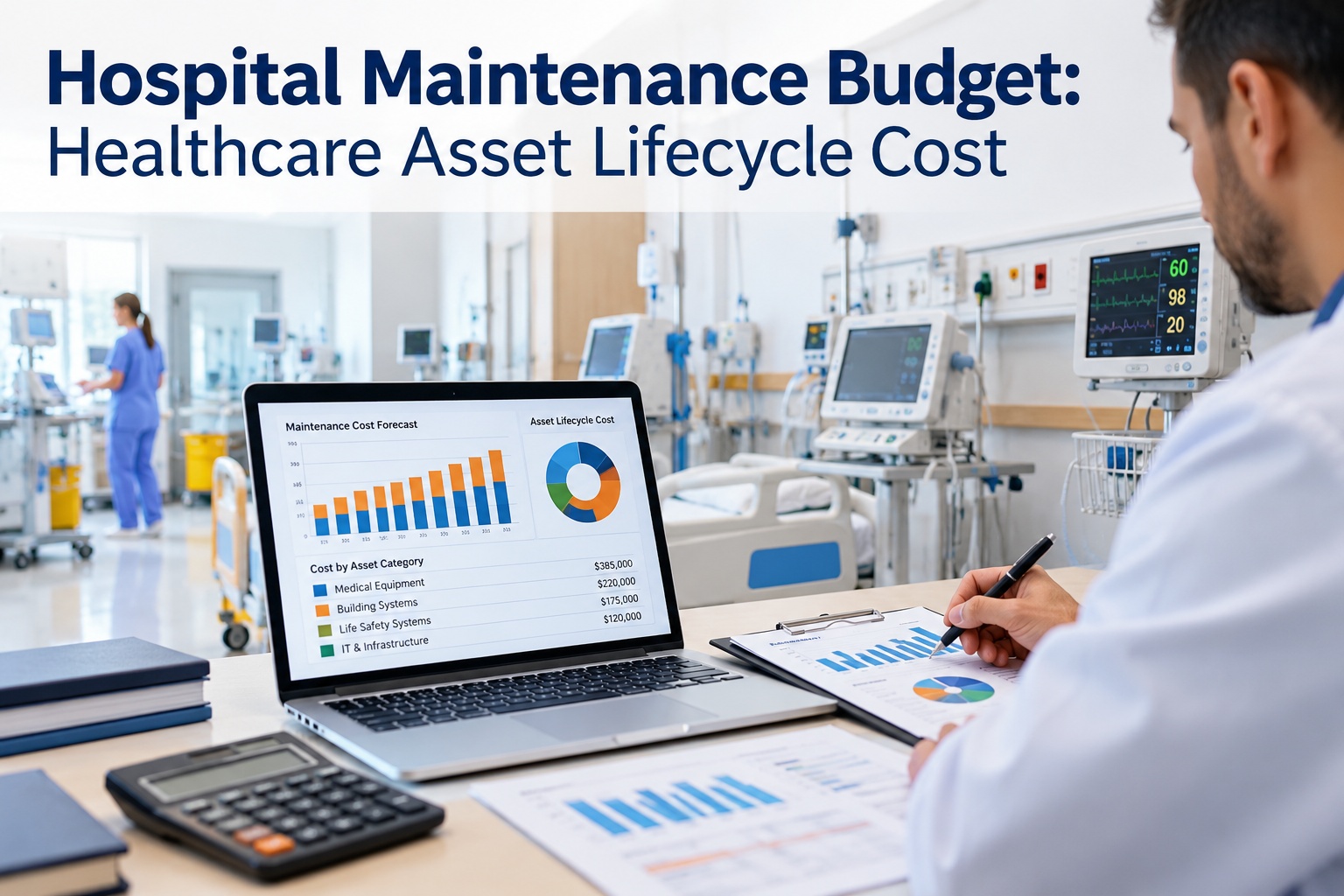
Healthcare asset performance management platforms generate lifecycle cost models that show the true total cost of ownership for every device, including acquisition cost, cumulative maintenance expenditure, downtime cost, and efficiency trends over time. These models identify the optimal replacement point for aging equipment, eliminating premature replacements that waste capital and delayed replacements that increase operational risk. Capital planning teams use this data to build accurate multi-year equipment budgets and negotiate more effectively with vendors.
Can OxMaint manage lifecycle data across multiple hospital facilities?
Yes. OxMaint is specifically designed for multi-site hospital networks. The platform maintains a unified lifecycle registry for every device across every facility while giving each campus the operational flexibility to manage its own maintenance workflows. Network-level dashboards provide consolidated healthcare asset performance management visibility across all locations, and AI lifecycle analytics operate across the entire portfolio regardless of how many facilities are included in the network.
How quickly can a hospital network implement AI-powered lifecycle management?
Most hospital networks achieve initial deployment within two weeks and full lifecycle management capability within six to eight weeks. OxMaint's cloud-based architecture eliminates on-premises infrastructure requirements, and the onboarding team handles data migration, staff training, and workflow configuration. AI predictive models begin generating equipment health scores and maintenance recommendations as soon as initial asset data is loaded, with prediction accuracy improving continuously as more performance data accumulates.
What compliance documentation does medical equipment lifecycle software generate?
OxMaint generates complete audit-ready documentation for every stage of the equipment lifecycle, including initial commissioning records, all preventive and corrective maintenance events, calibration logs, safety inspections, and final decommissioning records. Automated reporting covers Joint Commission, FDA, OSHA, and state-specific requirements. Audit reports for all facilities in the network can be generated simultaneously with a single click, replacing weeks of manual document gathering with minutes of automated report generation.


.png)
