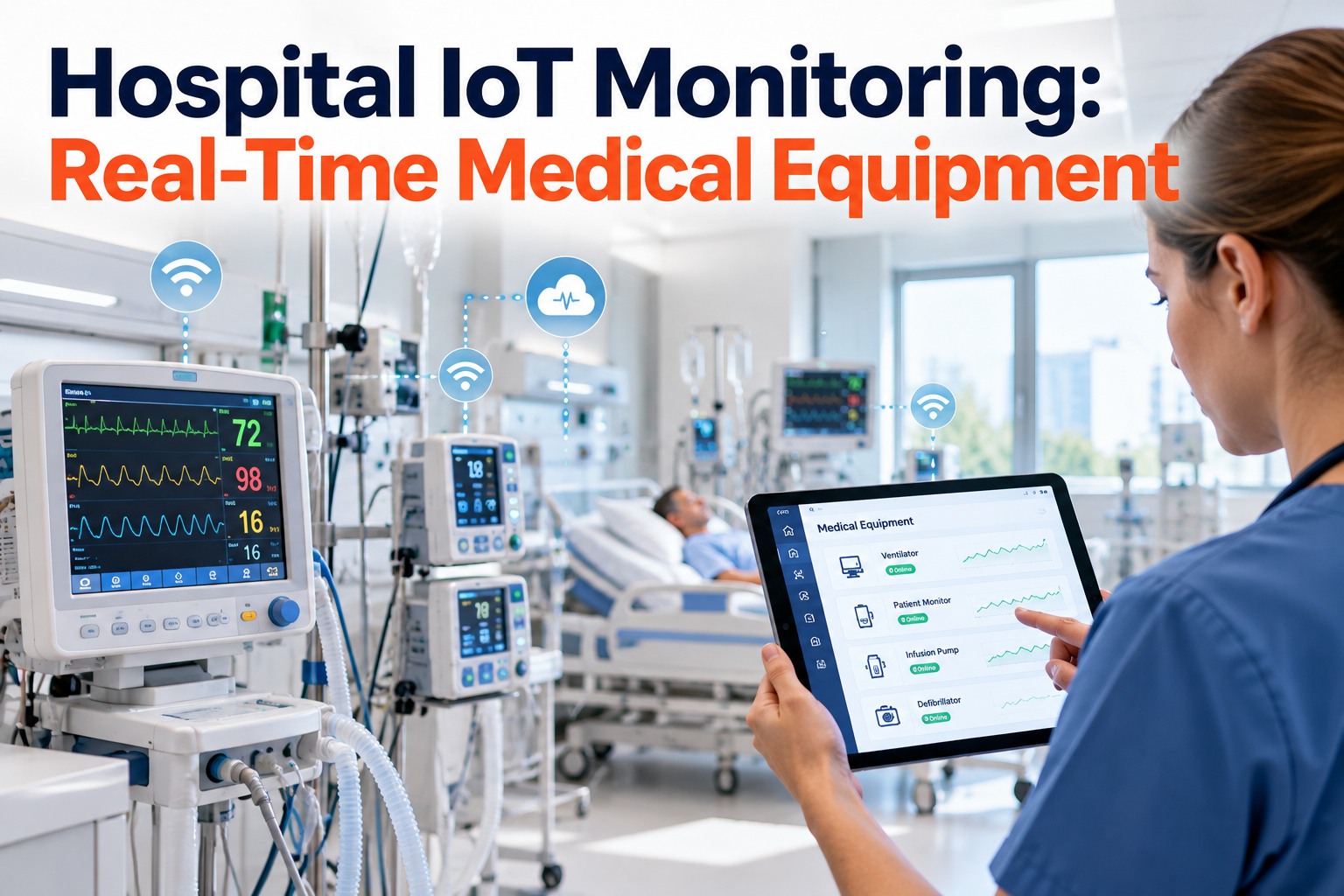
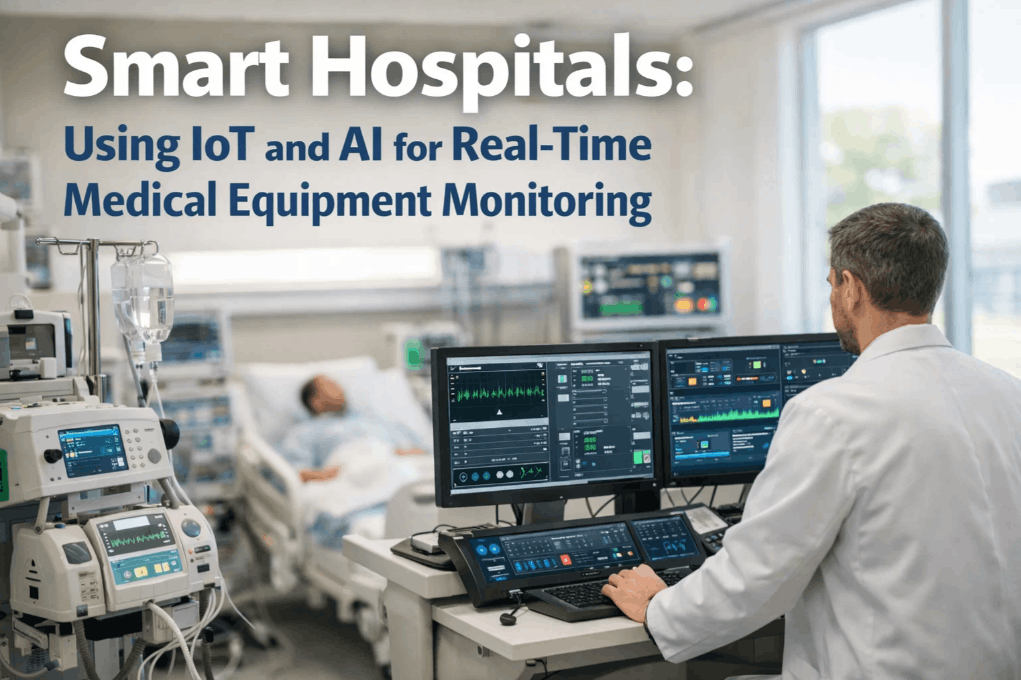
A hospital nurse spending 20 minutes per shift searching for an IV pump that has been moved to the wrong floor is not a workflow problem — it is a quantifiable cost. Across a 400-bed hospital with 120 nursing staff on three shifts, that adds up to 4,320 hours of clinical staff time lost annually to equipment search. OxMaint's Asset Lifecycle Management module connects RTLS, RFID, and BLE tracking data to your maintenance records — so every piece of mobile medical equipment has a known location, a current maintenance status, and a complete service history accessible to any authorised staff member in under 10 seconds. Book a 15-minute demo to see real-time hospital asset tracking in OxMaint.
Hospital Asset Tracking: Real-Time Medical Equipment Location & Management
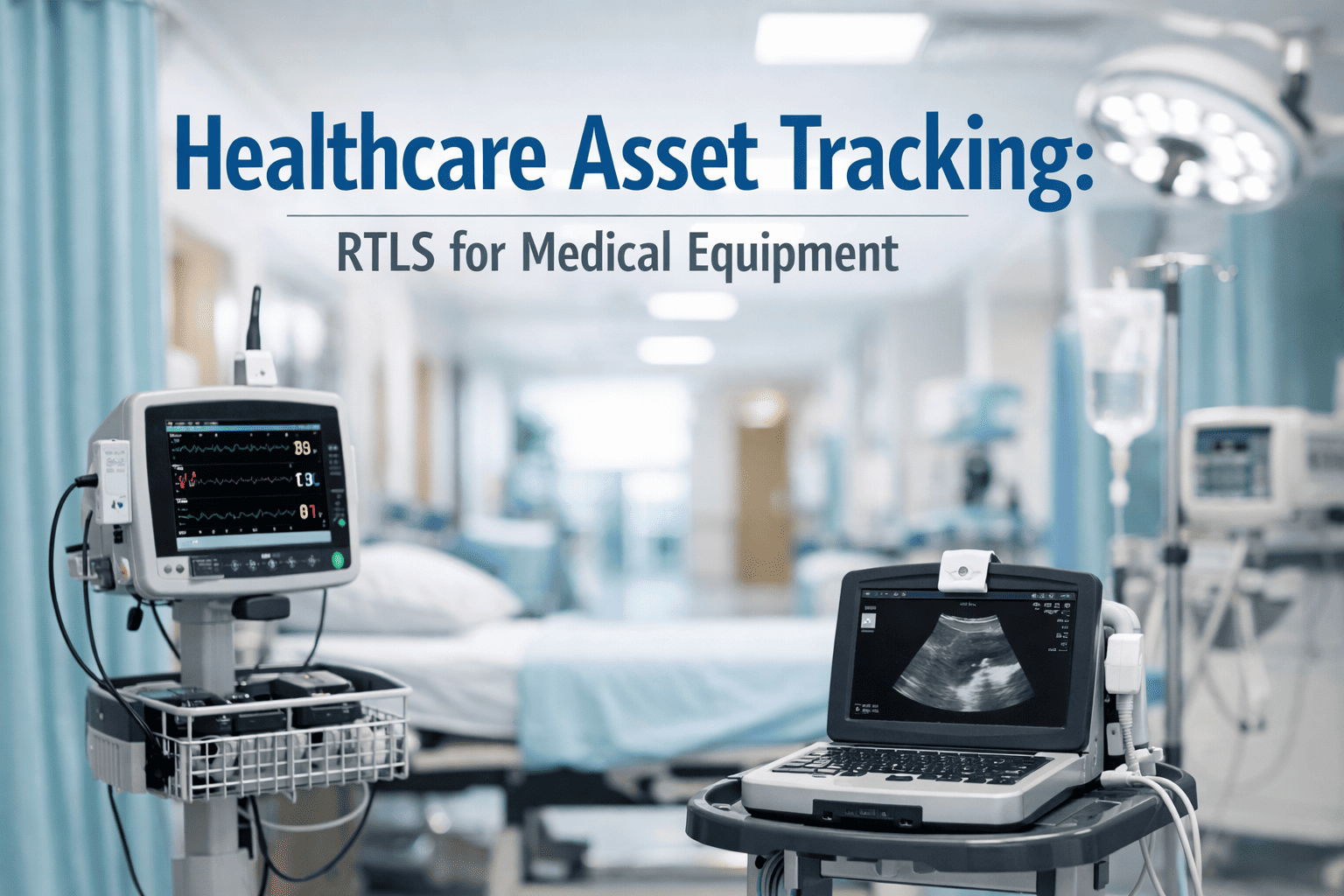
RTLS, RFID, and BLE beacon integration with CMMS — so every infusion pump, ventilator, and mobile imaging unit has a known location, current maintenance status, and searchable service history.
RTLS, RFID & BLE — Which Technology Fits Which Need
| Equipment Type | Recommended Technology | Tracking Priority | OxMaint Integration |
|---|---|---|---|
| Ventilators / life support | RTLS (active) | Critical | Real-time location + PM status + calibration record |
| Infusion pumps (IV pumps) | RTLS or BLE | Critical | Location + drug library update status + PM compliance |
| Patient monitors | RTLS or BLE | Critical | Location + biomedical PM schedule + calibration history |
| Mobile imaging (portable X-ray, ultrasound) | RTLS | Critical | Location + radiation safety records + preventive PM |
| ECG / Defibrillators | BLE or RTLS | High | Location + battery check records + compliance docs |
| Wheelchairs, stretchers, beds | BLE | High | Location + cleaning status + PM frequency tracking |
| Surgical instruments (reusable) | RFID (passive) | High | Location + sterile processing cycle count + expiry tracking |
| Feeding pumps, syringe drivers | BLE | Standard | Location + PM compliance + utilisation rate |
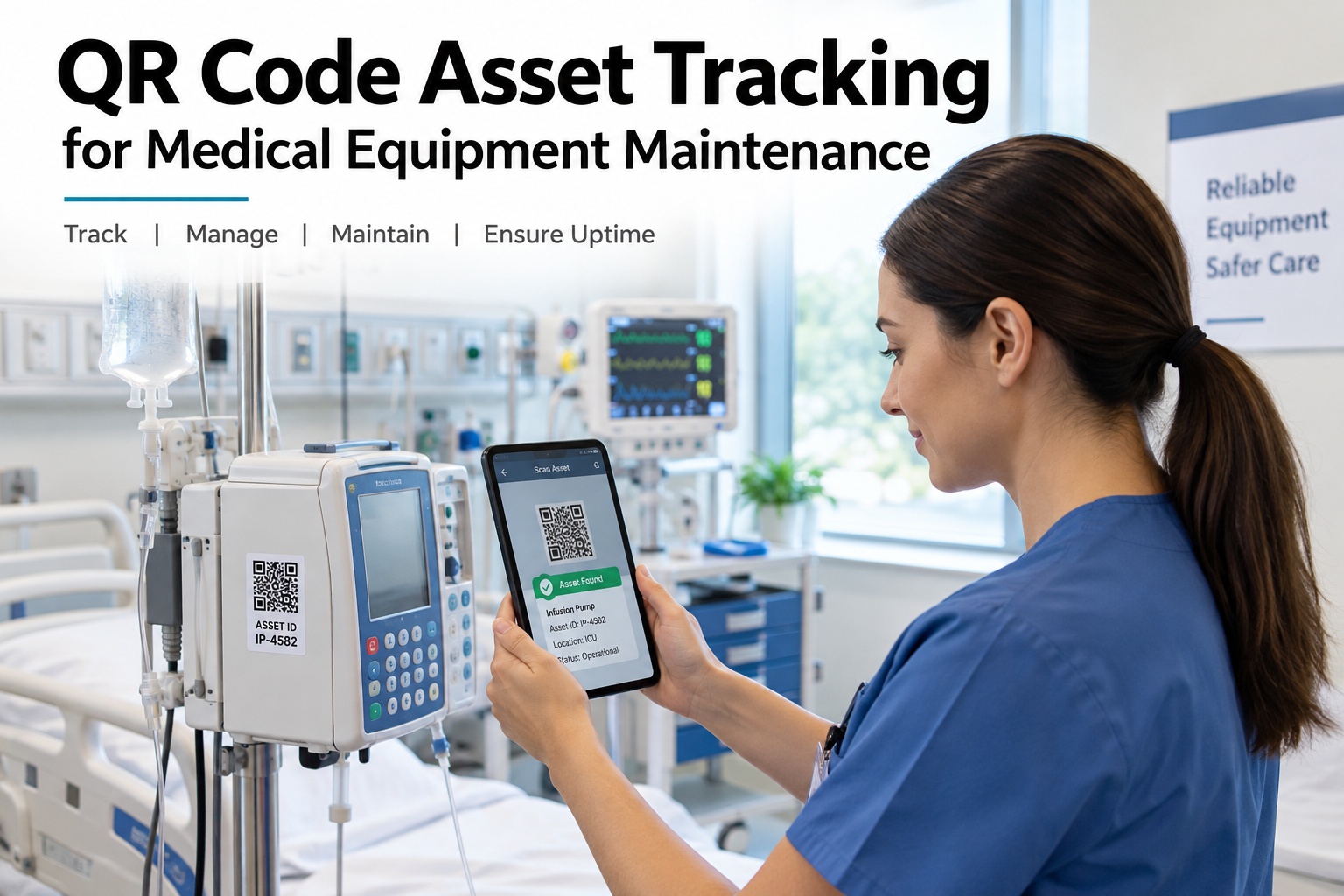
| Portable fans, heaters, equipment | RFID or QR | Standard | QR scan on WO — location recorded at each maintenance event |
Book a Demo — See Real-Time Hospital Asset Tracking in OxMaint.
RTLS / RFID / BLE integration · Location per asset · PM status overlay · Utilisation analytics · Maintenance history on scan. Every asset, every location, every status — in one platform.
Asset Utilisation — What the Data Reveals and Why It Matters
The business case for hospital asset tracking is almost always underestimated in the wrong direction. Hospitals calculate the technology cost but forget to calculate the nursing time cost of equipment search — which at $45 per clinical hour and 20 minutes per shift per nurse adds up to more than most RTLS deployments cost annually. The second underestimated benefit is equipment utilisation data. Every hospital I have worked with discovered they had 15–30% more mobile equipment than they needed once RTLS revealed where it actually was and how often it was used. The rental and purchase cost avoidance alone typically pays for the tracking infrastructure within 12 months.
How OxMaint Connects Asset Tracking to Maintenance Management
Book a Demo — See OxMaint Managing Hospital Asset Location and Maintenance Together.
RTLS / RFID / BLE integration · PM status overlay on location map · QR scan asset history · Utilisation analytics · JC-ready location and maintenance records. Every asset tracked. Every PM documented.
Hospital Asset Tracking — Common Questions
What is the typical ROI timeline for a hospital RTLS deployment?
Most hospitals achieve payback within 12 months from two primary sources: nursing time savings (eliminating 15–20 minutes per shift of equipment search across the nursing workforce) and equipment fleet reduction (typically 15–25% of mobile equipment is identified as underused or duplicated once utilisation data is available). A 400-bed hospital with 120 nurses at $45/hour recovering 20 minutes per shift realises over $500,000 annually in clinical time value alone. Sign in to start tracking equipment utilisation in OxMaint today.
Which is better for hospital asset tracking — RTLS, RFID, or BLE?
The correct choice depends on the equipment category and budget. High-value, clinically critical equipment (ventilators, infusion pumps, patient monitors) justifies RTLS for its room-level accuracy and real-time update frequency. General mobile equipment (wheelchairs, stretchers, portable monitors) is well-served by BLE beacons at significantly lower infrastructure cost. Consumables and surgical instruments use passive RFID for its sub-dollar tag cost. Most hospitals deploy a combination — RTLS for top 20% of high-value assets, BLE for the remainder. Book a demo to discuss the right integration for your hospital's asset profile.
Can OxMaint work with our existing RTLS system from a different vendor?
Yes. OxMaint integrates with RTLS platforms via API — including Zebra MotionWorks, Stanley Healthcare AeroScout, Versus Technology, and others. OxMaint receives location events from the RTLS platform and overlays them on the asset's maintenance record, PM status, and compliance documentation. Integration typically requires a one-time API configuration session — not a platform migration. Sign in to begin configuring your RTLS integration in OxMaint.
Does hospital asset tracking help with Joint Commission compliance?
Yes — directly. Joint Commission EC.02.04.01 requires hospitals to manage medical equipment and ensure it is safe and in working order. Having location history, PM compliance status, and service records per asset in one retrievable system is strong evidence of organised equipment management. When a surveyor asks for the maintenance records for the defibrillator on 4 North, OxMaint retrieves the full history — including where it has been — in under 30 seconds. Book a demo to see JC compliance documentation in OxMaint.