A hospital chiller failure, AHU malfunction, or critical BMS alarm left unaddressed can compromise patient safety and operational continuity. In healthcare facilities, the gap between Building Management System (BMS) detection and Computerized Maintenance Management System (CMMS) action creates unnecessary risk and delay. Oxmaint closes this gap with seamless BMS to CMMS integration that automatically converts faults into prioritized work orders with full context and audit-ready documentation. Book a demo to see how Oxmaint integrates hospital BMS with CMMS for automated maintenance workflows.
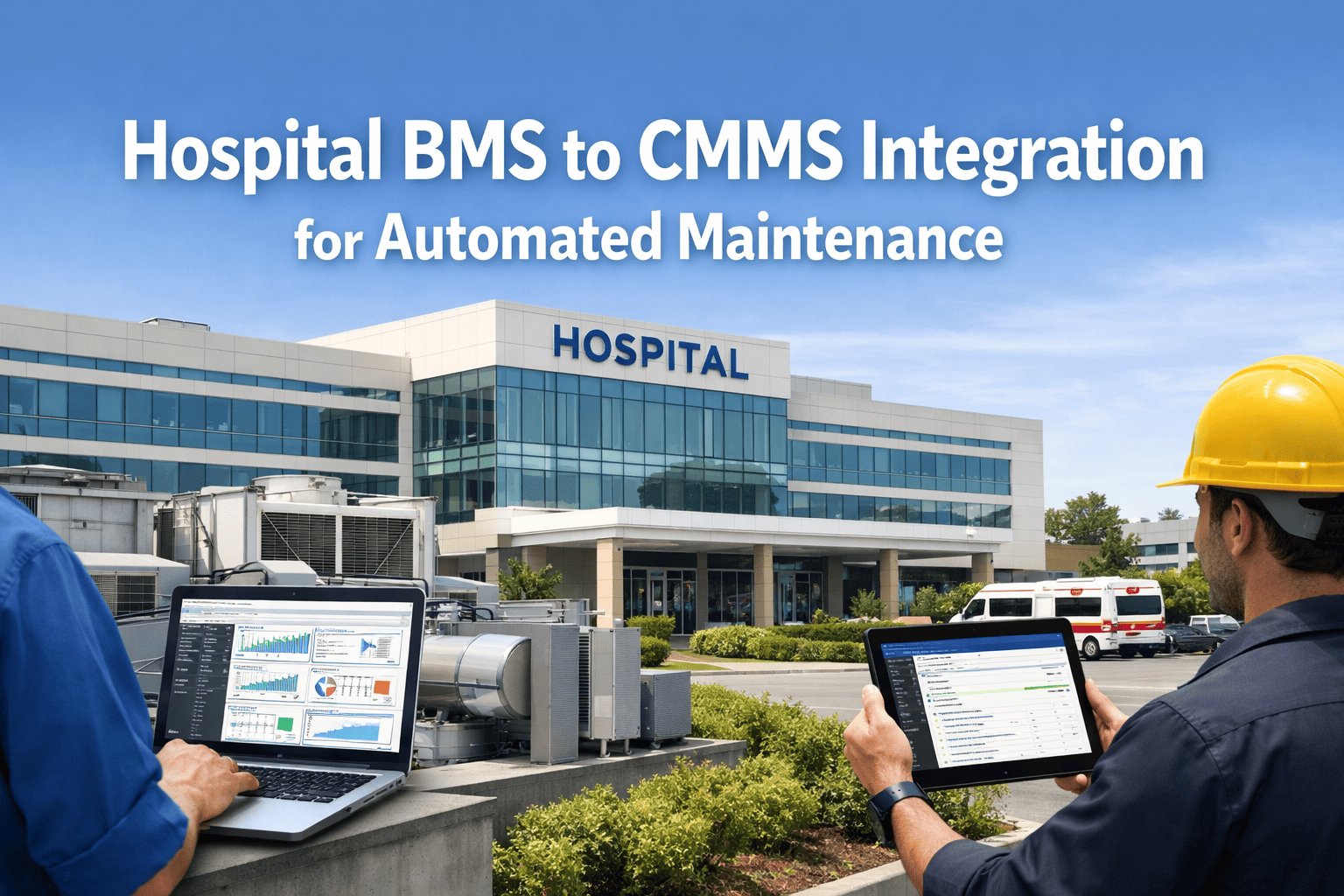
Oxmaint enables direct integration between hospital Building Management Systems and CMMS platforms. BMS alarms and sensor data automatically trigger maintenance work orders with complete asset context, fault details, and historical trends — eliminating manual data entry and accelerating response times in critical healthcare environments.
Key Benefits of BMS-CMMS Integration for Hospitals
Hospitals require uninterrupted operation of critical building systems. Manual processes between BMS alerts and maintenance execution create delays that impact patient care and regulatory compliance. Oxmaint delivers automated, intelligent integration that connects real-time building data directly to actionable maintenance workflows.
BMS detects anomalies in HVAC, chillers, AHUs, medical gas systems, or electrical infrastructure. Oxmaint instantly creates a detailed work order in your CMMS with asset ID, location, alarm values, severity level, and recommended actions.
Technicians receive mobile work orders enriched with live BMS data, trend graphs, and equipment history. This enables faster diagnosis and resolution without repeated site visits for information gathering.
Every integrated workflow generates complete, timestamped audit trails. Oxmaint maintains full documentation of alarm acknowledgment, work order execution, and resolution — ready for inspections and certification audits at any time.
Transform BMS Alerts into Actionable Maintenance — Automatically
Oxmaint connects your hospital’s Building Management System directly to CMMS workflows. Alarms become intelligent work orders with full context delivered to technicians on mobile devices. Book a demo to see BMS-CMMS integration configured for your hospital infrastructure.
Implementation Roadmap for Hospital BMS Integration
Oxmaint deploys BMS-CMMS integration quickly without disrupting hospital operations. The structured approach ensures rapid value delivery while maintaining strict compliance and security standards.
Critical hospital assets in BMS (chillers, AHUs, medical gas, power systems) are mapped to Oxmaint CMMS hierarchy. Integration points and alarm rules are configured based on your existing BMS protocols.
Rule-based triggers are established to convert specific BMS alarms into CMMS work orders. Severity levels, notification protocols, and escalation paths are aligned with hospital maintenance policies.
Executive and facility dashboards provide real-time visibility into system performance, response times, and compliance status. Automated audit reports are configured for regulatory requirements.
Oxmaint vs Traditional Hospital Maintenance Approaches
Manual processes between BMS and CMMS create delays and documentation gaps. Oxmaint delivers a fully integrated digital solution designed specifically for healthcare environments.
| Aspect | Traditional Approach | With Oxmaint Integration |
|---|---|---|
| BMS Alarm to Work Order | Manual notification and data entry | Automatic creation with full context |
| Technician Information Access | Multiple systems and manual checks | Single mobile view with live data |
| Compliance Documentation | Manual compilation before audits | Automatic audit-ready records |
| Response Time | Delayed due to manual processes | Immediate contextual work orders |
Connect Your Hospital BMS to CMMS — Automatically and Securely
Eliminate manual gaps between building system alerts and maintenance execution. Oxmaint delivers secure, reliable integration that improves response times and ensures full compliance. Book a demo to see hospital-specific BMS-CMMS integration in action.
Frequently Asked Questions
Automate Hospital Maintenance with Intelligent BMS-CMMS Integration
Move from reactive manual processes to automated, intelligent maintenance workflows. Improve response times, reduce risk, and ensure continuous compliance across your hospital’s critical building systems. Book a demo with your facility and clinical engineering leadership.