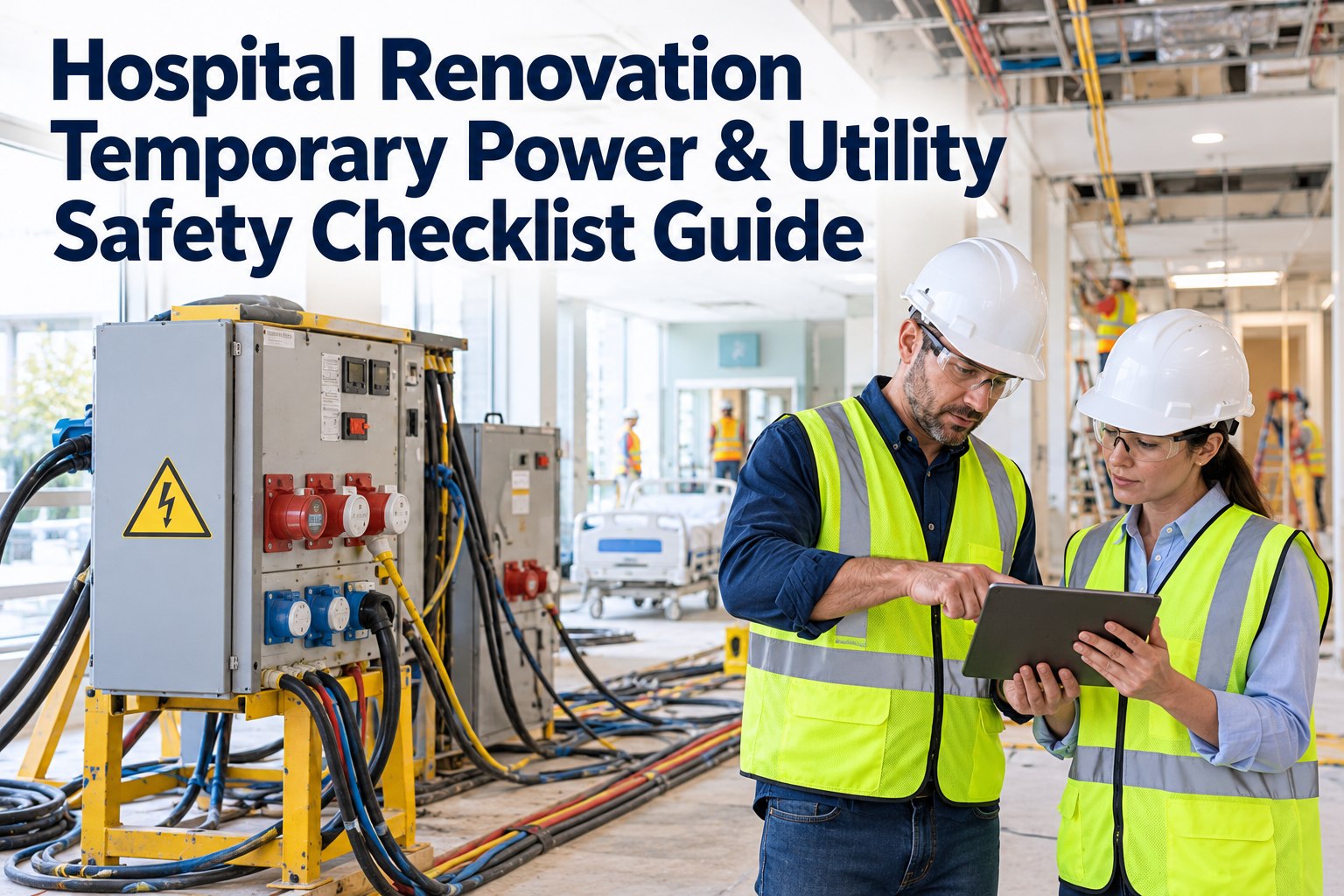
An unannounced NFPA 110 compliance audit at a US hospital — with a missed generator load test, an unsigned transfer switch inspection record, or a UPS battery replacement log two months overdue — creates regulatory exposure that extends beyond a fine. The Joint Commission cites inadequate emergency power system documentation as a Category 1 finding, triggering a follow-up survey within 45 days. In critical care facilities, the gap between a compliant paper record and a field-verified test is precisely where patient safety risk lives. Oxmaint closes that gap — connecting generator run records, transfer switch inspections, and UPS battery logs to auditable, timestamped digital documentation completed by field technicians at the equipment. Book a demo to see how Oxmaint digitizes hospital emergency power compliance across your full facility portfolio.
Hospital emergency power compliance requires documented control of four interdependent systems: NFPA 110 generator load testing and fuel management, automatic transfer switch inspection and exercising, UPS battery capacity testing and replacement scheduling, and NFPA 99 essential electrical system branch documentation. Oxmaint digitizes every inspection record, test log, and corrective action — creating audit-ready documentation that satisfies Joint Commission, CMS, and state health department surveyors without manual assembly.
The Four Emergency Power Systems That Drive Hospital Compliance Risk
Each system carries its own regulatory standard, its own documentation frequency, and its own failure mode when records are paper-based and disconnected from field activity. Book a demo to see how Oxmaint structures all four into a unified digital compliance program.
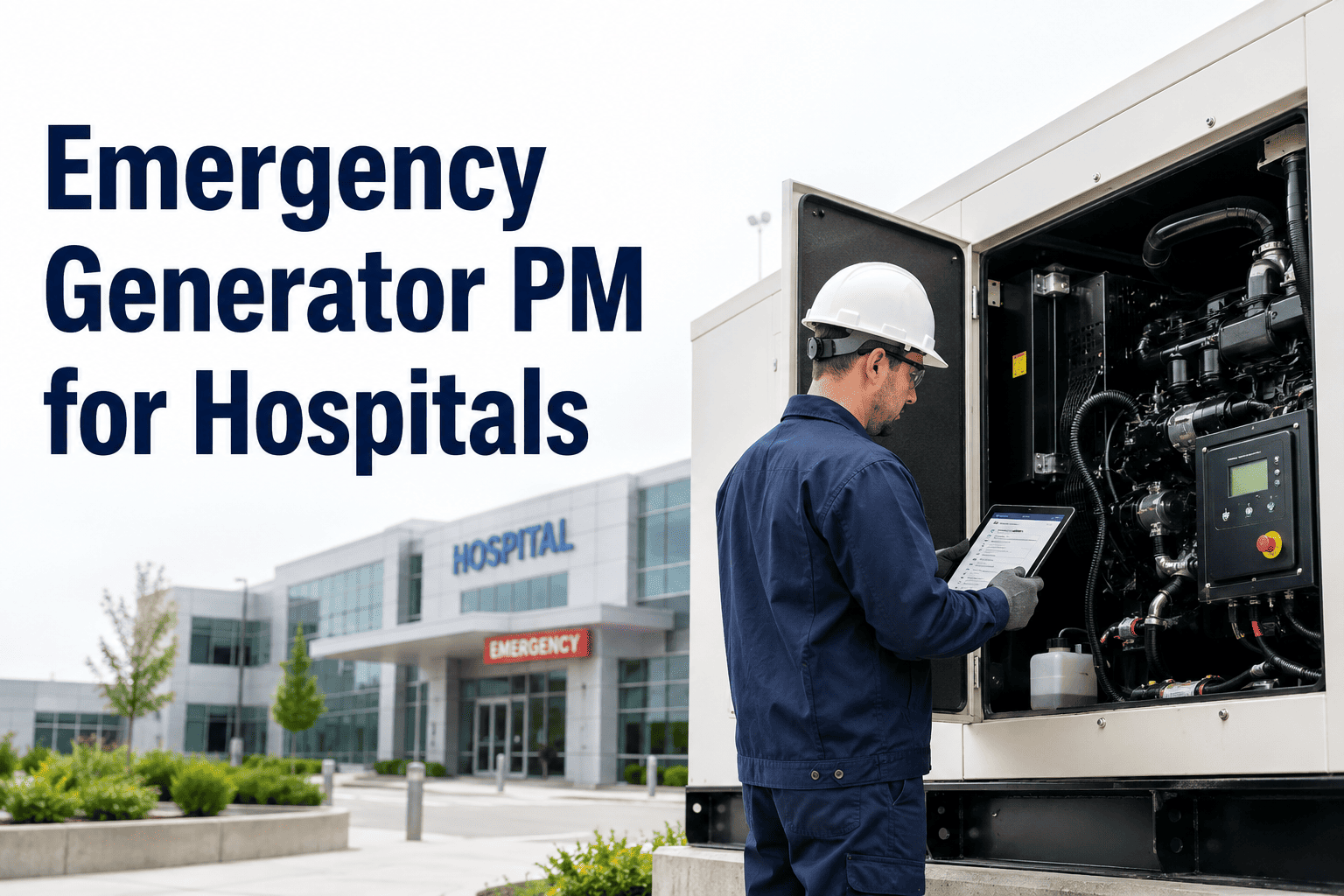
NFPA 110 requires monthly no-load or load tests of 30 minutes minimum and annual load bank tests at 30% rated kW for Level 1 systems. Fuel quality testing, tank level verification, and coolant system checks must be documented per inspection cycle. Missed test windows — even by a single day — create a compliance gap that Joint Commission surveyors identify as a Category 1 finding. Oxmaint schedules and routes all generator PM tasks to field technicians with equipment-specific checklists, capturing test results at the generator with timestamp and technician identity.
Automatic transfer switches serving critical care, life safety, and equipment branches must be exercised monthly and inspected annually per NFPA 110. Contact condition, transfer time verification, and manual bypass operability must be logged. Transfer switch failures are the most common cause of emergency power system non-delivery during an actual outage — making documented testing both a compliance requirement and a patient safety control. Oxmaint links ATS inspection records to each generator asset, triggering escalation when test windows are missed.
Hospital UPS systems protecting ICU, OR, and imaging equipment require annual capacity testing under IEEE 1188, with battery replacement schedules tracked against manufacturer design life. A UPS battery reaching end-of-life without documented replacement triggers both a compliance finding and a latent patient safety risk in any power interruption scenario. Oxmaint manages UPS battery age tracking, capacity test scheduling, and replacement work orders — with automated alerts when battery age approaches replacement threshold and test intervals become overdue.
NFPA 99 requires documented inspection and testing of life safety branch, critical branch, and equipment branch circuits in hospital essential electrical systems — including receptacle testing in patient care areas, ground fault protection testing, and isolated power system inspections in wet locations. Documentation must be retained and retrievable for CMS surveys and state health department inspections. Oxmaint manages the full inspection schedule per branch circuit, captures field readings against NFPA 99 acceptance criteria, and archives records against the facility asset register.
Every Generator Test. Every ATS Exercise. Every UPS Inspection. Documented at the Equipment.
Oxmaint field technicians complete NFPA 110 and NFPA 99 inspection records on mobile at the equipment — not reconstructed from memory before the Joint Commission survey. Book a demo to see the emergency power PM workflow for your facility.
Compliance Performance Benchmarks — Hospital Emergency Power
Deployment Roadmap — Emergency Power Compliance Digitization
Every generator, ATS, UPS, and essential electrical panel registered in Oxmaint with its NFPA 110/99 classification, test frequency, regulatory reference, and responsible technician. Existing paper PM schedules converted to digital task templates per equipment. Fuel tank assets linked to generator records with capacity and reserve threshold configuration.
NFPA 110 generator run log templates, ATS exercise checklists, UPS capacity test forms, and NFPA 99 branch circuit inspection records configured as mobile-first digital forms in Oxmaint. Technicians access inspection tasks via QR-scanned equipment tags — completing records at the equipment in real time. Book a demo to see mobile generator inspection completion for your facility layout.
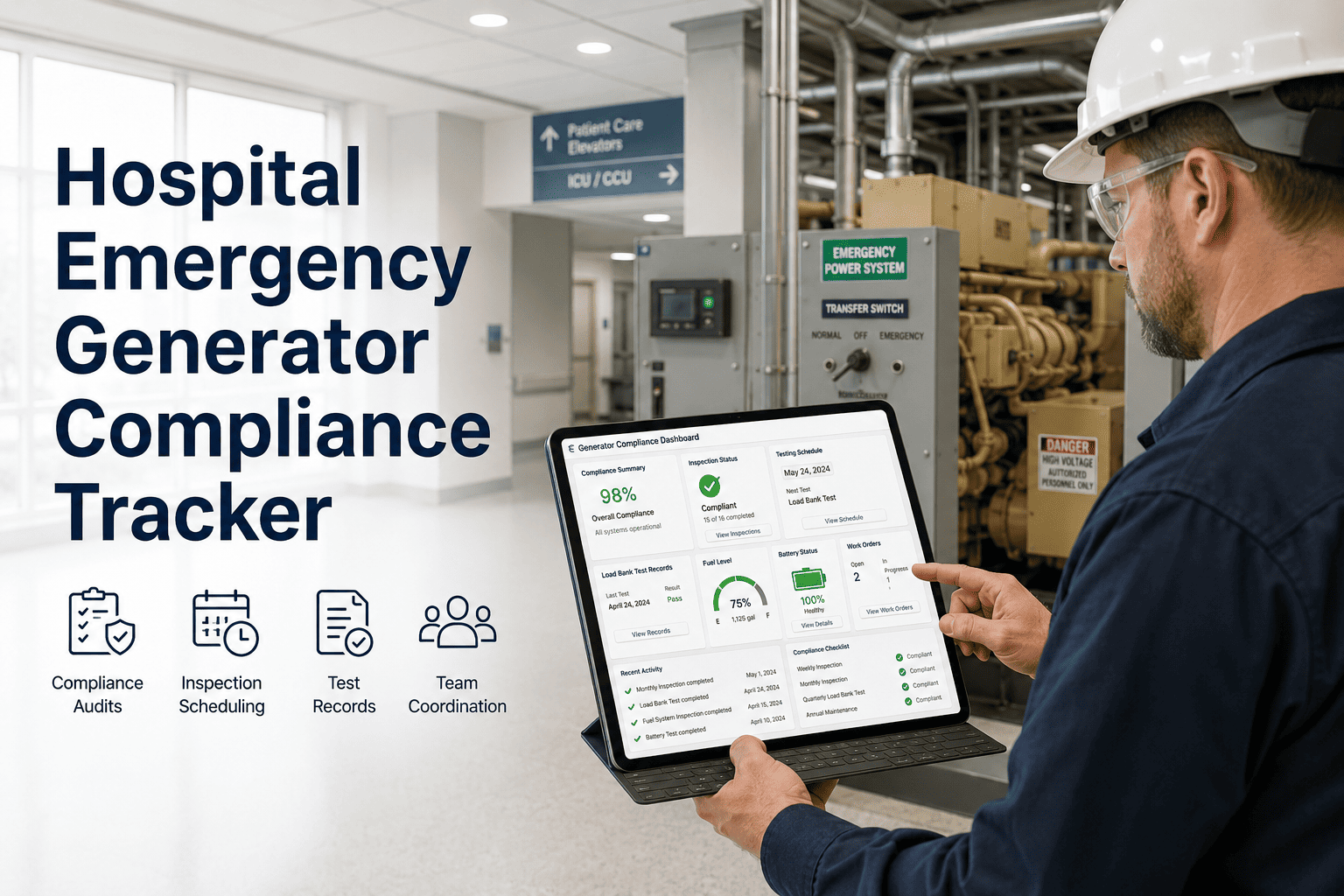
Oxmaint compliance dashboard activated showing PM completion rates, overdue inspection tasks, upcoming test windows, and corrective action status by facility and system type. Joint Commission EC chapter exports assembled automatically from Oxmaint records — reducing survey preparation from weeks to hours. Automated escalation alerts configured for missed generator test windows and overdue ATS exercises.
Outcome Results — Hospital Facilities Using Oxmaint
NFPA 110, NFPA 99, Joint Commission, and CMS — One Audit-Ready System
Whether your facility operates under Joint Commission accreditation, CMS Conditions of Participation, or state health department licensure — Oxmaint pre-configures the correct inspection templates, test frequencies, and documentation exports for your compliance scope. Book a demo to see multi-facility emergency power compliance configuration for your health system.
Platform Capabilities — Hospital Emergency Power
Monthly and annual generator load test schedules auto-generated per NFPA 110 — with fuel level, coolant, and oil records captured at the equipment on mobile, not transcribed afterward.
Monthly ATS exercise records and annual inspection checklists linked to each generator asset — transfer time, contact condition, and manual bypass operability documented per cycle with automatic escalation on missed windows.
Battery installation date, design life, and capacity test results tracked per UPS asset — automated replacement alerts triggered at configurable thresholds before end-of-life, eliminating reactive failure risk in critical care areas.
EC.02.05.01 through EC.02.05.09 documentation assembled from Oxmaint records in under 3 hours — formatted for surveyor review without manual compilation from paper files or disconnected spreadsheets.
Life safety, critical, and equipment branch circuit inspection records managed per NFPA 99 Chapter 6 — receptacle testing, ground fault verification, and isolated power system inspections scheduled and archived per facility floor and department.
Compliance status across all generators, ATS units, and UPS systems consolidated in a single dashboard — facilities VP and regional director views showing PM currency and overdue task counts across every campus in the health system.
Frequently Asked Questions
Close the Emergency Power Documentation Gap Before the Next Survey
Digital generator PM records, ATS exercise logs, UPS battery tracking, and NFPA 99 branch circuit documentation — all live in Oxmaint within 4 to 6 weeks, no IT project required. Book a demo with your facilities compliance team and see the full emergency power workflow configured for your facility portfolio.