A hospital fire safety audit that uncovers an unmonitored sprinkler zone, an uninspected fire door, or a missing suppression system test record does not end with a notation — it ends with a Joint Commission deficiency, a CMS Condition of Participation violation, and potential facility shutdown. NFPA 101 Life Safety Code, NFPA 25 Inspection and Testing of Water-Based Systems, and NFPA 72 National Fire Alarm Code each carry independent documentation obligations that must be satisfied per survey cycle, per building, and per system. The failure mode is not equipment failure. It is documentation failure — the inability to produce a retrievable, auditable record proving the inspection happened, the system passed, and the deficiency was closed. Oxmaint digitizes every fire safety inspection, suppression system test, fire door survey, and corrective action record across your entire hospital portfolio. Book a demo to see how Oxmaint structures NFPA 25, 72, and 101 compliance for healthcare facilities.
Hospital fire safety compliance requires documented control across five system categories: sprinkler and suppression system testing under NFPA 25, fire alarm and detection system inspection under NFPA 72, fire door and egress pathway surveys under NFPA 101, portable extinguisher inspection, and smoke control system verification. Each system has a distinct inspection frequency, test record format, and corrective action deadline. Oxmaint centralizes every inspection record, test result, and deficiency closure into a single auditable platform — eliminating the documentation gap that drives Joint Commission and CMS findings.
Five Fire Safety Systems with the Highest Regulatory Exposure in Healthcare
Each system operates under a separate NFPA code with independent documentation requirements. Failure in any one system creates independent CMS and Joint Commission survey findings. Book a demo to see how Oxmaint manages all five in a unified compliance platform.
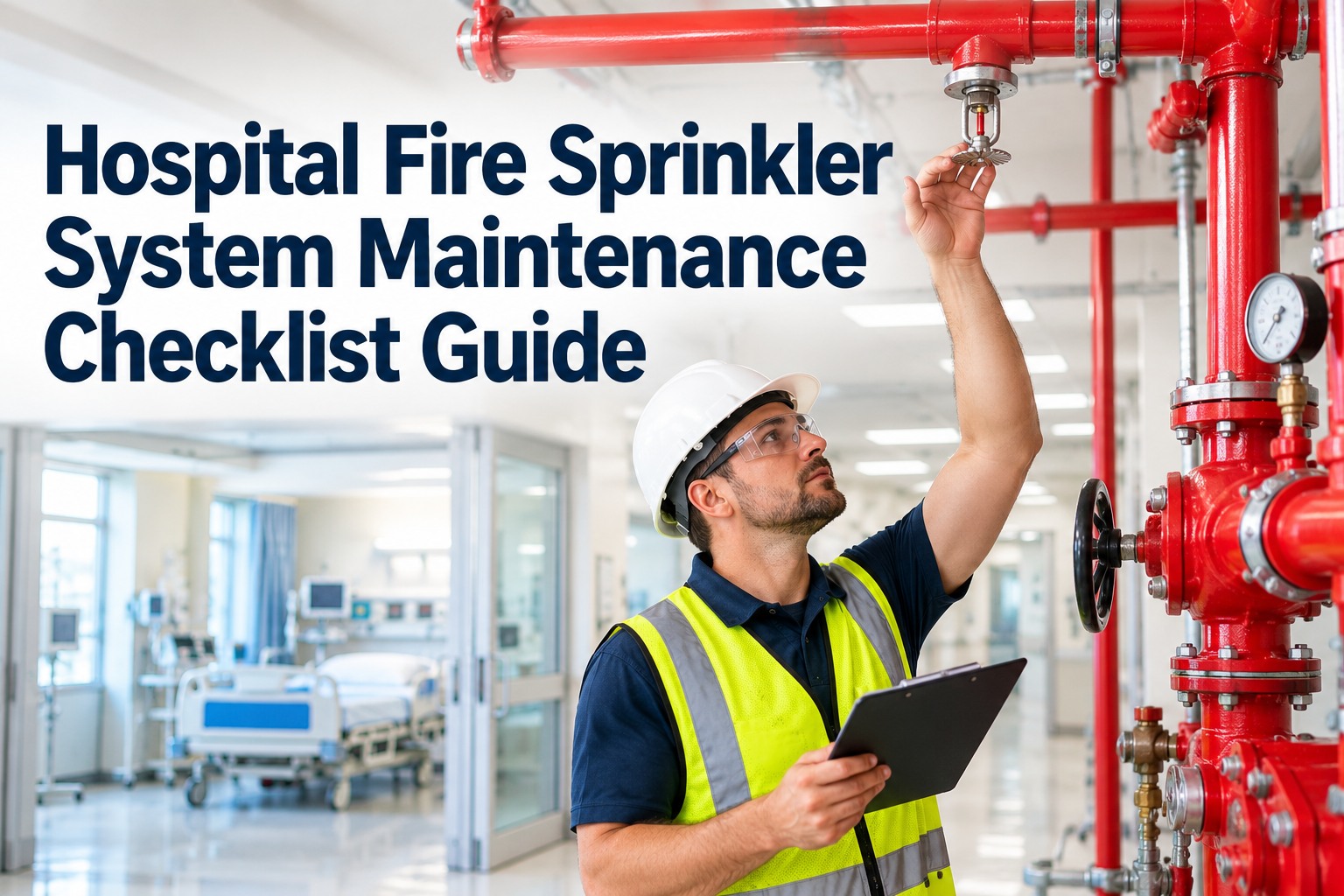
Wet, dry, pre-action, and deluge sprinkler systems in healthcare facilities require quarterly, semi-annual, and annual inspection and test cycles per NFPA 25. Backflow preventer testing, main drain tests, alarm valve testing, and five-year obstruction investigations each carry independent documentation obligations. Oxmaint generates NFPA 25 inspection work orders at the correct frequency, captures test results at the system level, and routes deficiencies to corrective action with deadline tracking.
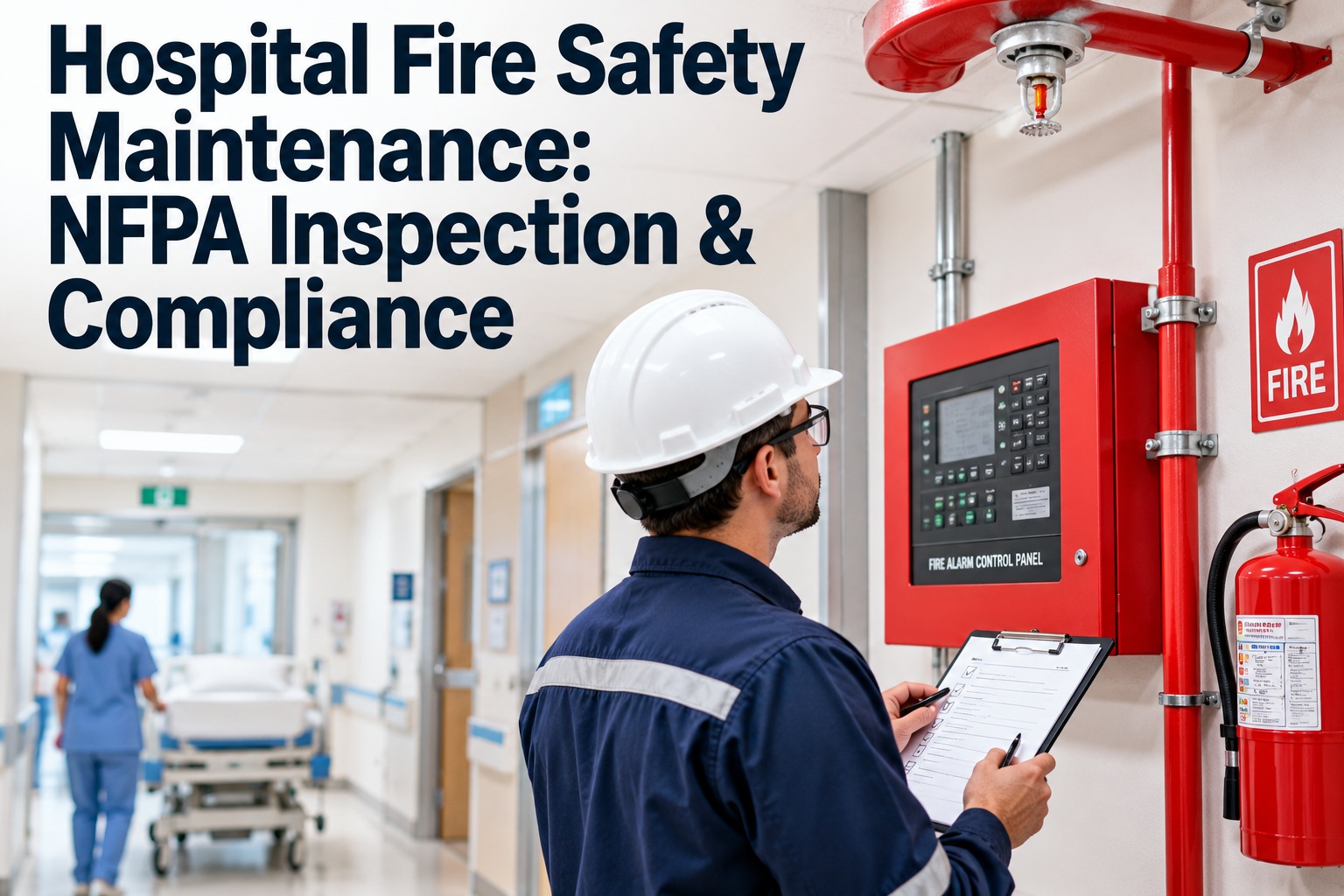
Hospital fire alarm systems — including pull stations, smoke detectors, duct detectors, heat detectors, notification appliances, and the fire alarm control panel — require annual inspection and testing per NFPA 72 Table 14.3.1, with monthly visual inspection of select components. Battery testing, communication pathway verification, and notification appliance circuit testing each produce separate record sets that must be retained and producible on demand at survey. Oxmaint structures the full NFPA 72 inspection matrix by device type, floor, and building — with all results logged against the asset, not the technician's clipboard.
NFPA 80 and NFPA 101 require annual inspection of every fire door assembly in a healthcare facility — including positive latching, self-closing operation, clearance gaps, glazing integrity, and hardware condition. Hospitals with 500+ fire doors face a significant inventory management challenge: tracking inspection currency, recording deficiencies per door, and documenting corrective closure before the next survey cycle. Oxmaint registers every fire door as an inspectable asset with room and floor location, generates annual inspection work orders, and tracks deficiency closure to the individual door record.
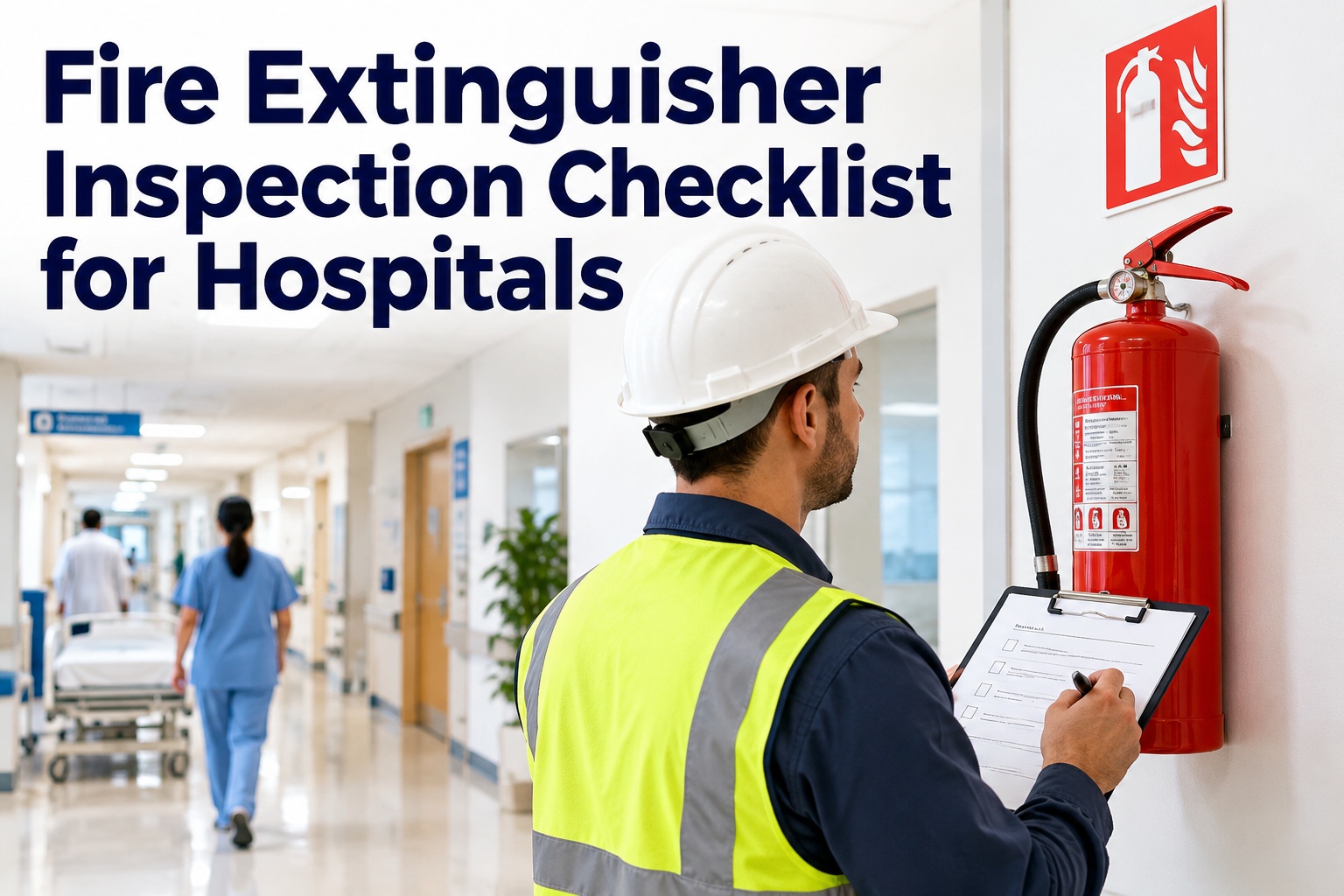
Every portable fire extinguisher in a healthcare facility requires monthly visual inspection and annual maintenance inspection per NFPA 10, with six-year internal examination and hydrostatic testing at intervals by extinguisher type. A 400-bed hospital may carry 800 to 1,200 extinguisher units across all floors, departments, and mechanical spaces — each requiring an individual inspection record, tag, and corrective action log for any unit found discharged, damaged, or out of service. Oxmaint manages the full extinguisher inventory with QR-coded asset tags and generates monthly and annual inspection routes automatically.
NFPA 25. NFPA 72. NFPA 101. Every Inspection Record Captured at the Point of Work.
Oxmaint structures hospital fire safety inspections as mobile work orders — completed in the field, logged against the asset, and immediately available for Joint Commission and CMS survey response. Book a demo to see the fire safety compliance workflow for your facility portfolio.
Hospital Fire Safety Compliance — KPI Benchmarks
Client Results — Healthcare Facilities Using Oxmaint Fire Safety Management
From 61% to 97% Fire Safety Compliance — in 60 Days
Healthcare systems that move from paper inspection logs to Oxmaint's digital fire safety platform close the documentation gap before the next Joint Commission survey — not during it. Book a demo to identify your current compliance gap in the first deployment session.
Oxmaint Fire Safety Platform — Core Capabilities for Healthcare
Quarterly, semi-annual, and annual NFPA 25 inspection work orders generated automatically by system type — wet pipe, dry pipe, pre-action, and deluge. Test results logged per zone, per valve, per device. Deficiencies routed immediately to corrective action with regulatory deadline assigned.
Every alarm device — pull station, smoke detector, duct detector, notification appliance — registered in Oxmaint by floor, room, and building. Annual test records captured per device with technician identity, timestamp, and pass/fail result. Monthly visual inspection routes generated automatically.
Complete fire door asset registry with room number, floor, fire rating, and hardware type. Annual NFPA 80 inspection checklists — latching, self-closing, clearances, glazing — completed on mobile at the door. Deficiency status tracked to individual door record with closure evidence required before sign-off.
QR-tagged extinguisher inventory with floor-by-floor inspection routes generated monthly and annually. Missing or failed units flagged immediately with alert to facilities manager. Six-year and hydrostatic test due dates tracked per unit with automated advance notification.
Complete fire safety documentation — inspection records, test results, deficiency logs, and corrective action evidence — exportable for Joint Commission, CMS, and state health department surveys. Full audit package assembled in under 4 hours, not weeks of manual gathering.
System-level visibility across every hospital, outpatient center, and campus building in your portfolio. Inspection currency rates, overdue tasks, and open deficiencies displayed by facility, regulatory standard, and system type — giving VP and Director level leadership one view of enterprise fire safety posture.
Compliance Comparison: Oxmaint vs. Competing CMMS Platforms
| Capability | Oxmaint | MaintainX | UpKeep | Fiix | Limble | IBM Maximo | Hippo | Infor EAM |
|---|---|---|---|---|---|---|---|---|
| NFPA 25 sprinkler inspection scheduling | Yes | Generic | No | No | No | Custom | No | Custom |
| NFPA 72 device-level test records | Yes | Generic | Generic | No | No | Custom | No | Custom |
| Fire door inventory and annual survey | Yes | No | No | No | No | Yes | No | Partial |
| Joint Commission / CMS audit export | Yes | Partial | Partial | Partial | Partial | Yes | Partial | Yes |
| Multi-facility compliance dashboard | Yes | Generic | Generic | Partial | Generic | Yes | No | Yes |
| NFPA 10 extinguisher route management | Yes | Generic | Generic | Generic | Generic | Yes | Generic | Yes |
| Deployment without IT project | Yes | Yes | Yes | Varies | Yes | No | Yes | No |
Frequently Asked Questions
Close the Fire Safety Documentation Gap Before the Next Joint Commission Survey
NFPA 25, 72, and 101 inspection records. Fire door annual surveys. Extinguisher route compliance. All live in Oxmaint within 4 to 6 weeks — no IT project required. Book a demo with your VP of Facilities and see the full fire safety compliance platform configured for your hospital portfolio.