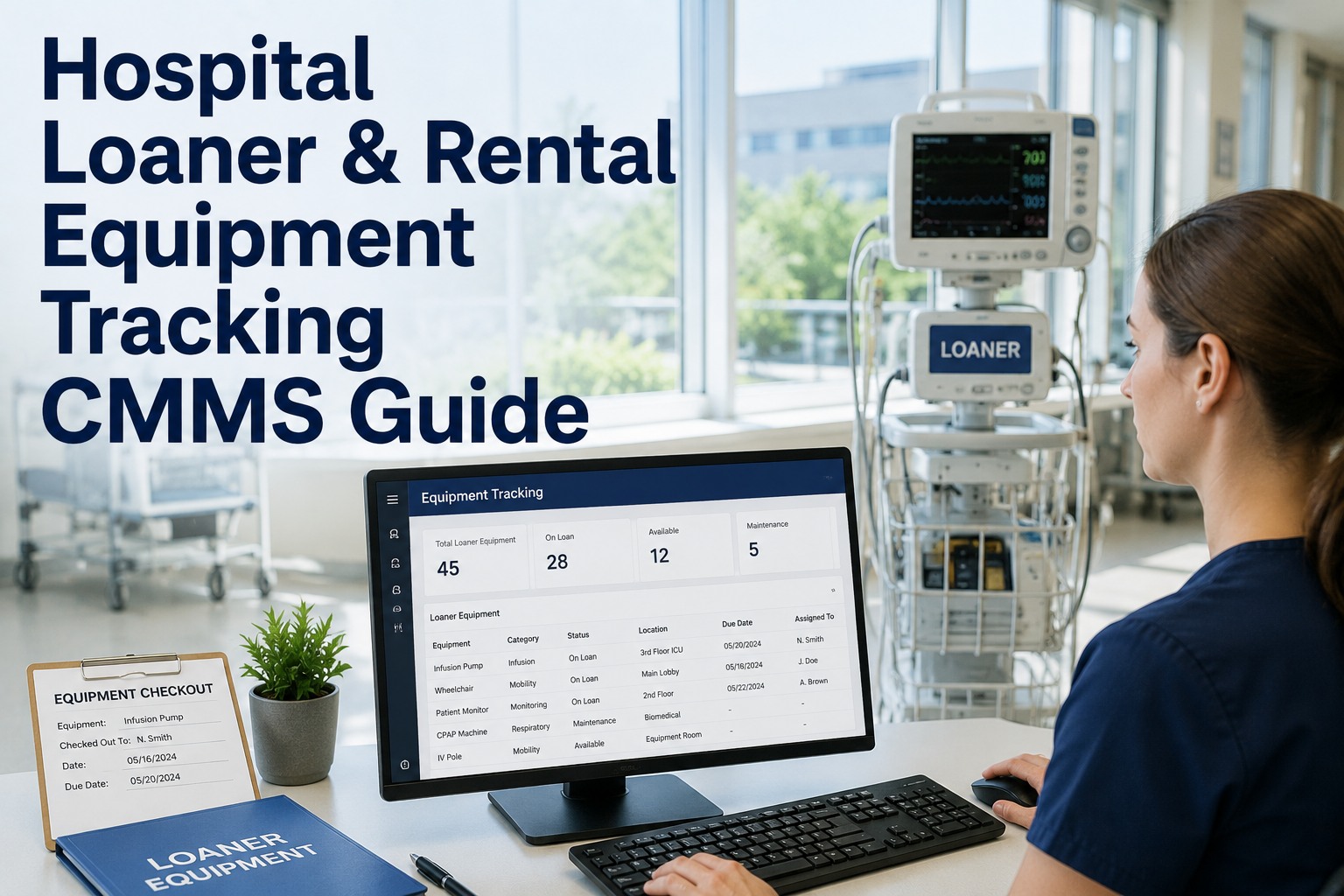
Hospital loaner equipment and rental tracking is one of the most overlooked compliance liabilities in healthcare maintenance today. When a vendor drops off a temporary imaging system, infusion pump bank, or biomedical device, that asset must be held to the exact same preventive maintenance, safety inspection, and calibration standards as owned equipment—yet most facilities still rely on spreadsheets, paper logbooks, or scattered emails to manage check-in and check-out. A dedicated CMMS for loaner equipment tracking eliminates these blind spots by enforcing automated intake verification, PM scheduling, and return-date accountability. According to industry audits, mismanaged loaner and rental devices cost hospitals thousands in lost vendor charges, delayed returns, and potential Joint Commission findings. If your team is ready to replace manual tracking with a centralized, audit-ready system, you can Start Free Trial of OxMaint today and see the difference immediately.
Hospital Loaner & Rental Equipment Tracking
How much is one untracked loaner device costing your hospital right now?
Vendor loaner and rental equipment flows through your facility every week—imaging carts, biomedical devices, surgical robots, and infusion pump fleets. Without a CMMS built for temporary asset lifecycle management, overdue rentals trigger daily vendor charges, PM compliance gaps create audit findings, and patient safety risks go unnoticed. OxMaint brings every loaner device under the same preventive maintenance, safety, and compliance standards as your owned equipment.
The Loaner Tracking Problem
Why hospital rental equipment tracking fails without a CMMS
Over 60% of hospitals still manage temporary equipment check-in and check-out using paper logs or shared spreadsheets—creating blind spots that directly impact compliance, vendor costs, and patient safety.
Real-world scenario
A 300-bed regional hospital borrows a vendor MRI coil loaner for overflow capacity. The biomedical engineering team logs it on a paper intake form, but the return date is buried in a vendor email. Nine days past the rental agreement, the vendor begins charging $380 per day. By the time someone catches it, the hospital has accrued $3,420 in unnecessary fees—and the device was never added to the preventive maintenance schedule, creating a compliance gap during a Joint Commission audit.
Step-by-Step Guide
The CMMS loaner equipment intake and return workflow
A structured, 5-step intake-to-return workflow ensures every loaner device is fully accountable to the same PM, safety, and calibration standards as owned equipment.
Vendor Intake & Asset Registration
Scan the loaner device barcode or QR code upon vendor delivery. OxMaint auto-creates a temporary asset record with vendor name, model, serial number, expected return date, and loan agreement reference—no manual data entry required.
PM & Safety Verification
Before the device enters patient care, OxMaint triggers a mandatory preventive maintenance and electrical safety inspection work order. The loaner cannot be marked as "available" until the inspection checklist is completed and signed off.
Active Deployment Tracking
The device is assigned to a department or location. OxMaint schedules recurring PM tasks based on the manufacturer's interval, ensuring the loaner receives the same maintenance rigor as owned assets throughout its stay.
Return-Date Alerts & Vendor Coordination
Automated alerts notify the biomedical team 72 hours, 48 hours, and 24 hours before the rental period expires. A return work order is generated, prompting final inspection, accessory verification, and vendor pickup scheduling.
Check-Out & Audit Archival
Upon vendor pickup, OxMaint closes the loaner record, archives the complete maintenance and inspection history, and generates an audit-ready compliance report tied to the original loan agreement.
Feature Integration
How OxMaint solves hospital loaner and rental equipment tracking
OxMaint brings AI-powered CMMS capabilities to temporary asset management, closing every gap that spreadsheets and paper logs leave open.
Automated Intake & PM Verification
Barcode-driven check-in auto-creates temporary asset records and triggers mandatory safety inspections before deployment. Loaner devices cannot enter patient care until PM is verified—eliminating 100% of intake compliance gaps.
Outcome: Zero undocumented loaner devices in active service
Rental Period & Return-Date Management
OxMaint tracks every loaner agreement's start and end date with tiered automated alerts. Late fees from overdue rentals drop to near-zero as return work orders are generated and assigned days before expiration.
Outcome: 90–100% reduction in vendor late fees
Audit-Ready Compliance Records
Every inspection, PM task, and location transfer is timestamped and archived. Generate a complete compliance report for any loaner device in seconds—ready for Joint Commission, DNV, or internal audit review.
Outcome: Cut audit preparation time by 80%
Maintenance Analytics & Cost Tracking
OxMaint's analytics dashboard surfaces rental spending, PM compliance rates, and vendor performance metrics. Identify which vendors consistently deliver late, which loaner models require excessive maintenance, and where rental costs can be consolidated.
Outcome: 20–30% reduction in annual rental spend
Compliance Comparison
Manual tracking vs. CMMS loaner equipment management
The difference between spreadsheet-based tracking and a dedicated CMMS for hospital rental equipment is the difference between surviving an audit and failing one.
| Capability | Spreadsheets & Paper Logs | OxMaint CMMS |
|---|---|---|
| Loaner intake documentation | Manual entry, prone to omission | Barcode scan, auto-populated record |
| PM scheduling for loaner devices | Not tracked or tracked separately | Auto-scheduled to manufacturer intervals |
| Return-date alerts | Calendar reminder (if set) | Tiered automated alerts at 72/48/24 hrs |
| Audit trail & compliance reports | Reconstructed manually, hours of work | Generated in seconds, fully timestamped |
| Vendor cost tracking | Not visible until invoiced | Real-time rental spend dashboard |
| Patient safety verification | Verbal or paper sign-off | Mandatory digital checklist before deployment |
ROI & Cost Impact
What does hospital rental tracking software cost—and save?
A mid-size hospital managing 40–60 active loaner and rental devices at any given time typically loses $50,000–$120,000 annually in late fees, redundant rentals, and audit-related labor. OxMaint's CMMS loaner tracking module eliminates the majority of that waste.
Annual Late Fee Waste
Avg. Loaner Devices × Overdue Rate × Avg. Days Late × Daily Vendor Fee
50 devices × 30% × 9 days × $380 = $51,300/yr
Audit Labor Cost
Compliance Staff Hours × Hourly Rate × Audit Frequency
120 hrs × $65 × 4 audits = $31,200/yr
See OxMaint track your loaner fleet in real time
Book a 30-minute demo and watch how OxMaint handles vendor intake, PM verification, return alerts, and audit reporting for hospital rental equipment.
Frequently Asked Questions
Hospital loaner equipment tracking CMMS: your questions answered
What is hospital loaner equipment tracking in a CMMS?
Hospital loaner equipment tracking in a CMMS is the process of registering, monitoring, and managing temporary vendor-provided or rental medical devices through a centralized maintenance management system. It ensures that every loaner device—whether an imaging system, biomedical pump, or surgical tool—receives the same preventive maintenance, safety inspections, and compliance documentation as owned equipment, from check-in to vendor return.
How does a CMMS handle rental period management for hospital equipment?
A CMMS like OxMaint tracks the start and end date of every rental agreement and generates automated alerts at 72, 48, and 24 hours before expiration. When the return window approaches, the system auto-creates a check-out work order that includes final inspection, accessory verification, and vendor pickup coordination—preventing overdue fees and ensuring the device is returned on time with full documentation. You can Book a Demo to see this workflow live.
Can loaner devices be held to the same PM standards as owned equipment?
Yes. OxMaint allows you to assign preventive maintenance schedules to loaner assets based on manufacturer intervals, device type, or risk classification. When a loaner device is registered at intake, the system automatically schedules required PM tasks, electrical safety inspections, and calibration checks—ensuring the temporary device meets the same Joint Commission and regulatory standards as permanently owned equipment.
What happens if a loaner device is not tracked properly?
Untracked loaner devices create three major risks: vendor late fees averaging $300–$500 per day per device, compliance audit findings from undocumented PM and safety inspections, and patient safety exposure if a device enters service without electrical or functional verification. Hospitals using manual tracking methods typically lose $50,000–$120,000 annually across these categories. You can Start Free Trial of OxMaint to eliminate these gaps immediately.
How long does it take to implement CMMS loaner tracking in a hospital?
Most hospitals are live on OxMaint's loaner tracking module within 2–4 weeks. The system integrates with existing barcode scanners and asset tags, and the intake workflow can be configured to match your facility's existing vendor drop-off process. Training for biomedical engineering and maintenance staff typically takes 1–2 hours, with full adoption achieved within the first rental cycle.
Stop losing money on untracked loaner equipment
Join the hospitals using OxMaint to manage every rental device with full PM compliance, automated return alerts, and audit-ready reporting. Your first loaner cycle could be fully tracked by next week.
Free 14-day trial · No credit card