Imaging Equipment Maintenance: MRI, CT Scanner, X-Ray & Ultrasound PM Schedules

By Jack Edwards on March 31, 2026

imaging-equipment-maintenance-mri-ct-xray-ultrasound

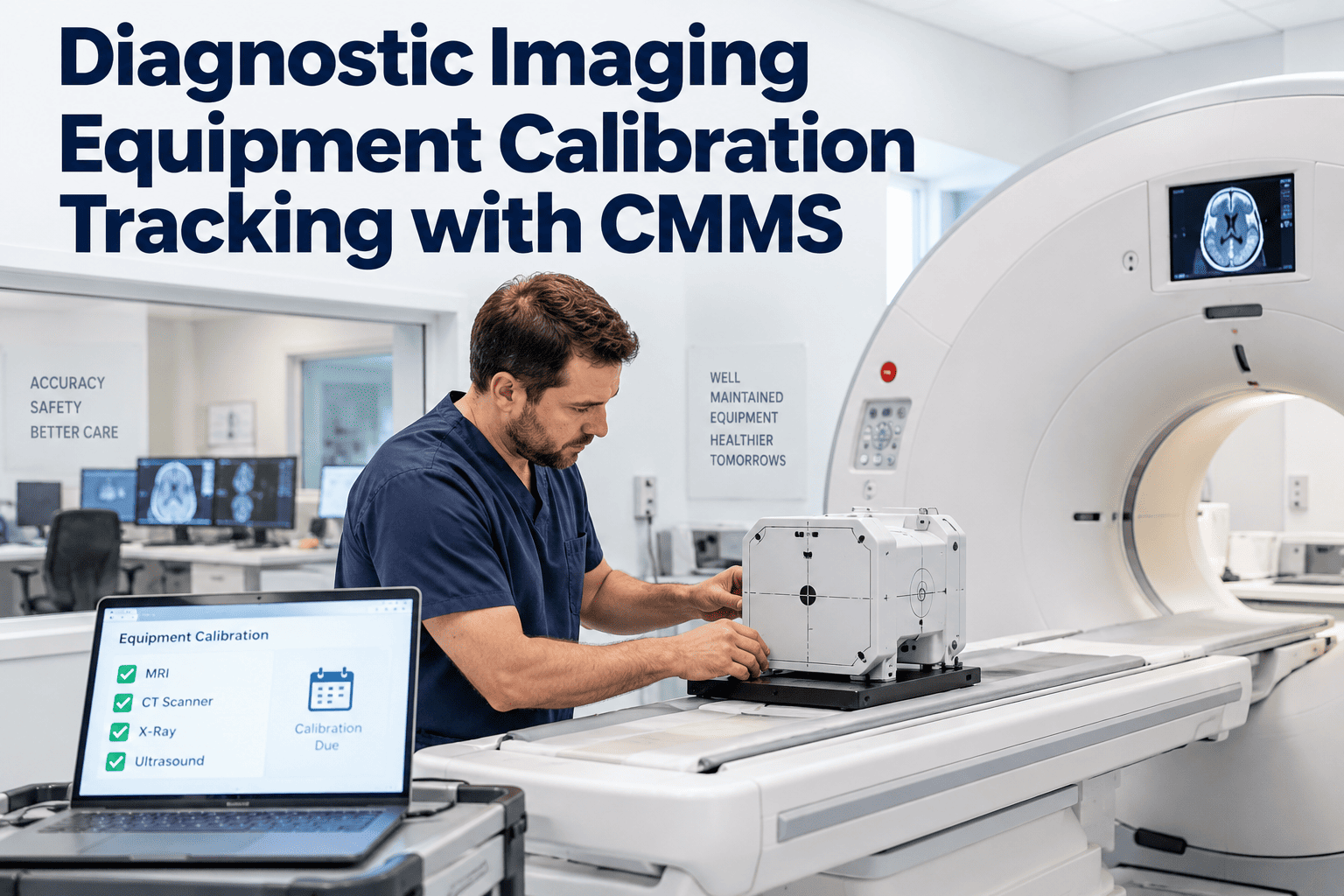
Every minute an MRI sits dark costs a hospital between $1,500 and $3,000 in lost revenue. CT scanners running without structured PM programs fail 60% more often than maintained units. Yet across radiology departments globally, maintenance is still treated as something you do after the error code appears — not before. This guide breaks down exactly what each imaging modality needs, when it needs it, and what it costs when you skip it. If your biomedical team is still tracking PM schedules on spreadsheets, start a free trial with Oxmaint or book a demo to see automated PM scheduling built for radiology operations.


Radiology Engineering · 2026 PM Guide

Imaging Equipment Maintenance:
MRI, CT, X-Ray & Ultrasound PM Schedules

OEM-aligned preventive maintenance intervals, failure pattern data, and compliance requirements — for every major imaging modality, in one place.

$2,000
per hour — CT scanner unplanned downtime cost
80%
of imaging failures preventable with structured PM
20–30%
longer equipment lifespan with consistent PM programs
3–5x
more expensive to repair reactively vs. planned maintenance
Why Imaging Maintenance Is Different

Your Scanners Are Not Generic Equipment. Your PM Program Shouldn't Be Either.

MRI systems hold liquid helium at −269°C. CT tubes accumulate heat units across thousands of rotations per scan. Ultrasound transducers degrade one dead crystal at a time — invisibly, until image quality drops. X-ray detectors drift out of calibration in ways that compromise diagnostic accuracy without triggering a single error alert. Each modality fails differently. Each requires a maintenance program built around its specific failure modes — not a generic asset PM calendar. Facilities that apply one-size PM schedules to imaging fleets see 40% higher unplanned downtime rates than those running modality-specific programs. Start a free trial with Oxmaint to see how modality-specific PM scheduling works in practice, or book a demo and we'll walk through your specific imaging fleet.

MRI
MRI Systems
$1.5M–$3M asset value
4x / year PM
CT
CT Scanners
$90K–$900K asset value
2x / year PM
XR
X-Ray Systems
$30K–$250K asset value
4x / year PM
US
Ultrasound Units
$20K–$200K asset value
Daily + quarterly
PM Schedule Deep Dive

Modality-by-Modality: What Gets Checked, When, and Why

01
MRI Systems
Cryogenic precision demands the most rigorous PM frequency of any imaging modality
4 PM visits/year
Daily
Helium level check
QC phantom scan
Magnet temp log
Weekly
Coil performance test
Gradient calibration
Quench vent inspect
Quarterly PM
Cryogen system full service
RF shielding integrity
Chiller inspection
ACR image quality testing
Annual
Medical physicist survey
Full field homogeneity
Safety interlock test
!
Chiller maintenance is NOT included in standard MRI PM contracts. A separate HVAC service agreement is required. Without it, overheating boards are the #1 cause of unplanned MRI downtime — costing $80,000+ per bearing collapse event.
02
CT Scanners
Tube heat unit tracking is the single most important metric to manage — and most teams don't track it
2 PM visits/year
Daily
CT number accuracy
Noise measurement
Artifact evaluation
Monthly
Spatial resolution (MTF)
Slice thickness check
CT number linearity
Semi-Annual PM
Tube heat unit review
Cooling circuit flush
Gantry tilt calibration
High-voltage generator test
Annual
Physicist survey (CTDI dose)
ACR accreditation QC
Full detector calibration
!
ACR CT accreditation mandates documented daily QC records. Without a CMMS enforcing mandatory closure fields, technologists complete tasks but records remain incomplete — creating a compliance gap that surveyors find immediately.
03
X-Ray Systems
Radiation output drift is silent — calibration verification catches what visual inspection never will
4x/year formal checks
Daily
Visual inspection
Contact point disinfection
Test image artifact check
Weekly
Mechanical movement check
Safety interlock verify
Cable/connector inspect
Quarterly
Radiation output verification
Collimator alignment
kV/mA parameter accuracy
Vent cleaning + fan check
Annual
Full calibration service
Regulatory compliance review
Parts replacement cycle
!
Radiation output must stay within 10% of target values per FDA and Joint Commission standards. Drift beyond this range means every image taken since the last verified calibration is potentially non-diagnostic — a patient safety and liability issue.
04
Ultrasound Systems
Transducers are the highest-cost consumable in ultrasound — and most facilities have no structured inspection program
Daily + quarterly formal
Before Each Use
Lens crack visual check
Housing/cable integrity
Electrical safety verify
Monthly
Phantom depth penetration
Lateral resolution test
Uniformity evaluation
Quarterly
Dead element count test
Crystal integrity scan
Transducer performance log
Endocavitary probe review
Annual
Full fleet probe audit
Accreditation QC review
Firmware/software update
!
A cracked transducer lens poses a direct electrical safety risk during endocavitary exams. Probe degradation is gradual and often invisible without structured QC — making per-use inspection and quarterly dead element testing non-negotiable, not optional.
The Cost of Skipping PM

Reactive Imaging Maintenance vs. Planned Programs: The Numbers

Every skipped PM is a deferred cost that compounds. Here is what the shift from reactive to planned maintenance actually delivers — in dollars, uptime, and lifespan.

Reactive Maintenance
Repair cost multiplier
3–5x higher
Avg. CT downtime per event
4–8 hours
Revenue lost per CT outage
$8,000–$16,000
Equipment lifespan
Shortened 20–30%
Accreditation documentation
Gaps and findings
Unplanned failure rate
60% higher
Patient rescheduling
Frequent disruption
Capital replacement timeline
Earlier, unplanned
Planned PM Program
Annual PM cost (MRI)
2–4% of asset value
Failure prevention rate
Up to 80%
Fleet uptime
94%+ achievable
Equipment lifespan gain
+20–30% years
Accreditation readiness
Audit-ready always
Unplanned failure reduction
60%+ fewer events
CapEx predictability
5–10 yr forecast models
Capital replacement timing
Planned, budgeted

The math is decisive. A $2 million MRI with a $60,000 annual PM program avoids an average of $180,000–$240,000 in reactive repair costs annually — plus the revenue impact of avoided downtime. If your radiology fleet doesn't have a structured PM program yet, start a free trial with Oxmaint or book a demo — most biomedical teams are live in under 10 business days.

What Falls Through the Cracks

The 8 Most Common Imaging Maintenance Failures

These are the gaps that surveyors find — and that drive the unplanned failures nobody budgets for. Across all four modalities, the pattern is the same: the work gets done, the documentation doesn't.

01
No Modality-Specific PM Schedules
Applying the same calendar-based PM interval to MRI, CT, X-ray, and ultrasound produces a program that's inadequate for high-risk modalities and over-serviced for lower-risk ones. OEM-aligned frequency — quarterly for MRI and X-ray, semi-annual for CT, daily for ultrasound transducers — reduces failure rates by up to 60%.
02
Chiller Excluded From MRI Contracts
The chiller is a separate unit not covered by standard MRI PM agreements. Facilities regularly discover this gap after an overheating event costs $80,000+ in component damage.
03
Tube Heat Units Not Tracked
CT tube lifetime is measured in heat units, not calendar time. Teams that track only elapsed time miss the actual failure predictor — accumulated load relative to tube age curves.
04
Ultrasound Dead Element Testing Not Performed
Most facilities rely on visual transducer inspection — which misses degraded but structurally intact crystals. Dead element counts using service software or a dedicated tool are required to catch subtle probe failure before it reaches the patient. An undetected cracked transducer lens creates electrical safety risk during endocavitary procedures — a patient harm event that structured QC would have prevented.
05
PM Completion Without Sign-Off
Work orders marked complete with no technician signature, time stamp, or photo evidence. Under TJC, DNV GL, and HFAP standards, this is an open finding regardless of whether the physical task was completed.
06
X-Ray Calibration Drift Undetected
Output drift beyond 10% of target values compromises diagnostic accuracy. Without quarterly dose meter verification, equipment can operate outside specification for months before a formal check reveals the problem.
07
Physicist Survey Records Siloed
Annual physicist survey documentation stored separately from the CMMS means surveyors must piece together records from multiple sources. ACR and Joint Commission require unified, immediately retrievable records.
08
Multi-Site Maintenance Inconsistency
Health systems operating multiple imaging sites often find PM records are formatted, stored, and documented differently at each location — creating incomparable histories when capital planning or accreditation review requires fleet-level analysis.
Oxmaint for Radiology

How Oxmaint Manages Imaging PM Programs End to End

Radiology operations need a CMMS that understands the difference between an MRI cryogen log and a CT tube heat unit record. Oxmaint is built for it — not adapted from generic asset management. Most biomedical teams are live in 5–10 business days. Start a free trial and set up your first imaging PM schedule today, or book a demo to see the radiology module live.


PM
Modality-Specific PM Scheduling
Separate PM templates for MRI, CT, X-ray, and ultrasound — each with OEM-aligned frequency triggers. Daily tasks, quarterly PMs, and annual physicist surveys scheduled from the same asset record.

QC
Digital QC Checklists with Auto-Escalation
Technologists complete ACR-aligned QC checklists on mobile. Results outside tolerance automatically create a linked corrective work order — no manual escalation, no missed findings.

AU
Audit-Ready Documentation
Every PM closure requires technician digital signature, timestamp, and photo attachment. Records are retrievable in under 60 seconds by asset, modality, site, or date range — exactly what ACR and Joint Commission surveyors demand.

FL
Full Asset Registry With Maintenance History
Every scanner carries a complete lifetime maintenance record — from install date through current PM cycle. Asset condition scoring, OEM specifications, and tube hour logs in one hierarchy from day one.

MS
Multi-Site Fleet Visibility
Health systems with multiple imaging campuses see PM compliance rates, overdue tasks, and corrective action status across all sites in one dashboard. Consistent documentation regardless of location.

CX
Rolling CapEx Forecasting From Asset Data
5–10 year capital replacement models built from actual equipment condition data. Presents per-asset replacement justification to finance and ownership — no spreadsheet, no guesswork.

WO
Work Order Management With Full Technician History
Every corrective action linked to the originating PM finding, with assigned owner, resolution deadline, and documented closure. No open corrective actions without traceable resolution timelines.

MO
Mobile-First Field Capture
Biomedical engineers and imaging technologists complete inspections, attach photos, and close work orders from the equipment room floor. Real-time compliance — not end-of-month batch entry.
FAQ

Questions Your Biomedical Team Is Already Asking

01 How often should MRI preventive maintenance be performed? +
OEM recommendations for MRI systems are 4 PM visits per year — quarterly. Each visit covers cryogen systems, RF shielding integrity, coil performance, and gradient calibration. Critically, chiller maintenance is a separate service requirement not bundled into standard PM contracts. Facilities that assume the quarterly PM covers all major MRI subsystems consistently discover the gap only after a costly overheating event.
02 What does ACR CT accreditation require in terms of documented QC? +
ACR CT accreditation requires documented daily quality control covering CT number accuracy, image noise measurement, and artifact evaluation. Weekly and monthly records must include spatial resolution testing, slice thickness accuracy, and CT number linearity across exposure settings. An annual medical physicist survey must be performed and documented, covering CTDI dose measurement and a full review of the QC program. All records must be retained and immediately retrievable for survey review — a standard that paper-based or spreadsheet tracking rarely meets consistently.
03 Is daily ultrasound transducer inspection really necessary? +
Yes — and it is not just a compliance formality. A cracked transducer lens poses a direct electrical safety risk during endocavitary examinations and a degraded array delivers images that appear diagnostic but are not. Because transducer degradation is gradual and often undetectable visually, the per-use inspection must be combined with formal quarterly QC testing using a tissue-equivalent phantom and dead element count testing using service software. Probes represent the highest-cost maintenance component in any ultrasound program — structured inspection programs extend probe life and catch safety risks before they reach patients.
04 How does a CMMS improve imaging PM compliance rates? +
The primary failure mode in imaging PM programs is not that tasks go unperformed — it is that task completion is not properly documented at the point of work. A CMMS like Oxmaint enforces mandatory documentation fields at work order closure: technician digital signature, timestamp, photo evidence, and result values. Schedules are auto-generated from asset records with the correct OEM-aligned frequency — no manual calendar management. When a QC result falls outside tolerance, the system automatically escalates to a corrective work order tied to the originating finding. PM compliance rates in facilities using CMMS enforcement typically run 15–25 percentage points higher than those tracking PM on spreadsheets or paper checklists.
Built for Biomedical and Radiology Engineering Teams

Your Imaging Fleet Deserves a PM Program That Matches Its Complexity

MRI cryogen logs, CT tube heat unit tracking, X-ray calibration records, ultrasound transducer QC — Oxmaint manages all of it from one platform. Modality-specific PM schedules, digital checklists, automatic corrective action escalation, and full audit trails for ACR, Joint Commission, and DNV GL compliance. Most radiology and biomedical teams are live in under 10 days — no heavy implementation, no long onboarding.
80%
of imaging failures preventable with structured PM

94%+
imaging fleet uptime achievable with condition-based maintenance

10 days
typical onboarding time for radiology teams

Share This Story, Choose Your Platform!