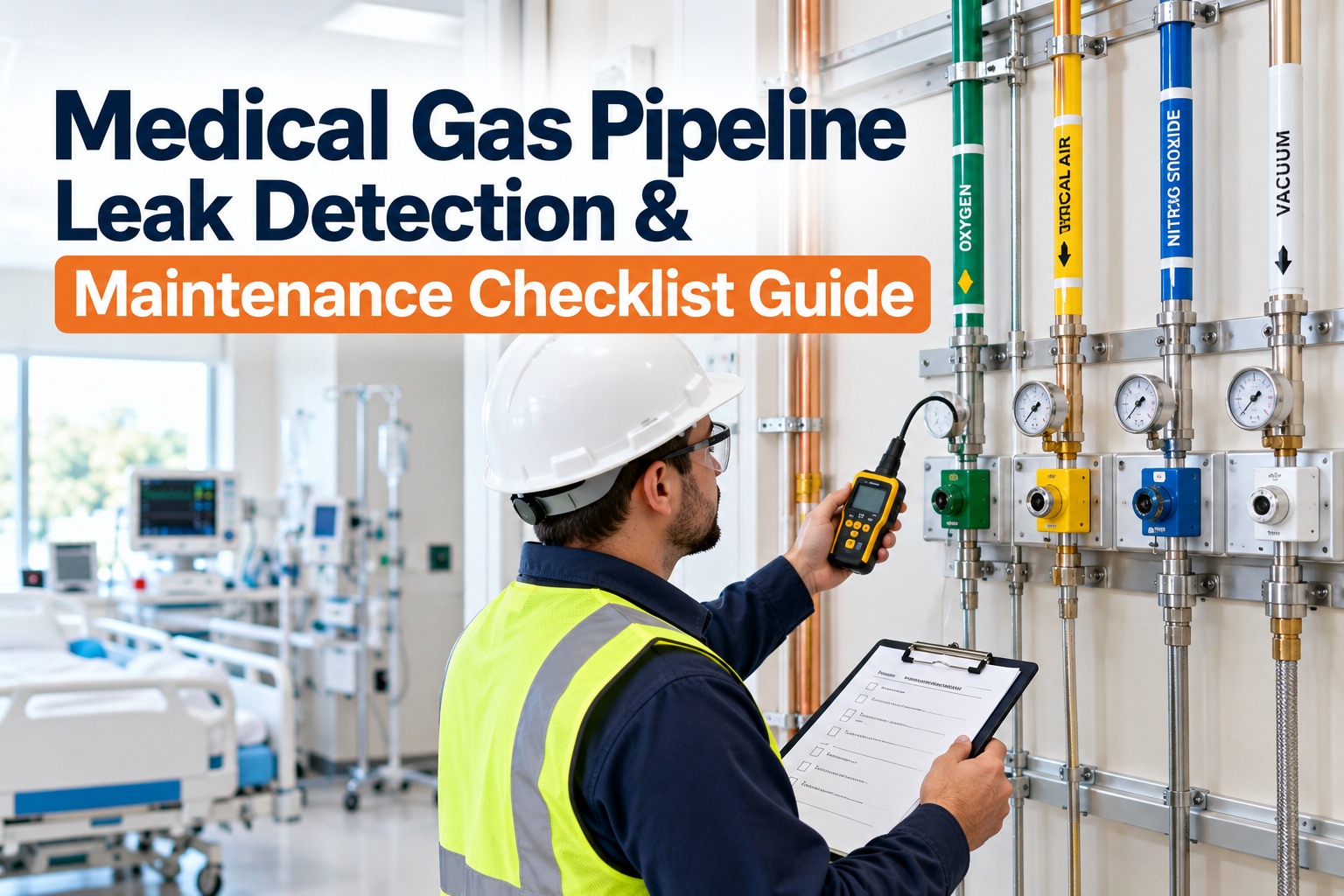
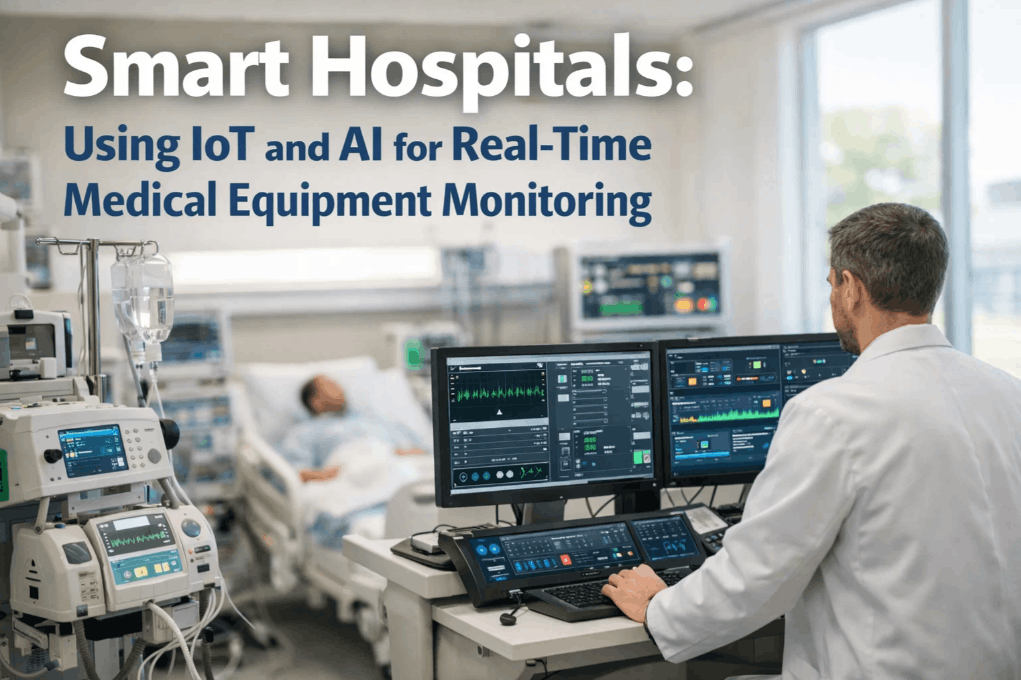
Every year, hospitals across the United States face unexpected medical gas pressure drops that put patient lives at risk. When oxygen pressure falls below the required 50 psi at a wall outlet, ventilators can malfunction, surgeries may be delayed, and critical care units lose their lifeline. NFPA 99 classifies medical gas systems as Category 1, meaning any failure is likely to cause major injury or death. The era of waiting for alarms to sound is over. Artificial intelligence is now capable of detecting subtle pressure anomalies days before they become emergencies, and healthcare facilities that adopt this technology are seeing up to 50% fewer unplanned gas system failures.
Why Medical Gas Pressure Drops Are a Silent Threat
Medical gas pipeline systems (MGPS) are the circulatory system of any hospital. They deliver oxygen, medical air, nitrous oxide, nitrogen, and vacuum suction to every patient care area, from operating theatres to neonatal intensive care units. Yet these systems operate largely out of sight and out of mind. Clinicians turn on gas outlets daily with little thought about the complex infrastructure behind the wall. That complacency becomes dangerous when pressure drops occur without warning.
A pressure drop in a medical gas line can stem from multiple causes: aging pressure-reducing valves, undetected leaks in copper piping, sudden surges in demand (as hospitals experienced during COVID-19), corroded fittings, or improperly maintained manifold systems. During the pandemic, one tertiary care hospital saw wall outlet pressure fall from the standard 4.2 bar to just 3.4 bar when patient demand overwhelmed the system's flow-limiting valves. Two hundred patients had to be rapidly shifted from piped oxygen to portable concentrators. Traditional maintenance approaches, whether calendar-based preventive maintenance or manual condition checks, simply cannot keep pace with the dynamic nature of these systems. Facilities that want to stay ahead of failures and protect patient safety are now turning to AI-powered predictive maintenance. Sign up for OxMaint to bring intelligent monitoring to your medical gas infrastructure today.
How AI Detects Pressure Anomalies Before They Become Emergencies
IoT Sensor Data Collection
Pressure transducers, flow meters, and temperature sensors installed across the MGPS continuously capture real-time data from source equipment, zone valves, and terminal outlets.
AI Pattern Recognition
Machine learning algorithms analyze historical performance data alongside live readings, establishing baseline pressure profiles for every branch of the pipeline system.
Anomaly Detection
When the AI detects subtle deviations from established patterns, such as a gradual 2% pressure decline over 48 hours or unusual flow rate fluctuations, it flags the anomaly for investigation.
Predictive Work Order Generation
The CMMS automatically generates prioritized work orders with the predicted failure timeline, affected zones, and recommended maintenance actions, all before any alarm sounds.
The power of AI lies in its ability to recognize patterns that human technicians cannot. A biomedical engineer might inspect a zone valve quarterly and find it functioning normally. But an AI system monitoring that same valve continuously can detect micro-variations in pressure response time that indicate the valve's internal seal is degrading. By the time a human would notice the problem, the AI has already predicted the failure window and scheduled a proactive repair. This approach transforms maintenance from a reactive scramble into a planned, efficient operation. Ready to experience this level of intelligence in your facility? Book a demo to see AI-driven maintenance in action.
Stop Reacting to Medical Gas Emergencies. Start Predicting Them.
OxMaint's AI-powered CMMS gives your healthcare facility the tools to monitor, predict, and prevent medical gas pressure failures before they impact patient care.
The Real Cost of Ignoring Pressure Drop Warnings
Patient Safety Risk
Inadequate oxygen pressure can compromise ventilator function, delay surgical procedures, and endanger patients in ICUs, NICUs, and recovery rooms. Every minute of supply disruption is a minute of elevated risk.
Compliance Violations
NFPA 99, Joint Commission standards, and state health department regulations mandate continuous, reliable medical gas delivery. Unresolved issues can result in citations, loss of accreditation, or unit shutdowns during inspections.
Financial Impact
Emergency repairs cost 3-5x more than planned maintenance. Add in surgical cancellations, patient transfers, extended stays, and potential litigation costs, and a single undetected pressure drop can cost a facility hundreds of thousands of dollars.
Operational Disruption
When a gas line fails, the ripple effects spread across every department. Operating rooms go offline, emergency protocols activate, and staff must scramble to deploy backup cylinder systems while the repair happens.
These are not hypothetical scenarios. Medical gas pipeline failures have been documented repeatedly in healthcare literature, with consequences ranging from interrupted care to fatal outcomes. The challenge is that small leaks and gradual pressure declines are nearly impossible to detect through periodic manual inspections alone. A leak that wastes just a few liters per minute today can escalate into a catastrophic supply loss within weeks. AI-powered condition monitoring closes this gap by providing continuous surveillance that never sleeps, never takes a break, and never misses a trend. Sign up for OxMaint and start protecting your facility from these preventable failures.
What Makes AI-Powered Medical Gas Monitoring Different
The distinction is clear: traditional maintenance reacts to problems after they occur or attempts to prevent them through rigid schedules that often result in over-maintenance or under-maintenance. AI-driven predictive maintenance adapts dynamically to the actual condition of your equipment, scheduling interventions only when the data indicates they are needed. This not only reduces costs but also minimizes disruption to clinical operations. For facilities managing complex MGPS infrastructure, this capability is transformative. Book a demo with our team to explore how this works for your specific setup.
Key Medical Gases Monitored by AI Systems
Oxygen
The most critical medical gas. AI monitors bulk liquid oxygen storage levels, pipeline pressure at every zone, and flow rates to ensure uninterrupted supply to ventilators, anesthesia machines, and patient outlets across the facility.
Medical Air
Generated on-site by compressors, medical air requires constant pressure monitoring at 345-380 kPa. AI tracks compressor performance, dryer efficiency, and distribution pressure to catch degradation before it affects respiratory therapy.
Nitrous Oxide
Used in surgical suites for anesthesia, nitrous oxide systems demand precise pressure regulation. AI detects manifold switching anomalies and supply pressure variations that could compromise anesthetic delivery during procedures.
Medical Vacuum
Suction systems require consistent vacuum pressure of -300 mmHg at terminal units. AI monitors pump performance, line integrity, and vacuum levels to prevent failures that could disrupt surgeries and emergency procedures.
Implementation: Getting AI Monitoring into Your Facility
Implementing AI-powered medical gas monitoring does not require a complete infrastructure overhaul. Modern CMMS platforms like OxMaint integrate with existing sensor networks and building management systems through standard protocols. The implementation typically follows a phased approach that minimizes disruption while building confidence through demonstrated results.
Critical System Assessment (Weeks 1-4)
Map your entire MGPS infrastructure, identify sensor gaps, and establish baseline performance data for oxygen, medical air, vacuum, and nitrous oxide systems. Install IoT sensors at key monitoring points including source equipment, pressure-reducing stations, zone valves, and high-demand terminal outlets.
AI Model Training (Weeks 4-8)
The AI system ingests historical maintenance records, alarm logs, and real-time sensor data to build predictive models specific to your facility's usage patterns, equipment age, and environmental conditions. It learns what "normal" looks like for each branch of your pipeline network.
Active Monitoring and Optimization (Ongoing)
The system goes live with automated anomaly detection, predictive work orders, and compliance reporting. Continuous learning improves prediction accuracy over time, and the platform scales as your facility expands or adds new gas systems.
Hospitals that have adopted this phased approach report full ROI within 18-24 months, with larger facilities often seeing payback even sooner due to the scale of their medical gas infrastructure. The key is starting with the most critical systems where failure carries the highest patient safety risk, then expanding coverage as the AI models mature. Sign up for OxMaint to begin your facility's transition from reactive to predictive maintenance.
Your Medical Gas Systems Deserve Smarter Maintenance
Join hundreds of healthcare facilities using OxMaint to protect patients, ensure compliance, and reduce maintenance costs with AI-powered predictive analytics.
Frequently Asked Questions
What is predictive maintenance for medical gas systems?
Predictive maintenance for medical gas systems uses IoT sensors and AI algorithms to continuously monitor the condition of your hospital's gas pipeline infrastructure, including oxygen, medical air, nitrous oxide, and vacuum systems. Instead of relying on fixed maintenance schedules or waiting for alarms, the system analyzes real-time data to predict equipment failures and pressure anomalies before they occur, allowing your maintenance team to intervene proactively.
How does AI detect medical gas pressure drops before they happen?
AI algorithms establish baseline pressure profiles for every segment of your medical gas pipeline by analyzing historical performance data and real-time sensor readings. When the system detects subtle deviations from these baselines, such as gradual pressure declines, unusual flow rate patterns, or micro-variations in valve response times, it flags the anomaly and generates a predictive maintenance alert. This allows technicians to address the root cause days or even weeks before a critical failure would occur.
What are the most common causes of medical gas pressure drops in hospitals?
The most common causes include aging or degraded pressure-reducing valves, undetected leaks in copper piping and fittings, sudden surges in patient demand that exceed system capacity, corroded connections, improperly maintained manifold switching systems, and inadequate system sizing for facility expansions. Environmental factors like temperature changes can also affect pressure regulation in bulk storage systems.
Is AI-powered medical gas monitoring compliant with NFPA 99 and Joint Commission standards?
Yes. AI-powered monitoring systems enhance your compliance posture by providing continuous surveillance that exceeds the minimum inspection requirements of NFPA 99 and Joint Commission standards. These systems automatically generate audit trails, maintenance documentation, and compliance reports that demonstrate your facility's proactive approach to medical gas safety. This documentation is valuable during accreditation surveys and regulatory inspections.
How long does it take to implement predictive maintenance for medical gas systems?
A typical implementation takes 8-12 weeks from initial assessment to active monitoring. The first phase involves mapping your MGPS infrastructure and installing sensors at critical monitoring points. The second phase trains the AI models on your facility's specific data. By week 8-12, the system is actively detecting anomalies and generating predictive work orders. Most facilities see measurable improvements in system reliability within the first quarter of operation.
What ROI can hospitals expect from AI-powered medical gas monitoring?
Healthcare facilities typically see a 20-40% reduction in maintenance costs, up to 50% fewer emergency gas system failures, and significant savings from avoided surgical cancellations and patient transfers. When factoring in reduced compliance risk and extended equipment lifespan, most hospitals achieve full ROI within 18-24 months. The patient safety benefits, while harder to quantify financially, represent the most compelling reason to adopt this technology.