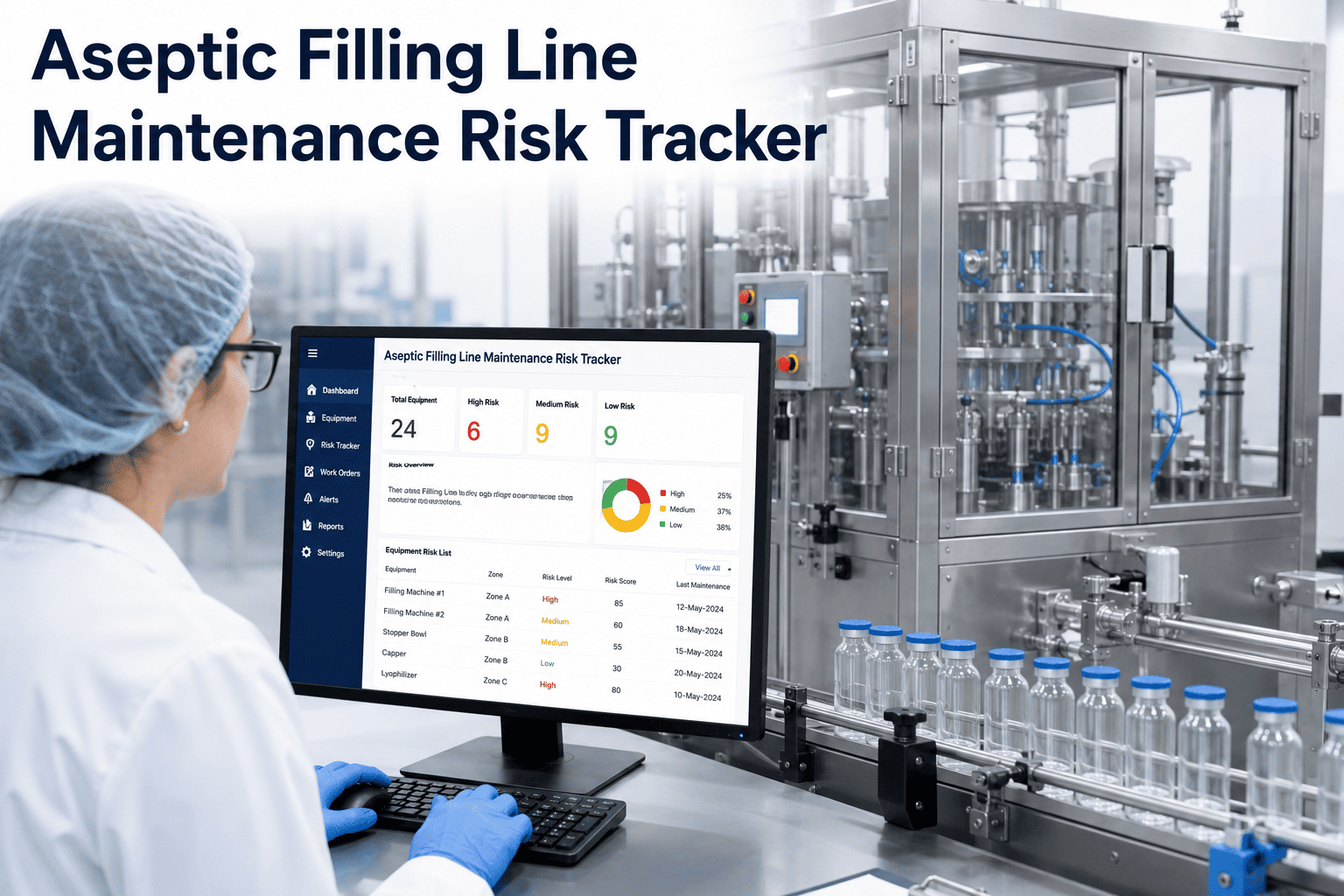
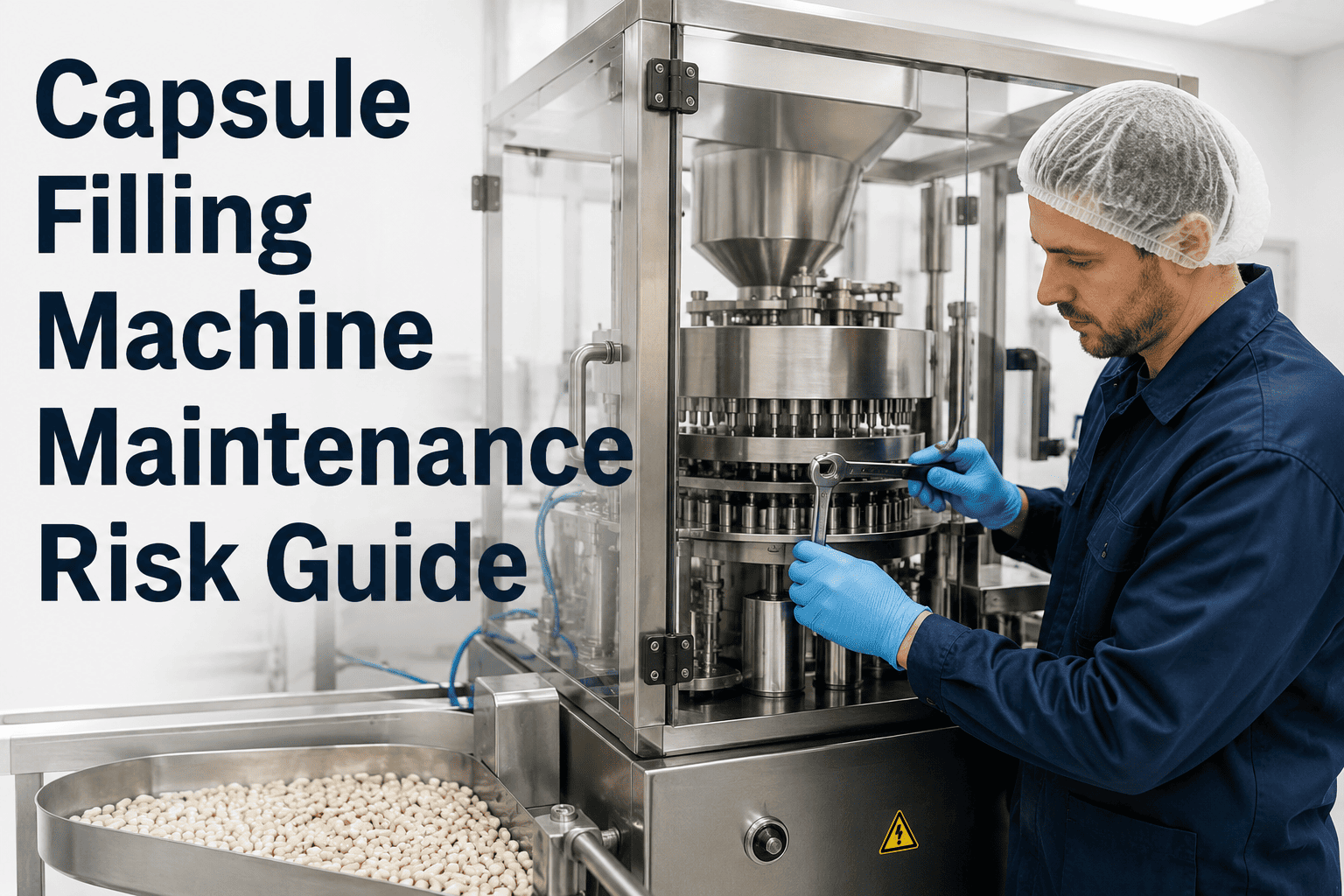
Aseptic filling line downtime in pharmaceutical manufacturing — whether from piston pump seal failure, peristaltic tubing degradation, needle misalignment, or stopper placement errors — costs an average of $450,000 per hour in lost production and batch rejection. Without real-time predictive monitoring, even minor deviations in fill weight, torque, or alignment trigger full line stoppages and costly investigations. In 2024–2025, over 68% of FDA 483 observations in fill-finish facilities cited inadequate equipment maintenance or monitoring programs. That gap between scheduled preventive maintenance and actual equipment condition is exactly what Oxmaint closes.
Pharmaceutical filling line predictive maintenance requires continuous monitoring of critical parameters across piston pumps, peristaltic pumps, filling needles, stopper placement mechanisms, and vial/syringe transport systems. Oxmaint integrates IoT sensors, vibration analysis, torque monitoring, and fill-weight trending to predict failures before they impact batch integrity or trigger regulatory action — delivering auditable, real-time equipment health records for FDA, EMA, and ISO 13485 compliance.
Critical Failure Points in Pharma Filling Lines
Each component carries unique failure modes that directly affect product quality, sterility assurance, and line availability. Oxmaint digitizes predictive monitoring for all major filling technologies.
Seal wear, diaphragm fatigue, and tubing degradation cause inconsistent fill volumes and particulate generation. Oxmaint tracks vibration signatures, pressure differentials, and cycle counts in real time, predicting maintenance windows before fill accuracy drifts outside validated ranges.
Misalignment leads to spillage, under/over fill, and compromised container closure integrity. Oxmaint uses position sensors and vision integration to monitor needle path and alignment in real time, alerting teams before deviation affects product quality.
Torque variation and placement errors compromise container closure integrity. Oxmaint monitors torque profiles and placement force with high-frequency sensors, ensuring consistent performance and generating traceable records for batch release.
Conveyor wear, star wheel misalignment, and servo drift cause jams and glass breakage. Oxmaint applies vibration and current signature analysis to predict mechanical degradation, minimizing unplanned interventions during high-speed runs.
Predict Failures Before They Impact Batch Release
Oxmaint connects sensors directly to your filling equipment, delivering real-time condition monitoring and automated work orders only when truly needed — protecting product quality while optimizing maintenance resources.
Oxmaint Predictive Maintenance Implementation Roadmap
A rapid, low-disruption deployment tailored for regulated pharmaceutical environments.
Filling line equipment registered with failure modes, sensor requirements, and criticality ranking. Integration points identified for existing PLCs, SCADA, and IoT sensors.
IoT sensors deployed or connected for vibration, torque, pressure, position, and fill-weight monitoring. Historical data analyzed to establish baseline signatures and alert thresholds.
Machine learning models tuned for each filling technology. Automated alerts and work order generation configured with escalation paths aligned to your quality management system.
IQ/OQ documentation support for sensor integration. Ongoing model refinement based on actual failure data and production feedback.
Oxmaint vs General CMMS Platforms — Pharma Filling Line PdM
Most CMMS platforms offer basic work orders. Only Oxmaint delivers pharma-specific predictive maintenance with regulatory-grade documentation for fill-finish operations.
| Capability | Oxmaint | MaintainX | UpKeep | Fiix | Limble | IBM Maximo | Hippo CMMS | Infor EAM |
|---|---|---|---|---|---|---|---|---|
| Piston pump vibration & pressure trending | Yes | Generic | No | No | No | Custom | No | Custom |
| Fill weight & torque profile monitoring | Yes | Generic | No | No | No | Custom | No | Custom |
| Needle alignment & position sensing | Yes | No | No | No | No | Custom | No | Custom |
| FDA/EMA audit-ready PdM records | Yes | Partial | Partial | Partial | Partial | Yes | Partial | Yes |
| Automated anomaly detection alerts | Yes | Generic | No | No | No | Custom | No | Custom |
| Integration with existing SCADA/PLC | Yes | Yes | Partial | Partial | Partial | Yes | Partial | Yes |
| Deployment without heavy IT involvement | Yes | Yes | Yes | Varies | Yes | No | Yes | No |
Client Results — Pharmaceutical Filling Lines Using Oxmaint PdM
Measurable outcomes from aseptic and non-aseptic filling operations after implementing Oxmaint predictive maintenance.
From Reactive to Predictive — Without Disrupting Production
Protect product quality, reduce regulatory risk, and maximize line availability with Oxmaint’s pharma-focused predictive maintenance platform.
Oxmaint Pharma PdM Platform Features
Vibration, pressure, torque, and position data captured continuously from pumps, needles, and transport systems with configurable alert thresholds.
Predictive alerts automatically create prioritized maintenance tasks with all supporting trend data attached for immediate review and approval.
All sensor data, alerts, and maintenance actions stored with full audit trail — ready for FDA inspections, EMA audits, and internal quality reviews.
Seamless data flow between filling line controls, quality management systems, and Oxmaint for closed-loop deviation management.
Frequently Asked Questions
Move from Time-Based PM to Condition-Based Reliability
Protect your fill-finish operations with real-time predictive insights, regulatory-ready records, and optimized maintenance execution. Book a personalized demonstration with your engineering and quality leadership team.