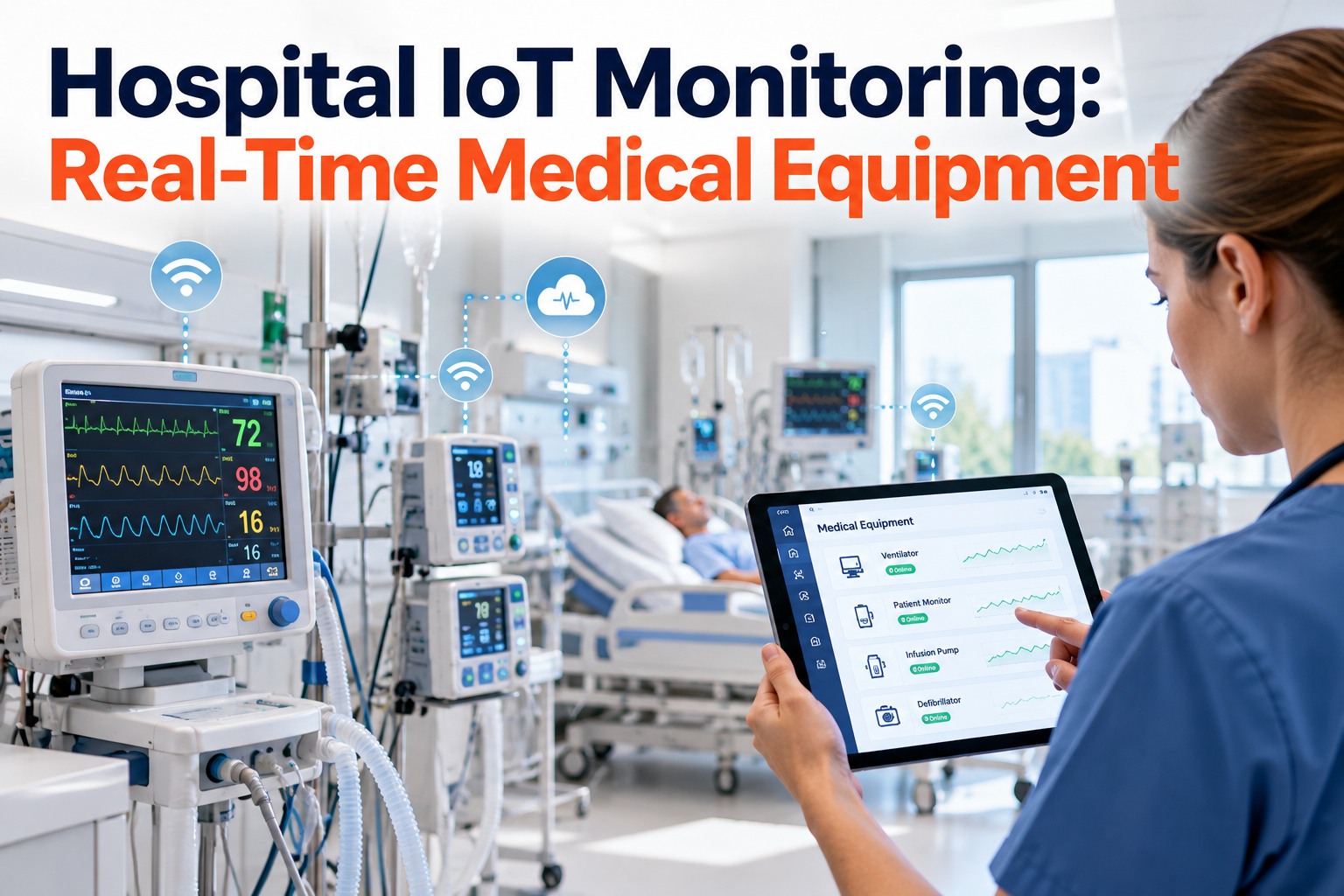
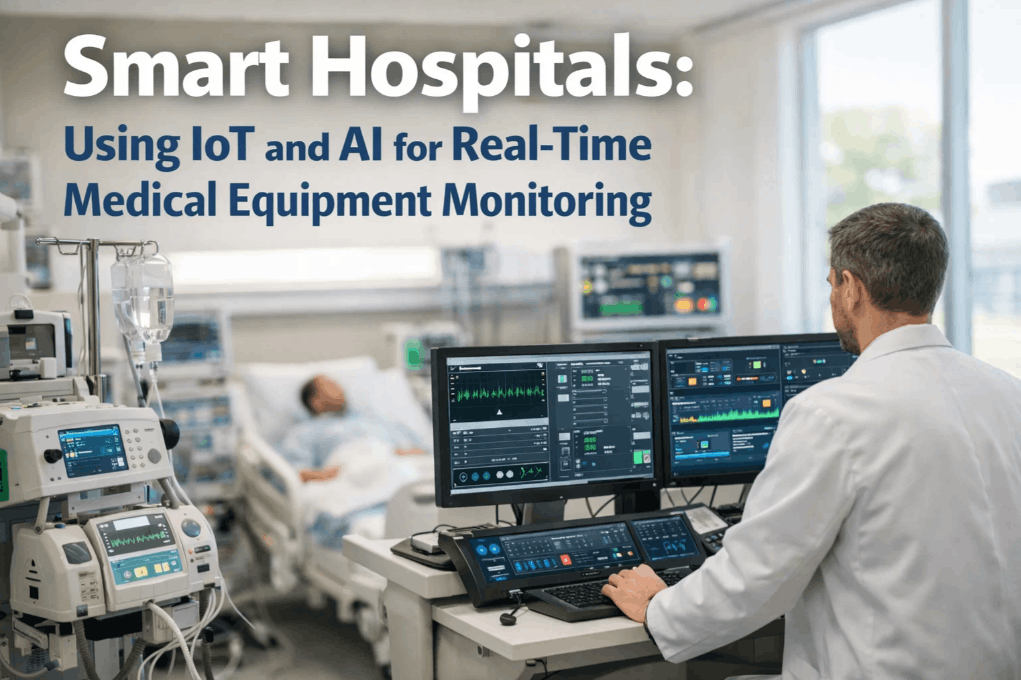
Unplanned equipment downtime in a surgical setting costs an average of $8,662 per minute. A single MRI out of service for one day erases approximately $4,000 in revenue — and that figure ignores the patients rescheduled, the diagnoses delayed, and the clinical trust quietly eroded. The WHO estimates that 80% of medical equipment failures are preventable. Preventable means a data problem, not an engineering one — and that is exactly where Oxmaint's predictive maintenance platform operates. Start a free trial and connect your hospital's critical equipment to real-time IoT monitoring today, or book a demo to see how AI-driven maintenance scheduling works across your asset portfolio.
Predictive Maintenance for Medical Equipment — Before the Machine Fails, Before the Patient Waits
AI and IoT sensors now detect equipment failure 2–4 weeks before it occurs, with 95%+ accuracy. For hospitals running MRI scanners, ventilators, CT systems, and lab analyzers — that window is the difference between a scheduled service and an emergency shutdown at 2 a.m.
Predictive vs Preventive Maintenance — Why the Distinction Matters in a Hospital
A biomedical technician visits the MRI on the first Monday of every quarter. The machine gets serviced whether it needs it or not. If it was degrading on the third Monday of last quarter, nobody knew — and the machine fails on its own schedule, not yours.
- Fixed intervals ignore actual equipment condition
- Over-maintains healthy equipment — wasting technician time
- Under-reacts to fast-developing failure patterns
- No early warning signal before clinical disruption
IoT sensors stream vibration, temperature, and helium pressure data continuously. Machine learning compares live readings to historical baselines and flags deviation 2–4 weeks before failure — generating a work order when intervention is still planned, not emergency.
- Intervenes only when sensor data indicates it is needed
- Identifies failure 2–4 weeks before it occurs at 95%+ accuracy
- Eliminates emergency callouts and rushed parts procurement
- Builds a continuous asset health record across the full portfolio
The shift from preventive to predictive is not a technology upgrade — it is a clinical operations upgrade. Start a free trial and load your first assets, or book a demo to see the monitoring dashboard with your equipment categories.
Eight Critical Asset Classes Where Predictive Maintenance Delivers the Highest Clinical Impact
From Raw Sensor Signal to Scheduled Work Order — The Oxmaint PdM Pipeline
IoT sensors stream vibration, temperature, pressure, and current via MQTT, OPC-UA, or HL7 FHIR. Wireless glue-mount sensors install in minutes — no wiring, no clinical disruption.
ML models build a normal operating profile for each asset over 30–60 days. Any deviation triggers an anomaly score. Models improve continuously as operational data accumulates.
Threshold breach triggers a health score and alert level — Watch, Warning, or Critical — with the specific parameter, trend direction, and estimated time to failure shown in the dashboard.
Critical alerts auto-generate structured CMMS work orders — asset details, alert context, inspection procedure, parts list, and technician assignment. No manual ticket creation, no ignored inbox alert.
Biomedical technician completes the work order on mobile — photos, measurements, parts, digital sign-off. Record appended to asset compliance history for Joint Commission, CMS, or ISO 13485 audit.
Connect Your Hospital Equipment to Real-Time Predictive Monitoring
No implementation fee, no minimum contract. Load your asset inventory, connect your first sensor cluster, and start building baseline profiles today. Most healthcare teams are live within 2 weeks. Start a free trial or book a demo and see your asset categories modelled live.
What Hospitals Measure After Implementing AI-Driven Predictive Maintenance Programs
Healthcare organizations implementing structured predictive programs on high-value assets report measurable downtime reduction within 6–12 months. The 60% figure reflects facilities running multi-sensor monitoring on imaging, ICU, and OR equipment simultaneously.
GE Healthcare predictive platform data — 4.5 additional operational days per MRI annually through early intervention before unplanned shutdown.
Including sensor hardware, software, and implementation — full ROI within 18–24 months, with compounding returns as models mature on each asset class.
Eliminating unnecessary visits to healthy equipment reallocates biomedical technician time to condition-indicated interventions — reducing labor cost without reducing coverage quality.
The market trajectory reflects institutional consensus: predictive maintenance is no longer optional infrastructure for hospitals managing modern equipment portfolios.
Predictive Maintenance and Healthcare Compliance — What Each Standard Requires
Equipment Maintenance standards accept risk-based, condition-based approaches as compliant alternatives to fixed schedules when properly documented. Predictive programs qualify when maintenance is systematic and traceable.
Centers for Medicare and Medicaid require hospitals to maintain medical equipment in a manner that protects patients and staff. Programs must be systematic and documented with evidence of compliance.
Medical device quality standards require documented maintenance procedures, calibration records, and traceability of all service events. IEC 62353 governs in-service testing of medical electrical equipment.
NFPA 99 governs healthcare facility infrastructure. NHS HTM 00 sets equivalent UK standards with requirements for documented planned preventive maintenance across all clinical engineering assets.
Healthcare Facilities and Biomedical Teams Ask — Oxmaint Answers
What types of sensors does Oxmaint use for medical equipment monitoring, and does installation disrupt clinical operations?
How long does it take for the AI model to build a reliable baseline and start generating accurate predictions?
Does Oxmaint's predictive maintenance documentation satisfy Joint Commission Equipment Maintenance standards?
Can Oxmaint integrate with our existing CMMS or hospital EHR system to avoid duplicate record-keeping?
80% of Equipment Failures Are Preventable. Your Next One Does Not Have to Happen.
Oxmaint gives your biomedical engineering team the IoT sensor integration, AI anomaly detection, automated work order generation, and audit-ready compliance documentation to stay ahead of every failure in your equipment portfolio. Most hospitals are live within two weeks. No implementation fee, no minimum contract. Start a free trial and connect your first equipment cluster today, or book a demo and see the full predictive maintenance workflow for your specific equipment portfolio.