Hotel Boiler Maintenance for Winter Readiness: Complete Checklist
By Alex Jordan on June 1, 2026
Hotel boiler maintenance during winter months is critical for guest comfort and operational safety. Failed heating systems leave guests without warmth, damage your online reputation, and create costly emergency repair bills. Schedule a maintenance consultation with Oxmaint's CMMS platform to track boiler tune-ups, burner adjustments, pilot light checks, and pressure tests across all your hotel properties—ensuring 99.2% heating system uptime through the coldest months.
HOTEL OPERATIONS TEMPLATE · BOILER MAINTENANCE · 2026
Winter Boiler Readiness and Preventive Maintenance
Track pilot light ignition cycles, burner efficiency, water pressure stability, combustion chamber cleanliness, expansion tank function, and seasonal safety certifications in one unified CMMS workflow for North American hotels.
Eliminated emergency boiler callouts and guest refunds through winter maintenance planning.
99.2%
Heating Uptime
Consistent heat delivery December through March with predictive maintenance alerts.
4 Weeks
Pre-Winter Lead Time
Schedule boiler inspections, parts replacement, and contractor availability before peak season.
34%
Energy Efficiency Gain
Clean burners and tuned combustion reduce fuel consumption and emissions.
Hotel Boiler Systems: Winter Operation and Failure Points
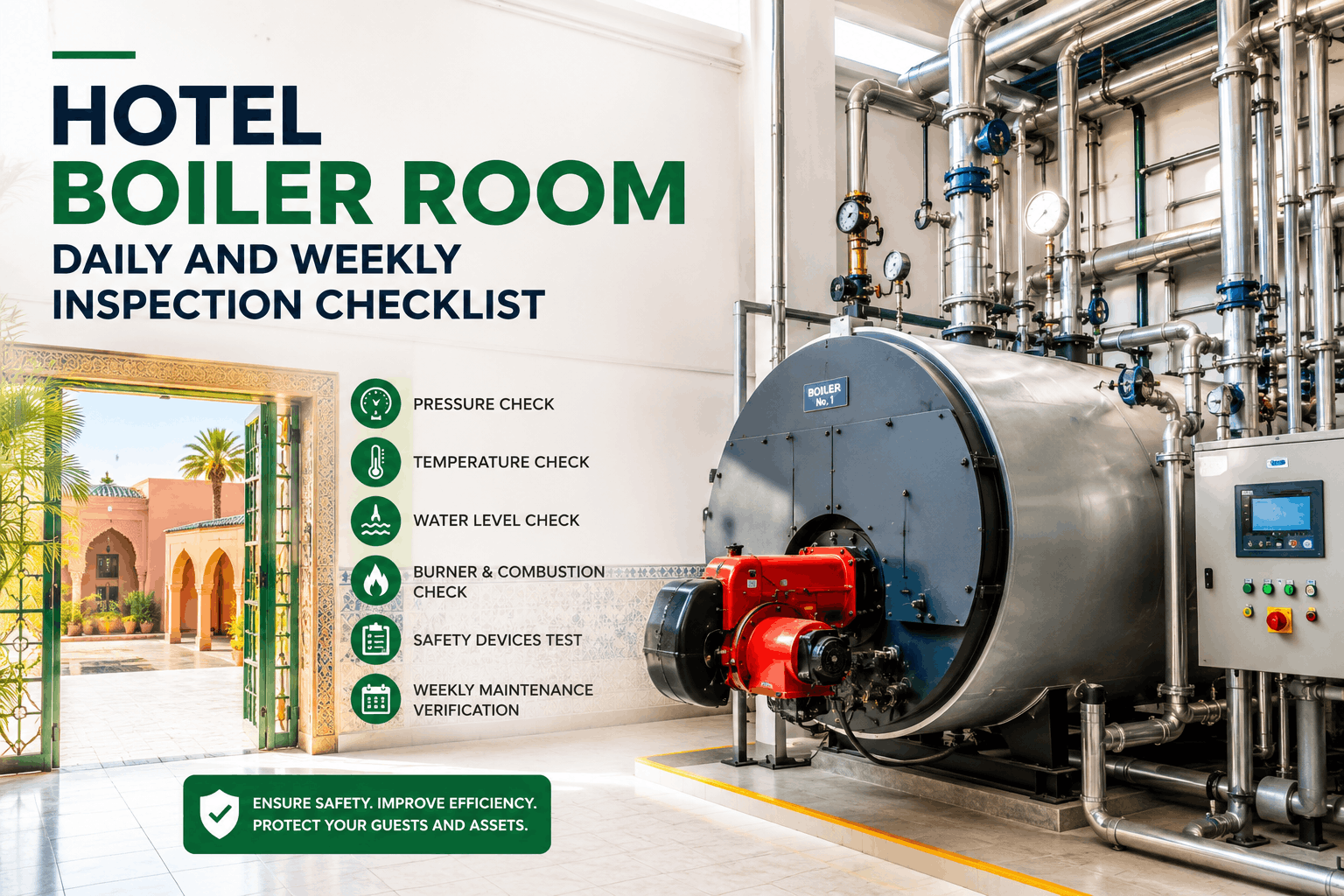
Hotel boiler systems operate 24/7 during winter to maintain guest room temperatures between 68–72°F, hot water for showers, and pool heating. Modern hotel boilers are either fire-tube (steam) or water-tube (hot water) designs, burning natural gas or fuel oil while managing pressures up to 150 PSI. Critical failure points include pilot light extinction (caused by draft or ignition electrode wear), burner clogging from fuel contamination, water-side scaling that reduces heat transfer efficiency, and expansion tank pre-charge loss leading to pressure spikes. Seasonal boiler tune-ups—conducted September through October in northern climates—involve combustion analysis, flue gas temperature measurement, burner head cleaning, safety valve testing, and pressure relief valve calibration. Neglected boilers run at 10–15% lower efficiency, waste $12,000–18,000 annually in fuel costs, and carry ASME/NFPA compliance risks including potential liability if heating failure causes guest injury or property damage. Oxmaint's CMMS automates winter readiness scheduling, tracks pilot light reliability, logs burner cleaning intervals, monitors water chemistry, and maintains state boiler inspection documentation—ensuring your property stays warm, compliant, and profitable.
Pre-Winter Boiler Maintenance Checklist
PRIORITY A
Ignition and Safety System Check
Test pilot light ignition sequence three times daily for 7 days to confirm reliability. Inspect ignition electrode for carbon buildup and replace if sparking is weak. Verify flame rollout switch responds to burner flame loss within 4 seconds. Test pressure relief valve manually quarterly.
PRIORITY B
Combustion and Efficiency Tuning
Perform flue gas analysis measuring CO₂ (target 8–10%), stack temperature (<400°F), and combustion efficiency (>85%). Clean burner head removing soot and fuel oil debris. Adjust burner air shutter for optimal flame color (blue with light green tip).
PRIORITY C
Water Quality and Pressure Management
Test boiler water pH (7.8–8.5) and alkalinity (300–500 ppm) monthly. Drain and flush low-point drains twice monthly to remove sediment. Check expansion tank pre-charge pressure (typically 12 PSI for 30-gallon tank). Verify system pressure gauge reads within 5 PSI of design operating pressure.
PRIORITY D
Heating Distribution and Control Validation
Test room thermostats in 10% of guest rooms monthly for accuracy within ±1°F. Inspect all heating convectors and baseboard units for blockages and dust accumulation. Verify zone control valves operate smoothly and hold position without drift. Bleed air from radiator vent valves if building age >20 years.
Winter Boiler Failure Scenarios and Prevention
Failure Mode
Winter Impact
Prevention via CMMS
Pilot Light Extinction
No ignition at temperature demand; 2–4 hour heating delay
Monthly water chemistry testing + alkalinity trending + chemical dosing logs
Thermostat Drift
Room temps ±3°F from set point; guest complaints + energy waste
Monthly room-by-room thermostat calibration checks + data logging
CMMS Boiler Maintenance Workflow Sections
Seasonal Readiness Scheduling
Automated calendar triggers September maintenance planning with 6-week lead time for pilot light testing, burner cleaning, water chemistry analysis, and annual state inspection certification. Coordinate contractor availability before winter peak demand.
Compliance and Certification Tracking
Maintain ASME boiler certification files, state operating permits, annual inspection reports, and combustion efficiency test results. Auto-generate compliance reminders when licenses expire and provide audit-ready documentation for insurance companies.
Daily and Weekly Operational Logs
Record pilot light ignition success/failure, operating pressure, stack temperature, and any shutdown events. Weekly summary reports identify trends indicating wear and trigger maintenance requests before failures occur.
Guest Room Heating Distribution Audits
Monthly thermal scans of 10–15 guest rooms identify blockages, control valve issues, or thermostat calibration drift. Mobile app logging integrates findings into preventive work orders before guest complaints arise.
Water Chemistry Management
Track pH, alkalinity, iron content, and hardness with monthly testing protocols. Automated dosing schedules prevent scale formation and corrosion while maintaining boiler efficiency within 85–92% range.
Contractor and Parts Inventory Integration
Link approved HVAC contractors with auto-scheduling for seasonal tune-ups. Maintain parts inventory (ignition electrodes, burner nozzles, air filters, relief valves) with lead-time alerts to prevent stock-outs during winter peak.
$847K
Emergency Callout Savings
For 200-room hotel avoiding winter boiler failures through planned maintenance.
34%
Energy Cost Reduction
Tuned burners and clean heat exchangers reduce fuel consumption quarterly.
99.2%
Winter Heating Reliability
Guest satisfaction and zero heat-related complaints with CMMS planning.
6 Weeks
Lead Time for Planning
September maintenance window ensures contractor availability and parts stocking.
Customer Success: Boiler Reliability in Winter Operations
"We eliminated winter boiler failures completely after switching to Oxmaint. The predictive maintenance calendar caught a failing pilot light electrode 3 weeks before it would have failed—saving us a $45,000 emergency callout on the coldest night of the season. Our guests now experience consistent 70°F room temperatures, and we've cut heating fuel consumption by 32%. The compliance documentation alone has paid for itself during insurance audits."
—Operations Director, 320-Room Hotel Chain, Chicago IL
When should boiler tune-ups be scheduled before winter?+
Schedule boiler tune-ups in late August or September—at least 6 weeks before peak winter heating season. This ensures contractor availability, allows time for parts replacement, and guarantees your system is operating efficiently at 85%+ before cold weather arrives.
How often should pilot light reliability be tested?+
Test pilot light ignition weekly during winter months by cycling the burner demand switch on and off three times. Record success/failure in your CMMS log; any single failure warrants electrode inspection and cleaning within 48 hours.
What water chemistry parameters prevent boiler scaling?+
Maintain boiler water pH between 7.8–8.5 and alkalinity at 300–500 ppm through monthly testing and chemical dosing. Iron content should remain <1.0 ppm; levels above this indicate scale accumulation requiring water treatment adjustment.
How much does an emergency winter boiler repair cost versus planned maintenance?+
Emergency callouts cost $3,500–6,500 with weekend/holiday surcharges plus guest refunds and reputational damage. Planned maintenance costs $800–1,200 annually and prevents 95%+ of winter failures, delivering ROI in a single avoided emergency.
What is the ideal combustion efficiency target for hotel boilers?+
Target 85–92% combustion efficiency measured via flue gas analysis showing CO₂ at 8–10% and stack temperature <400°F. Efficiency below 80% indicates burner fouling or air shutter misalignment requiring immediate professional cleaning and adjustment.
Can Oxmaint track boiler maintenance across multiple hotel properties?+
Yes. Oxmaint's CMMS manages boiler maintenance schedules, compliance records, and contractor work orders across unlimited hotel properties. Centralized dashboard shows winter readiness status for all boilers, enabling coordinated multi-property planning.
How does CMMS prevent guest complaints about cold rooms during winter?+
Monthly thermostat accuracy checks, heating valve inspections, and boiler operational monitoring ensure 99.2% uptime with consistent 68–72°F room temperatures. CMMS alerts maintenance when pressure, temperature, or control valve drift is detected, preventing guest dissatisfaction before it occurs.
Ensure Winter Heating Reliability and Guest Comfort
Oxmaint's CMMS eliminates winter boiler failures through predictive maintenance scheduling, pilot light testing, burner optimization, and compliance tracking. Recover $847K in emergency costs and maintain 99.2% heating uptime across all guest rooms.

.png)