Hotel Boiler Room Daily and Weekly Inspection Checklist
By Alex Jordan on June 6, 2026
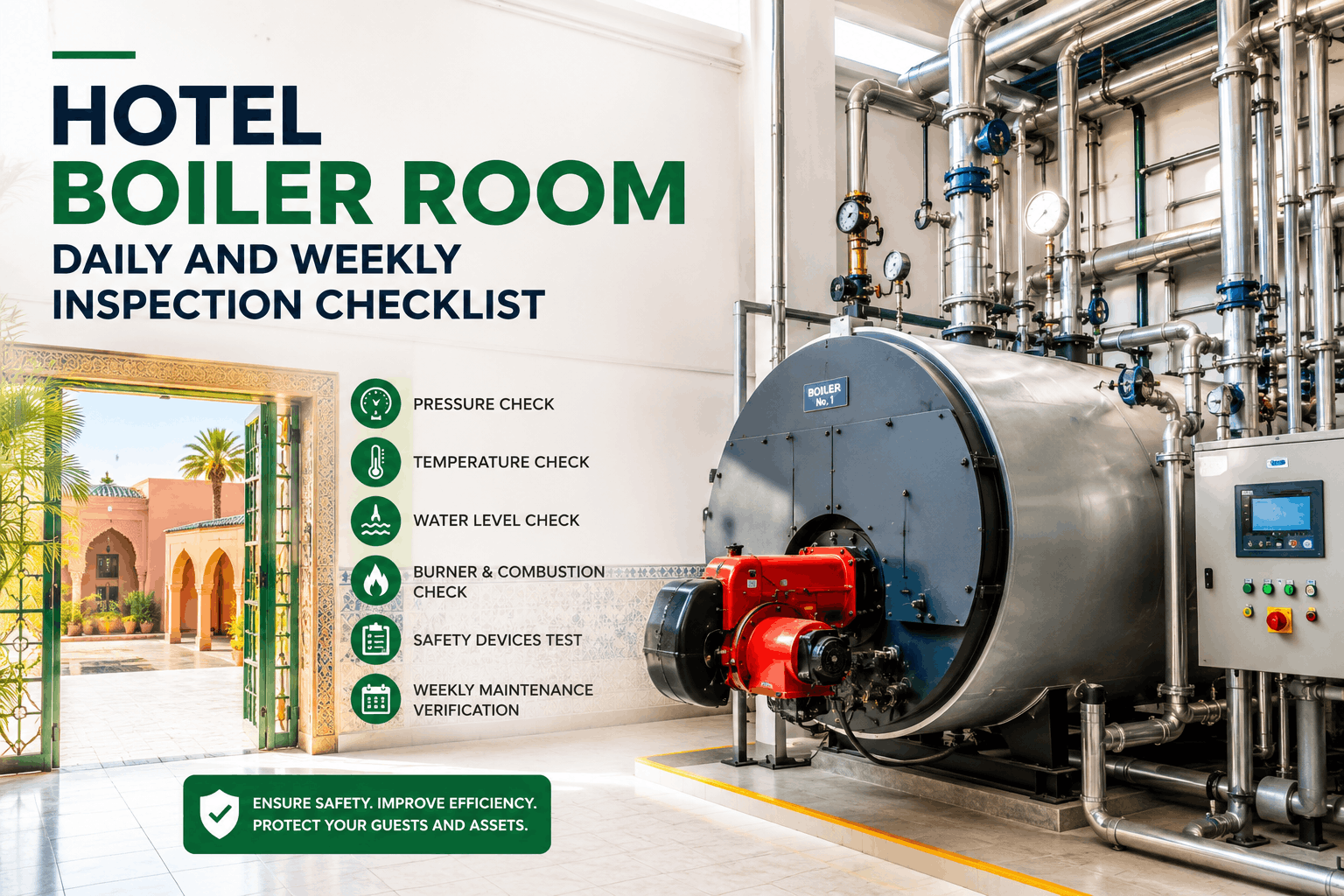
Hotel boiler systems operate under extreme conditions—generating 50–100+ PSI steam pressure continuously while maintaining precise temperature controls. A single boiler failure in a 250-room hotel costs $5,000–$8,000 per day in emergency outsourcing, forced room closures, and guest refunds. Boilers with documented preventive maintenance schedules operate 40–60% longer than neglected equipment, prevent catastrophic tube failures, and qualify for extended inspection intervals under ASME and NFPA standards. Daily pressure and water level checks prevent overpressure explosions—the leading cause of boiler-related fatalities per OSHA records. Weekly combustion analysis identifies burner drift and fuel efficiency loss before thermal efficiency drops below acceptable range. Monthly safety valve testing and control system verification prevent stuck relief valves (which cause 23% of boiler failures in hospitality). Oxmaint's boiler PM system automates daily operator logs, schedules weekly combustion tests, tracks pressure gauge calibration, monitors water treatment cycles, manages annual certification requirements, and documents all service history for insurance verification and liability protection. USA hospitality chains report 35–50% reduction in emergency boiler repairs and 18–25% improvement in heating system reliability after implementing structured boiler PM programs with digital compliance documentation.
Protect Your Boiler System & Guest ComfortDaily pressure monitoring, weekly combustion analysis, safety valve testing, water treatment tracking, and emergency repair prevention for all commercial boiler systems operating under ASME and NFPA standards.
Daily operator logs are mandatory under ASME CSD-1 and OSHA standards. Pressure fluctuations, water level drift, and flame irregularities are caught early through structured daily observation—preventing overpressure incidents and combustion failures.
2. Weekly Burner & Safety Device Inspection
Burner components degrade continuously—from combustion deposits on fuel nozzles to corrosion in flame sensors. Weekly inspections catch these wear patterns before they create emergency conditions requiring weekend emergency service calls.
3. Monthly Combustion Analysis & Water Treatment Verification
Combustion efficiency is the single largest driver of boiler operating cost. Monthly combustion analysis with portable analyzer reveals fuel waste, identifies burner fouling, and provides trending data that predicts maintenance needs 4–8 weeks before failure occurs.
4. Quarterly Control System Testing & Professional Service
Boiler control systems manage pressure, temperature, and safety device operation. Quarterly control testing verifies response times and accuracy—preventing slow-acting controls that create overpressure risk or poor heating performance.
Prevent Boiler Failures & Heating EmergenciesDaily operating logs, weekly safety device testing, monthly combustion analysis, pressure/temperature trending, and compliance documentation for all commercial boiler systems.
Boilers with preventive maintenance programs last 30–40 years. Without maintenance, lifespan is 15–18 years. Tracking efficiency metrics and repair costs identifies replacement candidates before emergency failures occur during peak heating season.
Frequently Asked Questions — Hotel Boiler Room Inspection
1. What is the most common cause of boiler failure in hospitality properties?
Water treatment neglect (48% of failures)—hard water deposits scale heat transfer tubes, reducing efficiency and causing overheat shutdowns. Second cause is safety relief valve sticking (23%)—from corrosion or sediment accumulation. Both are preventable through scheduled maintenance.
2. How much does an emergency boiler failure cost a 250-room hotel?
$5,000–$8,000 per day in emergency outsourcing costs, plus $20,000–$40,000 in guest refunds and lost revenue during repair period. One prevented emergency failure pays for 5–10 years of preventive maintenance programs.
3. What ASME/NFPA standards govern hotel boiler operation?
ASME CSD-1 covers safety devices and instrumentation; NFPA 85 covers combustion safety; ASME Section VIII governs boiler construction; state boiler authority code governs inspection intervals (typically annual external, biennial internal for steam systems).
4. How do I know if my boiler is operating at acceptable efficiency?
Portable combustion analyzer measures stack temperature, O₂%, CO₂%, and CO ppm—calculating efficiency automatically. New boiler baseline is 85–92%; efficiency below 80% indicates fouling or burner degradation requiring professional service.
5. What is the difference between daily, weekly, and monthly boiler checks?
Daily checks (pressure, water level, flame color) prevent immediate safety hazards and catch acute failures. Weekly checks (relief valve, air intake, fuel lines) catch degradation trends. Monthly checks (combustion analysis, water chemistry) identify systemic issues before they impact operation.
6. How often should boiler water treatment chemicals be replaced?
Chemical dosage depends on boiler volume and water hardness. Typical hotel boiler requires chemical refill every 2–4 weeks ($50–$100 per refill). Water quality testing ($20–$50/test) monthly ensures treatment effectiveness.
7. What triggers an emergency boiler service call?
Low-water cutoff malfunction, safety relief valve not seating, uncontrolled pressure rise, burner flame failure with safety shutdown, gas smell or oil leak, any visible boiler casing damage, or control system malfunction. All require immediate service—boiler must not be restarted.
8. Is boiler replacement worthwhile if the unit is still operating?
Yes, if efficiency has declined below 75% (adding $12,000+/year to fuel cost), annual repairs exceed $7,500, or boiler is 28+ years old. Modern condensing boilers recover 5–10% additional efficiency—payback period typically 3–5 years from fuel savings alone.
"Our hotel had a boiler overpressure incident that forced closure of 40 guest rooms for three days. Emergency repair cost us $12,000 in emergency service plus $35,000 in guest refunds and lost revenue. If we'd been recording daily pressure readings and testing the safety relief valve weekly, we would have caught the stuck relief valve 6 weeks earlier when it could have been fixed during normal service hours. Now every boiler reading is logged in Oxmaint—no more missed checks."— Jennifer Walsh, Director of Engineering, 280-room USA hospitality chain
Digitize Boiler Compliance & Prevent FailuresDaily pressure/water logs, weekly safety testing, monthly combustion analysis, automatic compliance documentation, and 5-year audit-ready records for all commercial boiler systems.