A hotel boiler room is the invisible backbone of guest comfort — heating hot water for thousands of showers, maintaining lobby warmth in winter, and powering laundry operations 24/7. But every day the boiler runs, pressure relief valves accumulate internal deposits, combustion efficiency drifts from design, water chemistry shifts toward corrosion, and low-water cutoffs collect sediment that degrades their response time. In 48 U.S. states, annual boiler inspections by a licensed state or insurance inspector are legally required — and violations are expensive: an emergency boiler failure in a 400-room hotel costs an average of $38,000 in emergency repairs, $12,000–$25,000 in lost revenue from guest refunds, and triggers mandatory state notices that damage reputation. This checklist gives your engineering team a structured daily, weekly, and annual inspection framework — covering pressure readings, safety valve testing, combustion analysis, water treatment, flue condition, and regulatory compliance — all recorded in OxMaint's CMMS platform, creating the audit evidence that keeps your boiler system running safely, efficiently, and legally before the annual inspector arrives.
Hotel Boiler Room Inspection Checklist: Daily, Monthly & Annual Tasks
Daily pressure and water level verification, weekly safety valve manual lift tests, quarterly combustion analysis and water treatment assessment, annual jurisdictional inspections — structured for hotel engineering teams operating in 48 U.S. states where mandatory boiler certification and documented inspection records are non-negotiable compliance requirements.
Why Boiler Safety Isn't Optional
A pressure relief valve that fails silently — without opening when needed — can allow boiler pressure to exceed design limits catastrophically. ASME Boiler and Pressure Vessel Code requires quarterly manual lift tests and annual certified inspections. These are not best practices — they are legal mandates in 48 states. One missed annual inspection can void your insurance coverage and expose your property to liability when a preventable failure occurs. OxMaint automatically schedules every required test, captures results digitally, and generates the compliance documentation that jurisdictional inspectors expect.
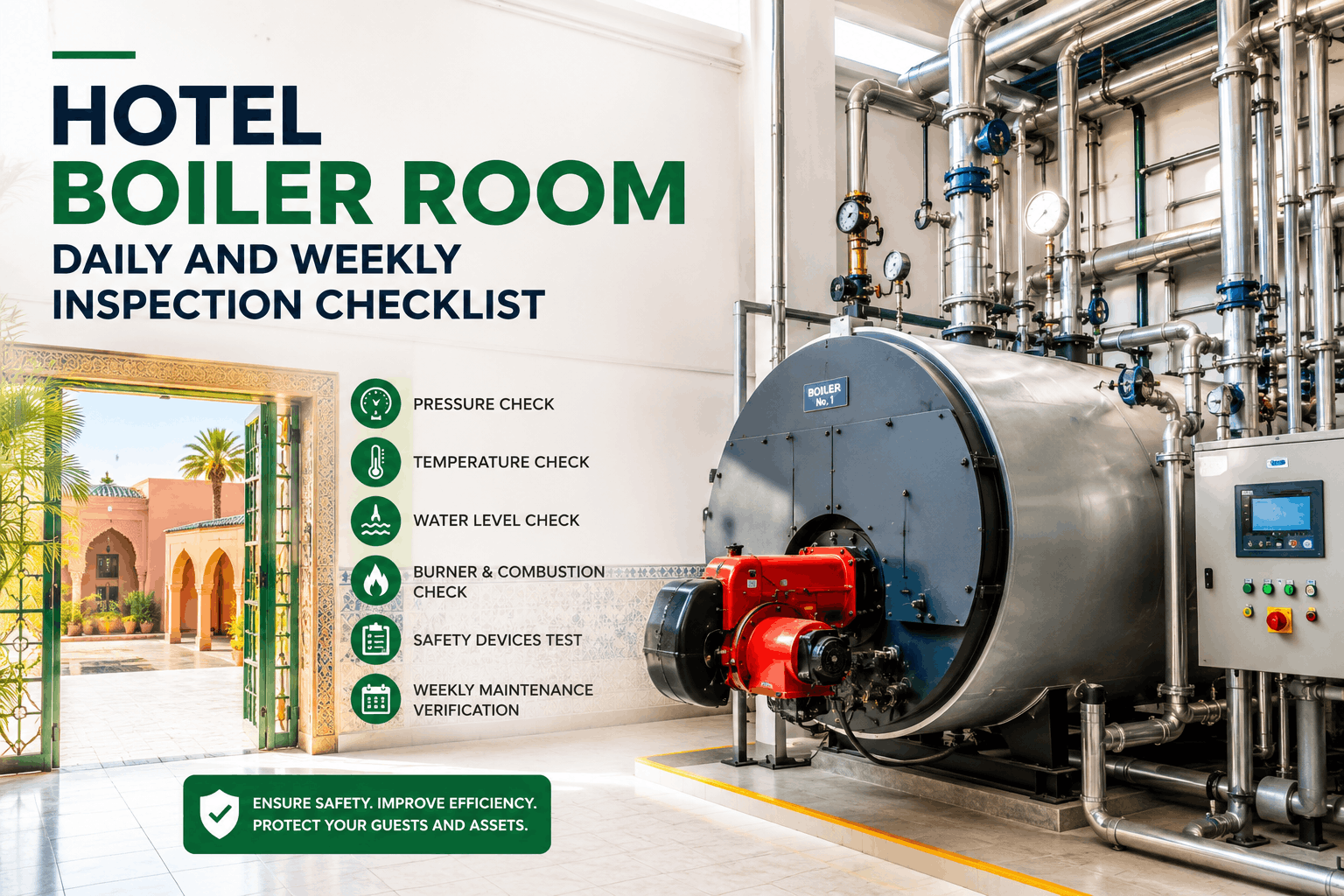
Boiler Pressure, Temperature & Water Level Control
Operating pressure must remain within the boiler's design limits — typically 15–30 psi for hot water systems, 50–150 psi for steam systems depending on design. Water level must be visible in the sight glass at all times: low-water conditions cause the burner to shut off on the low-water cutoff; extremely low water allows the boiler vessel to be exposed to the hot firebox, creating catastrophic damage in minutes.
Pressure Gauge Check
Verify reading within design range; above max triggers relief valve
Water Level Sight Glass
Must show clear water; cloudy or brown water indicates scaling
Low Water Cutoff Test
Manual test verifies burner shutdown at correct level
Pressure Relief Valve and Safety Interlocks
The pressure relief valve is the boiler's last line of defense against overpressure catastrophe. ASME code requires quarterly manual lift tests to verify the valve opens freely, and annual certified inspections by a licensed boiler contractor. A relief valve that has been in service for more than 3 years without testing should be replaced rather than tested — internal deposits can prevent proper seating, creating a stuck-open condition that's worse than no relief valve.
Combustion Efficiency and Burner Performance
Burner efficiency drift adds 15–25% to fuel costs while creating CO (carbon monoxide) hazards for staff. Quarterly combustion analysis measures CO, CO₂, O₂, and stack temperature — tuning the burner to 82–86% efficiency target. Burner deposits also increase fouling of the boiler's internal heat transfer surfaces, reducing heating capacity and creating maintenance cost spiral.
Daily & Routine Inspection Summary
| Check Element | Frequency | Target / Limit | Pass / Fail |
|---|---|---|---|
| Operating Pressure | Daily | Within design range (15–30 psi typical) | ✓ |
| Water Level Sight Glass | Daily | Clear, visible water level in middle of glass | ✓ |
| Low-Water Cutoff Test | Weekly | Burner shuts off at correct low level | ✓ |
| Relief Valve Lift Test | Weekly | Valve opens easily, reseats cleanly | ✓ |
| Combustion Efficiency | Monthly | 82–86% CO₂ / adjusted O₂ | ✓ |
| Water Treatment pH | Weekly | 7.5–9.5 (alkalinity treatment) | ✓ |
Water Treatment and Boiler Water Chemistry
Untreated water destroys boilers from the inside — scale buildup reduces heat transfer and causes local overheating, while oxygen corrosion pits the metal and creates leaks. Blowdown (periodic draining of concentrated dissolved solids) and chemical treatment (alkalinity and pH adjustment) prevent scale and corrosion. pH must remain 7.5–9.5 to prevent both scale and corrosion simultaneously.
Flue System and Annual Certification
The flue (exhaust duct) carries hot combustion gases away from the boiler. Blocked flues, corrosion, or improper termination cause combustion gas backup into the boiler room — an immediate CO hazard. Annual internal boiler inspection by a state-licensed or insurance inspector is legally required in 48 U.S. states and certifies that the boiler vessel, tubes, and internal surfaces remain in safe condition.
"Our boiler failed on a December Friday before a major holiday weekend. We didn't have documented monthly combustion tests, water treatment logs, or relief valve lift test records — just verbal assurance from the maintenance staff. The state inspector cited us for missing documentation. Insurance nearly denied the $38K repair claim. Now with OxMaint, every weekly test is timestamped, every monthly combustion analysis is documented, and I can show the inspector our full compliance file anytime. That $38K failure paid for 5 years of CMMS software."
Frequently Asked Questions
Why is the pressure relief valve manual lift test so important if the valve is supposed to work automatically?
The valve may fail silently — internal deposits can prevent it from opening when pressure exceeds limits, leaving your boiler with zero overpressure protection. Weekly lift tests confirm the valve opens freely; ASME code requires this quarterly minimum, and valves older than 3 years should be replaced rather than tested.
What is the correct boiler water pH range and why does it matter?
pH 7.5–9.5 prevents both corrosion (pH <7) and scale formation (pH >10). Corrosion eats through boiler metal and creates leaks; scale insulates the metal from cooling, causing local overheating and tube rupture. Water treatment maintains this pH range automatically through alkalinity and hydroxide adjustment.
How often should a boiler have a complete internal inspection?
Every state requires annual internal inspection by a licensed boiler inspector — this is a legal mandate in 48 states, not optional maintenance. The inspector verifies tube condition, refractory lining integrity, and absence of corrosion or scaling that precedes failure.
What causes boiler combustion efficiency to drift downward over time?
Burner deposits accumulate on fuel nozzles and burner heads, restricting fuel spray pattern and reducing heat transfer efficiency. Boiler internal deposits (scale) reduce heat transfer to water. Quarterly combustion analysis catches efficiency drops >5% and triggers burner cleaning and air-fuel ratio adjustment.
What is low-water cutoff failure and why is it a catastrophic boiler problem?
The low-water cutoff switch turns off the burner when water level drops below safe limits. Failure means the burner continues firing into an empty boiler — the exposed metal vessel overheats and ruptures explosively. Weekly slow-drain tests confirm the cutoff shuts the burner down at the correct level.
Can I operate my boiler without a current operating certificate posted in the boiler room?
No — all 48 states require the current operating certificate to be posted visibly in the boiler room. Operating without one is a state code violation subject to fines, operational shutdown orders, and insurance denial of coverage for any claim related to the boiler.
How much does an unplanned boiler failure cost a hotel, and what's the typical recovery timeline?
Average emergency repair: $38K parts and labor. Lost revenue from guest refunds and lost occupancy: $12K–$25K for a 400-room property. Full recovery time: 5–10 days including parts procurement, installation, and water treatment rebalancing. Preventive maintenance costs <5% of emergency repair cost.
What should OxMaint's boiler inspection module automatically schedule for my property?
OxMaint auto-schedules daily pressure/level checks, weekly low-water cutoff and relief valve tests, monthly combustion analysis and water treatment, and annual licensed inspector certification. All results are time-stamped, archived, and ready for regulatory review or insurance audit.
Every Pressure Reading Logged. Every Relief Valve Tested. Every Inspection Certified.
OxMaint's hotel boiler room inspection checklist automates daily monitoring, weekly safety device testing, quarterly combustion analysis, and annual certification scheduling — giving your engineering team complete compliance documentation that passes regulatory inspection and protects insurance coverage when the annual inspector arrives.