Hotel Roof and Mechanical Room Inspection Checklist
By James smith on March 5, 2026
Hotel rooftops and mechanical rooms are the most neglected spaces in routine maintenance programmes — and the most expensive to remediate when failure occurs. A roof membrane breach undetected for one quarter becomes a multi-room water intrusion event. A cooling tower drift eliminator that cracks over a single winter season turns a routine quarterly part replacement into an emergency Legionella exposure assessment. An RTU with a blocked drain pan overflows silently through the ceiling cavity for weeks before a guest notices. These are not system failures — they are inspection failures. Start your free Oxmaint account to schedule quarterly roof and mechanical room inspections automatically, assign each zone to the correct staff role, and build the documented inspection history that prevents minor defects from becoming major claims.
Minimum inspection interval for all rooftop and mechanical room zones in any hotel
48hr
Maximum interval between storm event and roof inspection to catch new water ingress before it migrates
Permit
Required for confined space entry in mechanical rooms — permit must be issued before entry in most jurisdictions
Hotel Roof & Mechanical Room Inspection Checklist
Five inspection zone checklists below. Each zone includes access requirements, minimum frequency, and the specific defects this inspection is designed to catch before they generate claims. Book a demo to see how Oxmaint assigns rooftop and mechanical room inspections to qualified staff with permit-to-work controls for restricted access zones.
RSFRoof Surface & DrainageQuarterly + Post-Storm
Access: Lone-worker check-in required. Non-slip footwear minimum. Site permit required for any edge proximity work.
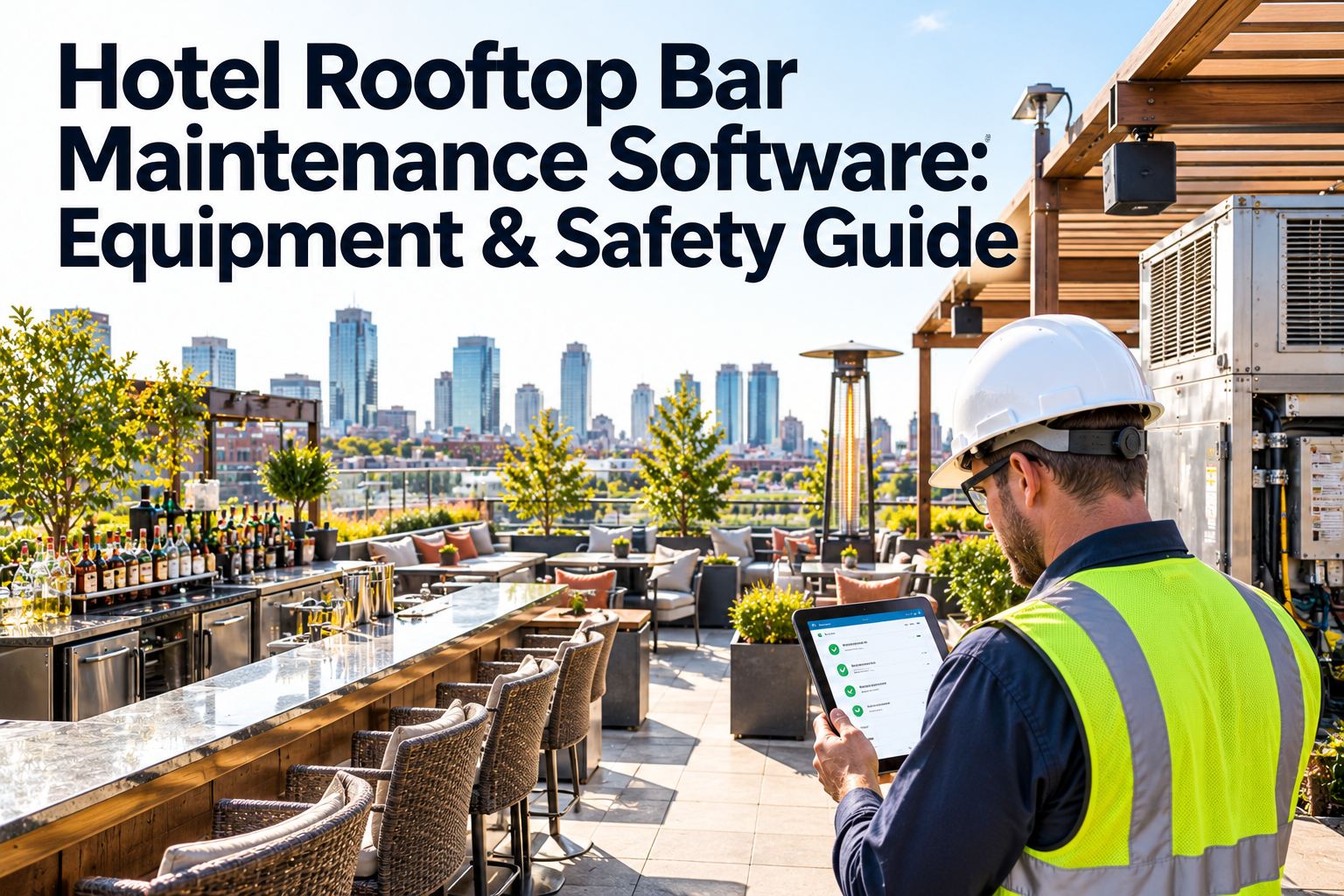
The roof membrane is the hotel's primary water barrier. A single point of failure — a split at a pipe penetration, a blister that has cracked, a drain bowl blocked with debris — migrates water horizontally through the roof construction before it becomes visible as a ceiling stain two or three floors below. By the time a guest reports a stain, the ingress has been active for weeks. Quarterly roof walks prevent this detection lag. Sign up to Oxmaint to schedule post-storm roof inspections automatically when a severe weather event is logged at the property.
Defects Caught: Membrane upstand splits that allow water migration into the roof build-up weeks before any ceiling stain appears. Blocked drain outlets that create ponding loads exceeding flat roof structural design capacity.
RTURooftop Units & EquipmentQuarterly + Bi-Annual Filter
Access: Isolate electrical supply at local disconnect before opening any RTU panel. Lone-worker check-in required. Ladder safety rules apply at all equipment-mounted service platforms.
Rooftop units operate in one of the harshest environments on the building — full UV exposure, wind-driven rain, frost, and thermal cycling. Filter media degrades faster at roof level than manufacturer schedules suggest. Condensate drain pans accumulate algae growth that blocks outlets and causes overflow into the ceiling void below. RTU base frames corrode at the roof interface and lose the seal that prevents water tracking down the equipment curb. Quarterly inspection prevents the most common RTU failure modes before they affect guest comfort or damage the ceiling below.
Defects Caught: Condensate drain pan overflow — the single most common RTU-related ceiling water damage cause in hotel buildings. RTU curb sealant failure that allows wind-driven rain to track into the ceiling void on every storm event.
CTWCooling TowersQuarterly + Bi-Annual Legionella
Access: Water treatment operations require a competent person. Legionella sampling requires accredited procedure. Isolate fan motors before internal tower access. PPE: respiratory protection when tower is running.
Cooling towers are the only hotel building system with a specific regulatory compliance obligation because of the biological risk they create — not the mechanical risk. A tower not maintained to the Approved Code of Practice (ACoP L8 in the UK, ASHRAE 188 in the US) creates Legionella exposure risk for guests, staff, and the surrounding public. The mechanical inspection cannot be separated from the water treatment and microbiological control programme — both must be verified on every quarterly round. Book a demo to see how Oxmaint integrates cooling tower water treatment records with quarterly mechanical inspection schedules in a single compliance audit trail.
Defects Caught: Drift eliminator damage that creates aerosol escape — the primary Legionella exposure pathway from cooling towers. Chemical dosing record gaps that create regulatory non-compliance even when water quality is satisfactory.
MCHMechanical RoomQuarterly + Annual Full Audit
Access: Confined space permit required for enclosed mechanical rooms below defined volume threshold. Restricted access — authorised maintenance personnel only. Log all entries and exits. No contractor access without engineer escort.
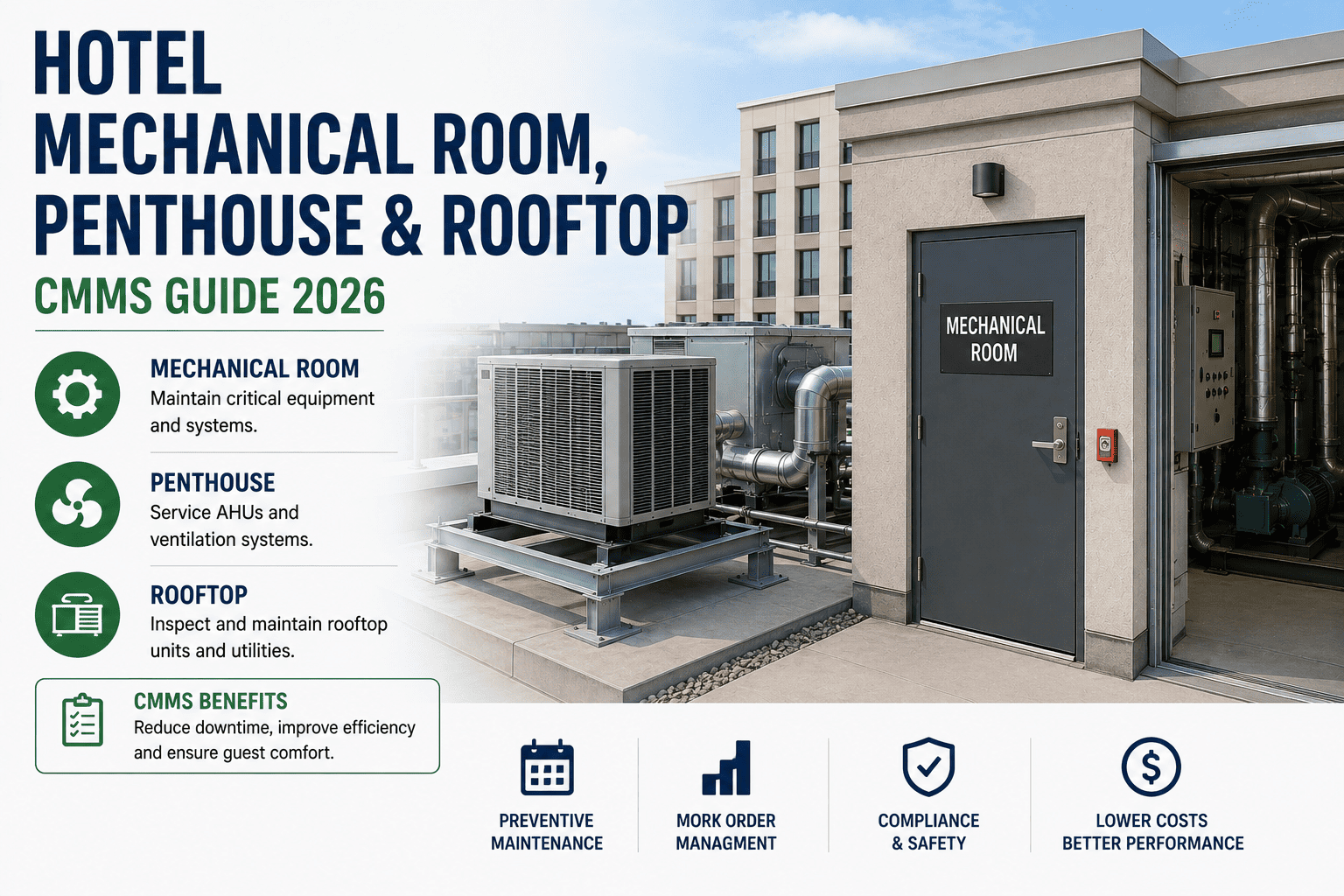
The mechanical room contains the hotel's most capital-intensive assets — boilers, chillers, pump sets, electrical switchgear, and BMS controllers — concentrated in a space that receives the fewest guest-facing inspections. Fluid leaks in mechanical rooms are often not discovered until a second visit when the staining pattern reveals a chronic drip. Electrical switchgear accumulates dust contamination that creates arc flash risk over time. A quarterly mechanical room walk with a structured checklist catches all these failure modes while they remain minor. Sign up to Oxmaint to build a quarterly mechanical room inspection into your PM calendar with mandatory photographic evidence at each equipment station.
Defects Caught: Pump mechanical seal weeping that progresses to full failure — planned seal replacement costs ~£180; emergency failure with motor damage costs £2,000+. BMS points in persistent override creating invisible energy waste across multiple guest zones.
ACCRoof Access & Safety SystemsQuarterly + After Each Access Event
Access: Anchor point and fall arrest system must be inspected before use on every access event. Working at height risk assessment required. Any anchor point showing defects must be tagged out of service before the rooftop access route is used.
Roof access systems — roof ladders, access hatches, walkway systems, fall arrest anchor points, and edge protection — are life-safety equipment. A corroded roof ladder rung, a hatch that cannot be opened from below, or an anchor point whose certification has expired places every person who accesses the roof at direct risk of fatal injury. These systems must be inspected quarterly and immediately after each access event. Sign up to Oxmaint to create a permit-to-work workflow that checks access system certification status automatically before any rooftop work order is approved.
Defects Caught: Expired fall arrest anchor point certification — using an uncertified anchor creates direct employer liability for any fall incident regardless of anchor mechanical condition. Roof hatch seal failure that creates a persistent water ingress point misdiagnosed as membrane failure.
Rooftop and mechanical room inspections without a structured digital record are attendance confirmations. Oxmaint turns them into asset condition histories — defect by defect, quarter by quarter, with every photo, every finding, and every corrective work order linked to the specific asset that generated it.
That record is what distinguishes a maintained building from a managed building — and it is what your insurer, your regulator, and your ownership group will ask for when something goes wrong. Start your free trial and configure your first rooftop inspection schedule today.
How Oxmaint Manages Roof & Mechanical Room Compliance
Permit-to-Work Integration for Restricted Zones
Before any rooftop or mechanical room work order is approved, Oxmaint checks that the required permit — working at height, confined space, hot works — is active for the zone. If a relevant permit has expired or has not been issued, the work order cannot be started. This prevents the most common cause of maintenance-related injury: engineers accessing restricted zones without active permits because the permit process is separate from the work order system.
Safety ModulePermit-to-Work
Post-Storm Inspection Triggers
Oxmaint generates a post-storm roof inspection work order automatically when a weather trigger is met — wind speed above threshold, rainfall above threshold, or a manual trigger from the duty manager. The work order is assigned to engineering with a 48-hour completion deadline and requires a photo of each drain and each equipment curb to close. This eliminates the gap between a storm event and the delayed discovery of new roof ingress that occurs when storm response is informal.
Inspection ManagementAuto-Scheduling
Cooling Tower Compliance Record
Oxmaint maintains the cooling tower's full compliance record — water treatment logs, Legionella sampling results, quarterly inspection findings, and drift eliminator replacement history — in a single asset record. Gaps in the chemical treatment record, the single most common ACoP L8 compliance failure, are flagged in real time rather than discovered in an annual paper audit when the gap is already months old.
Compliance ManagementAsset Management
Frequently Asked Questions
How often should hotel rooftops be formally inspected?
At minimum, every rooftop zone must be inspected quarterly plus within 48 hours of any significant storm event. In climates with heavy seasonal variation — freeze-thaw cycles, heavy rainfall seasons, or high-wind exposure — biannual deep inspections of the roof membrane and drainage are recommended. An annual professional roof condition survey by a roofing contractor provides an independent assessment of membrane life expectancy and any latent defects not detected by the in-house inspection programme. Sign up to Oxmaint to configure quarterly rooftop inspection schedules with post-storm trigger automations from your property's first inspection round.
What permits are required for mechanical room and rooftop access?
Requirements vary by jurisdiction but the standard framework is: working at height permit for any rooftop access — in many jurisdictions, any work at height above 2 metres requires a risk assessment and, for contractor work, a method statement. Confined space permit for mechanical rooms below a defined volume or with limited air exchange. Hot works permit for any welding or grinding on the roof or in the mechanical room. Book a demo to see how Oxmaint's permit-to-work module manages all permit types with approval workflows and automatic linkage to affected work orders.
Who should conduct hotel rooftop and mechanical room inspections?
Quarterly visual inspections of roof surface and drainage can be conducted by trained in-house engineering staff with working-at-height competency. RTU and mechanical room inspections require staff with relevant mechanical and electrical qualifications. Cooling tower inspections must be conducted under the supervision of the designated responsible person for the Legionella control programme. Electrical panel inspections must be conducted by a qualified electrician. Annual roof condition surveys require a specialist roofing contractor. Oxmaint allows each inspection zone to be assigned to the correct staff role with certification level requirements enforced before a work order can be accepted.
How does Oxmaint handle the cooling tower compliance record for regulatory purposes?
Oxmaint maintains all cooling tower records in a single asset profile — water treatment logs with chemical readings, Legionella sampling results with laboratory reports attached, quarterly mechanical inspection findings with photographs, and the full corrective work order history. The responsible person can generate a complete compliance report for any date range suitable for submission to the local health authority or an environmental health officer during a routine inspection. Real-time gap detection flags any missed chemical dosing log entry within 24 hours — eliminating the record gaps that are the most common basis for regulatory enforcement action under ACoP L8 and ASHRAE 188.
Ready to Replace Paper Rooftop Logs with a Real Compliance Record?
Oxmaint schedules every quarterly roof walk, every post-storm check, and every cooling tower compliance round automatically — with photo evidence required to close each inspection and a full audit trail available to your insurer, your regulator, or your ownership group on demand.