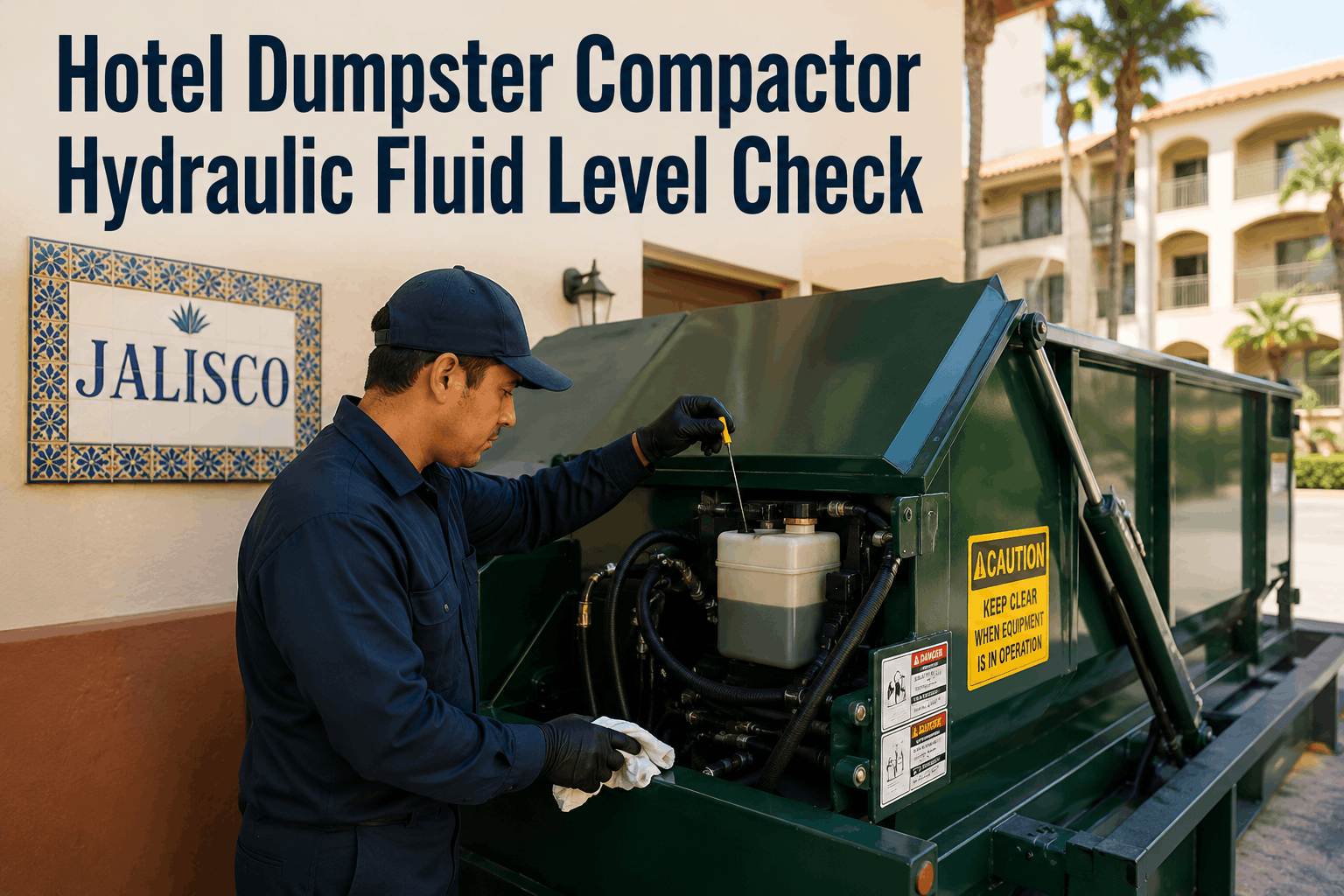
Hotel Dumpster Compactor Hydraulic Fluid Level Check
By Alex Jordan on June 18, 2026
A dumpster compactor with low hydraulic fluid is not a maintenance issue — it is a waste management crisis waiting to happen. When hydraulic fluid runs low, the compaction ram loses force, the compaction cycle fails, and trash accumulates in the loading area — creating odors, pest hazards, and health department violations. A single compactor failure can cost $1,000–5,000 in emergency repairs, plus additional waste hauling fees when trash cannot be compacted. Start a free trial with Oxmaint to schedule weekly fluid level checks, or book a demo to see how hotel engineering teams use Oxmaint's waste equipment module to maintain compactor reliability and prevent back-of-house operational failures.
HOTEL WASTE MANAGEMENT · COMPACTOR MAINTENANCE · BACK-OF-HOUSE · 2026
Hotel Dumpster Compactor Hydraulic Fluid Level Check: Weekly Inspection Routine for Waste Equipment Reliability
Hydraulic fluid level check, leak detection, ram cycle testing, safety switch verification, pump inspection, and waste disposal efficiency — the complete guide to maintaining hotel dumpster compactors and preventing back-of-house failures.
$1K–5KEmergency repair cost for a failed compactor
7 daysMaximum interval between fluid level checks
60%Of compactor failures traced to low hydraulic fluid
24/7Guest expectation — waste disposal must never disrupt operations
Why Compactor Hydraulic Fluid Maintenance Matters — The Science of Hydraulic Systems
Hydraulic compactors use pressurized fluid to drive the compaction ram. The hydraulic pump draws fluid from a reservoir, pressurizes it, and delivers it to the ram cylinder. Low fluid levels cause the pump to cavitate — drawing air into the system instead of fluid. Cavitation damages pump components, reduces compaction force, and can lead to complete system failure. Contaminated fluid (water, debris, or degraded oil) also reduces system performance and damages seals and valves. Start a free trial or book a demo to see how Oxmaint's waste equipment module tracks fluid levels and schedules preventive maintenance.
1
Hydraulic Fluid Level
Minimum fluid level required for proper pump operation
The weekly fluid level check is the most critical preventive maintenance task for dumpster compactors. The five-step protocol below takes 5–10 minutes per compactor and can prevent catastrophic failures. Oxmaint's waste equipment module generates weekly inspection work orders and tracks fluid levels over time.
Weekly Compactor Inspection — 5-Step Protocol
Step 1: Visual Inspection
Check for visible leaks, damaged hoses, and loose fittings
Inspect the hydraulic reservoir, hoses, and cylinder for leaks. Look for wet spots, drips, or puddles. Check hose condition for cracks, abrasion, or bulging. Tighten loose fittings.
Safety First
Step 2: Fluid Level Check
Verify fluid level between MIN and MAX marks
With the compactor off and the ram fully retracted, check the fluid level in the reservoir sight glass. Fluid should be between the MIN and MAX marks. If below MIN, add the correct hydraulic fluid (ISO 32, 46, or 68 depending on manufacturer specification).
Critical
Step 3: Ram Cycle Test
Run one full compaction cycle — verify smooth operation
Activate the compactor and observe one full ram cycle (extend and retract). Listen for unusual noise (pump cavitation indicates low fluid). Verify ram extends fully and retracts completely. If the ram hesitates or struggles, investigate further.
Functional
Step 4: Safety Switch Test
Verify all safety switches and interlocks function
Test all safety devices: emergency stop, door interlock, and pressure relief. Verify the compactor stops immediately when the emergency stop is activated. Confirm the door interlock prevents operation when open.
Safety
Step 5: Pressure Gauge Reading
Record system pressure during compaction
Note the pressure gauge reading during the compaction cycle. Compare to the normal operating range (typically 1,800–2,500 PSI). A significant drop indicates a pump or valve issue. Record the reading in CMMS for trend analysis.
Performance
Common Compactor Failure Modes and Prevention
Understanding the most common compactor failure modes allows engineering teams to prevent issues before they cause operational disruptions. Oxmaint's maintenance history module tracks failure types and repair history for each compactor, enabling proactive maintenance planning.
Common Compactor Failure Modes — Prevention Strategies
Low Hydraulic Fluid
Weekly
Level Check
Prevention
Hydraulic Leak
Weekly
Visual Inspection
Early Detection
Ram Sticking
Weekly
Cycle Test
Functional
Pump Cavitation
Weekly
Listen for Noise
Sound Check
Fluid Contamination
Annually
Fluid Change
Critical
Prevent Back-of-House Failures — Automate Your Compactor Maintenance Schedule
Oxmaint's waste equipment module tracks weekly fluid level checks, ram cycle tests, safety switch verification, and fluid changes — ensuring your compactor never fails when you need it most.
Hydraulic Fluid Types and Specifications — What to Use and When to Change
Using the correct hydraulic fluid is essential for compactor performance and reliability. The table below shows common hydraulic fluid specifications and change intervals. Oxmaint's parts inventory module tracks fluid specifications and schedules fluid changes based on manufacturer recommendations.
Best for compactors in unheated outdoor locations or cold climates. Maintains flow at lower temperatures. Change: Annually or per manufacturer recommendation.
Cold Climate
ISO 46
Most common — standard hydraulic fluid
Suitable for most hotel compactors in moderate climates. Provides good viscosity and wear protection. Change: Annually or per manufacturer recommendation.
Standard
ISO 68
Heavy hydraulic fluid — high temperature applications
Best for compactors in high-temperature environments or units with heavy usage. Provides superior film strength. Change: Annually or per manufacturer recommendation.
High Temp
Fluid Change Interval
Annually — or when contamination is detected
Change fluid annually minimum. If the fluid appears milky, dark, or has a burnt odor, change immediately. Water contamination (milky appearance) is a common cause of seal and pump failure. Oxmaint tracks fluid change dates and sends reminders.
Preventive
"
We had two compactor failures in six months — each one cost $3,000 in emergency repairs and caused trash to pile up in our loading dock for 48 hours. The kitchen staff couldn't dispose of waste, odors built up, and we almost had a health department visit. After implementing Oxmaint's weekly fluid level checks, we caught a slow leak in the hydraulic cylinder before it caused a failure. The repair cost $400 instead of $3,000, and we never had another unplanned shutdown. The weekly check literally paid for itself in one prevention.
Director of Engineering — 300-room Full-Service Hotel, US Southeast
How often should dumpster compactor hydraulic fluid be checked?
Weekly checks are the minimum standard for hotel compactors. Daily checks are recommended for high-volume properties. The check takes 5–10 minutes and includes fluid level, visual inspection for leaks, and a ram cycle test. Oxmaint generates weekly inspection work orders automatically. Start a free trial to configure weekly inspection schedules.
What happens if the hydraulic fluid level is too low?
Low fluid causes the pump to cavitate — drawing air into the system. Cavitation damages pump components, reduces compaction force, and can lead to complete pump failure. The ram may move slowly or stop completely. Continued operation with low fluid will destroy the pump. The weekly fluid level check prevents this scenario. Book a demo to see how Oxmaint tracks fluid levels.
What type of hydraulic fluid should I use in my compactor?
Check your manufacturer's manual. Most compactors use ISO 32, 46, or 68 hydraulic fluid. The specific grade depends on climate and operating conditions. Never mix different types of hydraulic fluid. If you're unsure, contact the compactor manufacturer or a local hydraulic fluid supplier. Oxmaint stores fluid specifications per asset. Start free to track fluid specifications.
How do I know if my hydraulic fluid needs changing?
Signs of contaminated fluid include: milky appearance (water contamination), dark or black color (heat degradation or particulate contamination), burnt odor (overheating), and visible particles or sludge. Annual fluid changes are recommended as a minimum. If the compactor operates in hot or demanding conditions, change fluid more frequently. Oxmaint tracks fluid change dates and sends reminders. Start free to configure fluid change schedules.
Every Hotel Needs Reliable Waste Compaction — Automate Your Maintenance.
Oxmaint's waste equipment module tracks weekly fluid level checks, ram cycle tests, safety switch verification, and fluid changes — keeping your compactor running and your waste moving. Free to start.