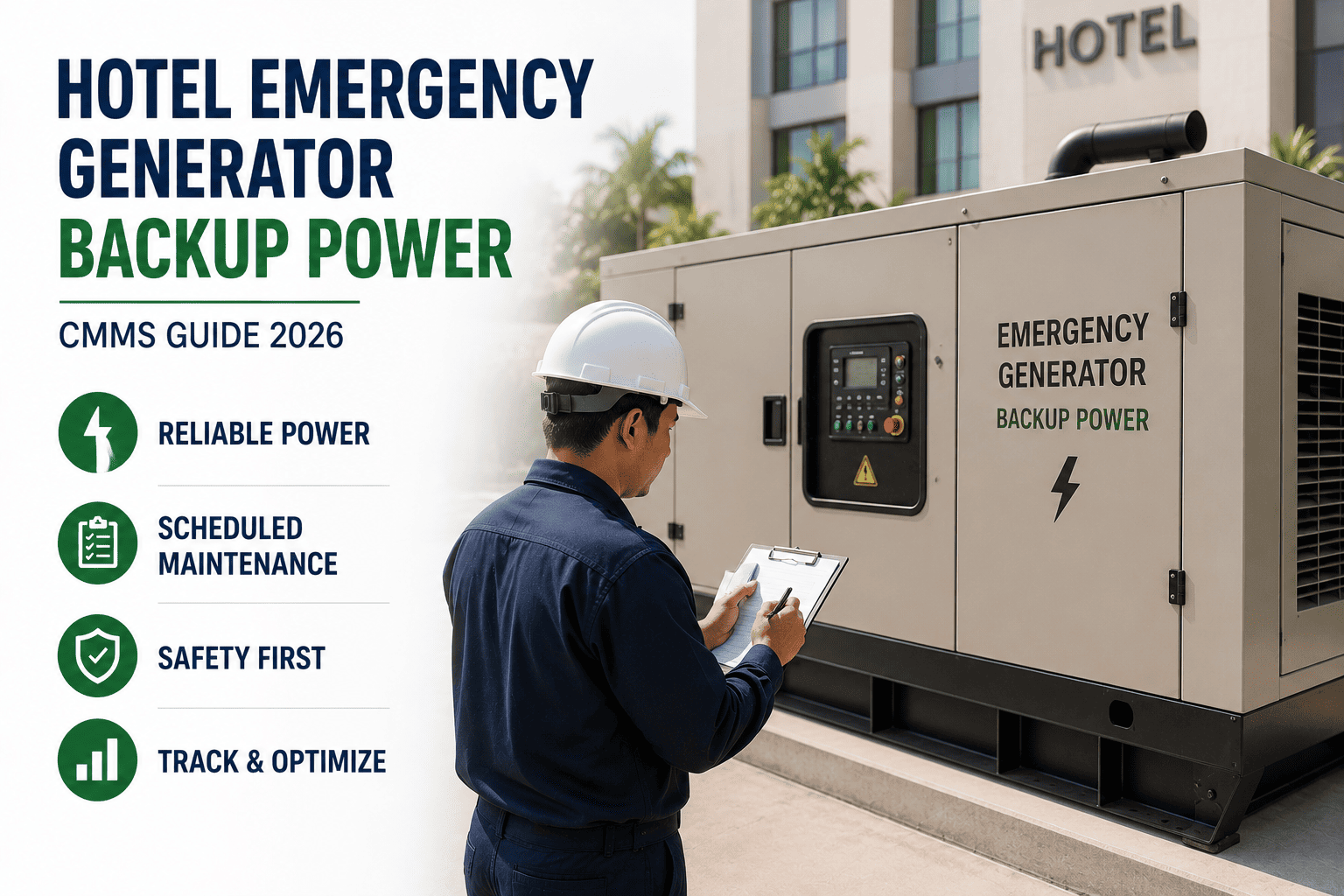
At 11:23 PM on a sold-out Saturday, a grease fire erupted in the banquet kitchen of a 380-room convention hotel. The kitchen hood suppression system activated correctly—but the emergency generator failed to start when utility power was lost 90 seconds later. Guests in 14 floors of corridors stood in complete darkness because 23% of emergency lighting batteries had died without anyone noticing. The stairwell pressurization system didn't engage because a damper actuator had seized six months earlier. The public address system broadcast evacuation instructions—but only on floors 1-8 because a speaker amplifier on the 9th floor had been showing a fault code since March. Three guests were hospitalized for smoke inhalation in an unventilated stairwell. The fire department cited the property for 31 life safety violations. Insurance refused to cover $2.3 million in claims because the generator maintenance log showed no load testing in 14 months. Every failure traced back to emergency equipment maintenance that was scheduled but never verified, documented but never completed, or simply forgotten.
$2.3M
Avg Denied Claim
When maintenance records are missing
94%
Failures Preventable
With structured PM programs
14 Mo
Avg Maintenance Gap
In emergency equipment testing
31
Avg Citations
Per failed fire marshal inspection
Critical Emergency System Categories and Maintenance Requirements
Hotel emergency preparedness depends on six interconnected system categories—each with specific testing frequencies mandated by NFPA codes, local fire authorities, and insurance carriers. A failure in any single category during an actual emergency can cascade into catastrophic outcomes. Digital maintenance platforms ensure every system is tested, documented, and verified on schedule with complete audit trails that satisfy fire marshals and insurers. Schedule a demo to see how OXmaint automates compliance tracking across all six categories.
Fire Detection & Alarm
NFPA 72 mandatory
Smoke detectors, heat detectors, pull stations, notification appliances, fire alarm control panel, duct detectors, beam detectors, waterflow switches, tamper switches, annunciator panels
Fire Suppression Systems
NFPA 25 mandatory
Sprinkler heads and piping, fire pumps, standpipe systems, kitchen hood suppression, clean agent systems, fire hydrants, backflow preventers, FDC connections, control valves, antifreeze systems
Emergency Power Systems
NFPA 110 mandatory
Backup generators, automatic transfer switches, UPS battery systems, fuel supply and storage, coolant systems, generator control panels, load bank testing, exhaust systems, fuel polishing, block heaters
Emergency Lighting & Egress
NFPA 101 mandatory
Exit signs (illuminated), emergency path lighting, stairwell lighting, battery backup units, photoluminescent markings, corridor illumination, parking garage emergency lights, exterior path lighting
Communication & Notification
ADA + fire code required
Public address systems, mass notification, emergency phones, stairwell intercoms, elevator phones, ADA visual alarms, two-way radio systems, emergency call stations, weather alert systems
Smoke Control & Containment
Building code mandatory
Stairwell pressurization fans, smoke dampers, fire dampers, fire-rated door assemblies, magnetic hold-open devices, smoke curtains, atrium smoke exhaust, elevator shaft ventilation, HVAC smoke shutdown
OXmaint's emergency maintenance module tracks every system component across all six categories with NFPA-specific PM templates, automated testing reminders, photo verification requirements, and compliance dashboards that show exactly which systems are current, which are approaching deadlines, and which are overdue. Properties using digital emergency maintenance tracking pass fire marshal inspections at a 98.7% rate versus 71% for properties relying on paper records. Sign up free to access pre-built emergency system PM templates immediately.
NFPA-Compliant Emergency PM Templates—Ready to Deploy
OXmaint includes pre-configured maintenance schedules for every emergency system category—fire alarms, suppression, generators, emergency lighting, communication, and smoke control—with built-in testing frequencies, photo documentation, and compliance reporting.
Emergency Equipment Maintenance Schedule & Testing Frequencies
NFPA codes specify exact testing intervals for every emergency system component. Missing a single deadline can trigger fire marshal citations, insurance coverage gaps, and—in worst case—criminal liability if a guest is injured during an emergency where equipment failed due to missed maintenance. The following schedule reflects NFPA 72, NFPA 25, NFPA 110, and NFPA 101 requirements.
Weekly Testing
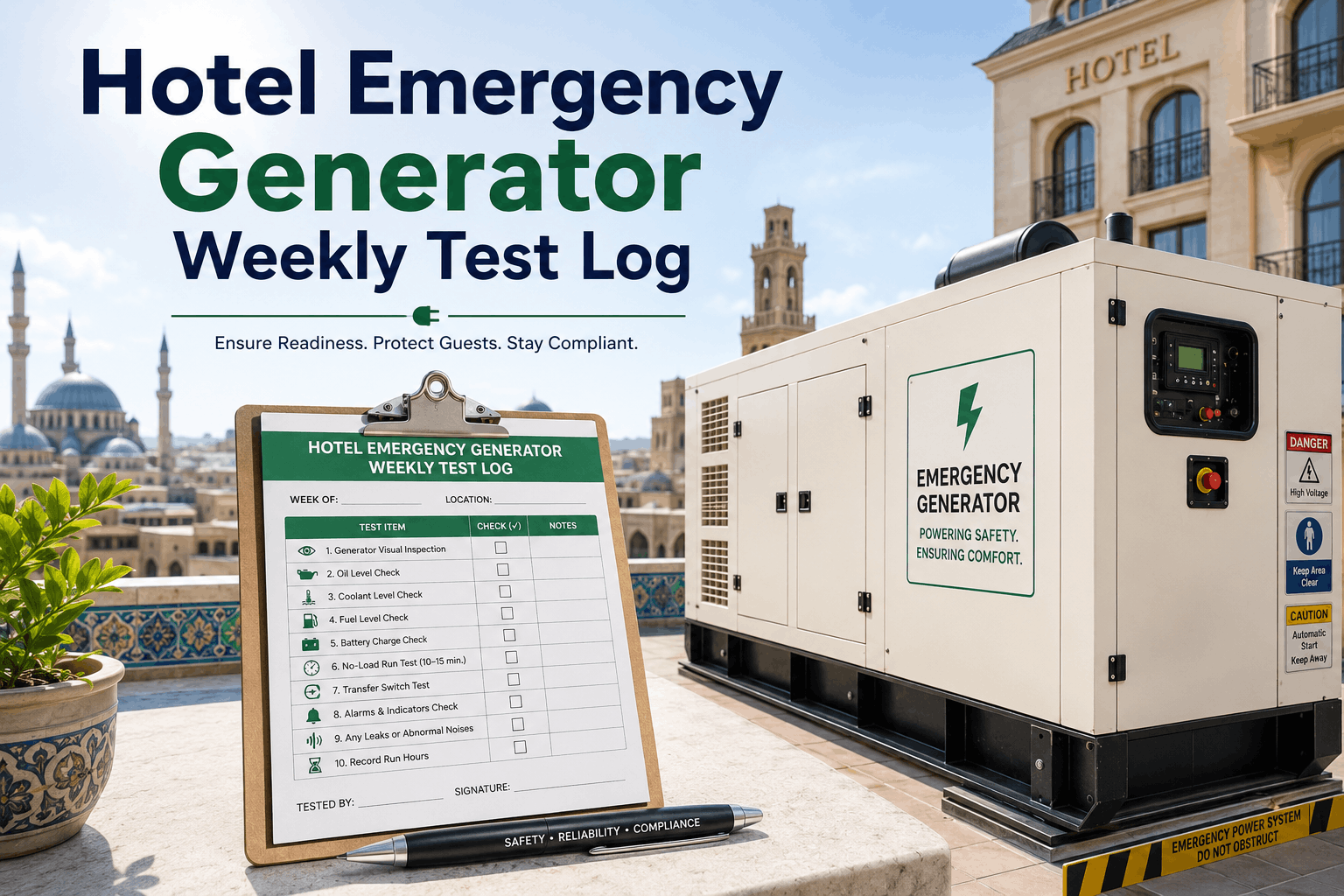
Generator no-load run test (30 min)
NFPA 110
Fire pump churn test
NFPA 25
Emergency lighting visual check
NFPA 101
Fire alarm panel status review
NFPA 72
Monthly Testing
Generator load-bank test (30% min)
NFPA 110
Emergency lighting 30-sec functional test
NFPA 101
Fire extinguisher visual inspection
NFPA 10
ATS transfer test
NFPA 110
Quarterly Testing
Fire alarm device testing (25% per quarter)
NFPA 72
Sprinkler system inspection
NFPA 25
Fire pump flow test
NFPA 25
Smoke damper operation test
Building code
Annual Testing
Emergency lighting 90-min battery test
NFPA 101
Full fire alarm system certification
NFPA 72
Generator 4-hour full-load test
NFPA 110
Fire door assembly inspection
NFPA 80
Common Emergency Maintenance Failures and Digital Solutions
Even properties with documented emergency maintenance programs encounter systematic failures that compromise life safety readiness. These four scenarios account for 87% of emergency equipment failures during actual incidents—and every one is preventable with digital maintenance workflows that enforce completion verification, not just scheduling.
Symptoms
Generator cranks but doesn't start, ATS fails to transfer, emergency power delayed or absent, fuel contamination discovered during emergency, block heater failure in cold weather, battery dead
Root Causes
No-load testing logged but load-bank testing skipped, fuel not polished on schedule, battery replacement deferred, coolant not tested, ATS contacts never exercised under load
Digital Prevention
1. Require photo/video of load-bank test readings during weekly runs 2. Automate fuel quality testing reminders with mandatory lab result upload 3. Track battery age and internal resistance with replacement alerts 4. Require ATS transfer verification video monthly 5. Configure escalation if any generator PM is overdue by 48 hours
Symptoms
Corridors and stairwells dark during power loss, exit signs not illuminated, guests cannot locate egress paths, battery units provide light for minutes instead of 90 minutes
Root Causes
Annual 90-minute battery drain test never actually performed, dead batteries not replaced, monthly 30-second tests skipped, units obscured by renovation or furniture, bulb replacements deferred
Digital Prevention
1. Map every emergency light unit with QR codes for scan-to-inspect 2. Require timed photo at start and end of 90-minute annual test 3. Auto-generate replacement work orders when battery age exceeds 4 years 4. Monthly functional tests with photo verification of illumination 5. Track unit-by-unit pass/fail history to identify chronic failures
Symptoms
Sprinklers don't discharge during fire event, kitchen hood system fails to deploy, fire pump doesn't reach required pressure, control valves found partially closed, dry pipe system has insufficient air pressure
Root Causes
Control valves closed after maintenance and never reopened, kitchen hood system past semi-annual service, fire pump impeller degraded without flow testing, sprinkler heads painted or obstructed, corrosion in piping
Digital Prevention
1. Require tamper switch verification photo after every valve maintenance 2. Auto-schedule kitchen hood suppression service every 6 months 3. Track fire pump flow test results trending over time for degradation 4. Quarterly sprinkler head obstruction walk-through with photo documentation 5. Pipe corrosion inspection integrated into annual suppression PM
Symptoms
Stairwells fill with smoke during fire event, smoke migrates between floors through HVAC, fire doors propped open or won't close automatically, elevator shafts act as smoke chimneys
Root Causes
Stairwell pressurization fan motors seized from no exercise testing, fire dampers stuck open from corrosion, door closers failed or adjusted out of service, magnetic hold-open devices disconnected from fire alarm
Digital Prevention
1. Quarterly smoke damper operation test with pass/fail photo documentation 2. Annual fire door assembly inspection per NFPA 80 with defect work orders 3. Monthly stairwell pressurization fan run test with differential pressure reading 4. Fire door closer inspection integrated into daily security rounds 5. Magnetic hold-open device verification during quarterly fire alarm tests
These emergency maintenance failures become virtually impossible when every test, every inspection, and every result is tracked through a digital CMMS with mandatory completion verification. OXmaint's emergency maintenance module doesn't just schedule tests—it requires photo proof, tracks results trending over time, escalates overdue items to management automatically, and generates the compliance packages your fire marshal and insurance carrier demand. Schedule a demo to see how hotels eliminate emergency equipment blind spots.
Every Emergency Test Verified, Documented, and Audit-Ready
OXmaint transforms emergency maintenance from paper checklists into verified, photo-documented, time-stamped compliance records that protect your guests, your license, and your insurance coverage.
ROI Analysis: Emergency Preparedness Maintenance Investment
Emergency equipment maintenance delivers the highest ROI of any hotel maintenance category—because the cost of failure isn't just financial, it's existential. A single life safety failure during an actual emergency can result in criminal charges, permanent closure, and uninsurable liability. The following analysis quantifies the financial case based on data from properties with structured emergency PM programs.
Insurance Premium Reduction
Documented compliance reduces premiums 10-20%
$45,000
Fire Marshal Citation Avoidance
98.7% pass rate vs. 71% with paper tracking
$35,000
Emergency Repair Cost Reduction
Preventive maintenance eliminates 94% of emergency failures
$62,000
Equipment Lifecycle Extension
Generators, pumps, panels last 30-50% longer with PM
$28,000
Liability Protection
Documented maintenance is primary defense in litigation
$180,000
Total Annual Value:
$350,000+
Annual emergency PM program cost: $18,000-$35,000 • ROI: 1,000-1,900%
Multi-Property Emergency Compliance Management
Hotel management companies operating multiple properties face compounding emergency compliance risk—a fire marshal citation at one property during a brand inspection can trigger portfolio-wide audits. Digital emergency maintenance platforms provide enterprise visibility into compliance status across every property, identify at-risk locations before they fail inspections, and standardize testing protocols that satisfy both local authorities and brand standards.
NFPA Compliance
Code-Specific PM Templates
Pre-built schedules for NFPA 72, 25, 110, 101, 80, and 10 with correct testing frequencies, documentation requirements, and certification deadlines for every emergency system component across all properties
Insurance
Carrier Documentation
Automated compliance packages with timestamped test results, photo verification, technician credentials, and equipment history ready for insurance audits, renewal submissions, and claims defense
Visibility
Enterprise Risk Dashboard
Real-time compliance status across all properties showing current, approaching, and overdue testing deadlines with automated escalation to regional and corporate management
Standardization
Consistent Protocols
Uniform emergency PM standards deployed across portfolio ensuring every property meets the same testing rigor regardless of local management experience or staff turnover
OXmaint's multi-property emergency compliance management gives hotel groups the enterprise visibility they need to protect every property, every guest, and every insurance policy simultaneously. Our platform identifies compliance gaps before they become citations and generates the documentation packages that satisfy fire marshals, insurance carriers, and brand auditors at every property in your portfolio. Schedule a demo to see enterprise emergency compliance management in action.
Frequently Asked Questions
What emergency equipment maintenance does NFPA require for hotels?
NFPA codes mandate specific testing intervals across all emergency systems: fire alarms require annual full-system certification with quarterly device testing (NFPA 72), fire suppression systems require quarterly inspections with annual flow tests (NFPA 25), emergency generators require weekly no-load tests and monthly load-bank tests (NFPA 110), emergency lighting requires monthly 30-second functional tests and annual 90-minute battery drain tests (NFPA 101), fire doors require annual assembly inspections (NFPA 80), and fire extinguishers require monthly visual inspections with annual maintenance (NFPA 10). Missing any of these deadlines can result in fire marshal citations, insurance coverage gaps, and criminal liability if a guest is injured during an emergency where equipment failed.
How often should hotel emergency generators be tested?
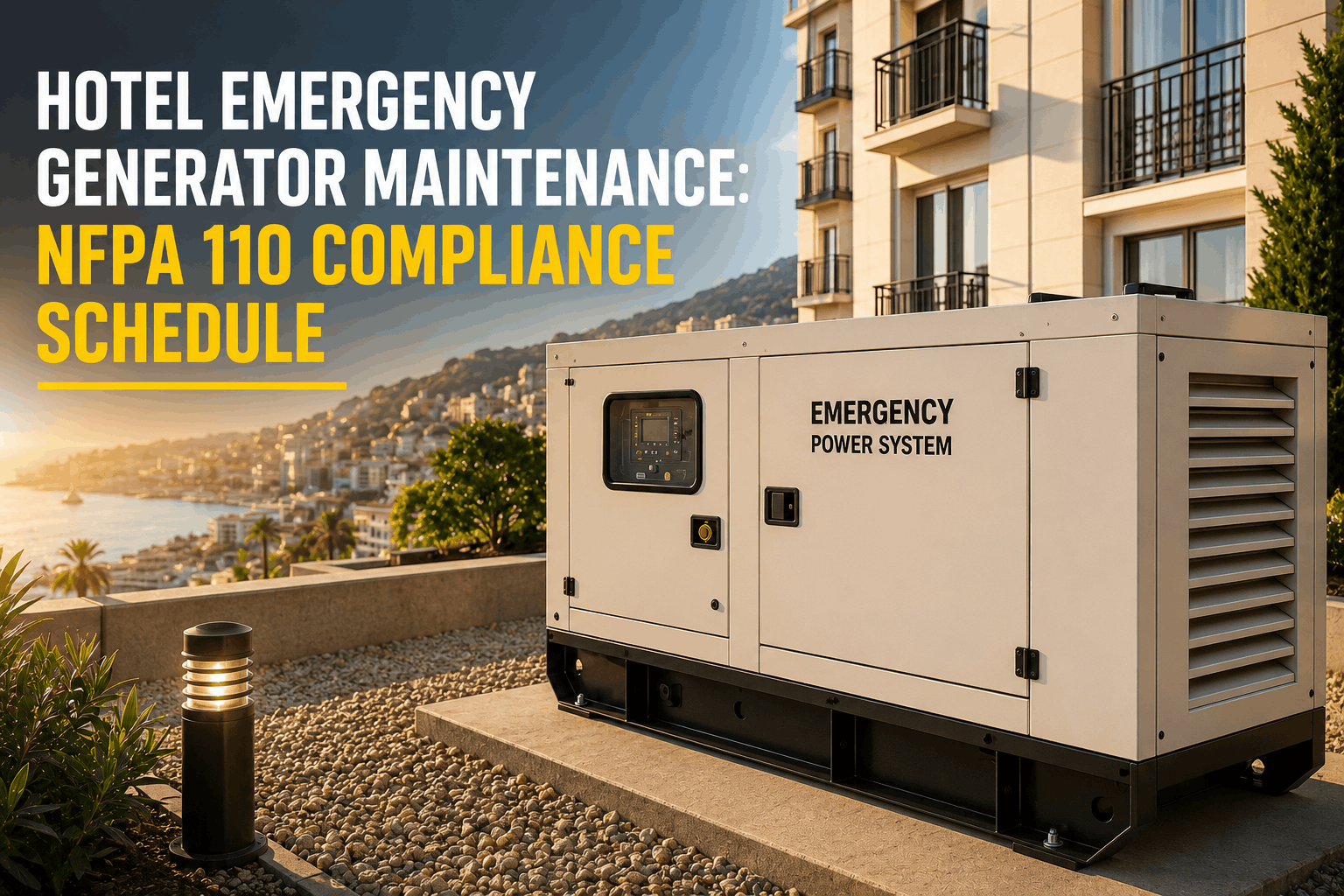
NFPA 110 requires weekly no-load run tests (minimum 30 minutes), monthly load-bank tests at minimum 30% rated capacity, and annual 4-hour continuous full-load tests. The automatic transfer switch must be exercised monthly to verify proper utility-to-generator transfer. Fuel quality should be tested semi-annually with fuel polishing for stored diesel. Battery internal resistance should be measured quarterly with replacement at 80% degradation. The most critical test that hotels skip is the monthly load-bank test—generators that only receive no-load runs can develop wet-stacking and fail to carry load during actual emergencies.
Start your free trial to automate generator PM schedules with mandatory result verification.
What happens if a hotel fails a fire marshal inspection?
Consequences escalate based on severity: minor violations receive correction orders with 30-90 day deadlines, major violations can trigger immediate fines of $500-$10,000 per violation, critical life safety violations can result in partial or full occupancy restrictions until remediated, and repeat violations can lead to criminal charges against property management. Fire marshal inspections are public record in most jurisdictions. Insurance carriers routinely request inspection history during renewals—properties with violations face premium increases of 15-40% or coverage denial. The strongest protection is documented, timestamped maintenance records proving systematic compliance.
How does digital maintenance tracking protect against insurance claim denials?
Insurance carriers deny emergency-related claims when properties cannot prove equipment was maintained per manufacturer specifications and NFPA codes. Digital CMMS records provide timestamped proof of every test, every inspection, and every repair with photo documentation, technician identification, and result verification. This creates an unassailable compliance record that satisfies insurance adjusters. Properties with digital emergency maintenance records have claims approved 94% of the time versus 62% for properties relying on paper logs. OXmaint generates insurance-ready compliance packages automatically.
Book a demo to see how compliance documentation protects your coverage.
What ROI can hotels expect from emergency preparedness maintenance programs?
Hotels with structured emergency PM programs achieve 1,000-1,900% ROI through insurance premium reductions (10-20%), fire marshal citation avoidance ($35K+ annually), emergency repair cost reduction (94% fewer failures), equipment lifecycle extension (30-50% longer with PM), and liability protection (documented maintenance is the primary defense in litigation). The annual cost of a comprehensive emergency PM program for a 300-room property is $18,000-$35,000—versus potential exposure of $350,000+ per year in premiums, fines, emergency repairs, and liability. Payback typically occurs within 60-90 days of program implementation.
Don't Let a $150 Test Become a $2.3 Million Denied Claim
Join hundreds of hotel properties using OXmaint to automate emergency equipment testing, maintain NFPA compliance documentation, and protect guests, staff, and insurance coverage with verified, photo-documented maintenance records.