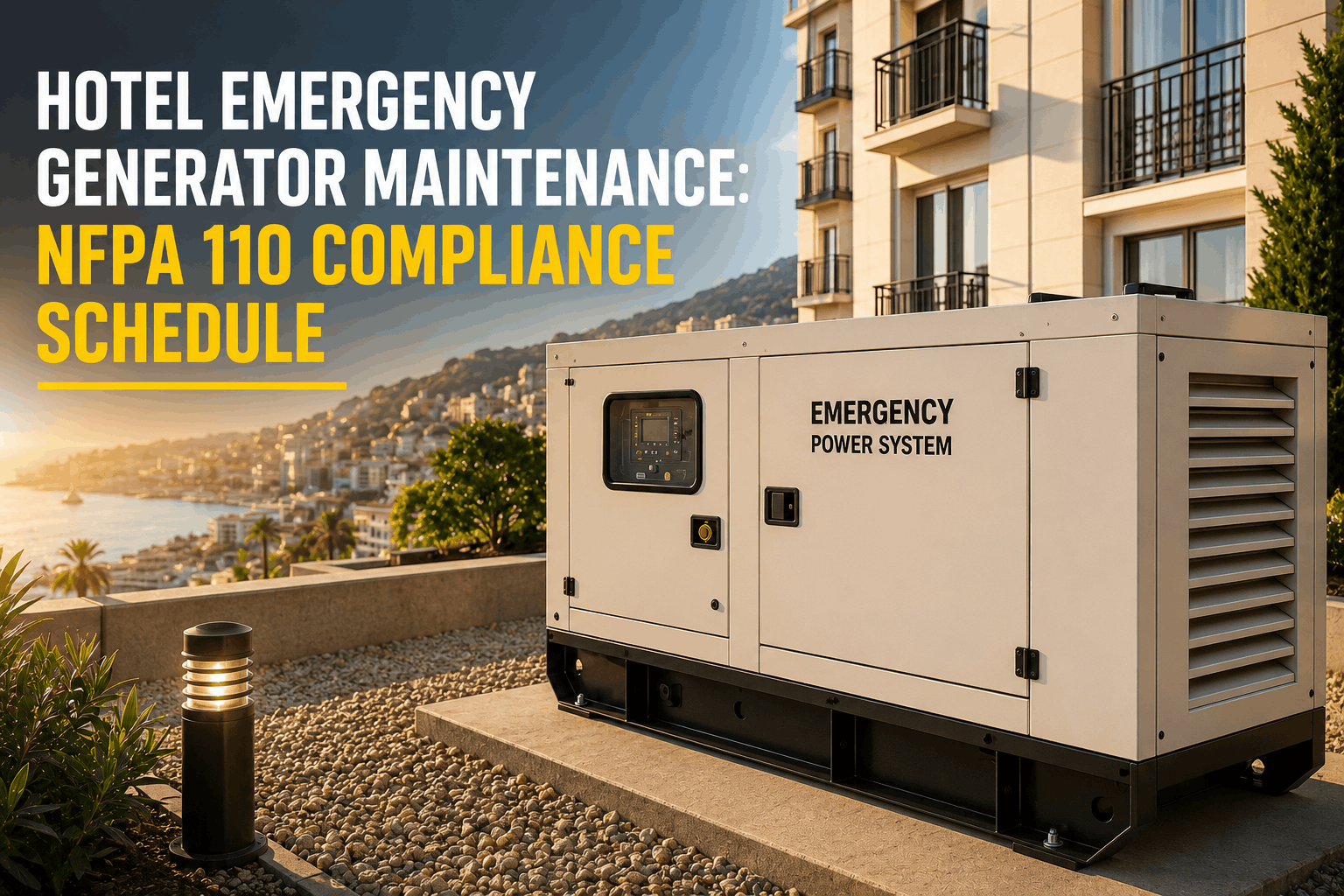
Hotel emergency generators are the last line of defense providing backup power during utility outages—keeping life safety systems operational (fire alarms, emergency lighting, elevator escape routes) and preventing guest evacuation chaos. A single generator failure during utility outage forces emergency evacuation of occupied rooms, creates liability for guest injuries, and damages brand reputation irreparably. NFPA 110 (Standard for Emergency and Standby Power Systems) mandates weekly inspections, monthly load testing under minimum 30% rated capacity, and annual full-load testing. Many properties perform weekly inspections but skip monthly load testing or perform insufficient load—a generator running at no-load monthly will accumulate internal carbon deposits (wet stacking) that prevent full-power startup during actual emergency. Hotel critical systems require Level 1 backup power—generator must start within 10 seconds of utility failure per NFPA 110, and must sustain full load indefinitely until utility power restores. A generator that starts late or stalls under load during emergency creates entrapment (guests cannot use elevators to descend), breathing hazard (HVAC systems fail, temperature/humidity spike in sealed rooms), and guest injury risk (elderly guests cannot navigate stairs unaided). Oxmaint's emergency power module automates weekly inspection checklists, schedules monthly load testing with service contractors, tracks fuel quality and microbial growth in fuel tanks, verifies automatic transfer switch (ATS) operation quarterly, documents all test results for compliance audits, and alerts when annual triennial load bank testing is due. USA hospitality chains report 98–99% generator starting success rate (vs. industry average 82%) and zero backup power failures during actual outages after implementing structured generator PM with digital work order execution and monthly load testing discipline.
Ensure Reliable Backup Power & Life SafetyWeekly no-load inspections, monthly load testing, quarterly transfer switch verification, annual fuel quality testing, and NFPA 110 compliance documentation for critical hospital and hospitality backup power systems.
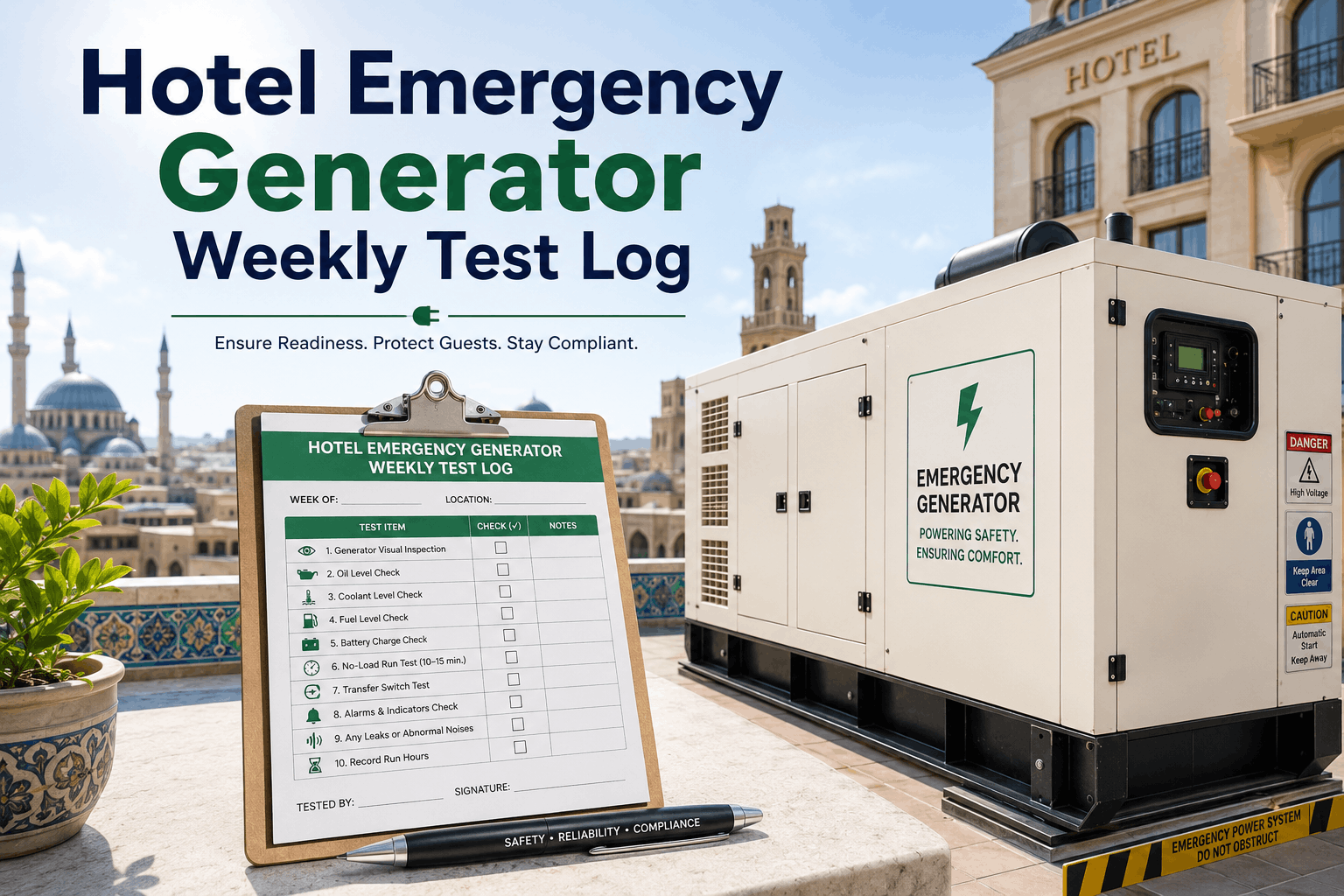
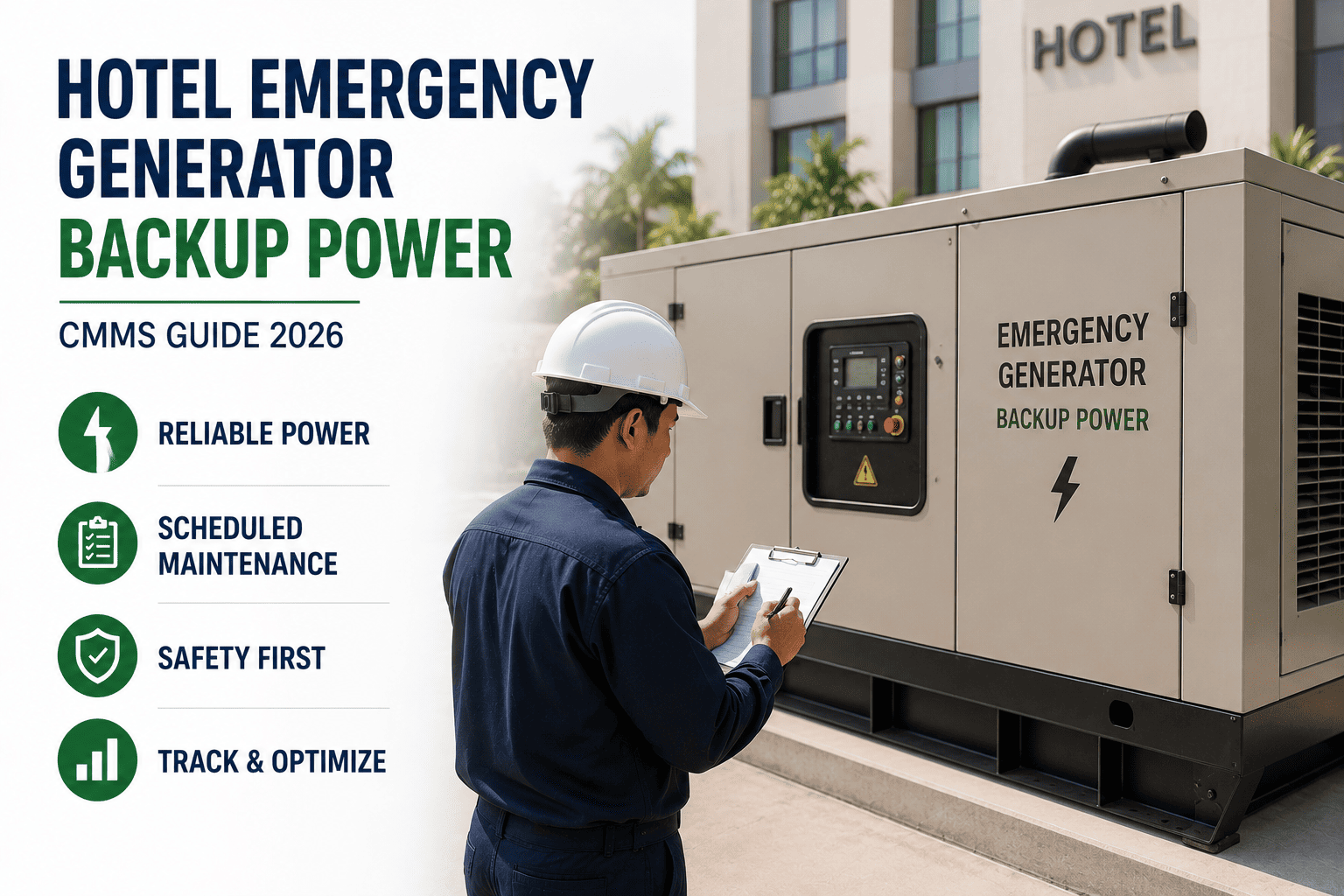
Weekly inspections verify generator is ready for emergency operation—fuel supply is adequate, battery backup is charged, control systems respond correctly, and no visible deterioration has occurred. No-load running (30-minute minimum per NFPA 110) exercises engine and control circuits weekly, preventing stagnation-related failures.
2. Monthly Loaded Run Testing (Minimum 30 Minutes)
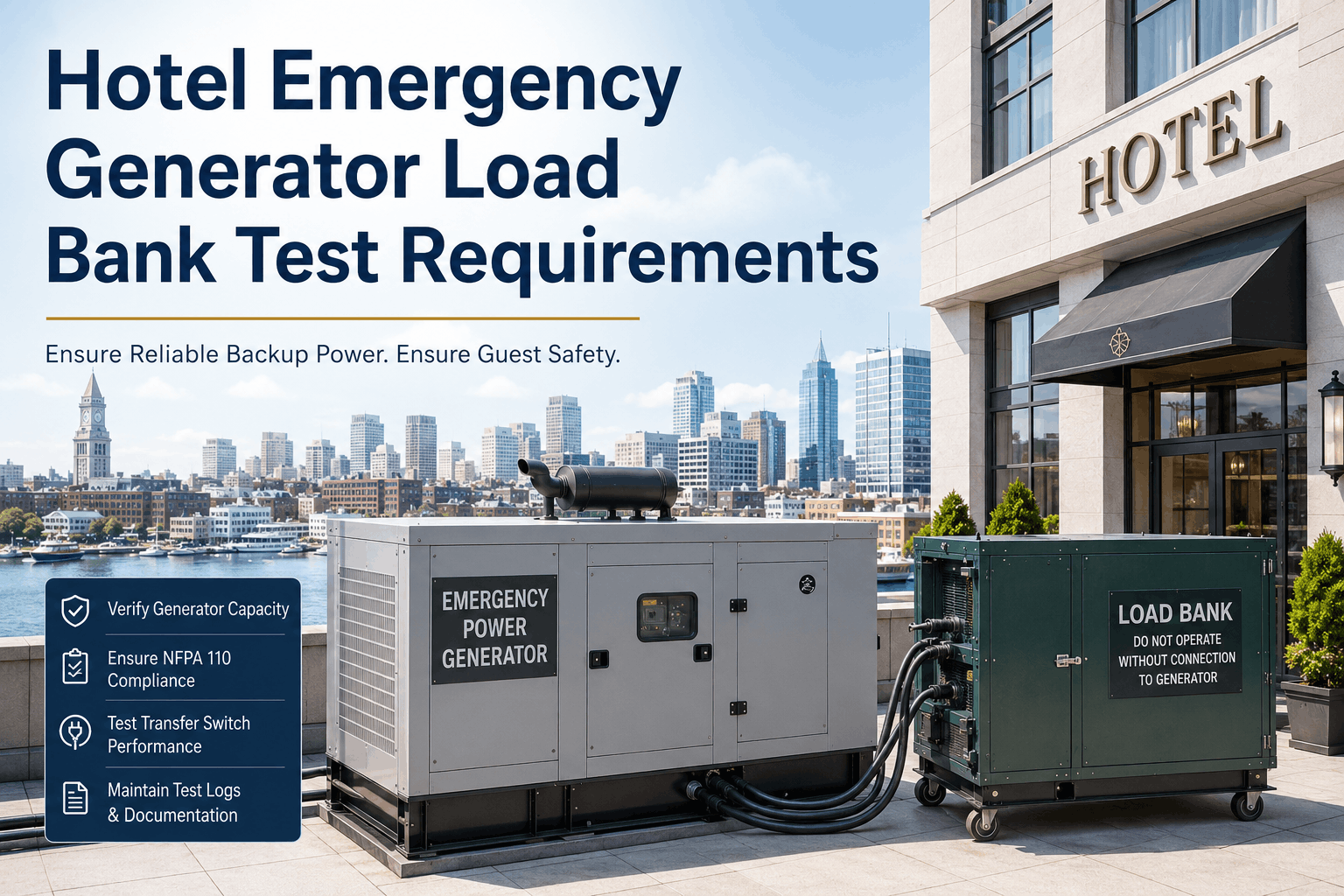
No-load running prevents long-term stagnation but does not fully exercise generator systems. Monthly loading test applies electrical load matching actual building demand—confirming generator can sustain rated output. Loading is critical because unloaded engines develop internal carbon buildup (wet stacking) that prevents reliable starting under actual load conditions.
3. Quarterly Transfer Switch & Control System Testing
Automatic transfer switch (ATS) is the vital link—without correct ATS operation, generator output never reaches building loads during outage. Quarterly testing verifies ATS synchronization, signal response, and mechanical operation under controlled conditions.
Guarantee Backup Power During Utility FailuresWeekly inspections, monthly load testing, quarterly ATS verification, annual fuel testing, triennial load bank certification, and NFPA 110 compliance documentation.
4. Annual Fuel Quality & Biennial Professional Maintenance
Fuel quality directly impacts generator reliability—microbial contamination, water, and oxidation degrade fuel and cause starting failures. Annual fuel testing and treatment prevent this silent failure mode that only reveals itself during actual emergency outage.
Frequently Asked Questions — Hotel Emergency Generator Maintenance
1. What is "wet stacking" and why is it dangerous?
Wet stacking is unburned fuel coating internal engine surfaces (pistons, cylinders) due to incomplete combustion from running at no-load or low-load. Accumulated carbon prevents reliable starting and full-power operation during actual emergency. Prevented by monthly 30%+ load testing and triennial 2-hour heavy-load recovery runs.
2. How long can a hotel operate without utility power before guest evacuation is required?
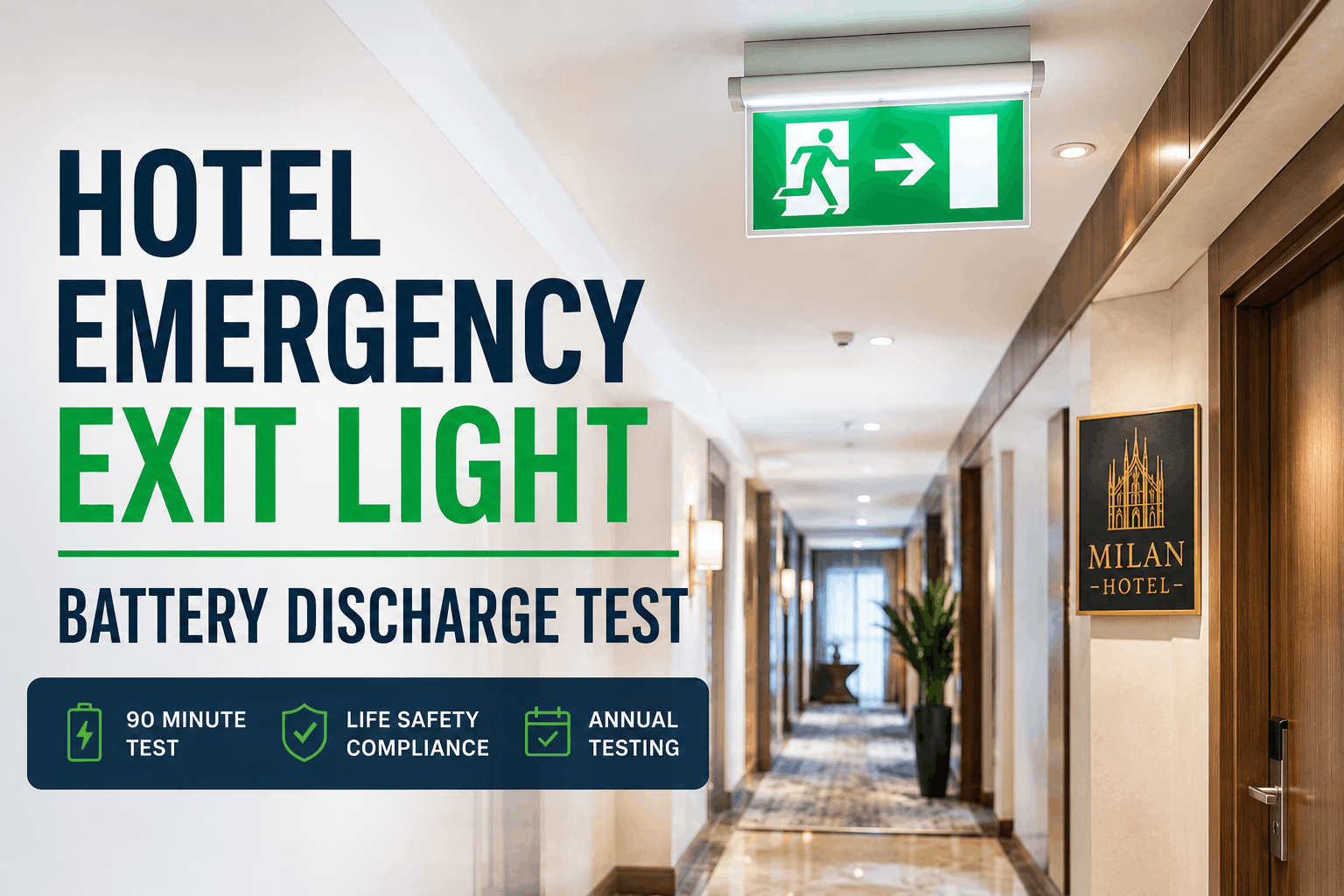
Hotels can operate indefinitely on backup power if generator is functional and fuel supply is adequate. Life Safety systems (fire alarm, emergency lighting) must have 90-minute minimum battery backup if generator fails to start. Guest comfort systems (HVAC, elevators) should operate continuously via generator during outage.
3. What is the difference between NFPA 110 Level 1 and Level 2 systems?
Level 1: generator must start within 10 seconds of utility failure (life safety systems—fire alarms, emergency lighting). Level 2: generator must start within 60 seconds (building operations systems). Hotels typically are Level 1 due to guest safety criticality.
4. Can a generator be sized to run entire hotel or only critical systems?
Generators can be sized for full-building load (expensive) or partial load (typical). Partial-load generators power Life Safety (fire alarm, emergency lighting, elevator descent) and essential systems (one elevator, lobby HVAC, kitchen cold storage). Guest room climate control and non-critical loads shed during outage to reduce load on generator.
5. What happens if generator fails to start during utility outage?
Fire alarm batteries (90-minute minimum) and emergency lighting batteries activate—Life Safety is maintained temporarily. But if outage exceeds 90 minutes, emergency lighting fails and fire alarm communication fails. Guest evacuation becomes mandatory at this point if backup generator hasn't been restored.
6. Why is monthly load testing required if weekly inspections seem adequate?
Weekly no-load runs only exercise 5–10% of engine capacity and don't prevent wet stacking. Monthly loading to 30%+ exercises combustion at real operating conditions and burns off accumulated carbon deposits before they accumulate enough to prevent full-load startup during emergency.
7. How can hotels reduce emergency generator maintenance costs?
Service contracts ($200–$400/month) are typically 30% cheaper than call-only service ($600–$1,000 per visit). Monthly testing is cheaper than discovering failures during emergency outage. Preventive fuel treatment ($500/year) is cheaper than emergency fuel tank cleaning ($2,000+) after contamination is discovered.
8. What is automatic vs. manual generator operation and which is better for hotels?
Automatic (AUTO mode): generator starts automatically when utility fails and ATS transfers load—no human intervention needed. Manual (MANUAL mode): technician must arrive on-site to manually start generator and switch loads—dangerous for life safety. Hotels must operate in AUTO mode—manual operation is not acceptable for life safety systems.
"A 6-hour utility outage hit our property and our generator started fine but only delivered 60% of rated power. During load testing, we discovered the engine had wet stacking from months of no-load operation. If that outage had lasted 8 hours, elevators would have lost power midway through guest evacuation. Now we perform monthly load testing and triennial recovery burns—generator failed to start during the next test and we discovered a fuel valve leak BEFORE it mattered. That early discovery prevented a guest safety crisis."— David Thompson, Director of Engineering, 245-room USA hotel chain
Never Face Unexpected Power Loss Without BackupWeekly inspections, monthly load testing, quarterly transfer switch verification, annual fuel quality testing, triennial full-load certification, and complete NFPA 110 compliance documentation.