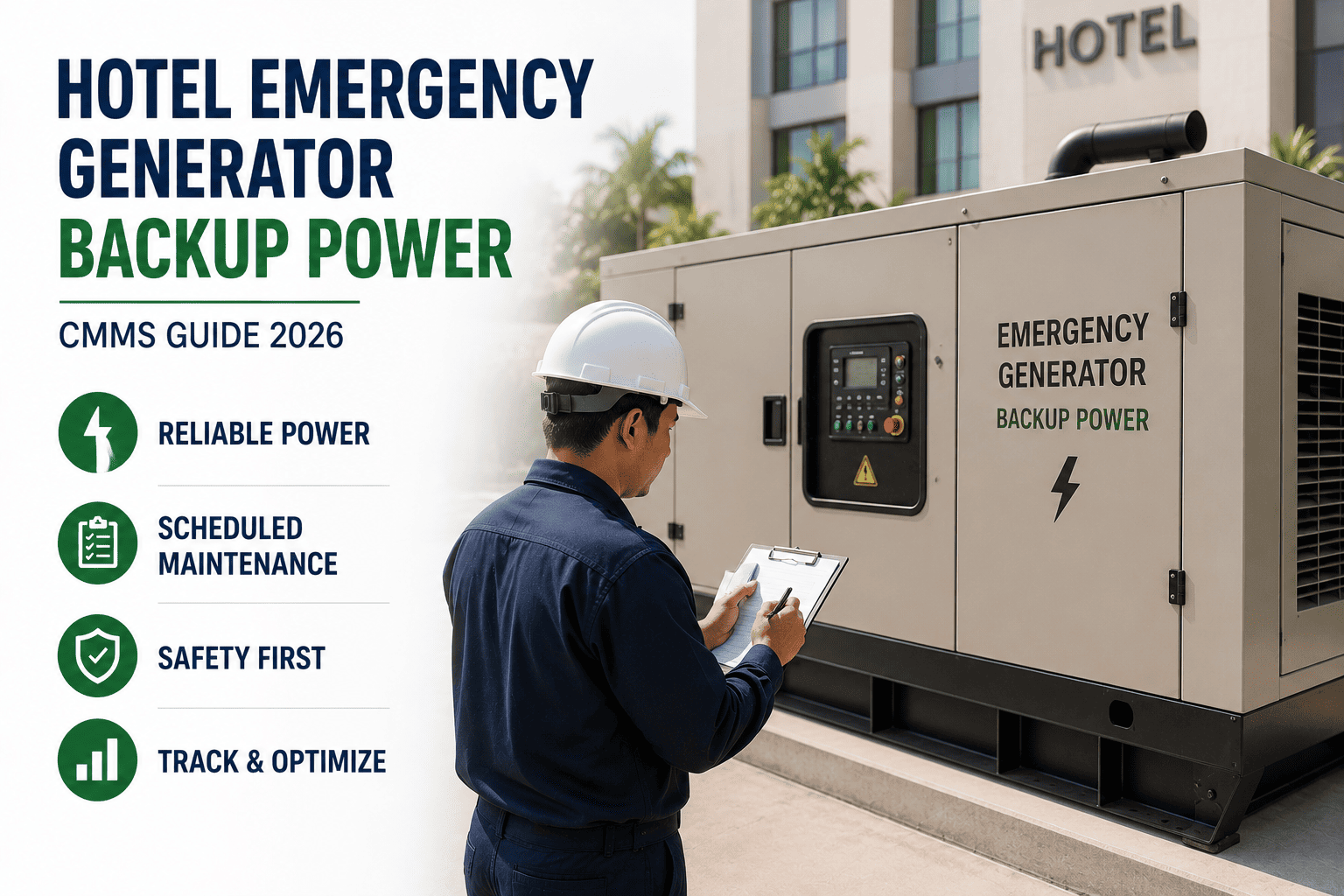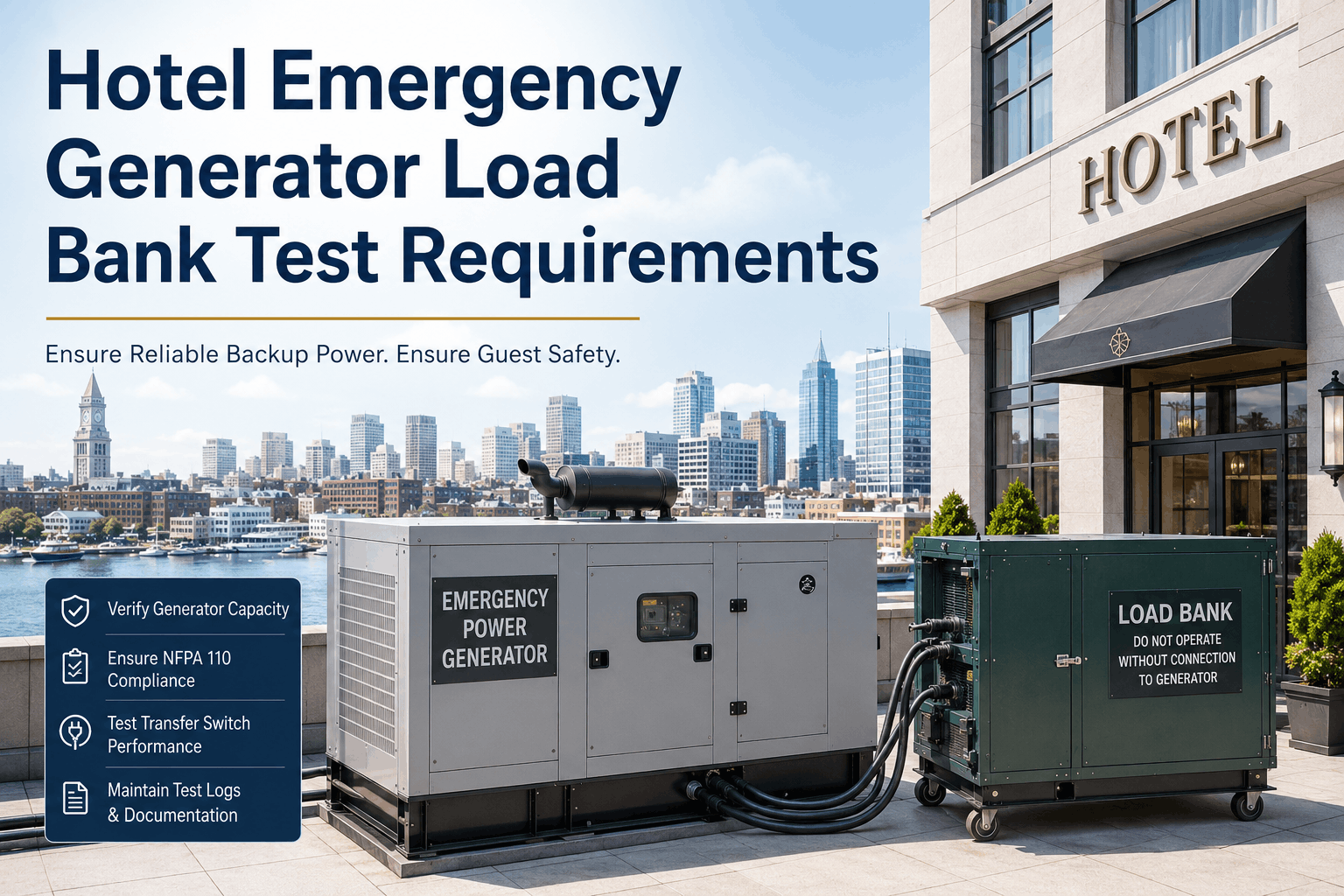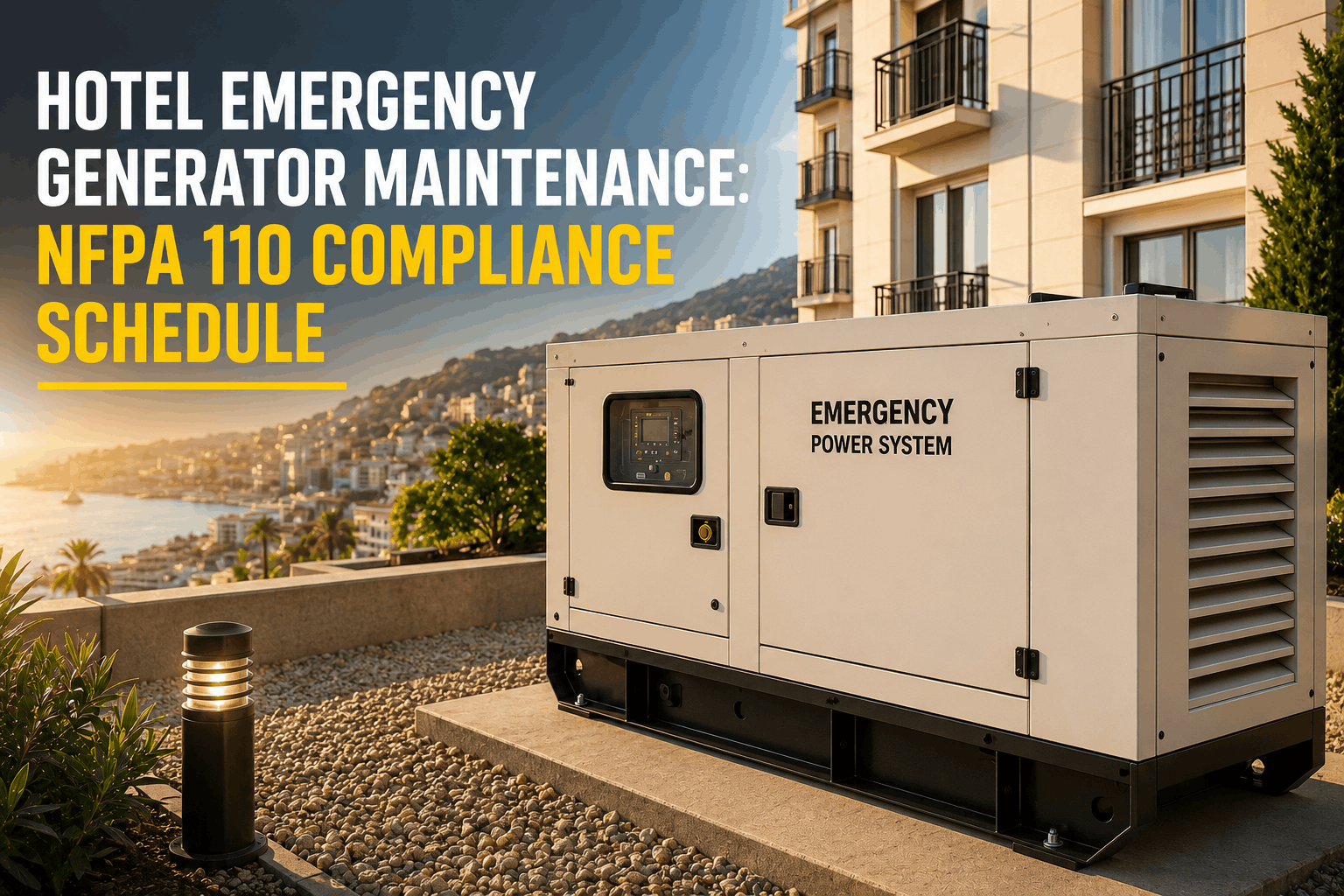
Emergency generators sit dormant until power fails — and that's exactly when they must start reliably and run continuously for hours. A failed backup power system during an outage forces guest evacuation, strands guests in dark rooms/elevators, and exposes hotels to liability and negative reviews that destroy reputation. NFPA 110 (Standard for Emergency and Standby Power Systems) mandates weekly exercise testing, monthly load testing, and semi-annual full-load capacity verification. Hotels with compliant generator programs experience zero power-related incidents, maintain guest safety during grid failures, and comply with insurance requirements. OxMaint CMMS tracks weekly generator exercise tests, fuel quality audits, transfer switch inspections, and battery backup system checks — ensuring backup power is always ready and all compliance documentation is audit-ready for insurance and fire marshal inspections.
Hotel Emergency Generator Maintenance: Complete NFPA 110 Weekly Testing & Compliance Schedule
Weekly exercise testing, monthly fuel quality audits, battery backup system checks, transfer switch testing, load bank verification, and NFPA 110 compliance documentation — the complete generator maintenance guide that ensures backup power is ready 24/7 and prevents power-outage related guest incidents.
Section 1: Weekly Exercise Testing & Load Verification Protocol
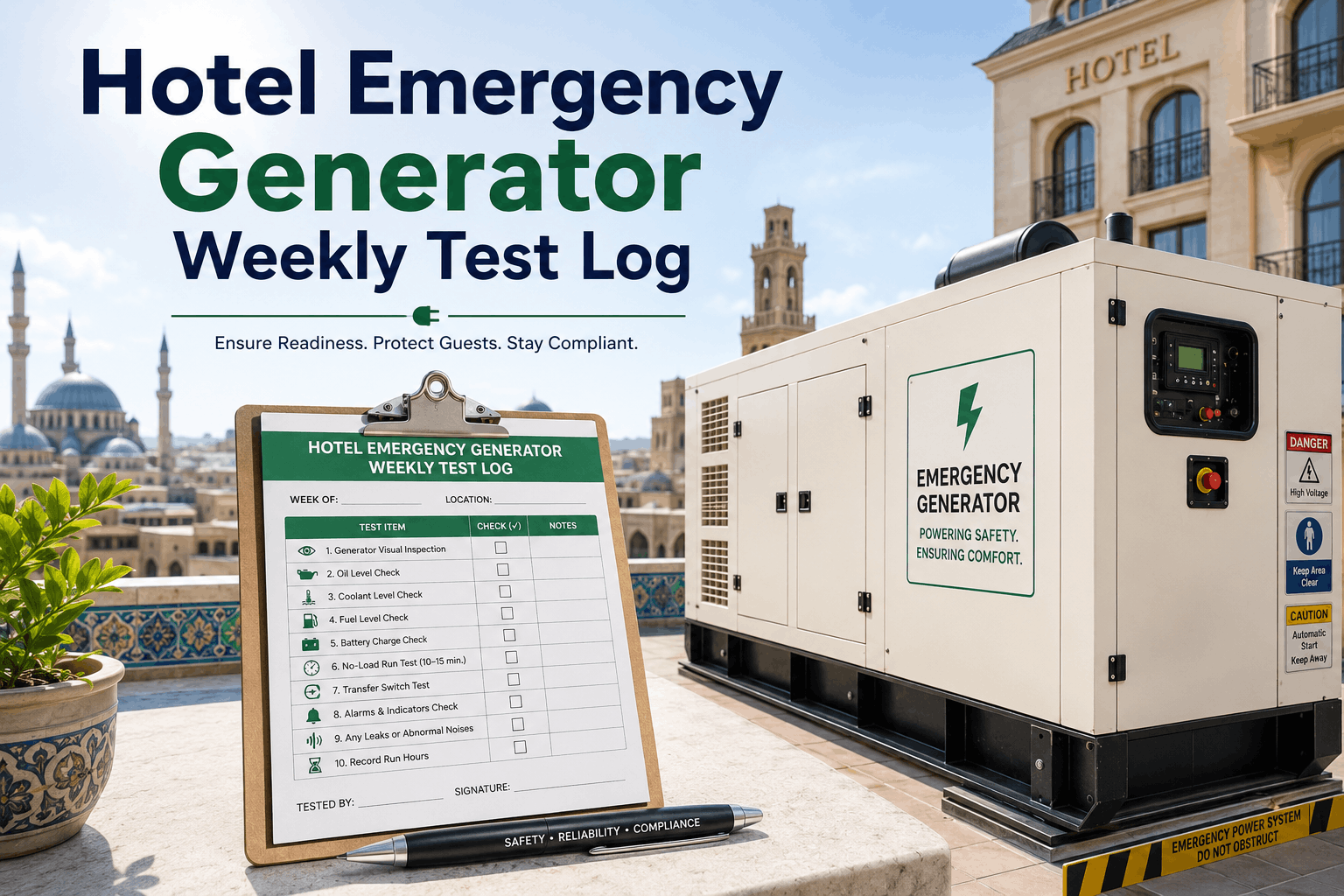
NFPA 110 requires generators to be started and run under load every week. This isn't a symbolic test — the generator must actually start automatically (simulating real power loss), accelerate to nominal RPM, stabilize voltage and frequency, and run continuously while supplying power to connected loads. A generator that starts but immediately stalls under load will fail catastrophically during an actual outage. Weekly exercise testing also prevents diesel fuel degradation (diesel sitting unused degrades and can cause clogged fuel injectors) and identifies soft failures before they become catastrophic. OxMaint schedules weekly generator exercise tests and logs startup time, load response, fuel consumption rate, and any anomalies. Each test should record: (1) automatic transfer switch activation time (should be under 10 seconds), (2) generator startup response (typically 2-8 seconds), (3) voltage regulation under load (±10% of nominal), (4) frequency stability (±2 Hz), and (5) any unusual sounds or vibrations. Fuel quality testing should accompany weekly exercise — a simple acid number test reveals if fuel has degraded and needs replacement. Generators consuming stale fuel experience hard starts, poor load response, and potential injection system damage.
Section 2: Monthly & Quarterly Comprehensive System Audits
Monthly inspections supplement weekly exercise tests with comprehensive system reviews. Check battery backup systems (automatic transfer switches require batteries for controller function) — batteries should hold charge and show no corrosion. Transfer switch mechanisms should move smoothly between utility and generator power. Fuel tank condition should be inspected for corrosion, leaks, or water accumulation (water in diesel fuel causes injector damage and is common in coastal areas or high-humidity climates). Monthly OxMaint audits should photograph fuel tank condition, battery voltage, and transfer switch operation — creating a documentation trail for compliance audits. Quarterly load bank testing (simulating full electrical load) is the most rigorous verification — a load bank can verify the generator can supply 80%, 50%, and 100% of nameplate capacity without voltage/frequency deviation. Many generators fail load bank testing because they've never been run at full capacity; subtle fuel system or injector issues only become apparent under full electrical load. A generator that passes weekly exercise tests but fails quarterly load bank testing requires immediate service before an actual power outage proves its inadequacy.
Section 3: Battery System & Transfer Switch Testing Framework
Automatic transfer switches (ATS) are the critical junction between utility power and generator power — they must sense power loss, command the generator to start, and switch electrical loads to generator power, all in under 10 seconds. ATS function depends on a battery backup system that provides switching power even if utility voltage collapses completely. A weak or dead ATS battery will prevent transfer switching even if the generator starts successfully. Monthly battery testing should measure voltage (typically 24V or 48V systems — should read within 90-110% of nominal) and load test should verify the battery can supply 30 minutes of sustained switching current. ATS mechanical testing should verify the transfer mechanism moves smoothly and the selector switch locks in place during transfer — any sluggish mechanical response indicates imminent failure. OxMaint battery voltage records establish trends showing battery degradation before complete failure — if voltage starts drifting downward over months, replacement is scheduled before the battery becomes unreliable. Transfer switch inspection should look for arcing marks on contacts (indicates electrical stress), mechanical binding, or hesitation during manual transfer testing.
Section 4: Emergency Lighting Integration & Power Management During Outages
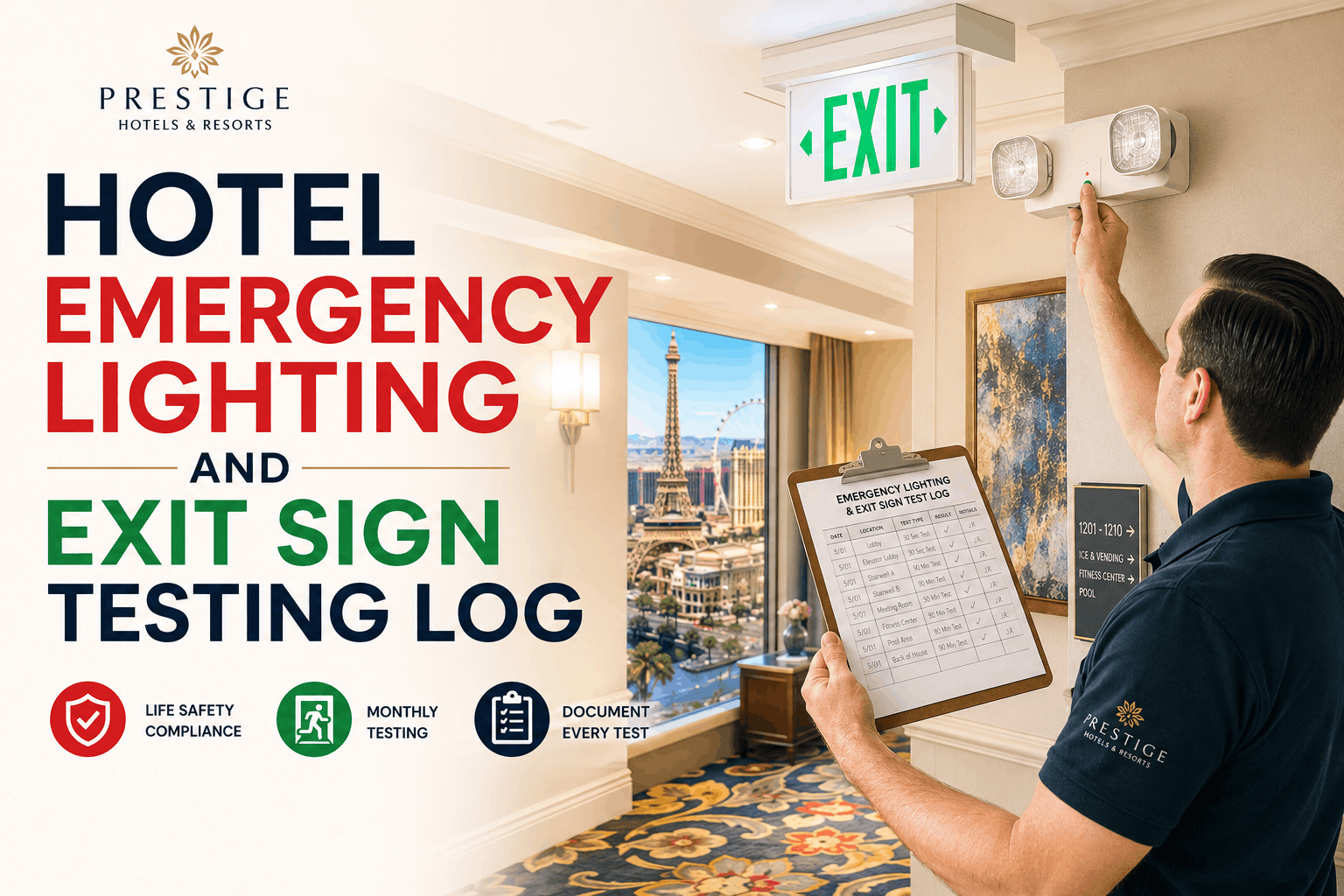
A generator that supplies power to HVAC and elevators but not emergency lighting leaves guests in dark hallways during evacuation — a safety hazard and liability nightmare. All hotels should have emergency lighting circuits that are the FIRST circuits restored when the generator comes online. Battery-backed emergency lighting (exit signs, hallway lighting) should operate for minimum 90 minutes without generator input, giving guests time to evacuate even if the generator fails. Power management during outages is critical: generators have finite capacity — a 300kW generator supplying a 400-room hotel cannot simultaneously power all HVAC, all lights, all elevators, and all equipment. Load sequencing must prioritize critical circuits: (1) emergency lighting and exit signs, (2) elevators (so guests aren't trapped), (3) refrigeration (food safety), (4) HVAC (guest comfort), (5) remaining loads. OxMaint tracks emergency lighting circuit functionality and generator load management testing — ensuring hotels have load sequencing plans documented and tested. During actual power outages, hotels should log how long the generator supplies power, which circuits stay energized, and what guests experience — this real-world data informs improvement to load sequencing for next outage.
We had a grid outage last summer that lasted 6 hours. Our generator came online in 8 seconds automatically, maintained power to all critical circuits, and our guests never even noticed the outage. Emergency lights stayed on, elevators worked, AC ran. Only reason we knew about it was when power utility notified us. That experience proved the value of strict maintenance. We implement OxMaint's weekly testing protocol to the letter now. Quarterly load bank testing shows we're always at 100% capacity. Insurance company gave us preferred rate because of our documented compliance. Generator maintenance used to feel like a chore; now it feels like the most important insurance policy we have.
Frequently Asked Questions
Ensure Backup Power Is Ready 24/7
OxMaint automates weekly exercise testing, monthly battery audits, quarterly load bank verification, and NFPA 110 compliance documentation — with zero risk of missed critical maintenance.