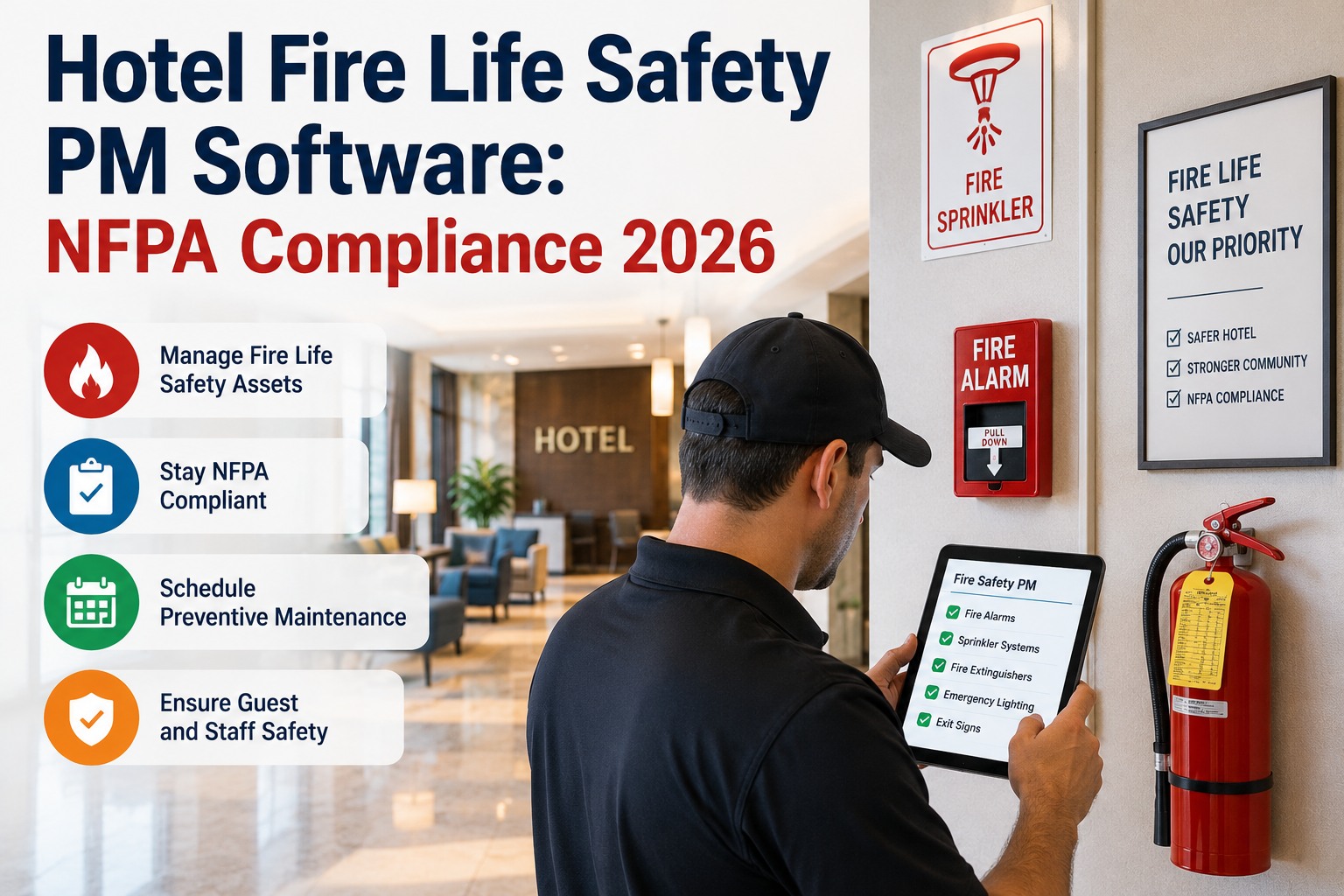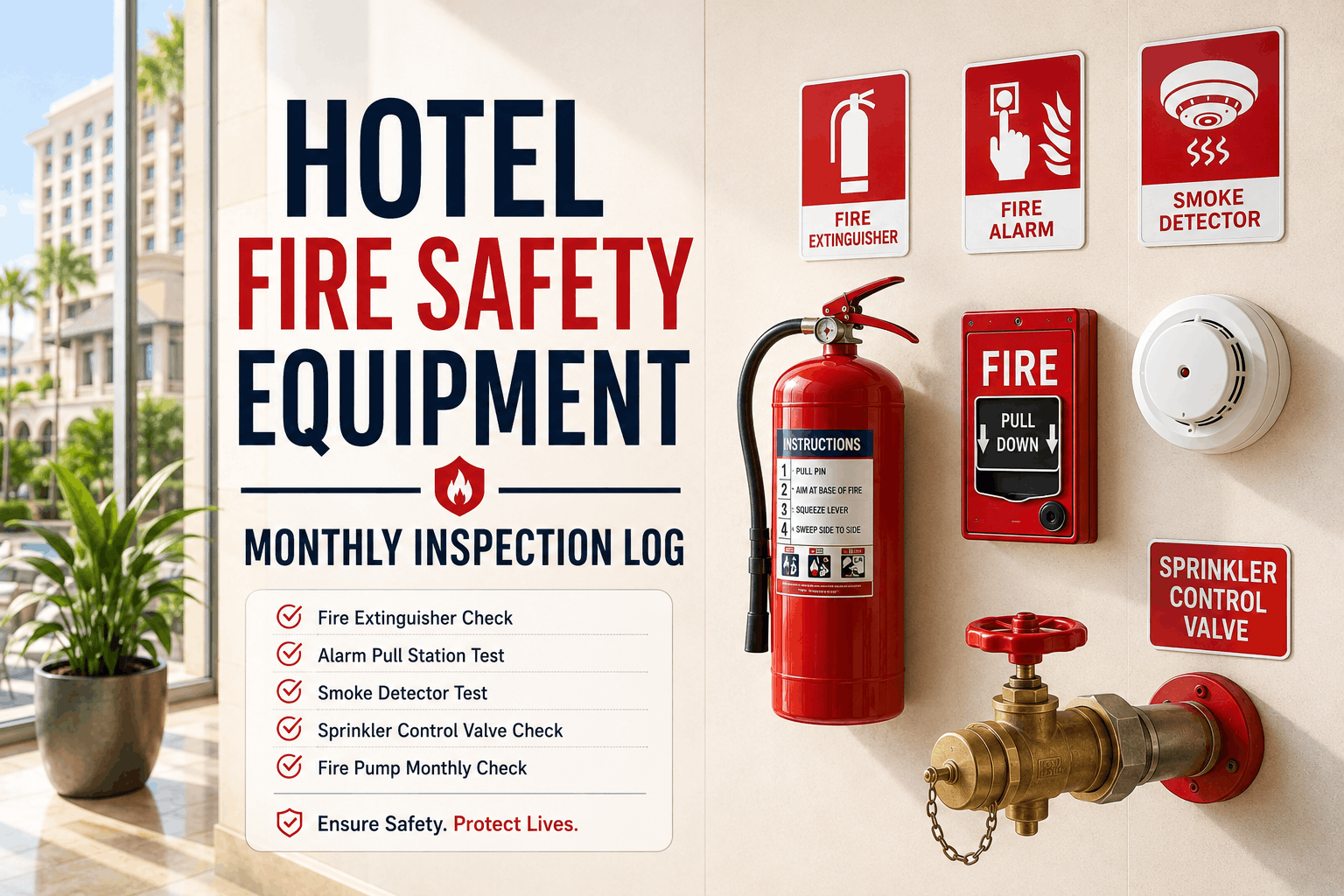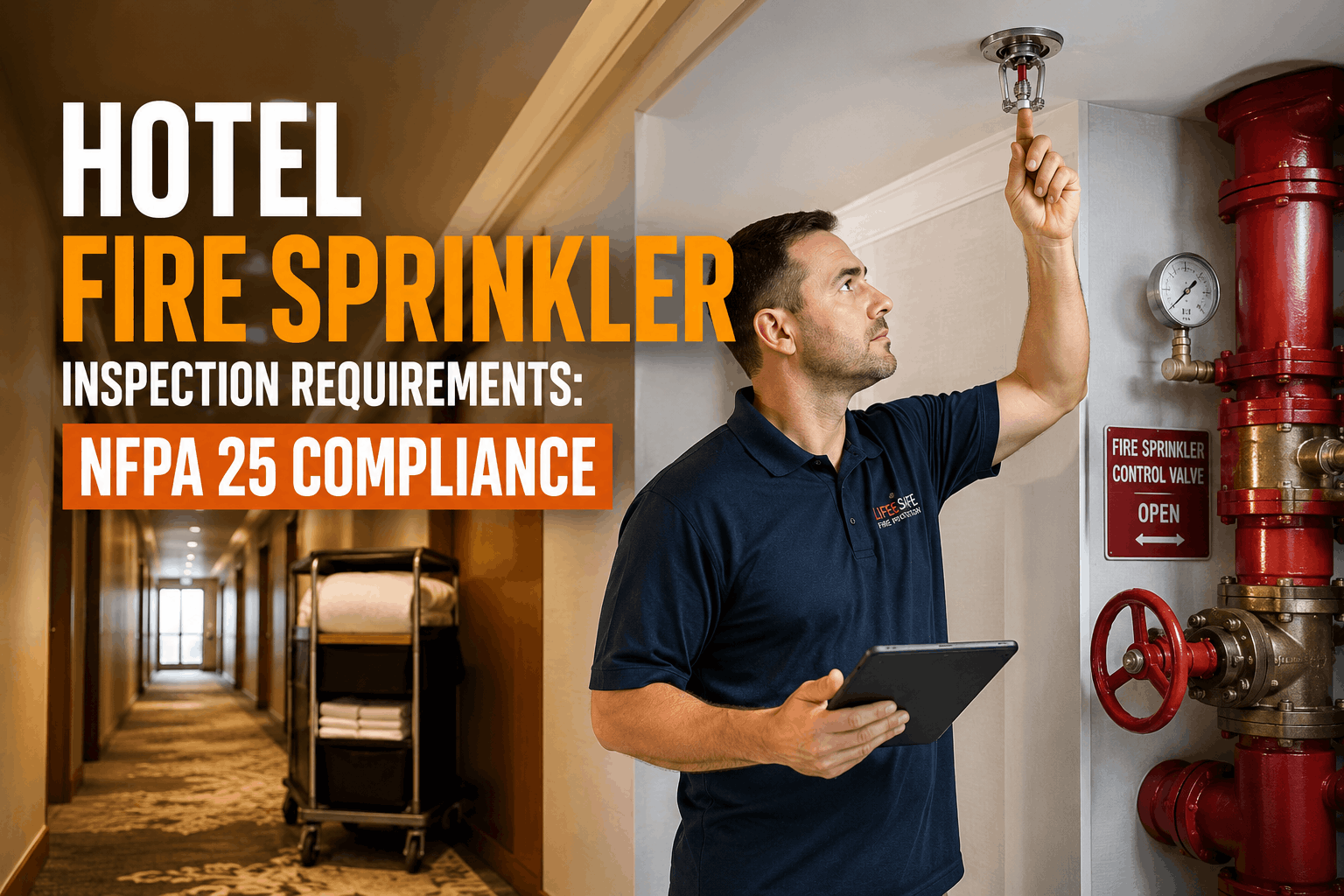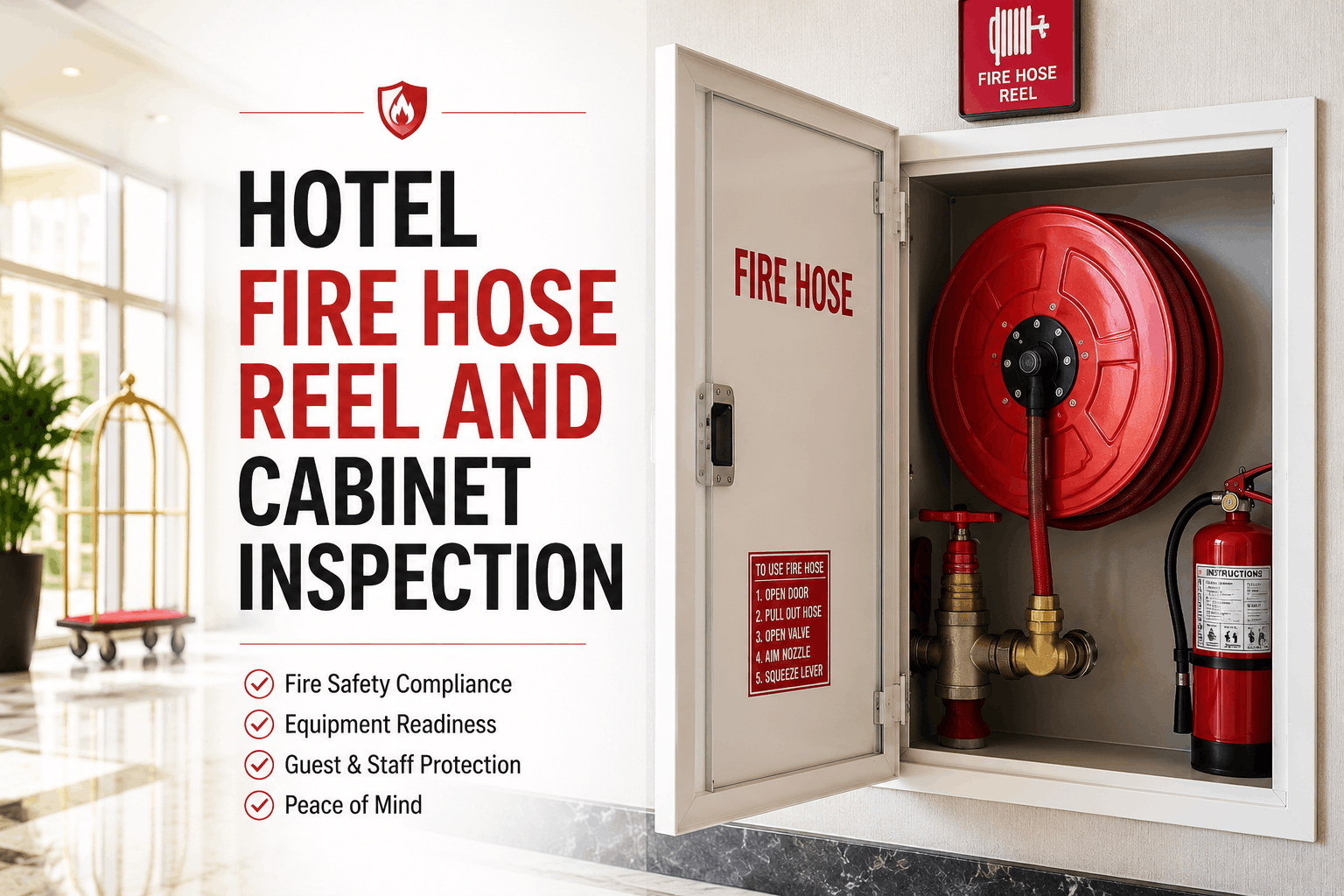
A fire hose that fails to deploy during an emergency is not just an equipment failure — it is a life safety failure that exposes the hotel to liability claims of $1,000,000–5,000,000 and regulatory penalties that can exceed $100,000. NFPA 25 requires quarterly inspection of fire hose reels and cabinets, yet most hotels treat these inspections as a checkbox exercise — opening the cabinet, glancing at the hose, and closing the door without verifying that the hose is ready for use. The quarterly inspection is not a visual check — it requires unrolling the hose, inspecting for cracks and degradation, testing nozzle operation, verifying cabinet visibility, and documenting the condition of every component. Start a free trial with Oxmaint to schedule and track fire hose reel inspections, or book a demo to see how hotel engineering teams use Oxmaint's life safety module to maintain compliance and protect guests.
Hotel Fire Hose Reel and Cabinet Inspection: Quarterly Inspection Checklist for NFPA 25 Compliance and Guest Safety
Hose condition check, nozzle operation testing, cabinet visibility verification, dry test and wet test procedures, NFPA 25 compliance, and life safety system documentation — the complete guide to inspecting hotel fire hose reels and cabinets.
Why Fire Hose Reel Inspections Are Non-Negotiable — The NFPA 25 Requirement
Fire hose reels and cabinets are required by building codes and fire safety regulations. NFPA 25 (Standard for the Inspection, Testing, and Maintenance of Water-Based Fire Protection Systems) requires quarterly inspections of all fire hose assemblies. Inspections must verify that the hose is in good condition, the nozzle is operational, the cabinet is visible and accessible, and all components are ready for immediate use. Missed inspections are a common citation during fire department and insurance audits — and if a fire occurs and a hose fails, the liability shifts from the fire to the hotel's maintenance program.
Fire hoses degrade over time due to UV exposure, heat, moisture, and chemical exposure. The jacket can crack, the lining can separate, and the couplings can corrode. Without quarterly inspection, degradation goes unnoticed until the hose is needed — and fails.
The nozzle is the most critical component of the hose assembly. Stuck or seized nozzles are common — especially when hoses are stored for long periods without operation. Quarterly nozzle testing ensures the valve opens and closes freely and delivers the correct flow pattern.
Fire hose cabinets are frequently blocked by luggage carts, housekeeping supplies, or renovation materials. A blocked cabinet prevents emergency access. Quarterly inspection verifies the cabinet is clear and accessible.
Fire hose cabinet signage must be visible and legible. Faded, missing, or covered signs mean guests and staff cannot find the equipment in an emergency — and liability exposure increases significantly.
NFPA 25 Quarterly Inspection Checklist — 7 Essential Steps for Every Fire Hose Reel and Cabinet
The quarterly fire hose reel inspection must be completed for every hose station in the hotel. The checklist below follows NFPA 25 requirements and industry best practices. Oxmaint's life safety module generates quarterly inspection work orders automatically and tracks completion per station with photos and technician sign-off.
Verify the cabinet is unobstructed and clearly visible. Remove any items blocking access. Ensure signage is legible and properly positioned. Document with photo. If signage is missing or faded, generate a work order for replacement.
Open the cabinet and inspect the interior for damage, debris, moisture, or pests. Verify the hose is properly stowed and not kinked or pinched. Check for rust or corrosion on the reel and mounting hardware. Clean any debris.
Inspect the entire length of the hose for cracks, cuts, abrasions, or discoloration. Pay special attention to the first 12 inches from the coupling — this is where the most wear occurs. If any damage is found, remove the hose from service and schedule replacement.
Inspect both the male and female couplings for damage, corrosion, or cross-threading. Verify the swivel rotates freely. Check that the gasket is intact and not cracked or missing. Document any coupling issues.
Remove the nozzle from the hose. Operate the valve handle or lever through full range of motion. Verify it moves freely and returns to the closed position. If the nozzle is seized or stiff, generate a repair work order. Wipe the nozzle clean.
If the system is charged with water, briefly open the hose valve (dry test) to verify water flow to the hose station. Open the valve for 2–3 seconds and verify water reaches the hose connection. Close the valve and verify it stops water flow completely.
Record all inspection results in the CMMS with timestamp and technician ID. Attach photos of the cabinet, hose condition, and nozzle. If any deficiencies are found, create corrective work orders and assign to appropriate technician. File all records for fire department and insurance audits.
Annual Fire Hose Flow Test — Beyond Quarterly Inspection
In addition to quarterly inspections, NFPA 25 requires an annual flow test of each fire hose assembly. The flow test verifies that the hose delivers the required flow rate (typically 75–100 GPM at 100 PSI) and that all components perform under pressure. Oxmaint's life safety module tracks annual flow test dates and generates work orders when testing is due.
| Frequency | Inspection Activity | Responsible Team | Compliance Check |
|---|---|---|---|
| Quarterly | Visual inspection of cabinet, hose, couplings, and nozzle | Engineering Team | Inspection record completed in CMMS |
| Annually | Full flow test — verify flow rate and nozzle function under pressure | Engineering Team or Certified Fire Protection Contractor | Flow test results documented and filed |
| 5 Years | Hose hydrostatic test — pressure test to verify hose integrity | Certified Fire Protection Contractor | Hydrostatic test certificate retained |
| 10 Years | Hose replacement — all hoses must be replaced per NFPA 25 | Engineering Team or Certified Fire Protection Contractor | New hose installed and tested |
All inspection and test records must be retained for the life of the equipment — fire department and insurance audits typically request 3–5 years of records. CMMS retention ensures records are always available.
Documented Quarterly Inspections = Defensible Compliance Position
Compliance Position: Weak. No proof of inspections. Fire department inspector: "When was the last inspection?" Hotel: "We don't have records." Citation issued. Liability exposure: High.
Compliance Position: Strong. Complete inspection records for every hose station. Fire department inspector: "When was the last inspection?" Hotel: "Last quarter. Here are the records." Citation avoided. Liability exposure: Significantly reduced.
Premium Impact: Documented life safety maintenance programs reduce liability premiums by 5–15%. Hotels with documented fire protection inspections demonstrate lower risk to insurance carriers.
Protection Impact: A fire hose that deploys correctly during an emergency can contain a fire before it spreads — protecting guests, staff, and property. Quarterly inspections ensure the equipment is ready when needed.
The ROI of Fire Hose Inspection Compliance
Engineering time: 60 seconds per hose station × 24 stations = 24 minutes quarterly. Total annual labor: approximately 4 hours. Total annual cost: $200–500.
Legal defense: $50,000–150,000. Settlement/judgment: $500,000–5,000,000. Regulatory fines: $10,000–100,000. Total potential cost: $560,000–5,250,000+.
$200–500 annual inspection cost vs. $560,000–5,250,000 liability cost. ROI: 1,000–10,000×. Preventing one failure pays for decades of inspections.
Documented life safety maintenance program reduces liability premiums by 5–15%. Annual savings: $2,500–15,000. The inspection program pays for itself through premium reduction alone.
Without vs. With Documented Quarterly Fire Hose Inspections
Frequently Asked Questions — Fire Hose Reel and Cabinet Inspection
What does NFPA 25 require for fire hose reel inspections?+
How do I know if a fire hose needs replacement?
Signs of hose degradation include: cracks or cuts in the jacket, discoloration (brown or black spots indicate chemical or heat damage), stiffness or brittleness, delamination (inner lining separating from outer jacket), corrosion on couplings, and any visible damage to the hose. If any of these are present, the hose must be removed from service and replaced. NFPA 25 requires hose replacement at 10 years of service regardless of condition. Book a demo to see hose inventory tracking.
What is a hydrostatic test and when is it required?
A hydrostatic test pressure tests the hose to verify integrity. The hose is filled with water, pressurized to the test pressure (typically 250–300 PSI), and held for a specified time. If the hose holds pressure without leakage or bulging, it passes. Hydrostatic testing is required every 5 years per NFPA 25. Hoses that pass are tagged with the test date. Hoses that fail must be replaced. Start free to track hydrostatic test dates.
How long should fire hose inspection records be retained?
Industry best practice is to retain all fire hose inspection and test records for the life of the hose. NFPA 25 requires records to be available for inspection at all times — typically 3–5 years of records are requested during audits. Fire departments and insurance carriers may request up to 5 years of records. CMMS retention ensures records are always available. Start free to store records in Oxmaint.
How does a CMMS help with fire hose reel inspections?
A CMMS like Oxmaint provides five fire hose inspection advantages: (1) Scheduling — quarterly inspection work orders generated automatically, (2) Documentation — photos, readings, and sign-offs stored for compliance, (3) Asset tracking — each hose station tracked separately with inspection history, (4) Compliance readiness — complete records available for fire department and insurance audits, (5) Corrective action — deficiencies automatically generate repair work orders. Start free to see how Oxmaint manages life safety inspections.
From the Director of Engineering — 300-Room Full-Service Hotel, US Northeast
"We had 32 fire hose stations across our property, and we were doing quarterly inspections — but we were using paper checklists that got lost, filed incorrectly, or never made it into a permanent record. When the fire department asked for our records, we had to reconstruct them from memory. After implementing Oxmaint's life safety module, every quarterly inspection is logged with photos and technician sign-off. The fire department inspector reviewed our records on a tablet during their last visit and asked why every hotel didn't do it this way. We now have zero citations and a much stronger liability position."
Director of Engineering — 300-Room Full-Service Hotel, US Northeast
Protect Your Guests and Your Hotel — Automate Your Fire Hose Inspection Schedule
A fire hose that fails during an emergency is a life safety failure that exposes your hotel to millions in liability. Oxmaint's life safety module generates quarterly inspection work orders, tracks hose condition and test dates, and stores all records for compliance audits. Start your free trial today.