Hotel Fire Safety Equipment Monthly Inspection Log
By Alex Jordan on June 6, 2026
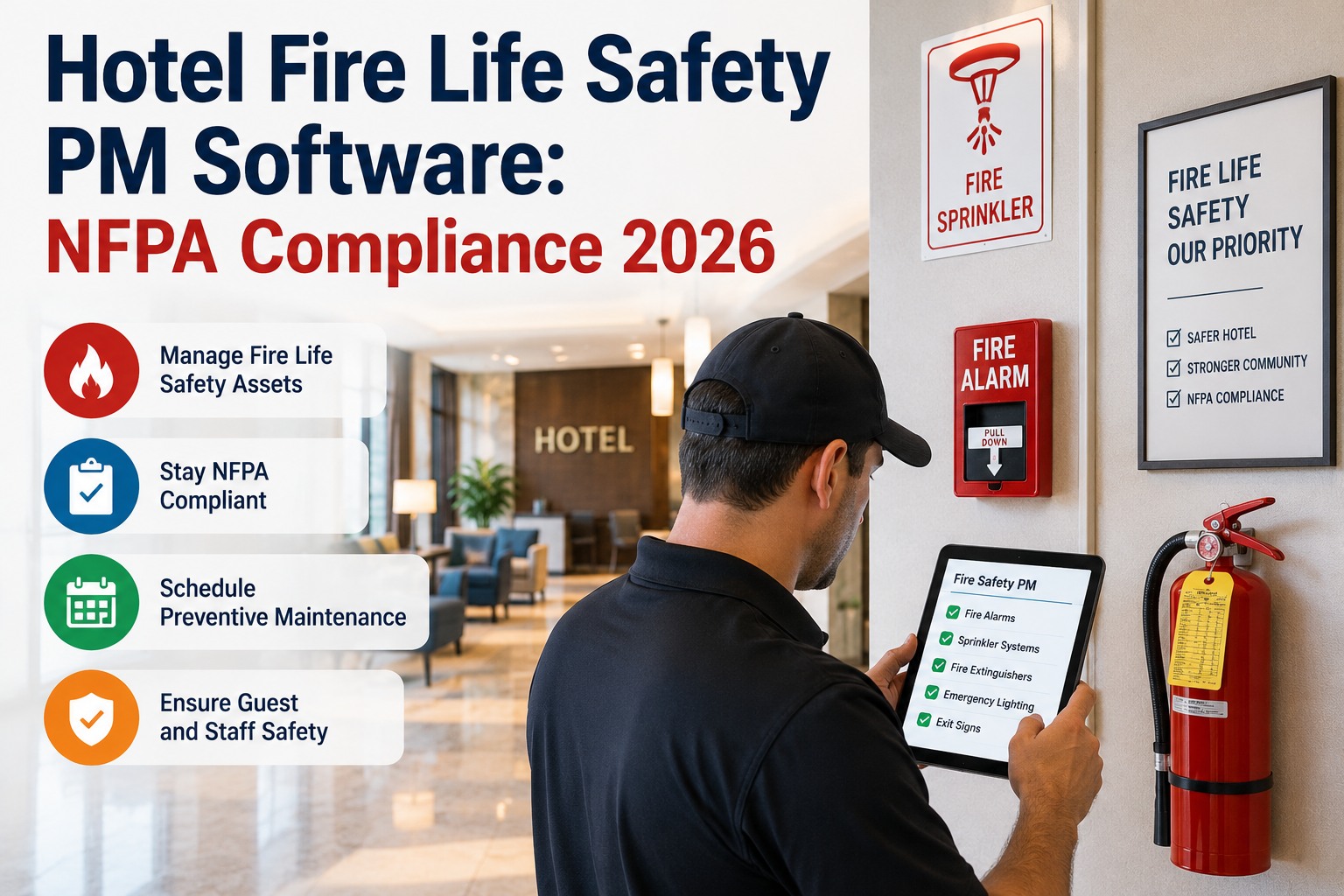
Hotel fire safety systems are the last line of defense protecting guest lives during emergency situations. A single fire safety equipment failure during an actual fire event can result in catastrophic liability exposure—$500,000+ in wrongful death claims, closure orders from fire marshal, and loss of operating certificate. Fire marshals conduct surprise inspections specifically targeting documentation gaps: missing extinguisher service tags, overdue smoke detector batteries, sprinkler waterflow test outside compliance window by even one day. Properties with documented, interval-driven compliance programs pass inspections consistently; those without documentation are cited for violations regardless of equipment condition. Daily fire safety failures in hospitality: smoke detector batteries dead (causing no alarm during actual fire), fire extinguishers not accessible due to blocked cabinets (cannot deploy during fire), sprinkler waterflow test missing by 5 days (noncompliant with quarterly interval), pull stations broken with no backup call system (guests cannot alert staff). Modern fire safety program requires monthly audits of all NFPA-governed systems: fire alarms (NFPA 72), sprinklers (NFPA 25), extinguishers (NFPA 10), emergency lighting (NFPA 101), kitchen suppression (NFPA 17A), and egress routes (NFPA 101). Oxmaint's fire safety module automates monthly checklists for all six systems, tracks compliance intervals by device location, generates audit-ready reports within seconds, and alerts staff when inspections are overdue. USA hospitality chains report zero fire code violations and insurance premium reductions of 8–12% after implementing structured, digitized fire safety PM programs.
Achieve NFPA Compliance & Zero Fire Code ViolationsMonthly fire alarm testing, sprinkler waterflow verification, extinguisher inspections, smoke detector battery checks, pull station audits, and audit-ready documentation for all NFPA-governed systems.
1. Monthly Fire Alarm System & Smoke Detector Verification
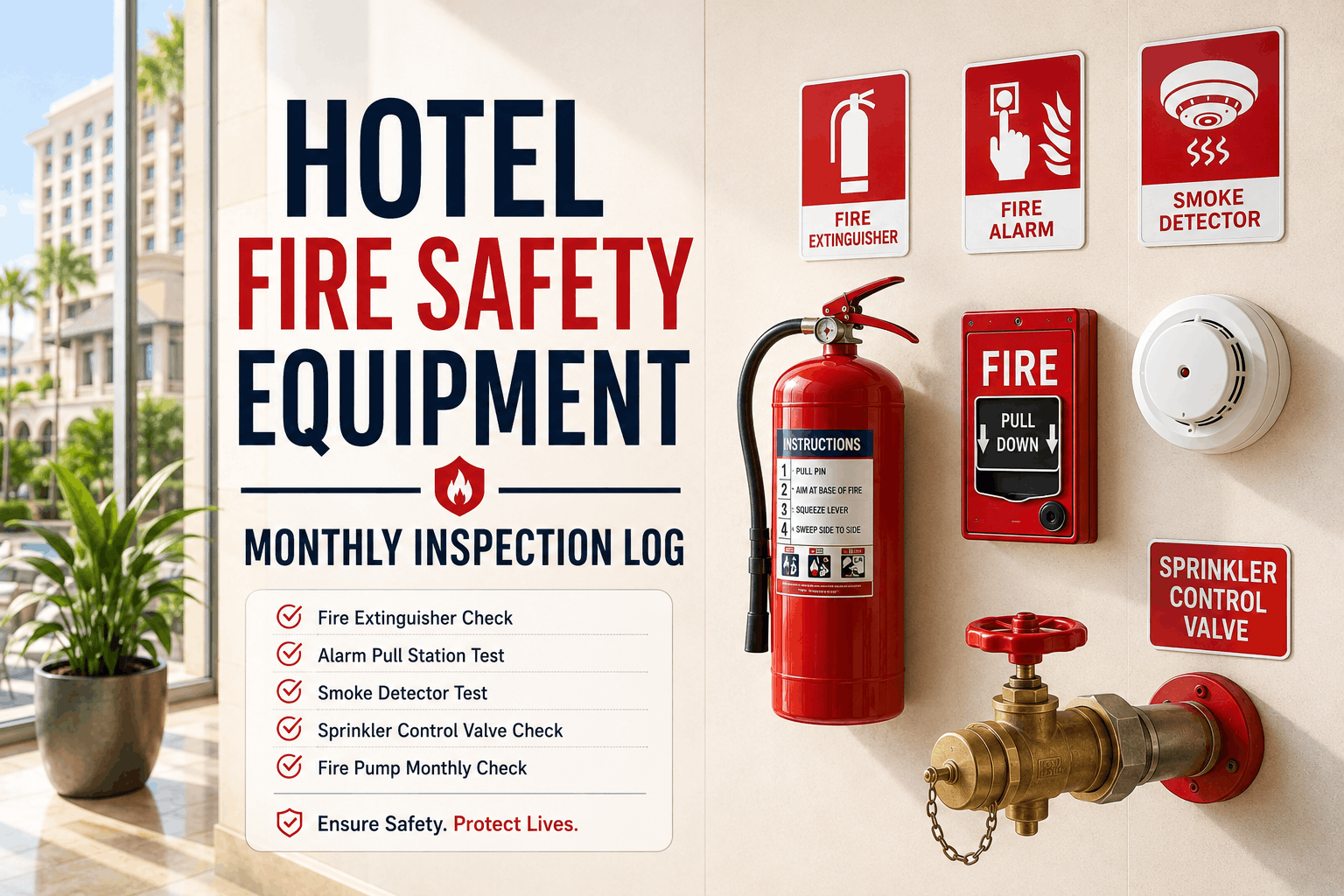
Fire alarm system reliability is non-negotiable—NFPA 72 requires quarterly full-system testing, with monthly visual inspections and annual professional verification. Smoke detectors in guest rooms are single most common violation, with expired batteries or units past 10-year lifespan causing inspection failures.
2. Monthly Portable Fire Extinguisher Inspection & Documentation
Fire extinguishers are first line of defense for small fires before they spread. NFPA 10 requires monthly visual inspection (visual inspection should take 30 seconds per unit) and annual professional maintenance tag by certified technician. Many properties neglect monthly checks, resulting in extinguishers with failed pressure gauges or corroded valves sitting unused during actual fires.
3. Monthly Sprinkler System & Water Supply Verification
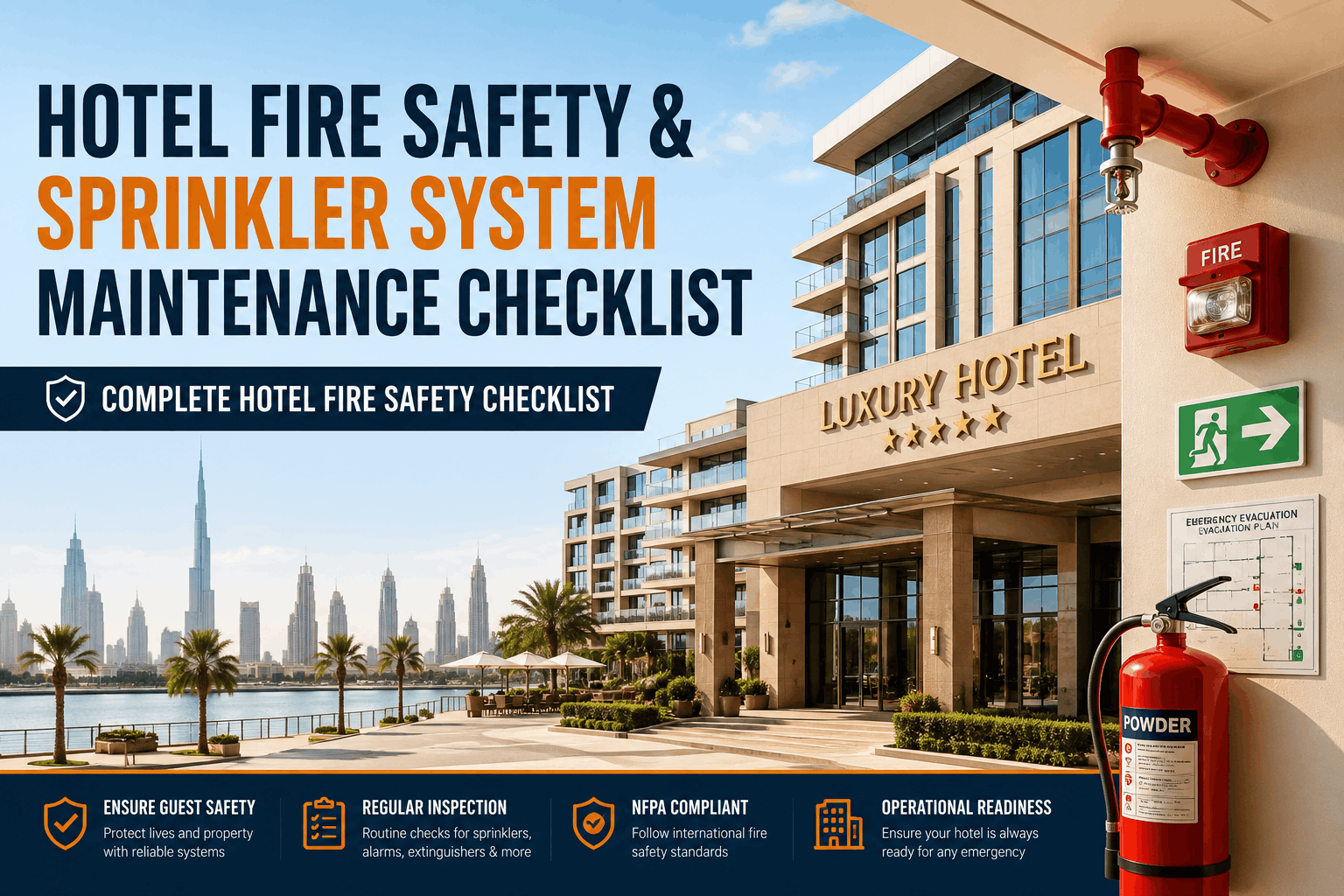
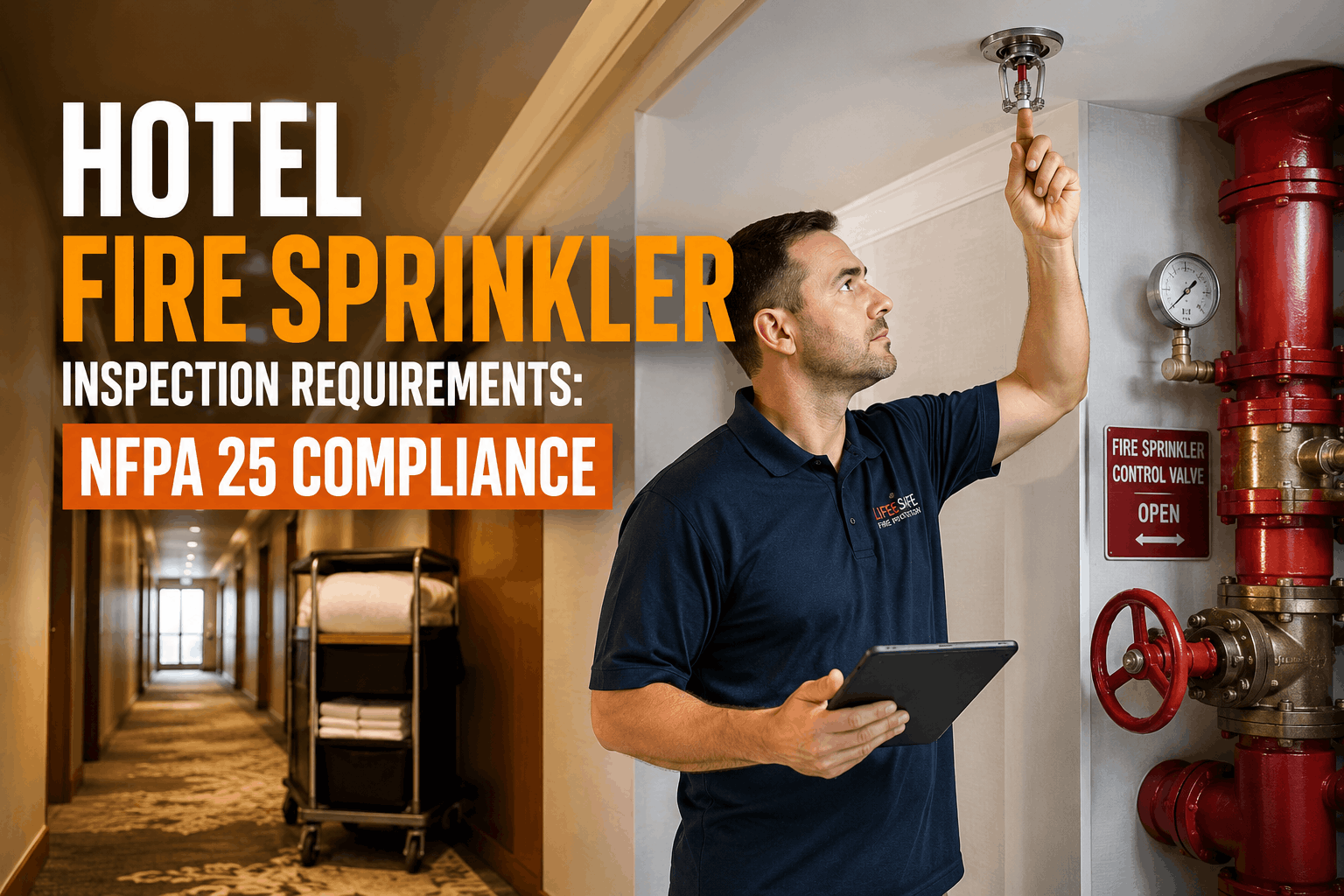
Sprinkler systems activate automatically during fire, containing flames before they spread to multiple rooms. NFPA 25 requires weekly gauge inspection, quarterly waterflow test, and annual full-system inspection. Many properties skip quarterly waterflow testing—a missing test just 5 days into the inspection interval is noncompliant, even if test was performed 85 days earlier.
Emergency lighting provides illumination path for occupant evacuation during fire when normal power is lost. Exit routes must be clear, marked, and illuminated per NFPA 101. Many properties have blocked exits or non-functional emergency lights, creating entrapment risk—immediate violation priority for fire marshals.
Zero Fire Code Violations & NFPA Compliance ReadinessMonthly fire safety audits, quarterly waterflow testing, annual system certification, audit-ready documentation, and automatic compliance interval tracking for all systems.
5. Kitchen Fire Suppression & Annual Compliance Documentation
Kitchen fire suppression systems (wet chemical systems per NFPA 17A) are specialized, high-maintenance safety systems. Monthly inspections and annual professional service are mandatory—any delay in compliance documentation results in automatic code violation regardless of equipment condition.
Frequently Asked Questions — Hotel Fire Safety Compliance
1. What is the most common fire safety violation cited by fire marshals in hotels?
In-room smoke detector batteries dead or units past 10-year lifespan without replacement (35% of violations). Second: missing or expired fire extinguisher maintenance tags (22%). Both are prevented by monthly inspections and proper asset tracking.
2. What happens if a fire safety inspection finds a violation?
Violations are classified as Minor (30 days to correct), Major (10 days), or Life-Safety (immediate closure order). Life-safety violations (blocked exits, non-functional alarms) result in property closure until corrected—forcing evacuation of occupied rooms and potential loss of occupancy revenue.
3. How often should fire alarm systems be professionally tested?
NFPA 72 requires quarterly full-system testing (all initiating devices and notification appliances). Monthly visual inspections by property staff are baseline. Annual professional certification required.
4. Can fire extinguishers that have been used partially be recharged or must they be replaced?
Extinguishers can be recharged if cylinder integrity is sound. Professional technician inspects internally for corrosion, cleans valve, refills with agent, and replaces seal/safety pin. Cost is $30–$75, much cheaper than replacement. Must have annual recharge tag.
5. What does waterflow test of a sprinkler system actually verify?
Waterflow test confirms system is pressurized, main control valve is open, water supply is adequate, and flow rate is sufficient to protect the occupancy. Test must occur every 90 days per NFPA 25 and is non-negotiable—even 1 day overdue is violation.
6. Are battery-powered in-room smoke detectors required if building has hardwired fire alarm system?
Yes—NFPA 101 requires in-room detection for guest protection. Hardwired system provides building-wide detection; in-room batteries provide redundant protection if hardwired system fails. Batteries must be replaced every 6 months (or per manufacturer schedule).
7. What should property do if fire inspection reveals a violation that can't be corrected immediately?
Request extension from fire marshal based on severity and correction timeline. Request fire watch (stationing staff to monitor area) while violation is being corrected. Document all corrective actions in writing and photograph completion. Submit documentation to fire marshal for closure.
8. How can hotels reduce fire insurance premiums through fire safety compliance?
Documented, digitized fire safety maintenance program with zero violations history typically qualifies for 8–12% insurance premium reduction. Premium savings can exceed annual maintenance cost within 2–3 years, creating positive ROI on compliance program investment.
"Fire marshal arrived unannounced and cited us for three violations in 30 minutes: extinguishers with expired service tags, guest room smoke detectors with dead batteries, and one pull station with a broken cover. We had no organized records showing that we'd ever tested anything. Since implementing Oxmaint's fire safety checklist, every single device location, test date, and service due date is tracked digitally. Next inspection, we had all records ready on a tablet—marshal passed us with zero violations and actually complimented our compliance system."— Michael Chen, Chief Engineer, 165-room USA hotel chain
Never Fail a Fire Safety Inspection AgainMonthly device testing, quarterly waterflow verification, annual certifications, automated reminders, and audit-ready documentation for every NFPA-governed system in your hotel.