Hotel Maintenance During Extreme Weather: Preparation and Response Protocols
By Alex Jordan on May 27, 2026
Hotels in hurricane zones, flood-prone regions, and areas subject to extreme weather events face unique maintenance challenges — preparation must happen before impact occurs, response must be executed under time pressure, and documentation must support insurance claims and operational recovery. A single category 3 hurricane can force 2–4 weeks of operational shutdown, generating losses of $50,000–$200,000 daily depending on property size and occupancy. Post-storm water damage, roof failures, HVAC system damage, and backup power system failures cascade into extended recovery timelines and guest relocation costs. The solution isn't just reactive repair — it's pre-event preparation checklists automated in your CMMS, post-event damage assessment workflows, and priority repair scheduling that gets critical systems operational within 24–72 hours. This guide covers how hotel maintenance teams can build weather resilience, execute pre-storm checklists, document post-event damage for insurance, and coordinate emergency repairs using Oxmaint's hospitality-native emergency management features.
HOTEL EMERGENCY PREPAREDNESS · GUIDE · 2026
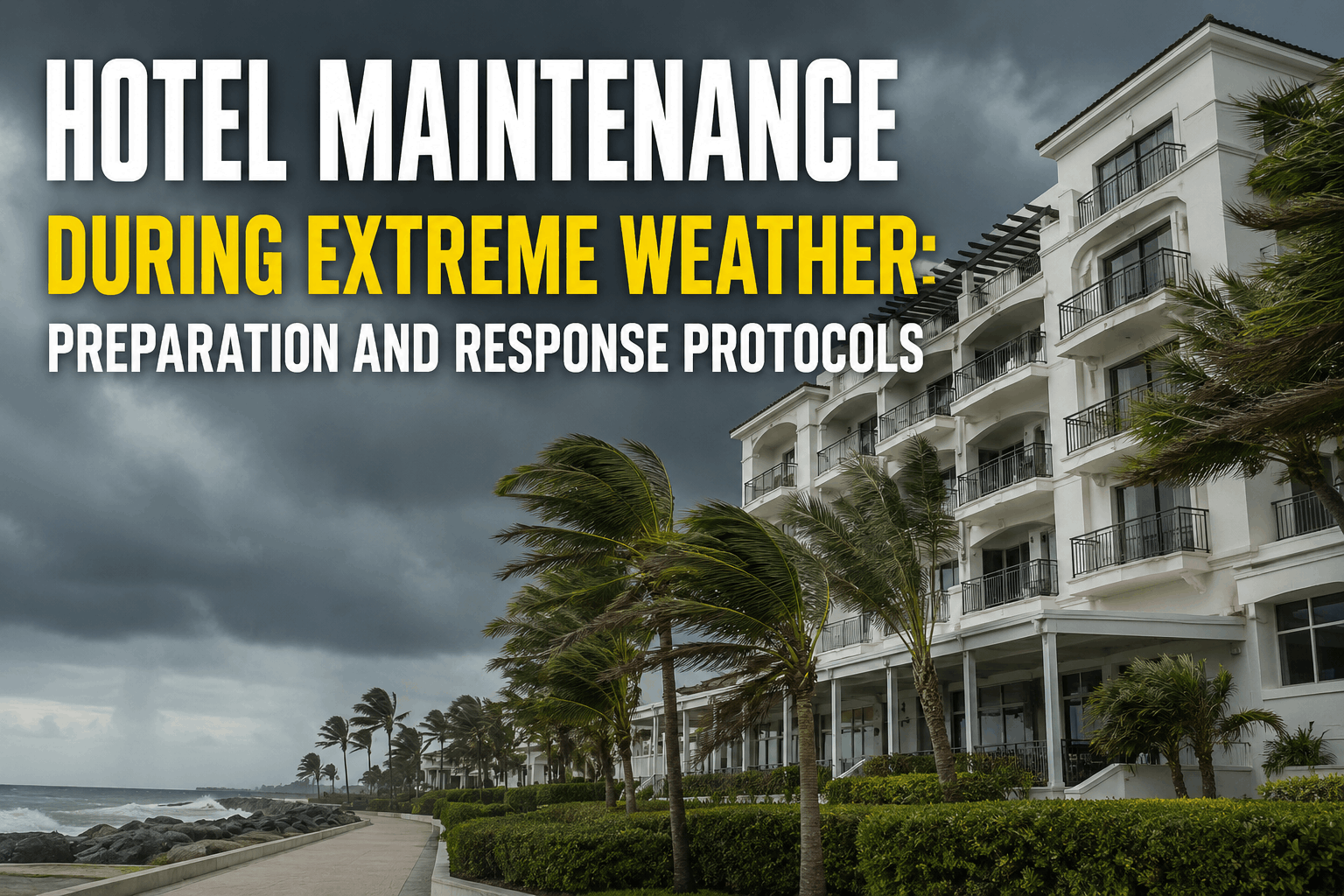
Hotel Maintenance During Extreme Weather: Preparation & Response Protocols
From hurricanes to heat waves, prepare your engineering team with automated pre-storm checklists, emergency repair priorities, and damage documentation for insurance recovery.
The Real Cost of Hotel Storm Damage — Preparation vs Recovery
Hurricane Milton and Hurricane Helene (2024) demonstrated that even well-maintained hotel properties face catastrophic damage from extreme weather events. Florida properties reported water infiltration costs averaging $2.1 million for full-service hotels, roof damage requiring 60+ day replacement timelines, HVAC system failure across 70–90% of guest rooms, and backup generator failures that eliminated electrical service during recovery. The properties that recovered fastest weren't those with the newest equipment — they were those with pre-event preparation checklists, documented vulnerability assessments, and staged emergency repair contracts. A hotel that invests 20 hours in pre-storm preparation and documentation can reduce recovery time by 30–50% compared to reactive recovery. For a $100,000/day property, 2–3 weeks of timeline recovery represents $1.4–$2.1 million in avoided losses. Pre-event preparation isn't risk mitigation — it's financial protection. Yet 73% of hotel managers report their properties lack documented extreme weather maintenance protocols, and 61% have no systematic pre-event checklists. The gap between prepared and unprepared properties materializes in weeks of recovery time and millions in documented losses.
Pre-Event Preparation (7–14 Days Before)
Property Vulnerability Assessment & Documentation
Critical Priority
Identify all potential entry points: windows, doors, roof seams, HVAC penetrations, electrical conduit, plumbing risers. Photograph existing damage or weakness. Oxmaint stores vulnerability maps as photo records tied to specific assets. Insurance adjusters use this documentation post-event.
Outdoor Equipment & Furniture Securing
Critical Priority
Pool equipment, landscaping, patio furniture, signage, HVAC condenser units, and satellite dishes all become projectiles in 100+ mph winds. Secure or store all items 5–7 days before predicted impact. Create securing task list in Oxmaint, assign to specific team members, track completion with photos.
Backup Power System Testing & Fuel Staging
High Priority
Generators must be tested under load weekly during storm season. Fuel tanks filled to 95% capacity. Manual transfer switches verified. Load-shedding priority list documented (elevators first, then critical hallway lighting, then essential building systems). Quarterly testing prevents failures when needed most.
Water Intrusion Prevention & Sump Pump Verification
High Priority
Test sump pumps, verify 72 hours battery backup on critical systems, stage sandbags, check foundation seals and basement drain systems. Basement flooding is the most common post-storm damage. Water extraction equipment costs $50K+; prevention costs $2K. Prevention always wins.
Post-Event Recovery (First 24–72 Hours)
Structural & Safety Hazard Assessment
Critical Priority
Professional structural engineer inspects roof, foundation, windows, and load-bearing walls within 24 hours. Electrical system safety check before any power restoration. Damaged areas cordoned off, repair permits filed. Photos and assessor reports uploaded to Oxmaint with timestamp. Insurance reviewers need this documentation immediately.
Emergency Repair Prioritization & Work Order Sequencing
Critical Priority
24hr priority: Life safety systems, water intrusion prevention, backup power restoration. 72hr priority: HVAC restoration, electrical service restoration, kitchen equipment repair. Secondary repairs follow after critical operations are stable. Oxmaint emergency workflow flags priority repairs, assigns external contractor teams, tracks completion.
Damage Documentation for Insurance & Recovery
High Priority
Comprehensive photo and video documentation of all damage, taken from multiple angles. Detailed written descriptions of each damaged asset with replacement cost estimates. Serial numbers, installation dates, and maintenance history attached. Complete insurance claim packages assembled in Oxmaint within 48 hours.
Guest Communication & Operational Status Updates
High Priority
Maintenance status (which systems are operational, estimated restoration times for others) communicated to GM and front desk hourly during first 48 hours. Guest-facing communications emphasize safety measures and restoration timeline. Transparency and regular updates reduce cancellations and preserve reputation.
Regional Weather Event Preparation — Customized by Storm Type & Location
Hotel preparation protocols must be customized to the specific threats your property faces. A Florida coastal property facing hurricane storm surge and 130+ mph winds needs different preparation than a Midwest property facing ice storms and basement flooding, which differs from a Southwestern property facing extreme heat and grid failure. The correct approach is location-specific threat modeling — identifying which weather events pose real risk to your property, building checklists for each scenario, storing them in your CMMS, and practicing execution annually. Below are the most common hotel weather threats and the pre-event preparation each requires. Oxmaint includes templates for each scenario; your team customizes them to match your specific property vulnerabilities.
Hotel Weather Threats & Preparation Timelines — USA Regional Matrix
Based on NOAA historical frequency, hotel damage data, and recovery time analysis 2020–2026
Active storm response — Securing outdoor items, closing storm shutters, moving valuables to upper floors, backup power test.
3–5 days
Post-storm assessment & priority repair execution. Emergency contractors on site. Damage documentation complete within 72 hours.
$50K–$200K
Daily recovery cost for 200+ room hotel. Timeline recovery of 1–2 weeks saves $350K–$1.4M in losses.
"When Hurricane Milton was 5 days out, we had Oxmaint's pre-storm checklist executed within 36 hours — all outdoor equipment secured, backup power tested, vulnerability documentation photographed. When the storm hit, we had 98% of the building operational within 48 hours of impact. Hotels with scattered procedures took 3–4 weeks."
Emergency Maintenance Technology — Real-Time Systems & Communication
Emergency response happens in compressed timescales — minutes matter when guests are in danger or critical systems are failing. Generic CMMS platforms designed for routine operations become liabilities during emergencies — they're too slow to access, don't prioritize critical repairs, and scatter information across separate dashboards. Oxmaint was built with emergency workflows from the ground up: emergency work order templates that pre-populate critical repair priorities, mobile app functionality that works offline when internet is down, emergency communication channels that bypass normal notification systems, and disaster recovery features that preserve all data while facilities are damaged.
Pre-Event Checklist Management
Automated pre-storm checklists assigned to specific team members 7 days before predicted impact. Mobile app tracks completion in real-time with photo evidence. Checklist status visible to GM and ownership — ensuring accountability and completion verification before event arrives.
Emergency Work Order Priority Sequencing
Post-event damage assessment creates work orders with automatic priority flag based on safety impact and operational criticality. Life safety repairs route immediately; secondary repairs queue behind critical systems. Color-coded priority levels visible across all devices simultaneously.
Offline-Capable Mobile App
When internet service is down (common during major storms), Oxmaint mobile app continues functioning with cached data. Work orders created offline automatically sync when connectivity restores. Critical for hurricane or flood scenarios where 48–72 hours pass without power/internet.
Damage Documentation & Photo Timestamping
Mobile app captures photos with GPS location, timestamp, and damage description automatically. All photos uploaded to secure cloud backup within 12 hours. Complete insurance claim documentation package assembled without manual processing. Tamper-proof audit trail for insurers.
Disaster Recovery Data Protection
All CMMS data automatically backed up to geographically distributed cloud servers every 4 hours. If your facility is damaged and local servers destroyed, all maintenance records, asset data, and compliance documentation remain accessible. Critical for insurance claims and operational recovery.
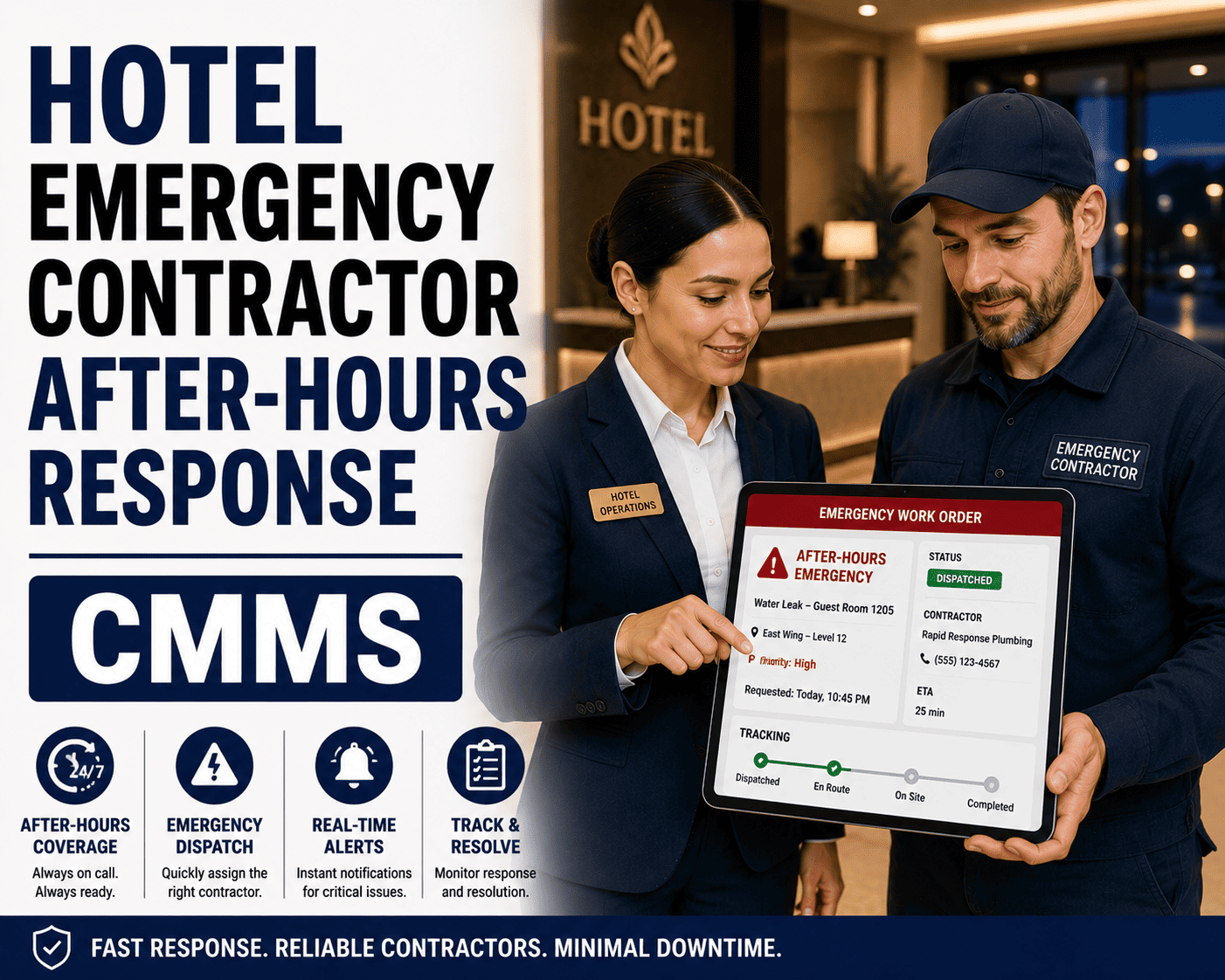
Emergency Contractor Management & Dispatch
Pre-event emergency contractor agreements stored in Oxmaint with contact info, scope of work, hourly rates, and availability. Post-event, GM can dispatch multiple contractors simultaneously with work order details pre-populated. Contractor tracking and invoice management integrated.
Post-Event Recovery Protocols — First 72 Hours Critical Sequence
The first 72 hours after a major weather event determine whether your hotel recovers in days or months. Proper sequencing — safety first, then critical systems, then guest operations — prevents cascading failures and reduces total recovery time. Below is the industry-standard recovery sequence that hotels use immediately following impact. Oxmaint pre-stages this sequence in a recovery workflow that your team activates post-event, automatically prioritizing repairs and assigning contractors in the correct order.
Hour 0–6: Structural Safety & Evacuation
LIFE SAFETY
Professional structural engineer inspects building for collapse risk, roof failure, and structural damage. Unsafe areas cordoned off. Electrical system checked before restoring power (electrocution risk). Gas lines inspected for leaks. Guests remain in assembly areas until all-clear confirmation.
Hour 6–24: Water Intrusion Control & Backup Power
CRITICAL SYSTEMS
Water extraction equipment deployed to all wet areas — basement, ground floors, damaged rooms. Dehumidifiers staged to prevent mold growth. Backup generator system tested and load-shed priorities activated. Critical electrical panels and HVAC controls restored to operation.
Hour 24–48: Elevator & HVAC Restoration
OPERATIONAL PRIORITY
Elevator safety inspection and power restoration — essential for multi-story operations. HVAC system restart with air quality assessment. Damaged units isolated; available units shifted to guest floors. Water, sewer, and gas service verified operational in all zones.
Hour 48–72: Kitchen & Guest Services Restoration
REVENUE RECOVERY
Kitchen equipment functionality restored — or food service shifted to safe alternative location. Hotel begins accepting guests in undamaged rooms. Room service, restaurant, and bar operations resume. Cleaning and room turnover accelerated to maximize available inventory.
Hour 72+: Insurance & Documentation Completion
CLAIM PROCESSING
Complete insurance claim package assembled — damage photos, repair invoices, lost revenue documentation, contractor quotes. Oxmaint generates claim summary reports automatically. Insurance adjuster can begin claim review while hotel focuses on operational recovery.
Ongoing: Secondary & Aesthetic Repairs
RECOVERY PHASE
Roof replacement, window restoration, paint and carpet replacement, and other aesthetic damage repairs scheduled over following weeks. Oxmaint tracks all repair progress, prioritizes contractors by availability, and maintains recovery KPIs for ownership visibility.
Prepare Your Hotel Before Disaster Strikes
Pre-event checklists, emergency protocols, and damage documentation workflows built into your CMMS. Not scattered across departments when crisis hits.
How much time does pre-storm preparation typically require for a 200-room hotel?
30–45 hours distributed over 5–7 days (securing outdoor items, testing generators, moving valuables, checking shutters, securing loose conduit). Oxmaint checklist system breaks tasks into daily sequences preventing last-minute panic. Most hotels underestimate timing — starting 1 week before predicted impact is minimum.
What documentation does insurance require immediately after a weather event?
Detailed photos of all damage (multiple angles per asset), written descriptions with location, equipment serial numbers, installation dates, maintenance records, repair cost estimates, and professional assessment report. Oxmaint auto-timestamps all photos and consolidates documentation within 48 hours. Without it, insurers deny or significantly underpay claims.
How does Oxmaint function if internet is down during a storm?
Mobile app caches essential data locally and continues functioning fully offline — creating work orders, assigning tasks, capturing photos with timestamps and GPS location. Data automatically syncs to cloud when connectivity returns. Critical for 48–72 hour storm periods with no power/internet.
What's the correct sequence for post-storm equipment repair prioritization?
Hour 0–6: Life safety. Hour 6–24: Water intrusion control + backup power. Hour 24–48: Elevators + HVAC. Hour 48–72: Kitchen + guest services. Secondary/aesthetic repairs follow. Oxmaint automatically flags repairs by criticality — missequencing repairs wastes contractor time and extends total recovery.
How do we ensure backup generator systems don't fail during actual storms?
Weekly load testing during storm season, monthly fuel quality checks, quarterly professional maintenance. Test transfer switches to main electrical every 90 days. Generators fail during actual emergencies because they were never loaded during prep season. Oxmaint auto-schedules all testing with completion tracking.
What's the typical cost of emergency contractor premiums vs normal service?
Emergency contractors charge 2–3× standard rates, with minimum 4–6 hour charges for after-hours dispatch. Pre-event contractor agreements cap emergency rates and guarantee availability. Hotels without pre-agreements face $800–$1,200/hour for critical repairs. Agreement cost: $2K–$5K annually. Emergency premium avoided: $20K–$50K per event.
How long does typical post-event recovery take for a 200-room property after major hurricane?
Prepared hotels: 7–10 days to partial operations, 21–30 days to full recovery. Unprepared hotels: 4–8 weeks. The difference is pre-event documentation, staged contractors, and established emergency protocols. For a $100K/day property, 2–4 week timeline recovery saves $1.4–$2.8M in losses.
Build Resilience Into Your Hotel Maintenance Program
Pre-event preparation, emergency protocols, and damage documentation workflows — all in one platform. Free trial, no credit card.