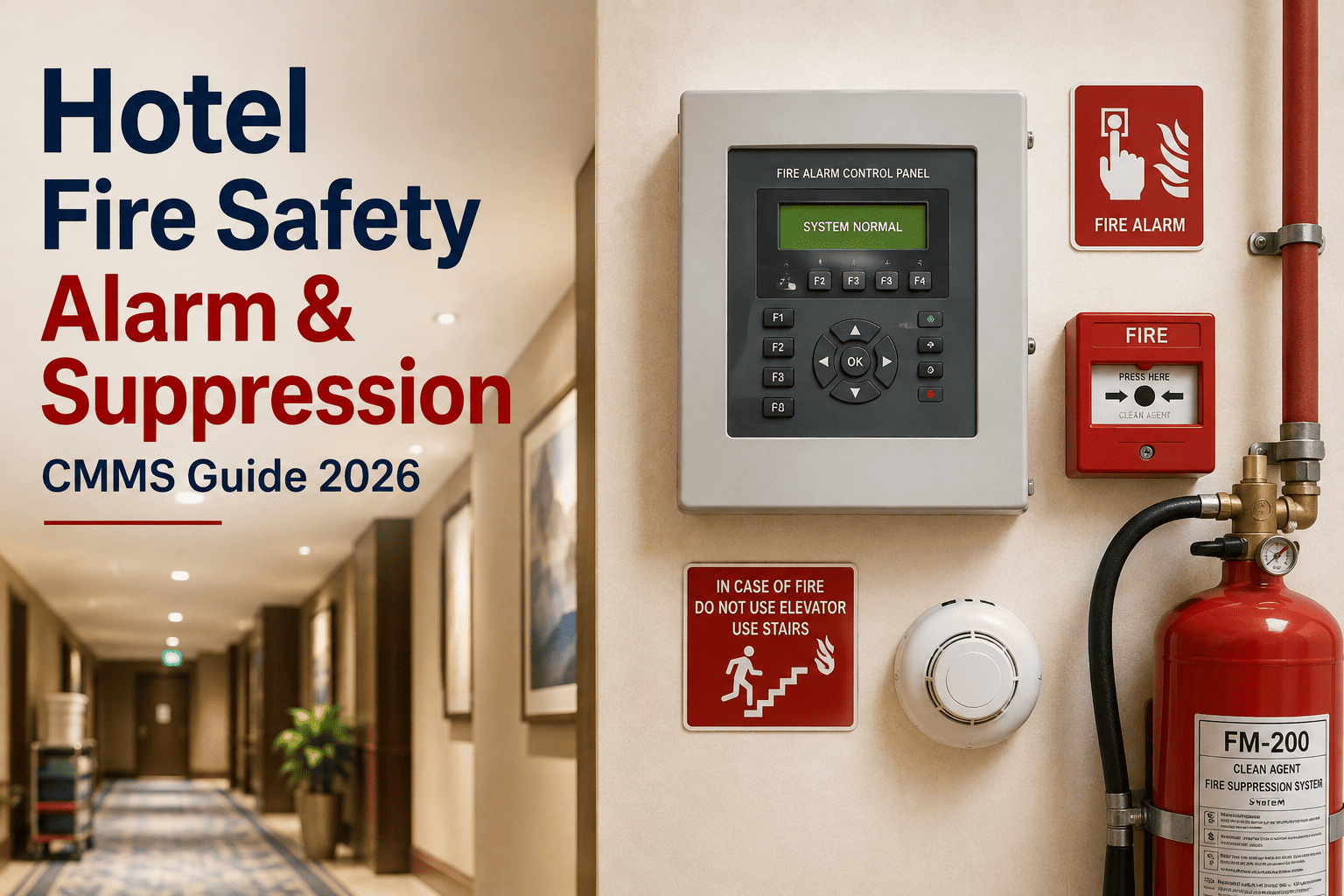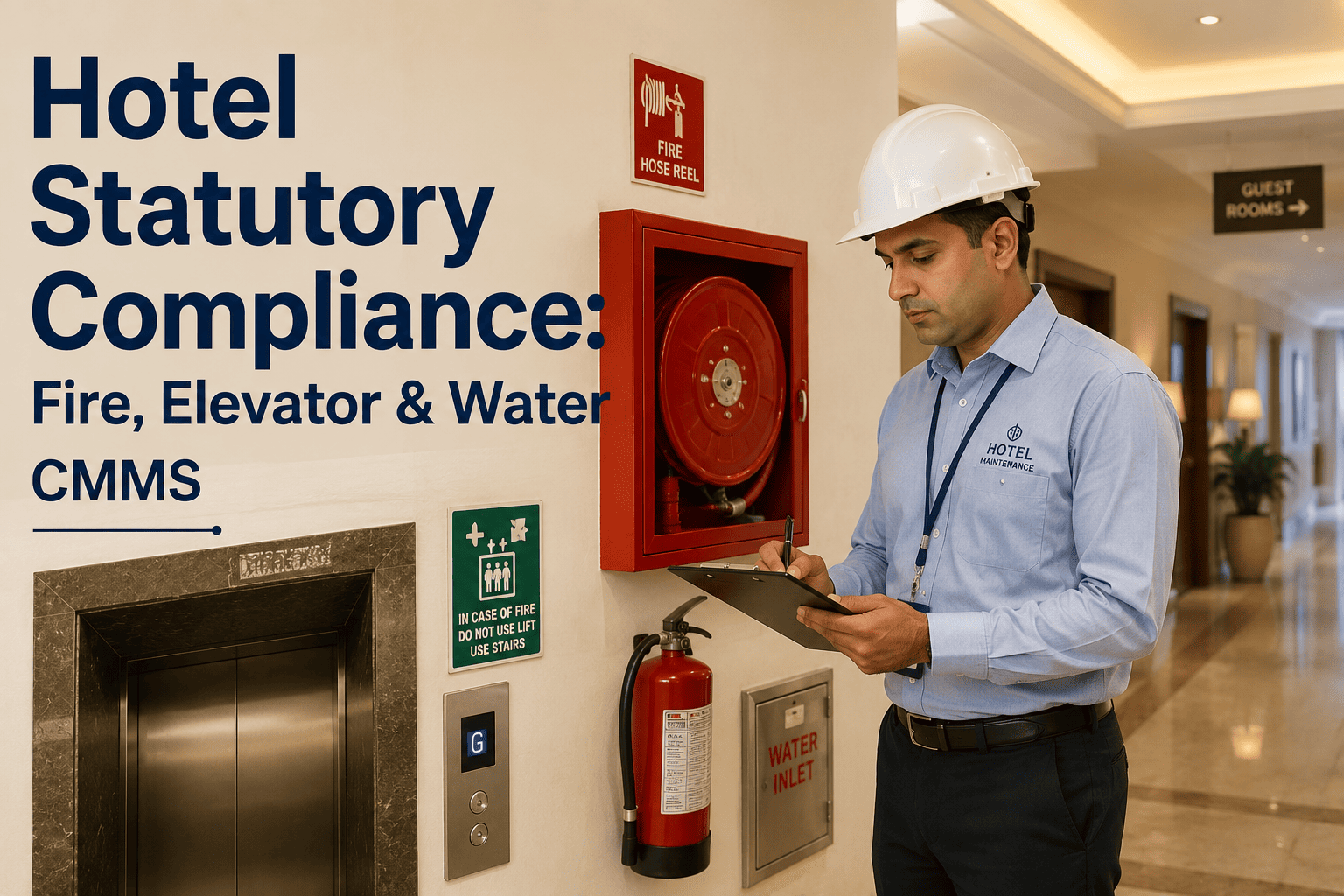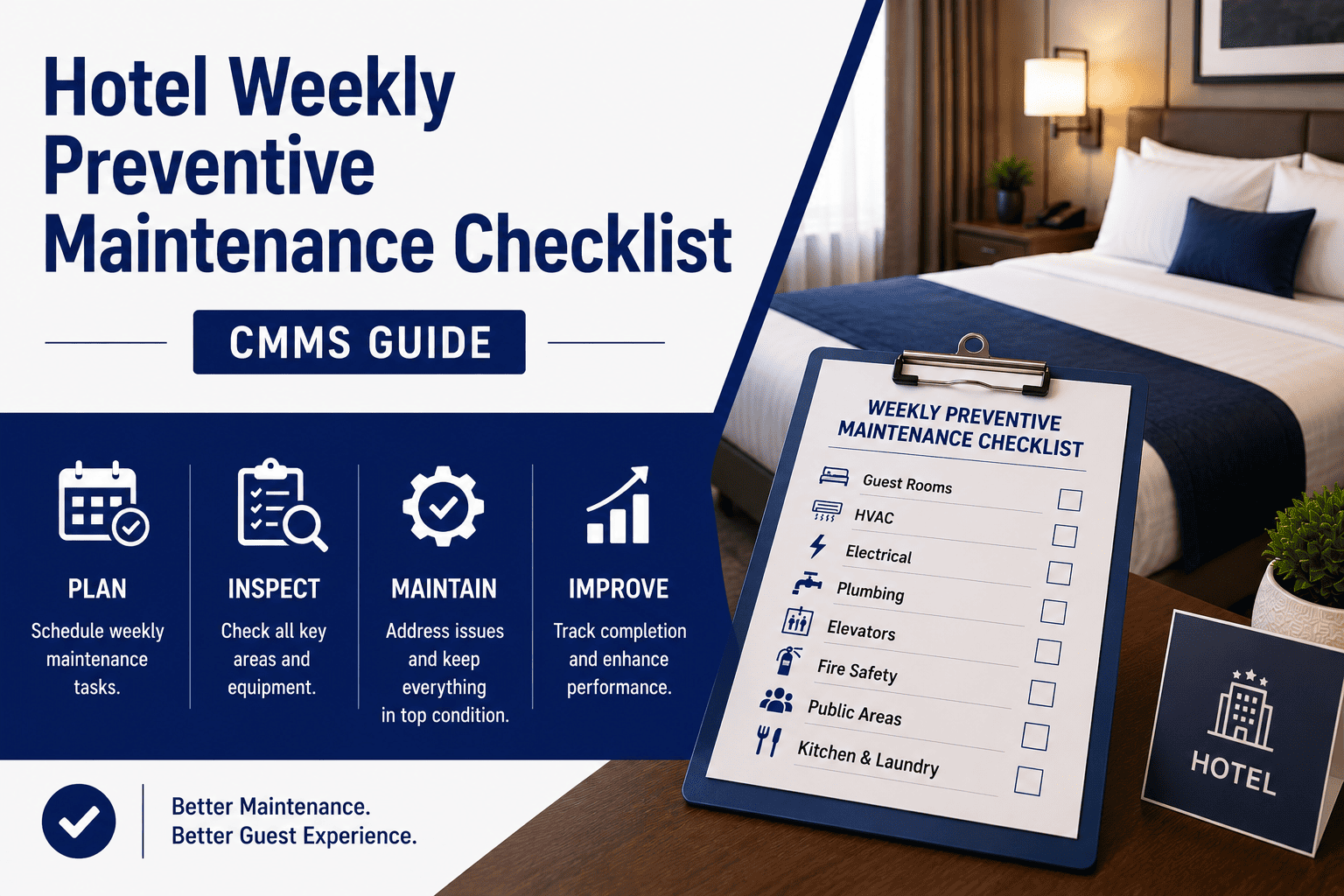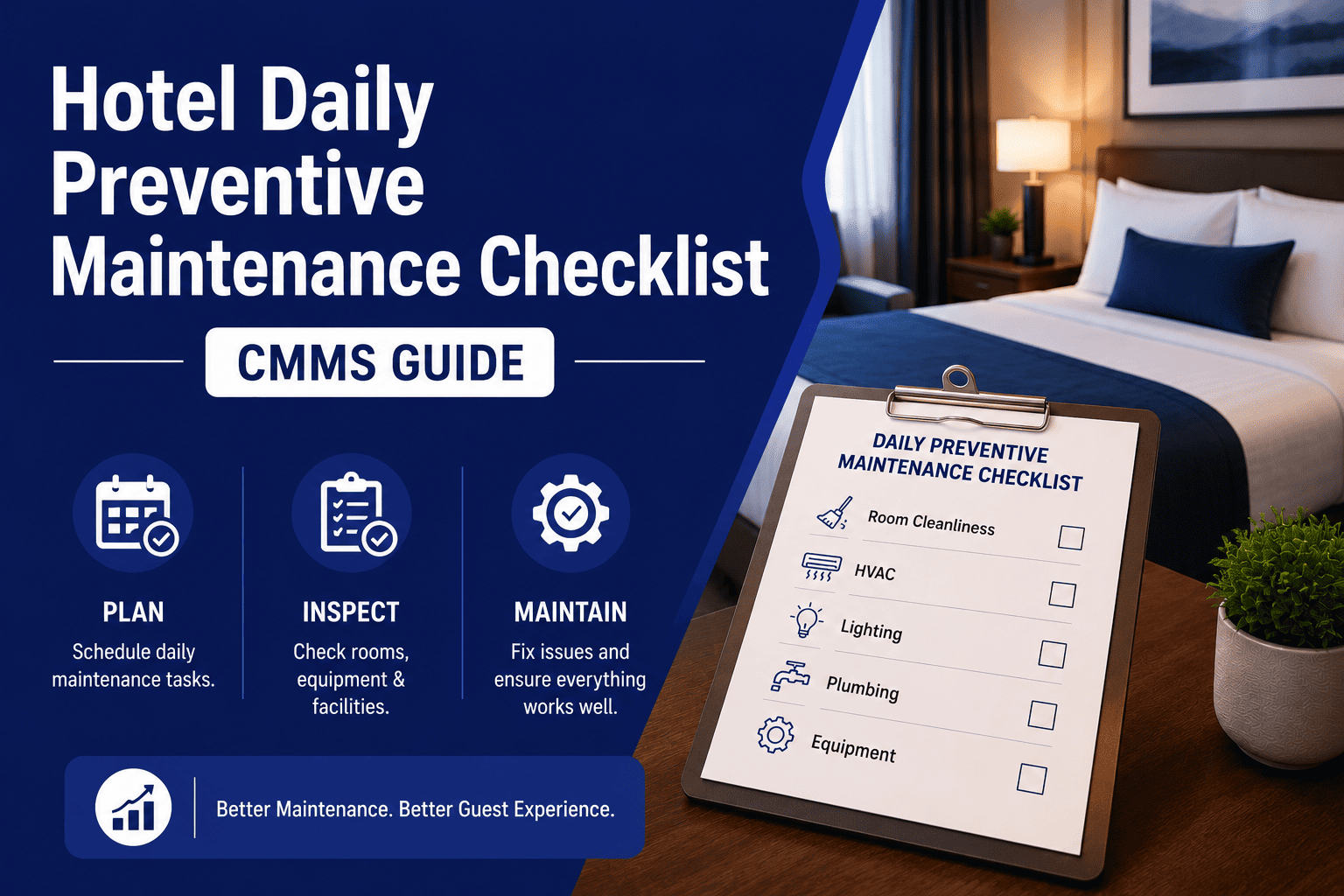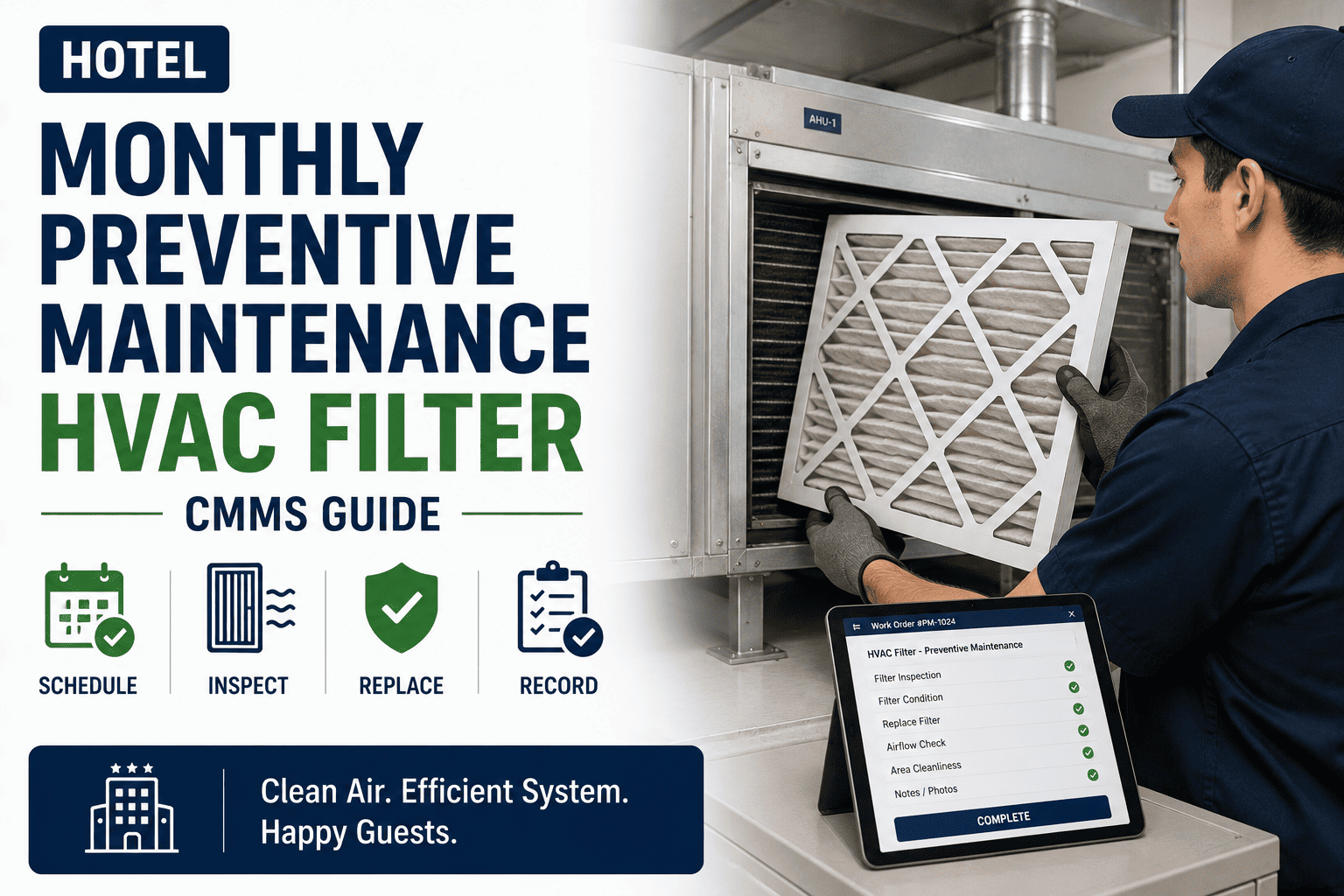
Monthly preventive maintenance is the single highest-leverage discipline a hotel engineering team can run, and HVAC filter compliance sits at the center of it — driving IAQ, energy spend, guest comfort scores and equipment life simultaneously. ASHRAE 62.1 sets the ventilation and filtration baseline, but without a CMMS enforcing cadence by unit type, compliance drifts below 60% within two quarters as staff turnover and ad-hoc logs take over. This guide breaks down the full monthly PM calendar — filter selection, replacement cadence, fire alarm functional tests, domestic hot water checks — and the CMMS workflow that pushes filter compliance above 95% across every guest room and public space. Ready to operationalize it tonight? Start Free Trial and import your asset register in under an hour.
How much is one skipped filter change actually costing your property?
A single MERV-8 filter left in service 60 days past its change-out date forces the fan motor to draw 18-24% more current, accelerates coil fouling, and quietly drags your guest comfort scores down one full star before anyone notices. The CMMS-driven monthly PM schedule below is built to make that failure mode impossible.
Why HVAC filter changes are the highest-ROI monthly PM — and the most skipped
Filter replacement is cheap, fast, and mechanically trivial. Yet across mid-scale and upper-upscale hotels, CMMS audit data shows real-world compliance hovering between 52% and 68% — not because technicians forget, but because the schedule lives in a spreadsheet that no one owns.
A 120-room property running 124 PTAC units, 6 rooftop AHUs, and 2 make-up air systems was spending roughly $42,000 per year on reactive HVAC calls, premature motor replacements, and guest-comp rooms traced to "stuffy air" complaints. After migrating monthly filter PM into a CMMS with barcode scan-verification at each unit, compliance moved from 61% to 96% within four months. Energy spend on conditioning dropped 7.8%, comfort-related comp credits fell 64%, and the property recovered the CMMS subscription cost in under 11 weeks. The filter line item itself went up 14% — because they were finally buying the right filters at the right intervals instead of emergency-stocking the wrong ones.
The ASHRAE 62.1-aligned filter schedule every hotel CMMS should enforce
Not every unit gets the same filter or the same cadence. Guest-room PTACs, lobby AHUs, kitchen make-up air, and pool dehumidifiers each have distinct loading profiles. The table below is the baseline configuration pushed to every new hotel workspace.
| Unit Type | Filter Spec | Monthly Task | Replace Cadence | CMMS Trigger |
|---|---|---|---|---|
| Guest-room PTAC / VTAC | MERV 8, 1" or 2" pleated | Inspect + vacuum face | Every 3 months | Auto-generate 90 days from install scan |
| Public-space AHU (lobby, corridors) | MERV 13, 2" or 4" cartridge | Inspect + manometer reading | Every 3-4 months | Pressure-drop threshold + calendar dual trigger |
| Kitchen make-up air / hood supply | MERV 8 washable + pre-filter | Inspect + degrease | Monthly replace / wash | Forced monthly, no skip without manager sign-off |
| Pool / spa dehumidifier | MERV 11, 4" pleated | Inspect + log humidity curve | Every 2-3 months | Humidity-spike alert overrides calendar |
| Meeting / ballroom AHU | MERV 14, final stage | Inspect + differential pressure log | Every 4-6 months | Event-load weighted schedule |
A calendar-only cadence catches 80% of changes on time. Adding a differential-pressure sensor reading — logged into the CMMS during the monthly walk — catches the remaining 20% where environmental loading (renovation dust, pollen events, wildfire smoke) accelerates fouling by 30-50%. Properties running both triggers consistently sustain 95%+ compliance versus 78% for calendar-only sites.
Beyond filters: the five-domain monthly PM walk every hotel should run
HVAC filters are the headline, but a defensible monthly PM program covers five parallel domains. Each generates its own CMMS work-order stream with sign-off, photo evidence, and automatic escalation if a task closes red.
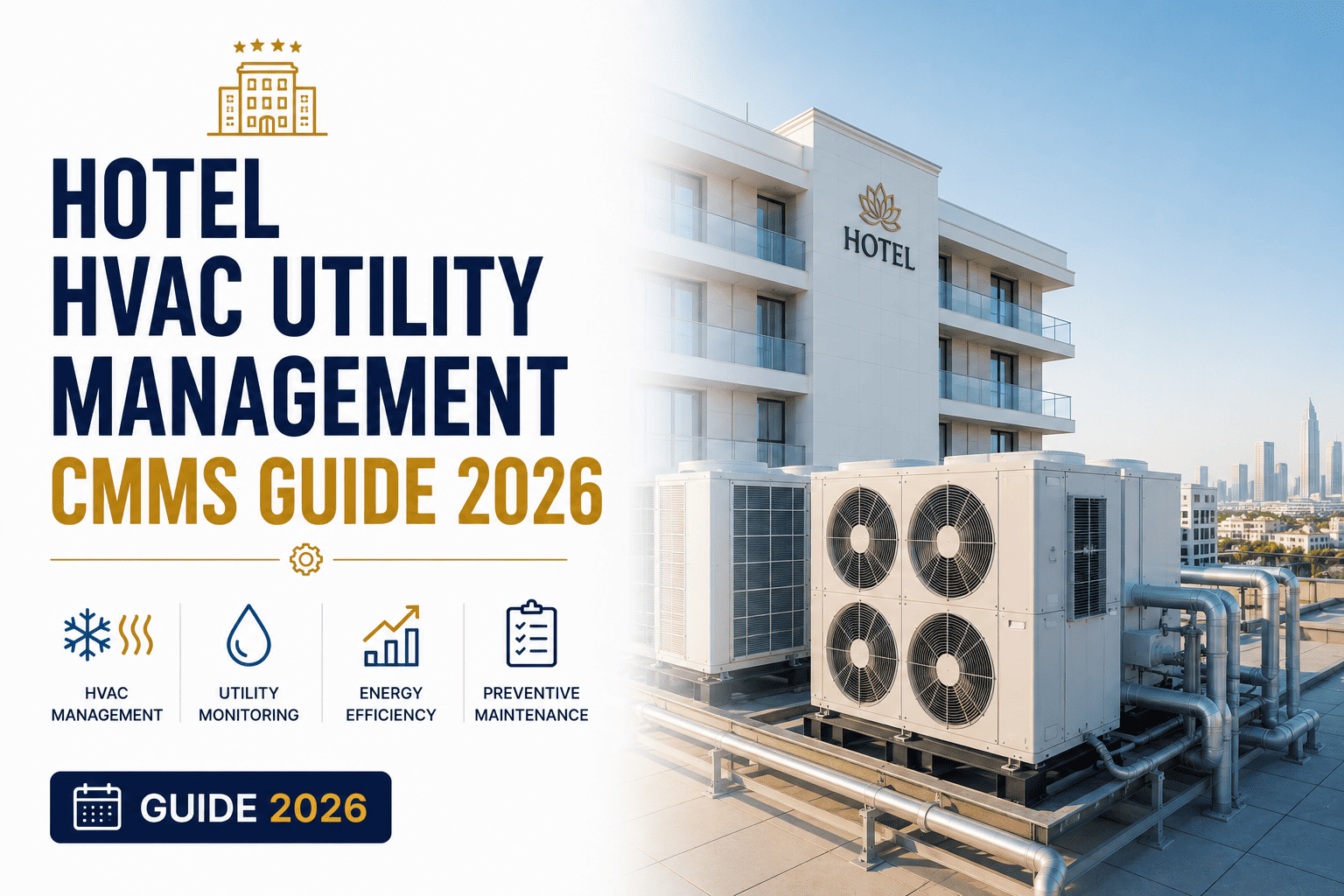
- Inspect all guest-room PTAC filters; replace per 90-day cadence
- Log AHU differential pressure on every public-space unit
- Verify cooling coil cleanliness; flag any visible biofilm
- Confirm economizer damper actuation on rooftop units
- Check condensate drain pan and trap for blockage
- Functional-test 10% of smoke detectors on rotating basis
- Test pull stations and horn/strobe on one floor per month
- Verify fire pump run indicator and churn pressure
- Inspect extinguisher tags across all guest floors
- Confirm kitchen hood suppression inspection is current
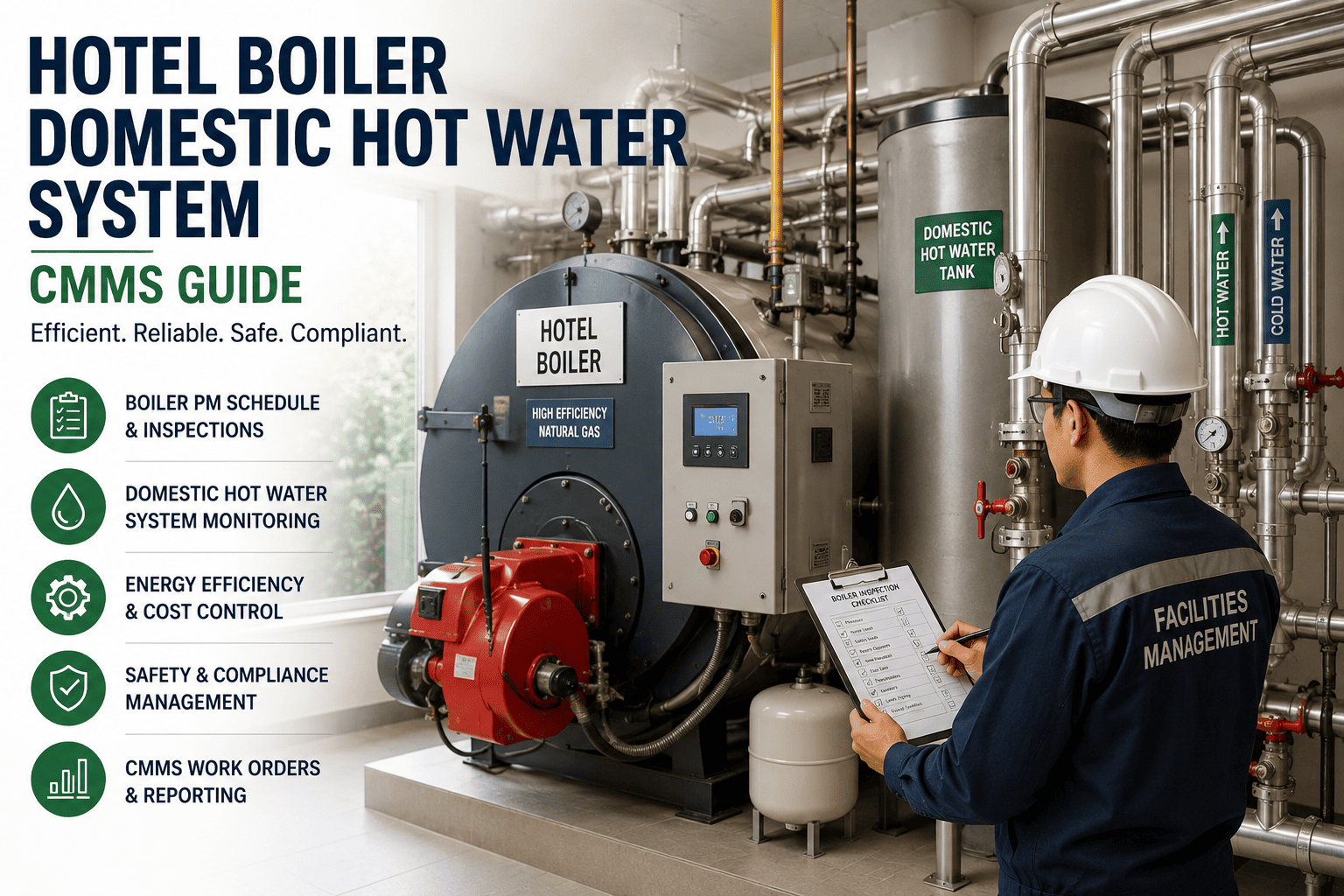
- Measure DHW delivery temp at the farthest fixture per wing
- Verify recirculation pump operation and timer schedule
- Inspect expansion tank bladder pressure
- Log boiler stack temperature and combustion reading
- Flush water heater drain valve to clear sediment
- Walk all public restrooms; log slow-drain early warnings
- Check lavatory aerators for scale buildup in 10% of rooms
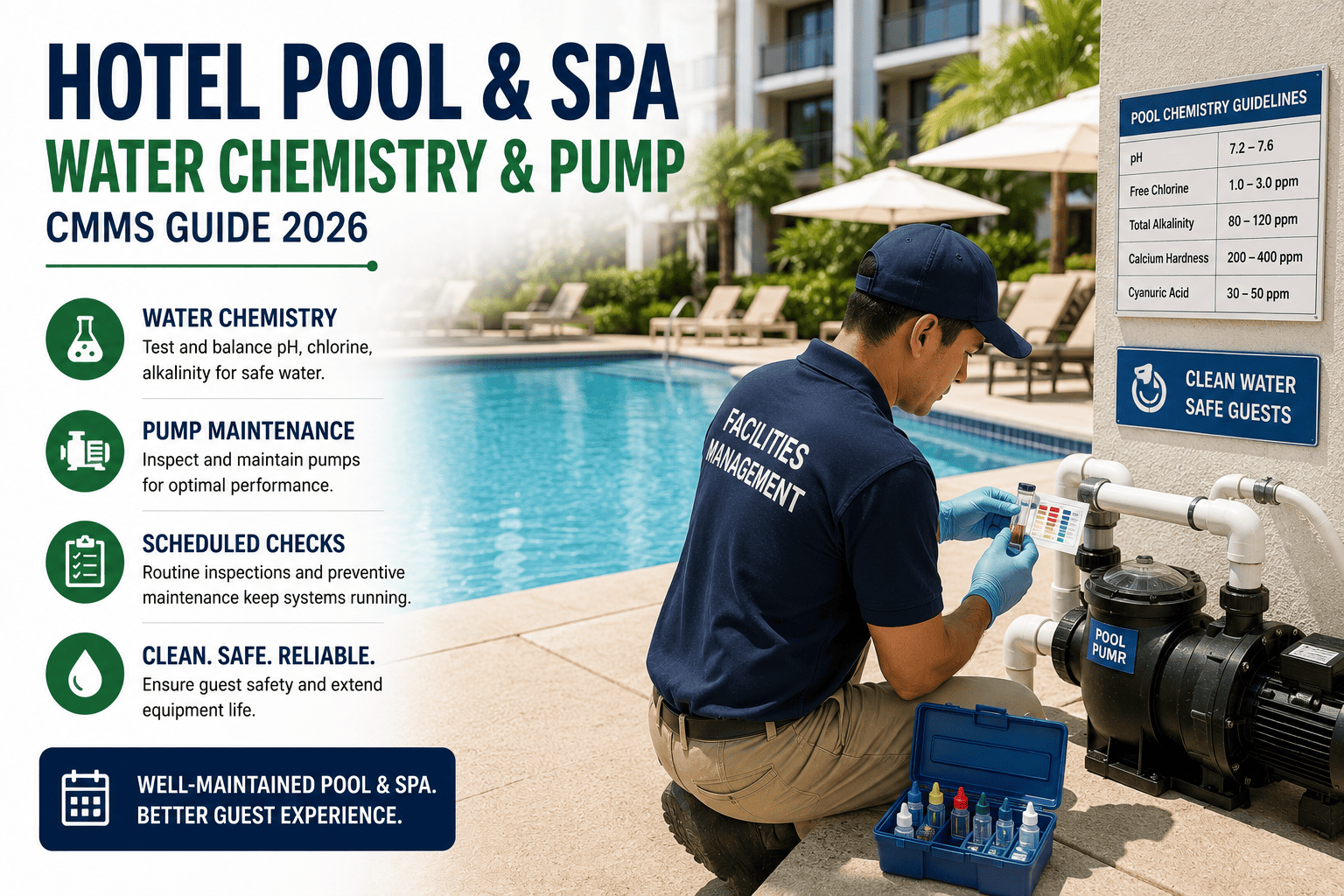
- Inspect pool deck drains and sump pump operation
- Verify backflow preventer test-port accessibility
- Flag any guest-room reporting repeated hot-water complaints
- Run generator 30-min load test; log voltage and frequency
- Inspect transfer switch indicator lamps and exercise cycle
- Thermal-scan main distribution panels for hot spots
- Verify emergency lighting battery test on one floor per month
- Confirm elevator machine-room HVAC is operational
- Inspect stairwell lighting and pressurization fan operation
- Walk parking structure; note lighting outages and trip hazards
- Verify loading dock door seals and dock-leveler operation
- Check irrigation controller schedule and leak indicators
- Log any pest-control bait station displacement
How the CMMS pushes filter compliance above 95%
The mechanism is not complicated — but it only works when the workflow is enforced end-to-end. Here is the six-step loop that takes a property from spreadsheet chaos to sustained 95%+ compliance in one quarter.
Each PTAC, AHU, and MAU is entered with its filter spec, slot size, last-change date, and pressure-drop baseline. The CMMS now owns the replacement calendar — not a clipboard.
Every due filter spawns a work order one week before its change-out date, assigned to the technician whose zone includes that unit — with the correct filter SKU pre-staged in the parts list.
The technician scans a QR code on the unit, confirming they were physically present. The scan timestamps the change and locks the old filter's service hours into the asset history.
If the filter is visibly beyond spec, fouled with grease, or water-damaged, the technician uploads a photo. The CMMS flags the unit for an engineering review and shortens its next cadence automatically.
Any filter change not closed within 72 hours of its due date escalates to the Chief Engineer, then to the General Manager at 96 hours. No task disappears silently — the accountability is structural, not personal.
On the first of each month, the CMMS pushes a one-page compliance report: % of filters changed on time, units flagged for early change, energy-trend overlay, and the financial impact of the month's avoided reactive work.
What 60% filter compliance actually costs a 120-room hotel
The compounding cost of skipped filter changes is rarely visible on a single P&L line — it hides across energy, capital, guest scores, and comp rooms. Here is the worked breakdown.
Turn your monthly PM walk into a closed-loop compliance engine
Import your asset register, configure filter specs and cadences per unit type, and push the first 90 days of work orders in a single afternoon.
Hotel monthly preventive maintenance: the questions engineering directors ask most
Guest-room PTAC filters should be inspected monthly and replaced every 90 days under normal loading. Public-space AHUs running MERV 13 cartridges typically replace every 3-4 months. Kitchen make-up air filters are the exception — grease loading forces monthly replacement or washing. The CMMS should enforce both a calendar trigger and a pressure-drop threshold so environmental events (wildfire smoke, renovation dust) can accelerate a change without waiting for the next scheduled date.
ASHRAE 62.1 sets minimum ventilation rates and filter efficiency for acceptable indoor air quality. For most hotel occupancies, the standard calls for MERV 8 minimum on recirculating systems and MERV 13 where outdoor air is conditioned through a central AHU. The standard does not dictate change-out frequency directly — that is determined by pressure-drop monitoring and manufacturer loading curves, which is exactly what a CMMS tracks per asset. You can see how this maps to your property when you Start Free Trial and import your unit list.
Yes — but only when the workflow includes barcode scan-verification at the unit and auto-escalation on missed tasks. Calendar reminders alone plateau around 78% because they rely on human discipline. The combination of a pre-staged work order, a mandatory scan to close it, and a 72-hour escalation window to the Chief Engineer creates structural accountability that sustains 95%+ month over month, even through staff turnover.
A typical 120-room property can be fully configured in 4-6 hours: 1-2 hours to import the asset register (PTACs, AHUs, generators, boilers, fire panels), 1 hour to assign filter specs and cadences, and 2-3 hours to train the engineering team on the mobile scan-and-close workflow. The first full monthly PM cycle runs in the same week, and the compliance dashboard is delivered on the first of the following month. Book a guided setup at calendly.com/oxmaintapp/30min if you want a specialist to walk your team through it.
Most properties recover the full annual CMMS subscription cost within 8-12 weeks. The recovery comes from three sources: reduced reactive HVAC service calls (typically down 60-70%), avoided premature motor and coil replacements (down 60%), and lower energy draw from clean filters and verified damper operation. A 120-room upper-upscale property averaging $42,000 in reactive HVAC spend can expect $30,000-$35,000 in net annual recovery once compliance stabilizes above 90%.
Get your hotel filter compliance above 95% before the next monthly walk
Configure your asset register, enforce ASHRAE 62.1-aligned cadences, and close every filter change with a barcode scan — starting today.