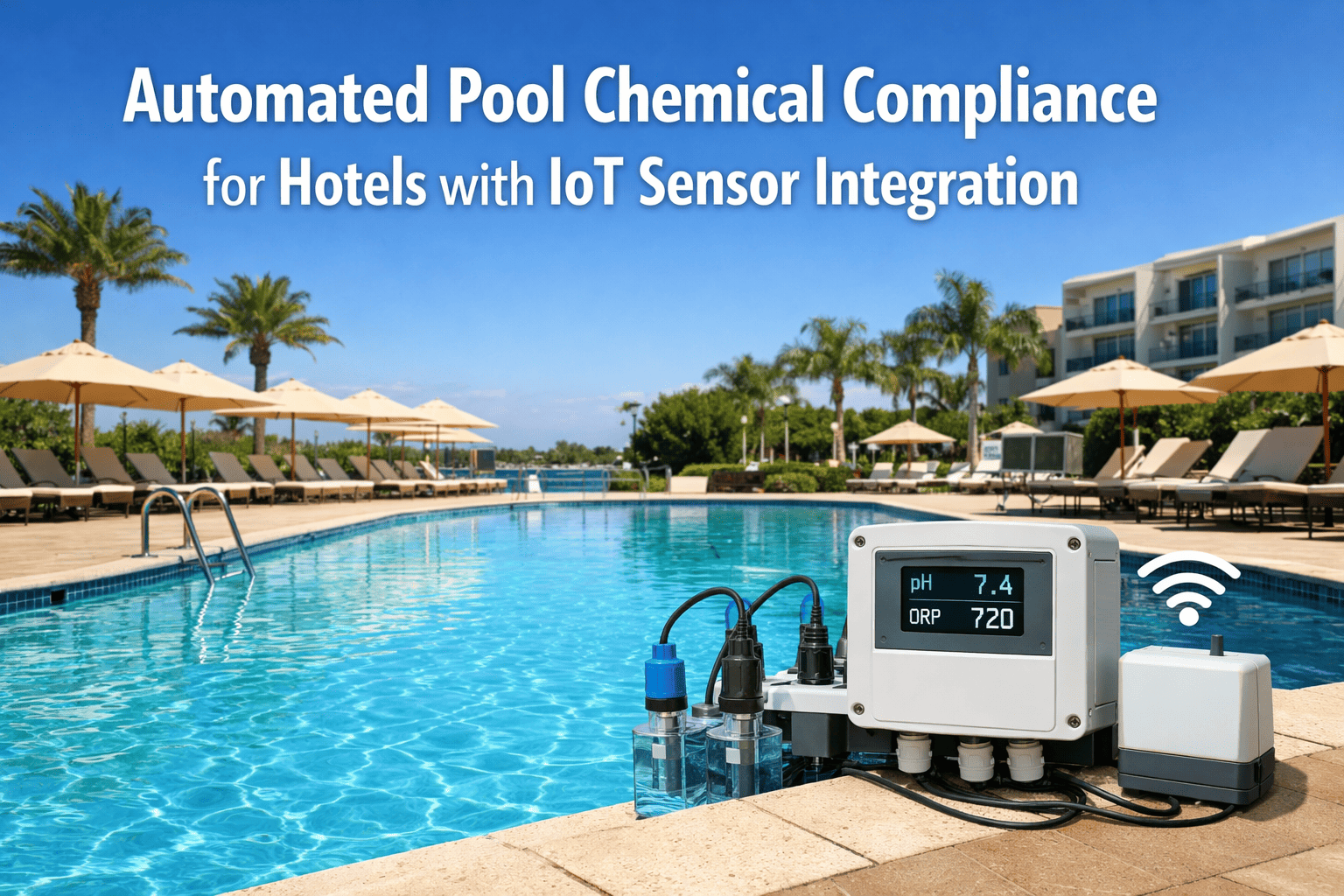
The resort's director of operations received the call no hotelier wants: a county health inspector had shut down both the main pool and rooftop infinity pool on a sold-out Fourth of July weekend. Chlorine levels had dropped below minimum standards three days earlier, but the daily chemical log—kept on a clipboard that blew into the pool—was missing. The backup pump had been making noise for two weeks; no work order was ever created. The sand filter hadn't been backwashed in six weeks because the seasonal technician didn't know the schedule. Total impact: $67,000 in lost F&B revenue from poolside service, 43 room cancellations worth $38,000and a health department citation that remained publicly visible for 18 months. The chemical controller recalibration that would have prevented the shutdown cost $85.
The Cost of Neglected Pool & Spa Maintenance
What happens when hospitality aquatic facilities lack systematic maintenance workflows
$105K
Avg Closure Cost
Revenue lost per forced pool/spa shutdown at full-service hotels
34%
Health Code Failures
Hotel pools cited for violations during routine inspections
72 hrs
Avg Repair Downtime
When major pool equipment fails without spare parts on hand
1-Star
Review Trigger
Closed or dirty pools are the #2 driver of negative hotel reviews
Understanding Pool & Spa Asset Workflows
Pool and spa systems are among the most regulated and guest-visible assets in any hotel. When teams implement comprehensive aquatic asset workflows, they gain control over water chemistry compliance, equipment reliability, safety documentation, and the guest experience that drives resort bookings and premium rate positioning.
Pool & Spa Maintenance Workflow Architecture
How integrated workflows connect every aspect of aquatic facility management
Equipment Registry Layer
Mechanical Systems
Pumps, filters, heaters, blowers, chemical feeders, automation controllers
Water Treatment
Chlorinators, UV/ozone systems, chemical controllers, pH dosing
Safety & Compliance
Drain covers, GFCI breakers, emergency equipment, signage, ADA features
Workflow Automation Layer
Daily Rounds
Chemistry → Equipment → Safety
PM Schedules
Calendar & usage triggers
Work Orders
Create → Assign → Resolve
Compliance
Health dept & brand audits
Analytics & Documentation Layer
Water chemistry trends, equipment health scores, compliance status, cost tracking, chemical consumption, energy efficiency, inspection readiness scores
Preventive Maintenance Scheduling
Pool & Spa PM Schedule Framework
Recommended maintenance intervals by task category
Daily
14
Check Points
Chemistry, pumps, safety
Weekly
18
Check Points
Filters, drains, deck
Monthly
22
Check Points
Heaters, controls, electrical
Annual
40
Check Points
Full inspection, certifications
PM Workflow Automation Benefits
Never Miss a Test: Auto-generated daily chemistry rounds with timestamp verification
Inspection-Ready Logs: Digital records satisfy health department audits instantly
Safety Compliance: VGB drain cover checks, GFCI testing, and ADA audits on schedule
Work Order Management for Aquatic Facilities
Pool & Spa Work Order Workflow Components
Essential elements for effective aquatic maintenance work orders
Issue Detection & Capture
Initiation Phase
Chemistry Out-of-Range AlertAuto-generated from controllerRequired
Chemical Adjustment LoggingDosage, product, readingsRequired
Compliance VerificationPost-repair chemistry confirmBest Practice
Automate Your Pool & Spa Compliance
OXmaint generates daily chemistry rounds, tracks PM completion, documents every inspection, and keeps your aquatic facilities audit-ready 365 days a year.
Certified Pool Operator or Aquatic Facility Operator required for water chemistry management
Electrical Qualification
Licensed electrician for pump motors, GFCI systems, underwater lighting, and bonding inspections
Gas Heater Certified
Gas fitting license for pool/spa heater service, ignition systems, and heat exchanger maintenance
Chemical Handling
OSHA hazmat training for chlorine, muriatic acid, and chemical storage/handling procedures
Spare Parts Classification
Stocking Strategy by Criticality and Lead Time
Critical Spares (Stock On-Site)
Parts causing pool closure with long replacement lead times
Pump Seals & Motors:1 complete set
Heater Ignition Boards:1 per heater type
VGB Drain Covers:2 per drain size
Lead Time: 1-6 weeks if not stocked
Important Spares (Min/Max Stock)
Commonly replaced items with moderate lead times
Filter Cartridges/Media:Min 1, Max 3 sets
Chemical Feed Tubes:Min 2, Max 6
Controller Sensors:Min 1, Max 2
Lead Time: 3-10 days typical
Standard Spares (Order as Needed)
Readily available items with short lead times
O-Rings & Gaskets:Order with PM
Test Reagents:Monthly order
Skimmer Baskets:Supplier stock
Lead Time: 1-3 days typical
Industry Insight
"A hotel pool isn't just a swimming pool—it's a revenue-generating amenity that justifies $50-$150 premium per night. When the pool closes unexpectedly, you don't just lose the pool—you lose the rate positioning, the F&B revenue, the event bookings, and the guest loyalty. Properties with systematic aquatic maintenance never have to explain a closed pool to a guest who booked specifically because of it."
— VP of Resort Operations, 20 years managing luxury aquatic facilities
Revenue Protection
Pool closures cost resort properties $15K-$50K per day in lost room premium, poolside F&B, and guest compensation.
Liability Reduction
Documented VGB compliance, GFCI testing, and chemical logs provide legal protection worth far more than maintenance costs.
Equipment Longevity
Properly maintained pool heaters last 12-15 years vs. 5-7 without PM. Pumps last 8-12 years vs. 3-5. Savings: $40K-$80K per pool.
Key Performance Indicators
Metrics That Drive Aquatic Facility Excellence
Water Quality
Chlorine Range:1-3 ppm (target 2)
pH Range:7.2-7.8 (target 7.4)
Compliance %:Target 100%
Health Critical
Equipment Health
Uptime:Target 99%+
PM Complete:Target 95%+
MTBF:Time between failures
Reliability
Cost Control
Chemical $/gal:Cost per volume
Energy $/pool:Monthly utility cost
PM vs CM:Target 80/20 ratio
Financial
Safety & Compliance
VGB Status:100% compliant
GFCI Test:Monthly verified
Inspection:Pass rate %
Regulatory
Implementation Roadmap
Pool & Spa Maintenance Workflow Implementation
01
Asset Inventory
Weeks 1-2
Equipment audit, QR tagging, Compliance gap review, Chemical system mapping
02
Workflow Configuration
Weeks 3-4
Daily round checklists, PM schedule setup, Work order categories, Compliance calendars
03
Team Training
Weeks 5-6
Mobile app rollout, Chemistry logging, Photo documentation, Escalation procedures
04
Optimization
Weeks 7-10
KPI monitoring, Chemical trend analysis, PM interval tuning, Mock health inspection
Don't Let an $85 Calibration Cost You $105,000
OXmaint delivers comprehensive pool and spa maintenance workflows—automated daily rounds, equipment PM scheduling, compliance documentation, and analytics that keep your aquatic facilities open, safe, and inspection-ready year-round.
What does a hotel pool maintenance program include?
A comprehensive program combines a complete asset registry of all aquatic equipment (pumps, filters, heaters, chemical systems, safety devices), automated daily water chemistry rounds with digital logging, preventive maintenance scheduling for all mechanical systems, work order management for repairs and deficiencies, safety compliance tracking for VGB drain covers, GFCI testing, and ADA features, spare parts inventory management, and performance analytics tracking uptime, chemical costs, energy consumption, and inspection readiness.
How often should hotel pool equipment be inspected?
Water chemistry must be tested and logged at minimum twice daily (most jurisdictions require this). Pump operation, skimmer baskets, and safety equipment need daily visual checks. Filters require weekly pressure differential monitoring and backwashing/cleaning as needed. Heaters, chemical controllers, and automation systems need monthly operational verification. Full mechanical inspections, electrical safety testing (GFCI, bonding), and VGB drain cover certification should be performed annually. Always exceed local health department minimums—the best hotels test chemistry three times daily.
What are the biggest pool maintenance compliance risks for hotels?
The top compliance risks include inadequate water chemistry documentation (the #1 reason for health department citations), non-compliant VGB drain covers creating entrapment hazards with severe liability exposure, missing GFCI protection on underwater lights and pump circuits, insufficient chemical storage safety creating fire/toxic gas risks, and undocumented maintenance creating liability gaps in injury claims. All are preventable with structured digital inspection and maintenance programs that create timestamped audit trails.
What ROI can hotels expect from pool maintenance software?
Hotels typically achieve 75% reduction in unplanned pool closures (protecting $15K-$50K per incident in lost revenue), 40% longer equipment lifespan saving $40K-$80K per pool in deferred replacement costs, 15-20% reduction in chemical costs through optimized dosing, 89% fewer health department citations eliminating fines and public records, and reduced insurance premiums through documented compliance. Most properties achieve positive ROI within 60-90 days through avoided closures alone.