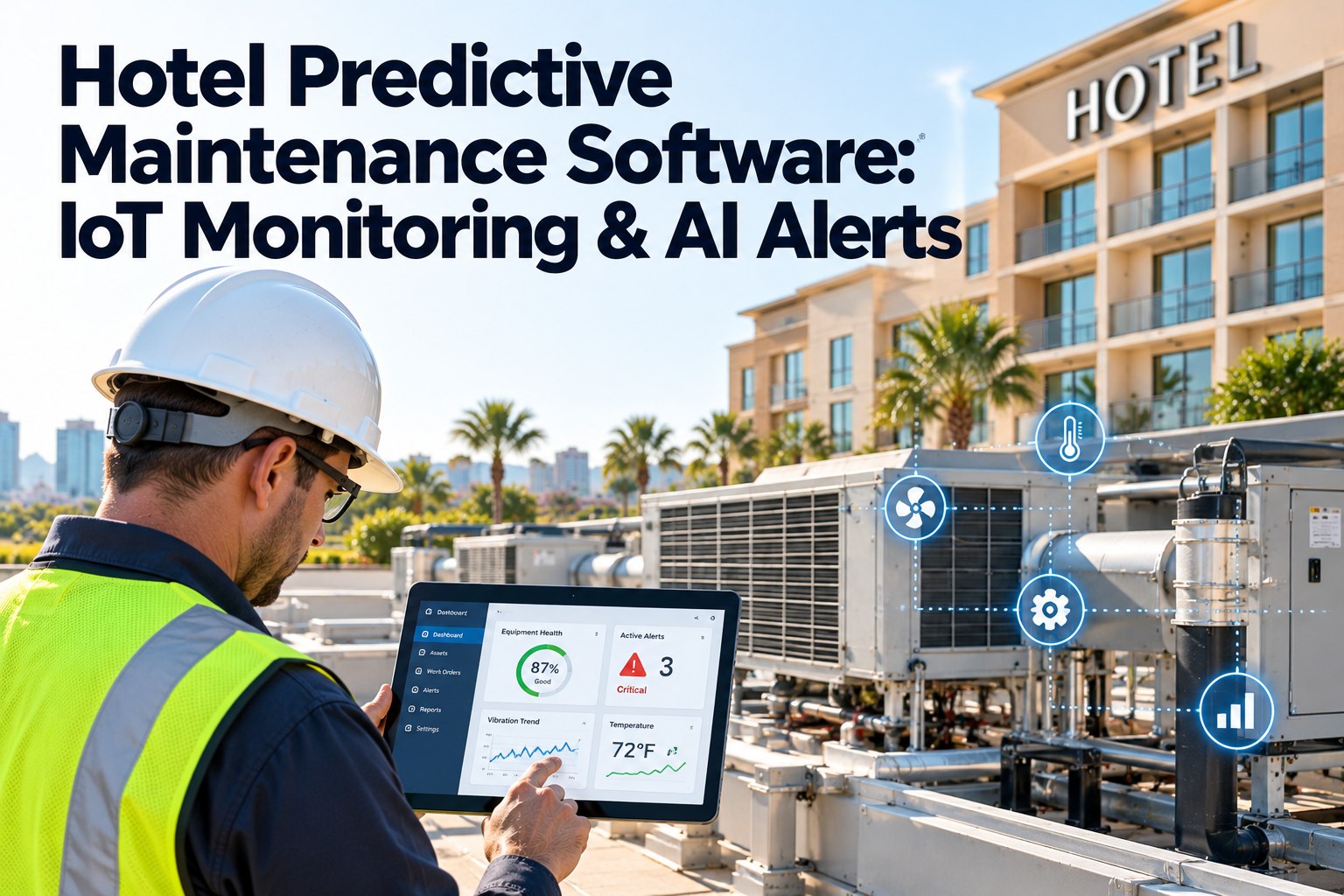
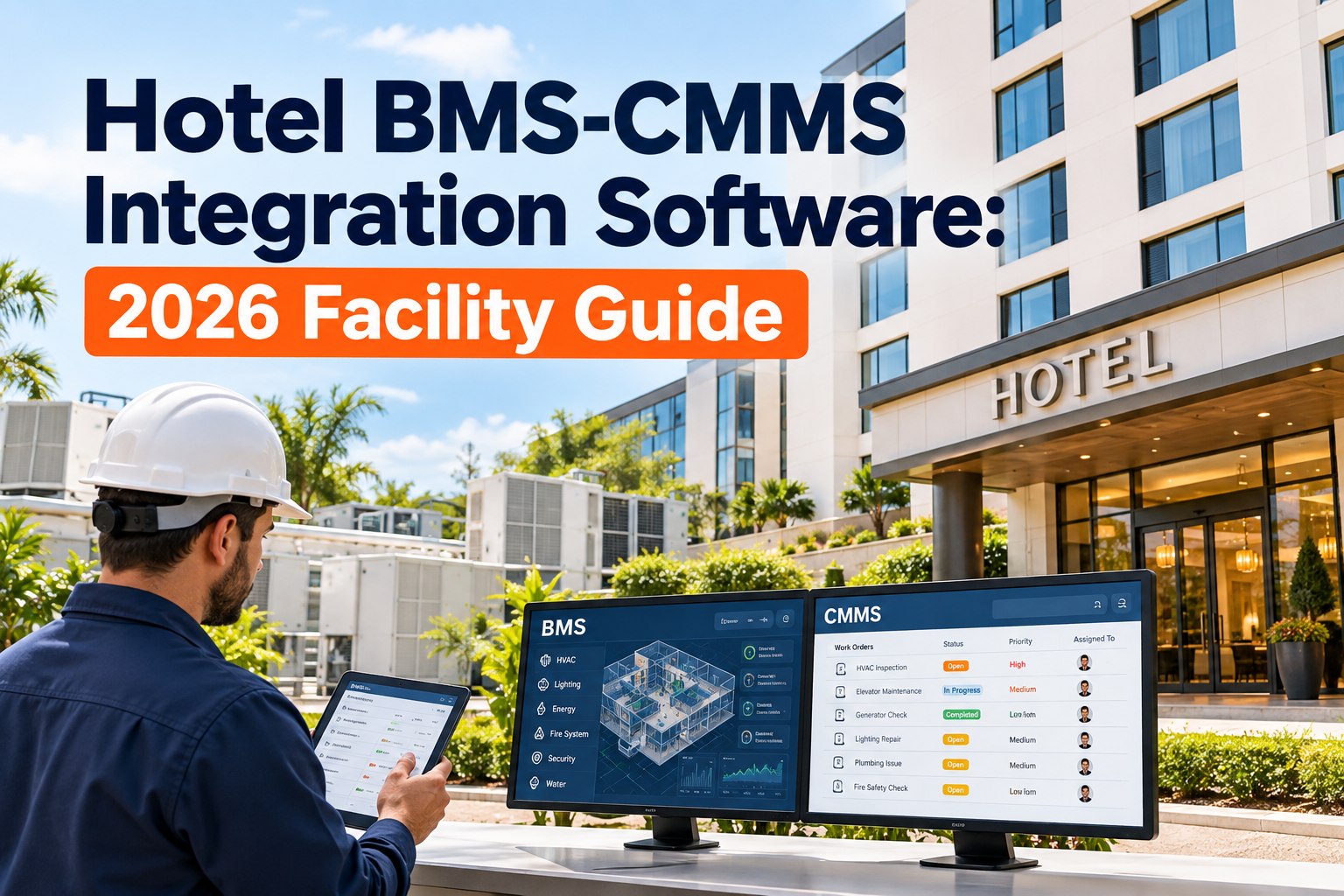
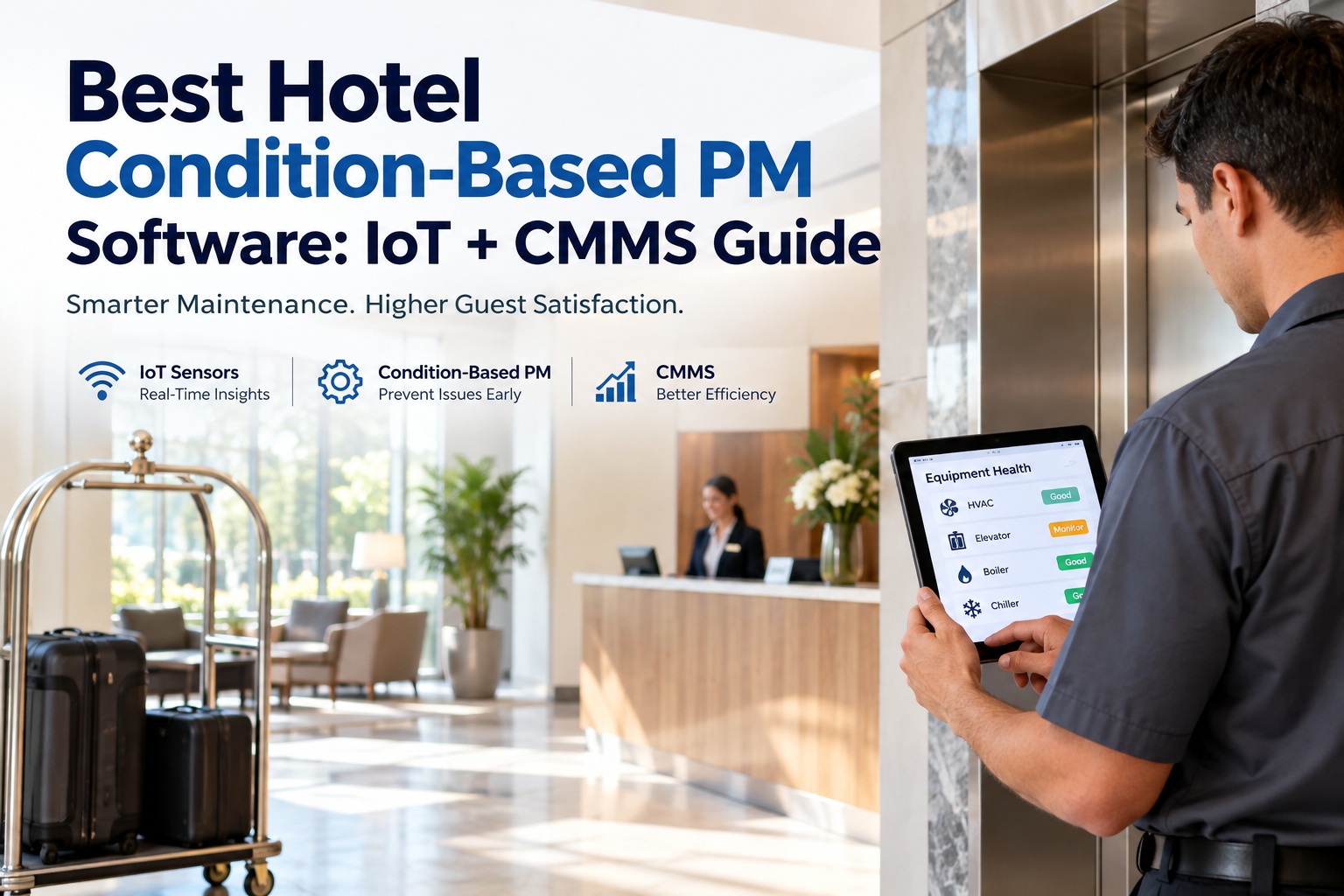
A chiller doesn't quit at 3pm — it drifts for two weeks first. A guest-room PTAC doesn't fail on the morning the room sells — its amp draw climbs for ten nights before. A pool pump doesn't seize at 7am Saturday — its vibration signature changes on Tuesday. Predictive maintenance is the practice of reading those early signals and acting before the asset goes down. OXMAINT AI is the AI-powered hotel maintenance management software that ingests IoT sensor streams, flags anomalies, raises priority-tagged work orders and keeps the AI-detected finding, the technician response and the asset history on one record.
HOTEL PREDICTIVE MAINTENANCE SOFTWARE · IoT MONITORING & AI ALERTS · 2026
Hotel Predictive Maintenance Software: IoT Monitoring & AI Alerts
IoT sensors on the hotel's critical assets, an AI model watching for anomaly signatures, and OXMAINT AI turning each flag into a priority-tagged work order — before the chiller trips, before the PTAC quits on a sold room, before the pool pump seizes on a Saturday.
4
alert tiers: watch, warn, act, stop
10-14
days of early signal before a typical hotel-asset breakdown
1
record binds the AI flag, the WO and the asset history
The Maintenance Maturity Ladder — Where Hotels Actually Sit
Predictive maintenance isn't a tool — it's the fourth rung on a ladder. Most hotel portfolios sit between rung 2 and rung 3; predictive is a step beyond the quarterly PM calendar. OXMAINT AI runs all four rungs on one platform so a property can climb without changing the software.
04
Predictive · AI anomaly on live signal
Vibration, amp draw, kWh creep, delta-T and pressure read live; AI flags the signature; WO raised 10-14 days early.
Target
03
Preventive · calendar PM
Scheduled inspections, filter swaps and lube on cadence. Catches the obvious; misses in-between failures.
Common
02
Reactive-with-tickets
Guest or staff report → ticket → fix. Faster than calling, still after the fact.
Majority
01
Reactive-by-call
Front desk calls engineering when a guest complains. No log, no record, no learning.
Legacy
Sensor × Hotel-Asset Coverage — What To Instrument First
A predictive program instruments the critical few first, not everything. Six sensor families cover almost every meaningful hotel-asset failure mode; the matrix below is what OXMAINT AI reads from day one.
Asset
Vibration
Amp draw
kWh
Temp ΔT
Pressure
Occupancy
Pool pump & heater
•
•
•
•
Kitchen exhaust / MUA
•
•
•
•
Walk-in refrigeration
•
•
•
•
The Sensor-to-Work-Order Pipeline
An IoT sensor on its own is a number; a predictive program is the pipeline that turns a number into a technician in front of the asset. OXMAINT AI runs stages 3-5 natively and reads from any sensor vendor at stage 1.
01
Sensor
Vibration, amp, temp, pressure sensor on the asset. BLE or wired. Reads every 1-60 seconds.
→
02
Gateway
On-prem gateway aggregates signals and ships them to cloud. One per property typically.
→
03
AI model
OXMAINT AI reads live signal, baselines the asset and flags anomaly signatures per asset type.
→
04
Alert tier
Flag assigned a tier: WATCH, WARN, ACT or STOP. Each tier maps to a WO SLA and a notification path.
→
05
Work order
WO auto-raised against the asset with signature, trend chart, suggested cause and closing photo requirement.
Four Alert Tiers — What Each One Earns
An anomaly flag with no tier is noise. OXMAINT AI assigns each flag to one of four tiers so the on-shift engineer knows exactly what action it earns.
WATCH
Trending outside baseline
Signal drift noted; no action yet; logged against the asset. No work order raised, no notification.
SLA: trend watch
WARN
Early anomaly signature
Known fault pattern beginning; WO raised at P3; engineer scheduled on next planned visit to the asset.
SLA: next planned visit
ACT
Strong anomaly, run OK for now
Fault signature clear; P2 WO raised; DOE and shift engineer notified; action within 48 hours.
SLA: 48 hours
STOP
Imminent failure signature
Asset at risk of hard failure; P1 WO raised; DOE, GM and on-call engineer paged; same-shift intervention.
SLA: same shift
Live Anomaly Board — Portfolio Snapshot
A DOE's morning view of a 12-property portfolio: every asset under IoT monitoring, every anomaly flag by tier, every WO already raised against it. OXMAINT AI renders it live.
LIVE ANOMALY BOARD · WEST REGION · 09:00
CHILLER-02 · BeachfrontVibration 7.1 mm/s, rising 11 d; bearing signatureSTOP · P1 WO 44902
POOL PUMP · Harbor SuitesAmp +18% over baseline, cavitation signatureSTOP · P1 WO 44907
AHU-04 · Airport InnΔT drift, filter loading risingACT · P2 WO 44911
PTAC 1407 · Downtown GrandAmp climbing 9 nights, coil freeze patternWARN · P3 WO 44914
BOILER-01 · BeachfrontAll signals within baselineOK
The Chiller Didn't Fail at 3pm. It Drifted for Two Weeks.
Predictive maintenance is the practice of reading the drift and acting while the asset still runs. OXMAINT AI turns the sensor into a flag, the flag into a tier, and the tier into a work order the on-shift engineer can act on. The asset never gets to 3pm.
Anomaly Signatures Hotels Should Know
The AI isn't magic — it is pattern recognition against a short list of known signatures. These six cover almost every hotel-asset failure a sensor can see 10-14 days early.
01
Bearing wear on chiller / fan
Vibration RMS rising past 4.5 mm/s with a bearing-fault harmonic. Classic 10-14 d early warning before seizure.
02
PTAC coil freeze pattern
Amp draw climbing night-on-night with ΔT narrowing. Filter loaded or refrigerant low; a sold room still cools.
03
Pool-pump cavitation
Vibration higher at odd harmonics, amp rising; strainer basket loaded or impeller cutting flow. Hours to days.
04
Boiler cycling creep
Short-cycle count rising, run-time per cycle falling. Thermostat drift or pressure control going.
05
Walk-in temp drift
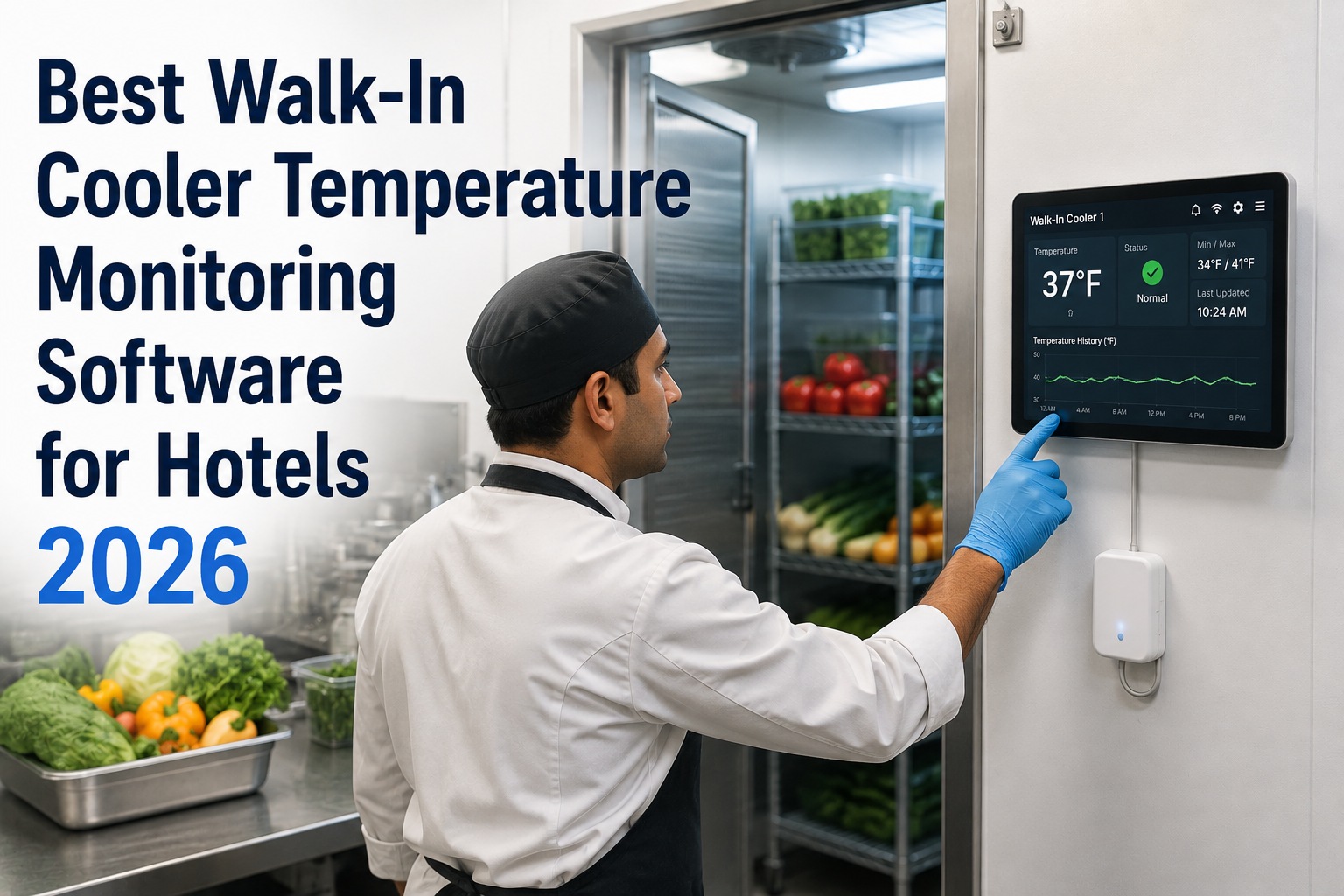
Internal temp holding higher by 1-2 °C, compressor run-time rising; door-gasket leak or capillary blockage.
06
Elevator door-cycle fatigue
Door-cycle time slowing, retry counter rising. Classic signature days ahead of a door-fault outage.
The ROI Of A Hotel Predictive Program — In One Shape
Predictive maintenance pays back on three lines: downtime avoided, overtime avoided and asset-life extension. OXMAINT AI exposes each number as a dashboard tile tied to the WO log.
82%
Unplanned downtime avoided
STOP-tier flags caught before hard failure. Chiller, pool pump, elevator — the three big guest-facing outages.
47%
Weekend / overtime cost cut
ACT-tier WOs scheduled in business hours instead of 7am Saturday. Overtime hours fall first; morale follows.
25%
Asset life extended
Catching bearing wear before seizure means a bearing swap, not a motor swap. The capital calendar relaxes.
How OXMAINT AI Runs The Predictive Program
The sensor ingest, AI anomaly engine, tier assignment, WO automation, trend chart and portfolio board all live natively in the OXMAINT AI hotel maintenance management software — open an account and connect your first asset in OXMAINT AI.
Sensor Ingest
OXMAINT AI reads BLE and wired sensors from major vendors — vendor-agnostic, hotel keeps the choice flexible.
AI Anomaly Engine
Baselines each asset over 2-4 weeks, then flags signature matches by asset type — chiller, PTAC, pump, boiler.
Tier Assignment
WATCH / WARN / ACT / STOP tier assigned per flag with its SLA and notification path pre-configured.
WO Automation
Tiered flag auto-raises a WO with the trend chart, likely cause and asset history already attached.
Trend Record
Every asset keeps a signal history — so when the next WO raises, the engineer sees the lead-up, not just the moment.
Portfolio Board
Multi-property live view: every monitored asset, every open flag, every WO raised — one DOE screen.
Frequently Asked Questions
Does predictive replace preventive maintenance?
No. Predictive sits on top — filters still swap on cadence, lube still runs on schedule. Predictive catches the in-between failures the calendar PM misses. OXMAINT AI runs both from one record.
How many sensors does a hotel really need?
Start with the critical few: chillers, pool pumps, boilers, kitchen exhaust, elevators. 20-30 sensors covers a mid-size property's downside. Guest-room PTAC monitoring is a second wave once the first wave proves out.
How long before the AI starts flagging usefully?
Two to four weeks to baseline each asset; after that the signature matches start firing. First real STOP-tier catches typically land in month 2 or month 3 — and that catch alone is often the payback for the year.
What if a sensor vendor stops being supported?
OXMAINT AI is vendor-agnostic at the ingest layer — the asset, baseline and signal history stay with OXMAINT AI even if the sensor hardware swaps out. The hotel keeps the data; the vendor is replaceable.
Read The Drift. Act Before The Guest Sees It.
Put the hotel's critical assets on IoT sensors and connect them to the OXMAINT AI hotel maintenance management software — AI anomaly detection, four-tier alerting, auto-raised work orders and a portfolio-wide live board. The chiller never reaches 3pm.