A slip-and-fall is the most common guest injury a hotel will face, and it is rarely the fall itself that decides the claim — it is what the hotel knew and how fast it acted. Premises liability turns on a single idea: notice. Did the hotel know about the hazard, or should it have, and did it respond in a reasonable time? A wet lobby floor is only a danger for the minutes between the spill and the cleanup, and everything that matters legally and operationally happens in that window. Prevention, then, is not a poster that says "caution" — it is a program of inspection, fast response and documented proof, run tightly enough that the window stays short and the record stays complete. This guide covers that program and the software behind it. The OXMAINT AI — the AI-powered maintenance management software — runs the inspections, the response and the record.
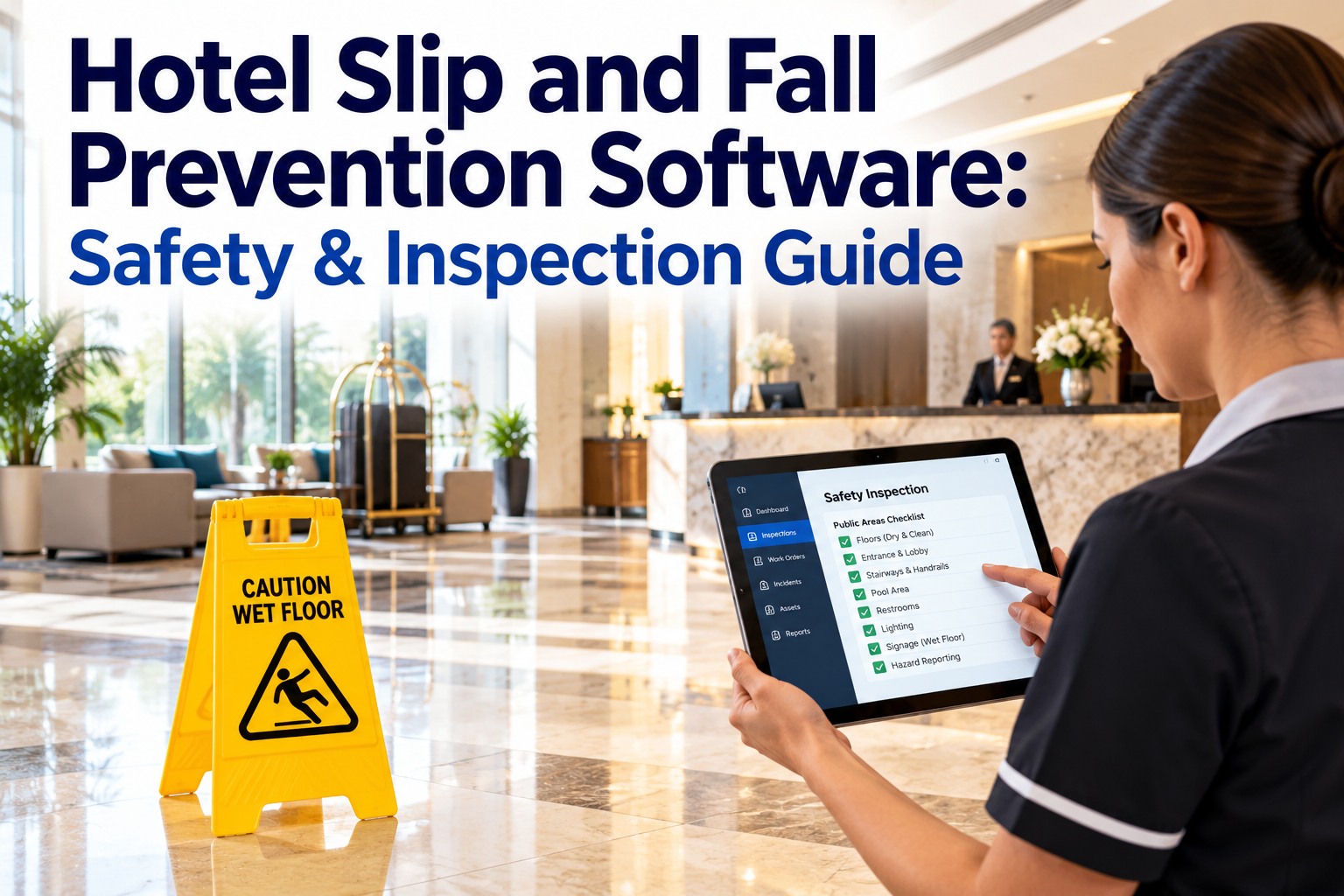
Hotel Slip and Fall Prevention Software: Safety & Inspection Guide
Liability lives in the gap between a hazard appearing and being cleared. This guide maps the legal reality of notice, where falls happen, the response that closes the window, and the documentation that defends the claim — with OXMAINT AI running all of it.
The Hazard Lives in a Window
A hazard is not dangerous forever — it is dangerous from the moment it appears until the moment it is cleared. Shrink that window and you cut both the chance of a fall and the exposure that comes with it. Every part of a prevention program exists to make one of these four stages faster; start free and close the window on every hazard in OXMAINT AI.
The longer a hazard sits unspotted or unaddressed, the worse both the safety risk and the legal position. Speed through this window is the entire game.
Why It Comes Down to Notice
In a premises-liability claim, the question is rarely whether the floor was wet — it is whether the hotel had notice of it and failed to act reasonably. Courts generally look at two kinds, and a prevention program is built to answer both; book a demo to see how the record answers the notice question in OXMAINT AI.
Both defences rest on the same thing: records. A regular inspection routine answers constructive notice; a fast, logged response answers actual notice. Without the documentation, even a hotel that did everything right cannot prove it.
Where Falls Happen in a Hotel
Risk is not spread evenly — a handful of zones produce most falls, each with its own hazard and its own control. A prevention program weights inspection frequency toward these; start free and set zone-based inspection routes in OXMAINT AI.
The Wet-Floor Response
When a hazard is found, the response is a short, fixed sequence — and the speed and the record of it are what matter. The order protects the guest first, then preserves the proof; book a demo to run this response from a phone in OXMAINT AI.
The Fall You Prevented Costs Nothing. The One You Cannot Document Costs the Most.
A defensible hotel is not one where nothing ever spills — it is one that can show a regular inspection routine and a fast, logged response every time. The OXMAINT AI maintenance management software schedules the public-area checks, captures hazard reports with a photo and timestamp, drives the response and keeps the complete record that answers the notice question.
If It Is Not Logged, It Did Not Happen
A hotel can run a diligent program and still lose a claim if the proof is on a paper log in a back office or in nobody's memory. Defensibility is built from a few records kept consistently; start free and keep all of them on one safety record in OXMAINT AI.
How OXMAINT AI Prevents Slips and Falls
The whole program is scheduled inspection, fast response and complete records — the core of what a maintenance platform does. Here is what the OXMAINT AI maintenance management software brings to guest safety; start free and run slip-and-fall prevention in OXMAINT AI.
Frequently Asked Questions
Keep the Window Short and the Record Complete.
Run hotel slip-and-fall prevention inside the OXMAINT AI maintenance management software — scheduled public-area inspections, mobile hazard reporting with photo and timestamp, rapid-response work orders, corrective-action tracking and defensible safety records — so hazards are cleared fast and every inspection and response is on the record if it is ever needed.