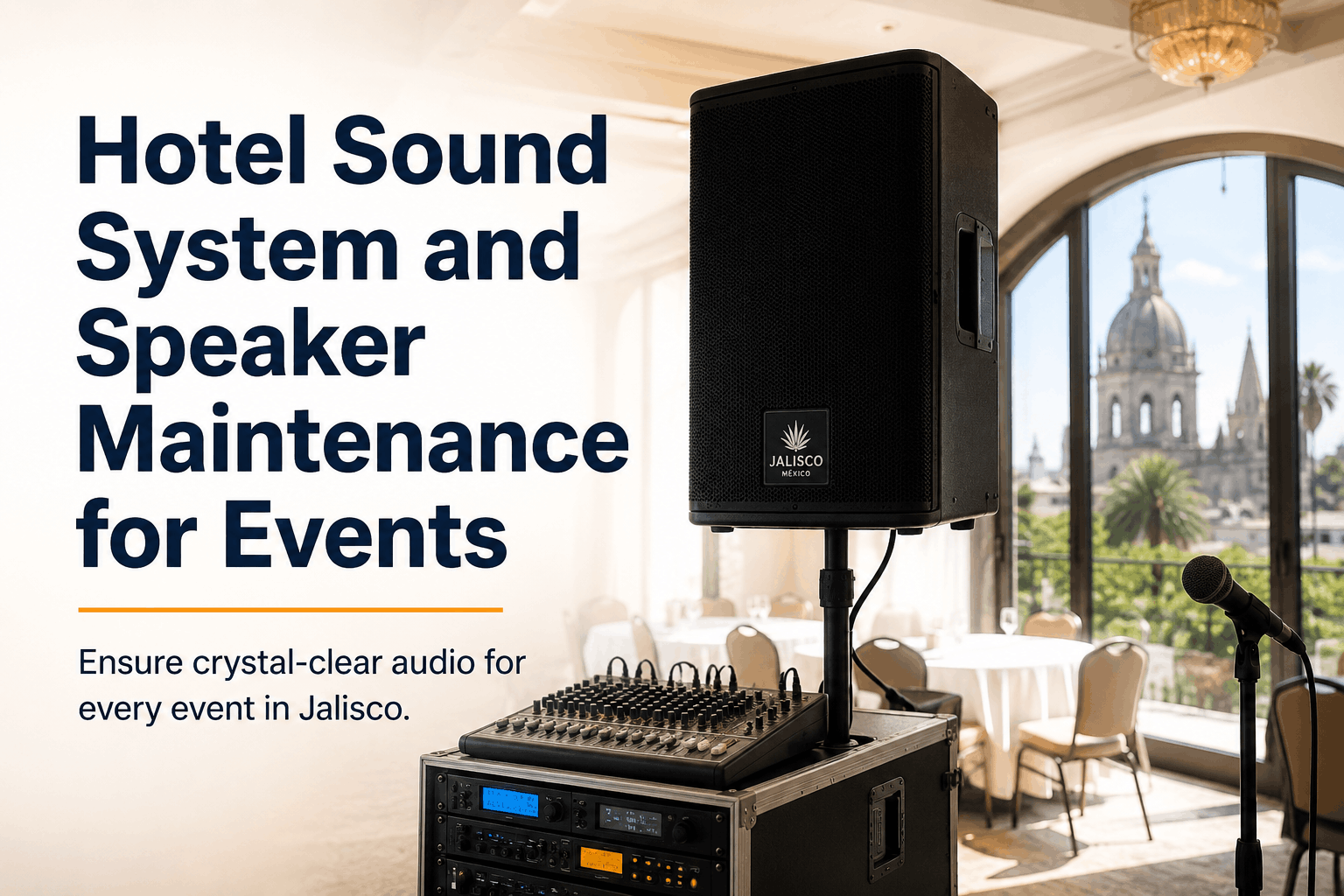
Hotel Sound System and Speaker Maintenance for Events
By Alex Jordan on June 18, 2026
A hotel ballroom sound system that fails during a keynote presentation is not just an AV failure — it is a reputation failure that can cost a hotel millions in lost event bookings. Corporate event planners remember the hotel where the microphone feedback ruined the CEO's presentation. Meeting planners avoid the property where the house audio dropped out during a product launch. The difference between a hotel that delivers flawless event audio and one that suffers constant complaints is a structured quarterly maintenance program that verifies every component — speakers, amplifiers, microphones, cables, and mixing consoles — before they are needed. Start a free trial with Oxmaint to schedule and track audio equipment inspections, or book a demo to see how hotel engineering and AV teams use Oxmaint's event space maintenance module to ensure reliable sound for every event.
HOTEL EVENTS · AUDIO VISUAL · SOUND SYSTEM · 2026
Hotel Sound System and Speaker Maintenance for Events: Quarterly Maintenance Checklist for Banquet and Conference Audio
Speaker cone inspection, amplifier testing, microphone function verification, cable integrity checks, audio quality testing, and event space AV reliability — the complete guide to maintaining hotel sound systems for successful events.
80%Of event planners would not rebook a hotel after a major AV failure
3 monthsMaximum interval between comprehensive audio system inspections
60%Of audio issues are preventable with quarterly maintenance
$50K–200KLost event revenue from a single major AV failure
Why Sound System Maintenance Matters — The Event Revenue Impact
Hotel sound systems are the backbone of successful events — corporate meetings, conferences, weddings, galas, and product launches all depend on reliable audio. A major audio failure during a keynote presentation can disrupt an event, damage the hotel's reputation with event planners, and cause lost future bookings worth $50,000–200,000 or more. Yet most hotels treat sound systems as "set and forget" — installing equipment and never inspecting it until a complaint arises. Start a free trial or book a demo to see how Oxmaint's event maintenance module tracks audio equipment inspections and prevents costly failures.
Event Revenue at Risk
Financial
A single major audio failure can lead to lost future bookings from event planners who will not risk using your venue. Average lost revenue: $50,000–200,000 per affected planner.
Equipment Degradation
Asset Protection
Sound system components degrade over time — speaker cones dry out, capacitors leak, connections corrode. Quarterly inspection catches degradation before failure.
Guest Experience
Reputation
Poor audio quality is the most common AV complaint in post-event surveys. Regular maintenance ensures clear, consistent sound for every event.
Quarterly Sound System Inspection — 7-Step Protocol
Quarterly sound system inspections should be completed for every event space — ballrooms, meeting rooms, boardrooms, and outdoor venues. The seven-step protocol below covers every component of a typical hotel sound system. Oxmaint's event maintenance module generates quarterly inspection work orders and tracks completion per room.
Step 1: Visual Inspection
Physical Condition Check
✓ Inspect all speakers for visible damage — cracked cones, dented grilles, loose mounting brackets
✓ Check amplifiers for dust accumulation, ventilation obstruction, and indicator light status
✓ Examine all cables and connectors for wear, fraying, or corrosion
✓ Document condition with photos in CMMS
Step 2: Speaker Cone & Driver Check
Audio Output Verification
✓ Play test tones through each speaker individually — verify clear sound without distortion
✓ Listen for rattles, buzzes, or crackling — signs of loose components or blown drivers
✓ Check both high-frequency (tweeter) and low-frequency (woofer) drivers
✓ If any speaker fails audio test, generate repair work order
Step 3: Amplifier Testing
Signal Chain Validation
✓ Verify all amplifiers power on and show normal operating indicators
✓ Test each amplifier channel with test signal — verify output to connected speakers
✓ Check for excessive heat, unusual noise, or intermittent signal dropout
✓ Record amplifier model and serial numbers for asset tracking
Step 4: Microphone Function
Input & Wireless Testing
✓ Test all microphones (wired and wireless) — verify clear audio without feedback
✓ Check wireless microphone batteries and transmitter battery life indicators
✓ Verify frequency coordination — no interference between wireless units
✓ Test microphone cables for intermittent connection — replace if faulty
Step 5: Cable & Connector Integrity
Signal Path Check
✓ Inspect all XLR, 1/4", RCA, and speaker cables for damage or wear
✓ Verify connectors are tight and free of corrosion
✓ Test cable continuity with cable tester if available
✓ Label all cables for easy identification during event setup
Step 6: Mixing Console & Signal Processor
Control Surface Check
✓ Verify all mixer channels function — test with microphone or test signal
✓ Check EQ, effects, and routing settings — reset to default if configured for specific use
✓ Inspect faders and knobs for smooth operation and correct resistance
✓ Verify power supply and backup battery (for digital consoles)
Step 7: System Listen Test
Full System Audio Verification
✓ Play reference audio through entire system — verify clarity, balance, and coverage
✓ Walk the room and listen for dead spots or uneven coverage
✓ Verify system handles peak levels without distortion
✓ Document system sound quality and any issues found
Common Sound System Failure Modes and Prevention
Understanding the most common sound system failure modes allows engineering and AV teams to prevent issues before they disrupt events. Oxmaint's maintenance history module tracks failure types and repair history for each audio component.
Blown Speaker Drivers
Common
Distorted audio, no output, rattling
Prevention: Test speakers at moderate levels quarterly. Avoid clipping amplifiers. Replace drivers when audio quality degrades.
Amplifier Failure
Critical
No output, intermittent signal, overheating
Prevention: Keep amplifiers ventilated. Check for dust quarterly. Verify power supply and circuit protection.
Cable & Connector Failure
Most Common
Intermittent signal, crackling, no audio
Prevention: Inspect cables quarterly. Replace worn cables immediately. Use high-quality connectors and strain relief.
Wireless Microphone Interference
Event Disruptor
Dropouts, noise, frequency conflict
Prevention: Verify frequency coordination quarterly. Check battery health. Keep backup wireless units on standby.
"
We had a major audio failure during a corporate keynote presentation — the house sound system dropped out completely for 12 seconds. The event planner was furious, and we lost a $150,000 annual conference booking. After that, we implemented Oxmaint's quarterly sound system inspection program. Every ballroom, meeting room, and boardroom now gets a full audio check every three months — speaker test, amplifier check, cable inspection, and wireless mic frequency verification. We haven't had a single audio failure in 18 months. The program cost us a few hours of AV time per quarter. The conference booking we retained was worth 50 times that.
Director of Event Operations — 450-room Convention Hotel, US Southeast
Pre-Event Sound Check Protocol — The Final Safety Net
In addition to quarterly maintenance, every event should include a pre-event sound check. The pre-event check verifies that the system is functioning correctly on the day of the event and catches any issues that may have developed since the quarterly inspection. Oxmaint's event check-in module includes a pre-event audio checklist that must be completed before every event.
Pre-Event Sound Check — 5 Essential Steps
Complete before every event — minimum 2 hours before guest arrival
1
Power On & System Startup
Turn on all equipment in correct sequence (mixer → processors → amplifiers). Verify all units power on without error indicators.
2
Test All Microphones
Test each microphone — wireless and wired. Verify clear audio, no feedback, and correct channel routing. Check wireless battery levels.
3
Full System Audio Test
Play reference audio through the system. Walk the room to verify coverage and sound quality. Check for distortion at expected volume levels.
4
Check Auxiliary Inputs
Test laptop audio input, Bluetooth, and any other auxiliary sources. Verify correct gain staging and no hum or interference.
5
Final Volume & Balance Check
Set final volume levels for the event. Verify all zones (if applicable) are balanced. Document pre-event check completion in CMMS.
Frequently Asked Questions — Hotel Sound System Maintenance
How often should hotel sound systems be inspected?
Quarterly inspections are the minimum standard for professionally managed hotels. High-volume event properties may require monthly inspections. Additionally, pre-event sound checks should be performed before every event. Oxmaint's event maintenance module tracks both quarterly inspections and pre-event checks. Start a free trial to configure inspection schedules.
What is the most common cause of sound system failure in hotels?
Cable and connector failure is the most common issue — loose connections, worn cables, and corroded connectors cause intermittent audio problems. The second most common is wireless microphone interference or dead batteries. Quarterly cable inspection and battery replacement schedules prevent most failures. Book a demo to see how Oxmaint tracks equipment inventory.
How do I know if a speaker needs replacement?
Signs of speaker failure include: distorted audio at normal volume levels, rattling or buzzing sounds, no output from one or more drivers, visible damage to the cone or surround, and inconsistent frequency response. If you hear crackling or the speaker sounds "muffled," investigate immediately. Quarterly audio testing catches these issues before they affect events. Start free to track speaker inventory and test results.
How does a CMMS help with sound system maintenance?
A CMMS like Oxmaint provides five sound system advantages: (1) Scheduling — quarterly inspection work orders generated automatically, (2) Asset tracking — each speaker, amplifier, and microphone tracked with history, (3) Documentation — photos and test results stored for warranty and insurance, (4) Pre-event checks — checklists ensure audio is verified before every event, (5) Repair tracking — failure patterns identified to guide equipment replacement decisions. Start free to see how Oxmaint manages AV equipment.
Every Event Deserves Flawless Audio — Automate Your Sound System Maintenance.
Oxmaint's event maintenance module tracks quarterly sound system inspections, pre-event sound checks, and equipment maintenance history — protecting your reputation and your event revenue. Free to start.