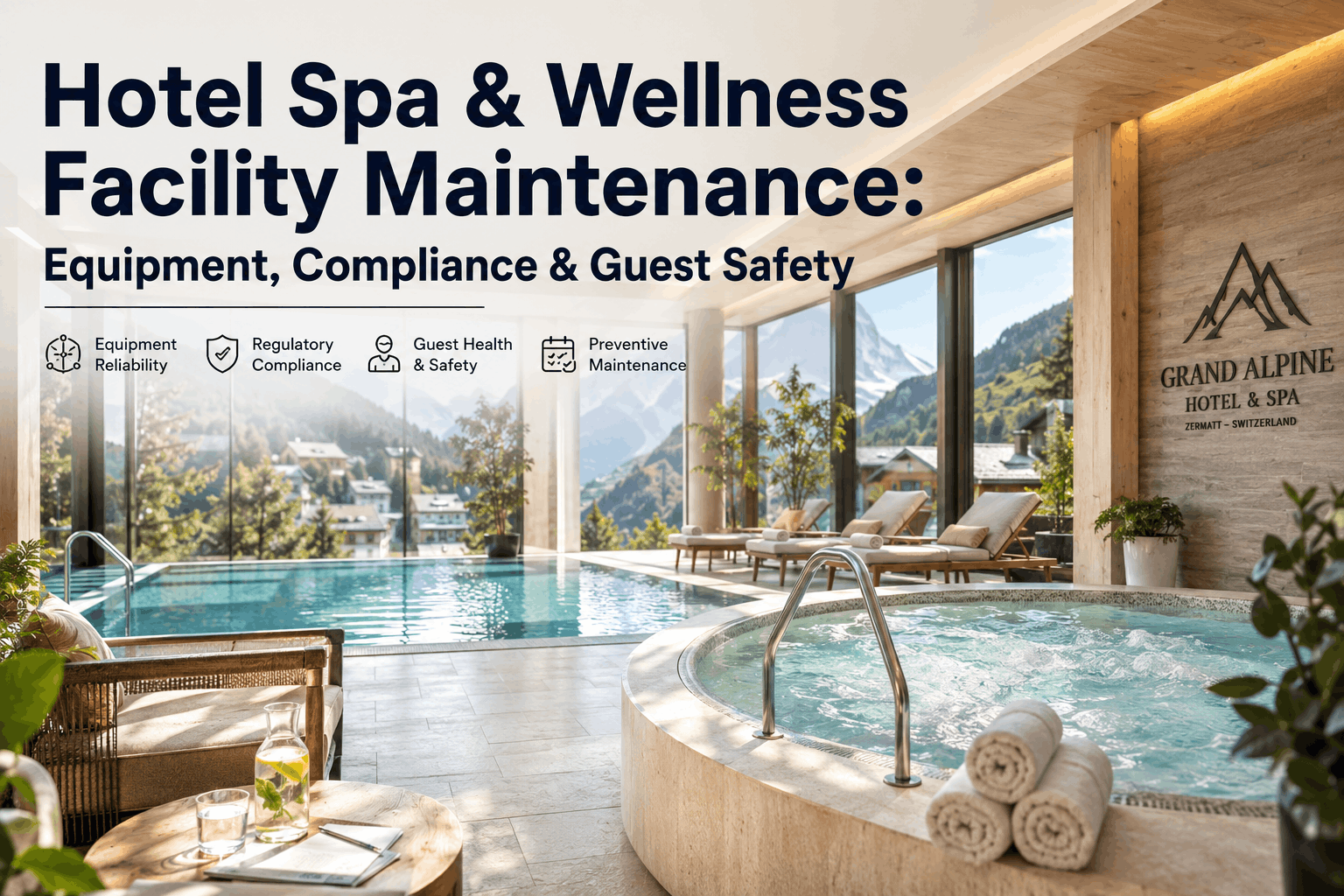
A hotel spa or sauna facility faces dual compliance challenges: health code water quality and safety requirements from state health departments, plus worker safety and occupational exposure standards from OSHA. Every day the spa operates without documented water chemistry tests, equipment inspections, or safety verifications is a day the facility is out of compliance — risking health code violations that trigger immediate closure, fines of $1,000–$5,000 per day, and guest-facing liability if a patron contracts a waterborne illness. This checklist gives your engineering and wellness teams a complete daily, weekly, and monthly inspection framework for water chemistry (pH, chlorine, alkalinity), temperature monitoring, circulation equipment, drain safety (VGB compliance), locker room sanitation, and regulatory documentation — all recorded in OxMaint's CMMS, creating the audit evidence that keeps health inspectors satisfied and guests safe.
Hotel Spa & Sauna Maintenance Checklist: Health Code & Safety Compliance
Daily water chemistry testing (pH, free chlorine, total chlorine, alkalinity), weekly circulation equipment inspection, biannual drain safety verification (VGB compliance), monthly filter backwash and cleaning, quarterly equipment servicing — structured for hotel wellness directors and engineers complying with state health codes and federal drain safety laws.
Why Daily Water Chemistry Testing Is Non-Negotiable
Combined chlorine above 0.2 ppm is a health code violation triggering mandatory closure. A missed daily test is not an operational oversight — it's a compliance failure. State health inspectors require 30–90 days of daily water chemistry logs showing pH, free chlorine, total chlorine, and alkalinity at specified test locations. OxMaint automates these daily tests, captures readings digitally, and flags out-of-range values with immediate supervisor notification and corrective action guidance.
Daily Water Chemistry and Sanitation
Water chemistry testing must occur minimum 3 times daily: morning before opening, midday, and evening before closing. Testing at mid-pool/spa surface (18 inches below surface for pools) and at dead zones (return fittings) ensures representative samples capture the condition throughout the facility. pH must be 7.2–7.6; free chlorine 2–4 ppm; combined chlorine <0.2 ppm; alkalinity 80–120 ppm.
Daily Chemistry Testing
3x daily: opening, midday, closing — pH, chlorine, alkalinity
Temperature Monitoring
Pool: 78–82°F; Spa: 100–104°F max per health code
Equipment Health
Circulation pump, filter, UV system operation verified daily
Circulation Equipment and Filter Maintenance
The circulation pump and filter are the heart of water sanitation — moving water through the filter removes particulates, and the filter prevents pathogens from spreading. Reduced circulation flow increases dead zones where bacteria accumulates. Filter backwash removes captured debris and restores flow.
Spa & Sauna Inspection Frequency Matrix
| Task | Frequency | Standard | Status |
|---|---|---|---|
| Water Chemistry Test | 3x Daily | State Health Code | ✓ |
| Temperature Check | Daily | State Health Code | ✓ |
| Pump Operation Check | Weekly | ASME/ANSI | ✓ |
| Filter Backwash | As needed | Manufacturer specs | ✓ |
| Drain Cover Inspection (VGB) | Biannual | Federal Law | ✓ |
| Equipment Service | Quarterly | Preventive Maintenance | ✓ |
Sauna/Steam Room Temperature and Humidity
Sauna and steam rooms must maintain temperature setpoints and have proper ventilation to prevent mold, legionella, and excessive humidity. Sauna thermostat must maintain 150–195°F; steam room maintains 110–115°F. Emergency cooling valves must be accessible and functional.
"We had a guest contract a skin infection that they attributed to our spa facility. Without documented daily water chemistry tests, we had no proof our water was compliant. OxMaint captures our daily pH, chlorine, and alkalinity tests automatically — every single test timestamped with operator signature. When the guest's attorney requested documentation, we had 90 days of continuous compliance logs proving our water was properly treated. The case was dismissed. Daily digital documentation isn't just compliance — it's liability protection."
Frequently Asked Questions
What is combined chlorine and why is it a health code violation when above 0.2 ppm?
Combined chlorine is chlorine that has already killed bacteria — it's the "used up" chlorine. High combined chlorine (>0.2 ppm) means free chlorine is low and pathogens can survive. It triggers mandatory closure. Calculate as total chlorine minus free chlorine at each daily test.
How often should water chemistry tests be conducted, and who should perform them?
Minimum 3x daily: before opening, midday, and evening before closing. Tests must be performed by trained staff certified in pool/spa operation — typically certified operators or lifeguards. Each test must be logged with date, time, readings, and operator signature.
What is the VGB drain entrapment law and how is it verified in spas?
The Virginia Graeme Baker Pool and Spa Safety Act (federal law) requires anti-entrapment drain covers. Covers must be tested biannually by physically lifting with handle and confirming they're secure. Missing or loose covers are federal law violations requiring immediate repair.
What happens if a health inspector finds a missed daily water chemistry test?
Missing test = compliance violation. Repeated violations trigger closure orders and fines of $1,000–$5,000 per day. Digital logging with OxMaint prevents missed tests — daily tests are automatically assigned and flagged if not completed before the day ends.
Why is pH control so important in spa water?
pH 7.2–7.6 is optimal — below 7.0 causes corrosion and skin irritation; above 7.8 causes scale formation and cloudy water. Both extremes reduce chlorine effectiveness and cause chemical imbalance. Daily pH adjustment keeps water comfortable and chemically stable.
What temperature is maximum safe for hotel spa operation?
State health codes limit hot tubs and spas to maximum 104°F. Temperature above 104°F increases risk of heat stress and scalding injury. Thermostats must be set to enforce this limit; temperature exceeding 105°F in operation closes the spa until corrected.
How long must water chemistry test logs be retained?
State health codes typically require 30–90 days of continuous daily water chemistry logs on-site for inspector review. OxMaint stores these indefinitely with searchable records — providing complete documentation for any inspection or liability investigation.
What causes filter pressure to rise, and when should backwash occur?
Rising filter pressure indicates particle accumulation in the filter media — dirt, algae, and dead bacteria are trapped. Backwash reverses water flow through the filter, flushing debris to waste. Backwash performed when pressure exceeds manufacturer limit (typically 20 psi above clean baseline).
Every Test Logged. Every Temperature Verified. Every Guest Safe.
OxMaint's hotel spa & sauna checklist automates 3x daily water chemistry testing, weekly equipment verification, monthly circulation checks, and quarterly service scheduling — giving your wellness team complete compliance documentation that satisfies health inspectors and protects guests from waterborne illness.