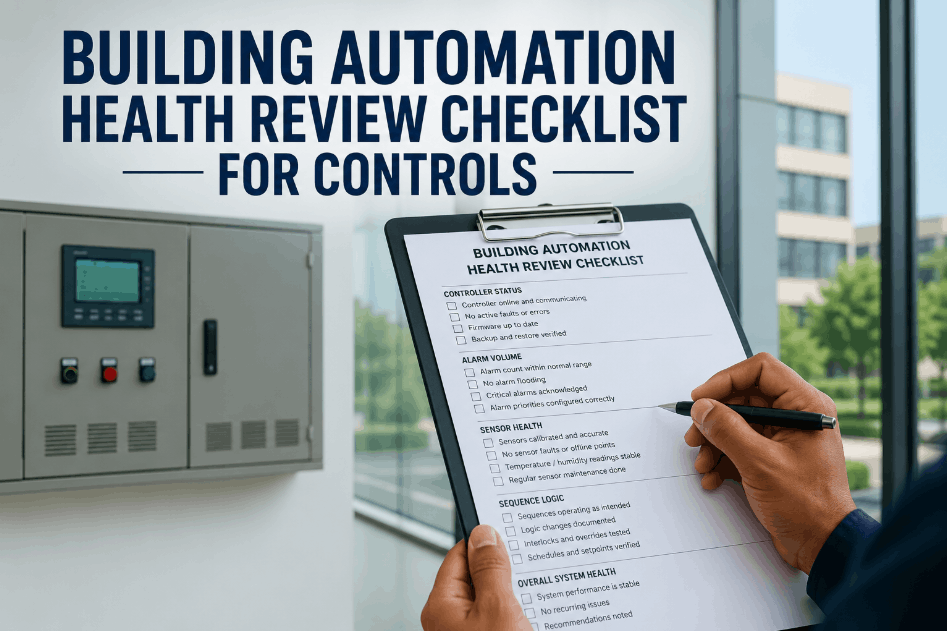
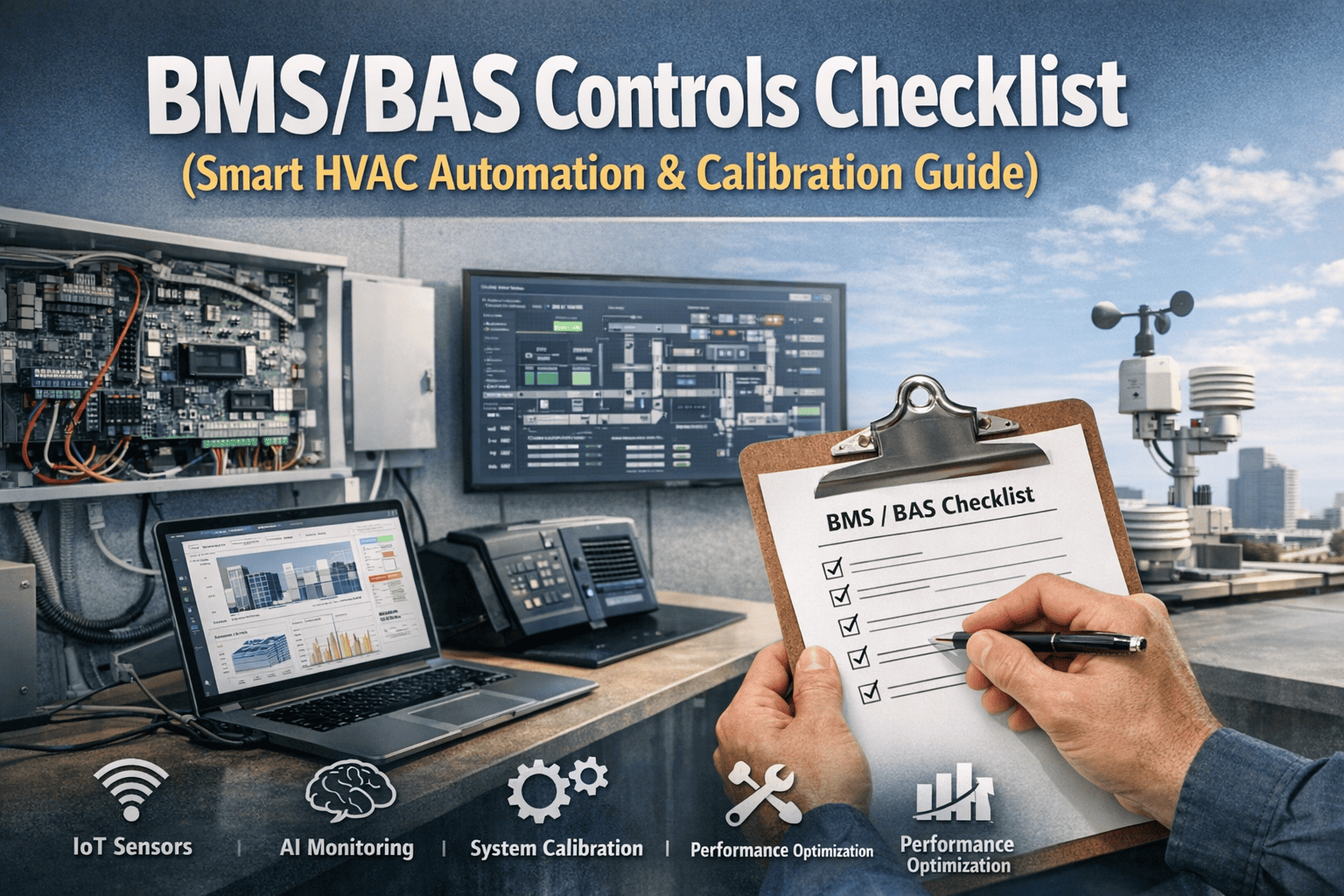
HVAC systems account for 40 to 50% of commercial building energy consumption — yet most of that energy is managed by systems that can't talk to each other, can't adapt to occupancy, and can't detect their own inefficiencies. Building Automation System integration changes all three. This guide covers how BAS-HVAC integration works, which protocols to use, what results to expect, and how to connect your existing infrastructure without replacing equipment. Sign up free to start building your IoT integration map, or book a demo to see OxMaint’s IoT Integration module configured for your building.
Connect Your HVAC to a Smarter System
OxMaint’s IoT Integration module bridges BACnet, Modbus, and BMS data into a single platform — turning sensor alerts into work orders automatically, with full asset history and compliance documentation built in.
What BAS-HVAC Integration Actually Does
A Building Automation System is a centralized platform that connects sensors, controllers, and actuators across your building’s mechanical systems. When integrated with HVAC, it replaces manual scheduling and reactive repairs with automated, data-driven control. Here’s what it controls — and how:
Smart Building: What BAS Controls
Rooftop / Plant
Chillers & Boilers
Cooling Towers
Solar / Generation
Upper Floors
AHUs & VAV Boxes
Zone Lighting
Access Control
CO⊂2; Sensors
Mid Floors
Fan Coil Units
Occupancy Sensors
Humidity Control
Fire & Life Safety
Plant Room / BMS
Central Controller
Energy Metering
Pumps & VFDs
Network Gateway
HVAC Systems
Lighting
Security / Safety
Core Controls
Energy
The 5 Core Functions BAS Delivers for HVAC
01
SCH
Occupancy-Based Scheduling
BAS monitors occupancy via sensors and calendar data, automatically adjusting HVAC setpoints for occupied and unoccupied periods. Baseline buildings that run HVAC round-the-clock achieve 10–30% energy savings from scheduling alone — without touching a thermostat.
Up to 30% energy savings
02
RST
Demand-Based Reset Strategies
Instead of running chilled water at a fixed setpoint regardless of load, BAS resets supply temperatures based on actual demand — warmer when loads are low, cooler when peak demand rises. This alone reduces chiller energy consumption by 8–20% in commercial buildings.
8–20% chiller energy reduction
03
DCV
Demand-Controlled Ventilation
CO⊂2; sensors feed occupancy data to BAS, which modulates outdoor air dampers to deliver exactly the ventilation required by actual occupancy — not the worst-case design maximum. This prevents energy waste while maintaining ASHRAE 62.1 indoor air quality compliance.
15–25% fan energy reduction
04
ALM
Real-Time Fault Detection & Alerting
BAS continuously monitors temperatures, pressures, flows, and actuator positions against expected values. Deviations trigger prioritised alerts — enabling operators to troubleshoot remotely and resolve issues before they escalate to failures or occupant complaints.
50% reduction in unplanned downtime
05
OPT
Optimal Start / Stop Optimisation
Rather than starting HVAC at a fixed time each morning, BAS calculates the latest possible start time to reach setpoint by occupancy based on outdoor temperature and building thermal mass — avoiding hours of wasted energy pre-conditioning an empty building.
5–15% morning energy reduction
BACnet vs Modbus: Choosing the Right Protocol
Protocol selection determines which devices can talk to your BAS and how much integration complexity you will face. BACnet and Modbus are the two most widely deployed protocols in commercial HVAC — and they serve different purposes.
BACnet
Building Automation & Control Networks
ASHRAE Standard — Est. 1995 | ISO Standard — 2003
~80% North American BAS market share
Variants
BACnet/IPEthernet-based, thousands of devices, high speed — modern commercial buildings
BACnet MS/TPRS485 serial, smaller systems, lower cost — field bus to controllers
BACnet/SCSecure Connect — encrypted, authenticated — cloud and IoT integration
Best for
Multi-vendor HVAC, lighting, security integration
Large commercial, healthcare, campus buildings
New builds and major renovations
Cloud and IoT platform connectivity
Go-to for smart building integration
VS
Modbus
Industrial Serial Communication Protocol
Modicon (Schneider Electric) — Est. 1979
Dominant in industrial / legacy equipment
Variants
Modbus RTUSerial RS485/232 — simple, low-cost, widely supported by legacy equipment
Modbus TCPEthernet-based — integrates Modbus devices onto IP networks
Best for
Legacy HVAC equipment and PLCs
Energy meters and sub-metering
Simple point-to-point device connections
Limited multi-vendor interoperability
Best for legacy & industrial equipment
Most real-world commercial buildings use both protocols — BACnet for the BAS backbone and Modbus for legacy equipment. Multi-protocol gateways bridge both into a single data stream. OxMaint connects to BACnet/IP, BACnet MS/TP, and Modbus RTU/TCP — alongside Tridium, Siemens, Johnson Controls, Honeywell, and Schneider systems via standard API connections.
BAS-HVAC Integration: Step-by-Step Roadmap
Discovery & Audit
Map what you already have
Inventory every HVAC asset — make, model, protocol, sensor coverage, and BMS data point availability. Most commercial buildings installed after 2000 already have sensors feeding a BAS or BMS — the gap is not hardware, it is connecting that data to a platform that can act on it. Identify protocol gaps where Modbus gateways or wireless IoT sensors will supplement existing coverage.
Output: Protocol map, sensor coverage gap list, integration priority ranking
Hardware & Connectivity
Connect sensors and gateways
Deploy IoT gateways that bridge existing BACnet, Modbus, and wireless sensor networks into a unified data stream. Wireless sensors (LoRaWAN, Zigbee, Wi-Fi 6) install on existing equipment in hours — no cabling, no electrical modification. A 10,000 m² commercial building with a central chiller plant and 8–12 AHUs typically requires $15,000–$45,000 in hardware, recovering in energy savings within 12–24 months.
Output: Unified sensor network, all assets visible on single platform
Control Logic & Setpoints
Configure schedules, resets, and lockouts
Programme occupancy-based scheduling, chilled water temperature resets, demand-controlled ventilation, and optimal start/stop sequences. Buildings that move from round-the-clock HVAC operation to scheduled control achieve 10–30% energy savings in the first month without hardware changes. Lockout strategies — preventing chillers from starting below ambient thresholds — further cut unnecessary runtime.
Output: Live scheduling, demand response active, first energy savings measurable
CMMS Integration
Connect BAS alerts to maintenance workflows
A BAS dashboard showing a fault alert is not maintenance management — it is information. The value is captured when BAS fault data automatically generates a CMMS work order assigned to the right technician with the right diagnostic context. OxMaint’s IoT Integration module closes this loop — BAS sensor thresholds trigger prioritised work orders with asset history, recommended action, and parts list pre-populated.
Output: Zero manual alert-to-work-order translation, full maintenance audit trail
Optimisation & Scale
Add AI, multi-site expansion, CapEx planning
Once the data foundation is established, AI analytics can identify fault patterns, predict equipment failure, and optimise control sequences beyond static rules. Multi-site portfolios can replicate the integration template across additional buildings with minimal per-site configuration. Remaining Useful Life forecasts feed a 5-year CapEx plan based on actual equipment condition — not age estimates.
Output: Predictive maintenance active, portfolio-wide visibility, CapEx forecast automated
OxMaint’s IoT Integration module connects your BAS, BACnet, and Modbus data to a full CMMS — turning sensor alerts into work orders automatically, with asset history, parts lists, and compliance documentation built in.
What BAS Integration Delivers: Outcomes by Category
Here’s what facilities consistently achieve after connecting HVAC to a building automation platform. Sign up free to start tracking your baseline metrics, or book a demo to see a portfolio-level ROI estimate.
Energy
5–29%
overall building energy reduction (DOE range based on starting conditions)
10–30%
from occupancy-based HVAC scheduling versus round-the-clock operation
8–20%
chiller energy savings from supply temperature reset strategies
Maintenance
50%
reduction in unplanned HVAC downtime through fault detection and alerting
25–40%
reduction in unnecessary PM visits — service when needed, not on calendar
Extended
equipment lifespan by preventing unnecessary wear through optimised control
Comfort & Compliance
Fewer
occupant comfort complaints from consistent temperature and humidity control
IAQ
ASHRAE 62.1 compliance enforced automatically via demand-controlled ventilation
ESG
measurable carbon reduction supporting Scope 2 targets and reporting obligations
How OxMaint Completes the BAS Integration Loop
IOT
Universal Protocol Connectivity
OxMaint connects to BACnet/IP, BACnet MS/TP, Modbus RTU, Modbus TCP, and all major BAS platforms — Tridium, Siemens, Johnson Controls, Honeywell, Schneider — via standard API. Wireless sensors supplement BAS coverage where gaps exist.
WO
Sensor-to-Work-Order in Seconds
When a BAS threshold triggers — differential pressure alarm, supply temp deviation, VFD fault — OxMaint automatically creates a prioritised work order with the asset record, diagnostic context, and recommended action pre-populated. No manual translation.
TRD
Energy Trend & Fault Analysis
BAS sensor data streams into OxMaint’s analytics layer — identifying energy anomalies attributable to specific maintenance faults. Fouled coils, refrigerant undercharge, and damper errors are flagged as maintenance issues, not just energy graphs.
PRT
Portfolio-Wide Visibility
All buildings, all HVAC assets, all BAS alerts — in a single dashboard. Completion rates, open work orders, energy anomalies, and CapEx forecast across your entire portfolio. No spreadsheets, no chasing site-by-site reports.
Your BAS Has the Data. OxMaint Turns It Into Action.
Connect your BACnet, Modbus, or BMS sensor data to OxMaint’s IoT Integration module — and stop treating BAS alerts as dashboard noise. Every threshold breach becomes a work order. Every work order builds the maintenance record your CapEx forecast depends on.
BACnet / Modbus Integration
Auto Work Orders
Energy Anomaly Detection
Portfolio Dashboard
CapEx Forecasting
Frequently Asked Questions: BAS HVAC Integration
QDo I need to replace existing HVAC equipment to integrate with a BAS?
No. Retrofit is the dominant model for commercial buildings. Most HVAC equipment installed after 2000 already communicates via BACnet or Modbus — the integration step is connecting that protocol to your BAS or IoT platform, not replacing the equipment. Where legacy equipment uses proprietary protocols, multi-protocol gateways translate between standards without hardware replacement. Wireless IoT sensors can be added to any equipment to supplement coverage for parameters the existing system does not monitor.
QWhat is the difference between a BAS and a BMS?
The terms are used interchangeably in most facility management contexts. Technically, a Building Management System (BMS) is the broader platform — encompassing HVAC, lighting, security, and energy management. A Building Automation System (BAS) refers specifically to the automation and control layer. In practice, both terms describe the centralised platform that integrates and controls building mechanical systems through sensors, controllers, and actuators connected via communication protocols such as BACnet and Modbus.
QWhat is BACnet and why is it the preferred protocol for HVAC integration?
BACnet (Building Automation and Control Networks) is an open communication standard developed by ASHRAE in 1995 and adopted as an ISO standard in 2003. It holds approximately 80% of the North American building automation market because it was designed specifically for building systems — enabling interoperability between HVAC, lighting, security, and energy devices from different manufacturers without custom integration work. Unlike Modbus, BACnet uses an object-oriented data model that carries meaningful information about each device and point, making it far easier to integrate across large, complex multi-vendor environments.
QHow much energy can BAS-HVAC integration realistically save?
The U.S. Department of Energy documents that full utilisation of advanced BAS could cut commercial energy use by approximately 29%. Real-world implementations consistently deliver 5–15% overall building energy savings as a baseline, with older or poorly automated buildings achieving 18–30%. The highest savings typically come from three strategies: occupancy-based scheduling (10–30%), chilled water temperature resets (8–20%), and demand-controlled ventilation (15–25%). Buildings with round-the-clock HVAC operation that add scheduling alone often see payback within 12–18 months from energy savings alone, before maintenance savings are factored in.
QHow does OxMaint integrate with existing BAS and BMS platforms?
OxMaint integrates with all major BAS platforms — Tridium Niagara, Siemens Desigo, Johnson Controls Metasys, Honeywell, and Schneider EcoStruxure — via BACnet/IP, Modbus TCP, and REST API connections. For buildings without a centralised BAS, OxMaint connects directly to HVAC equipment via BACnet MS/TP or Modbus RTU through IoT gateway hardware. Wireless sensor networks (LoRaWAN, Zigbee) supplement coverage for equipment that existing BAS does not monitor.
Book a demo to see which protocols in your existing building infrastructure can connect to OxMaint immediately.