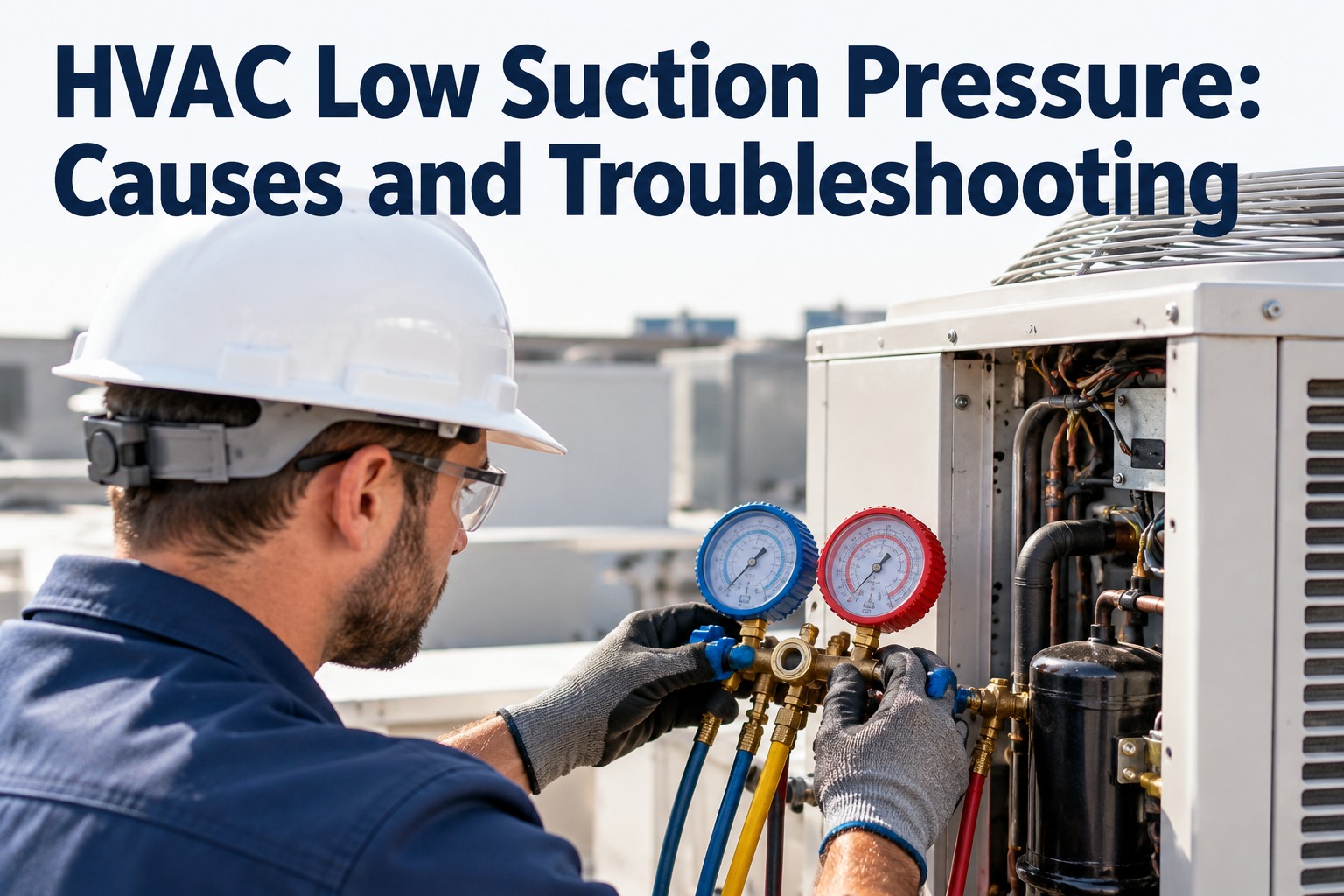
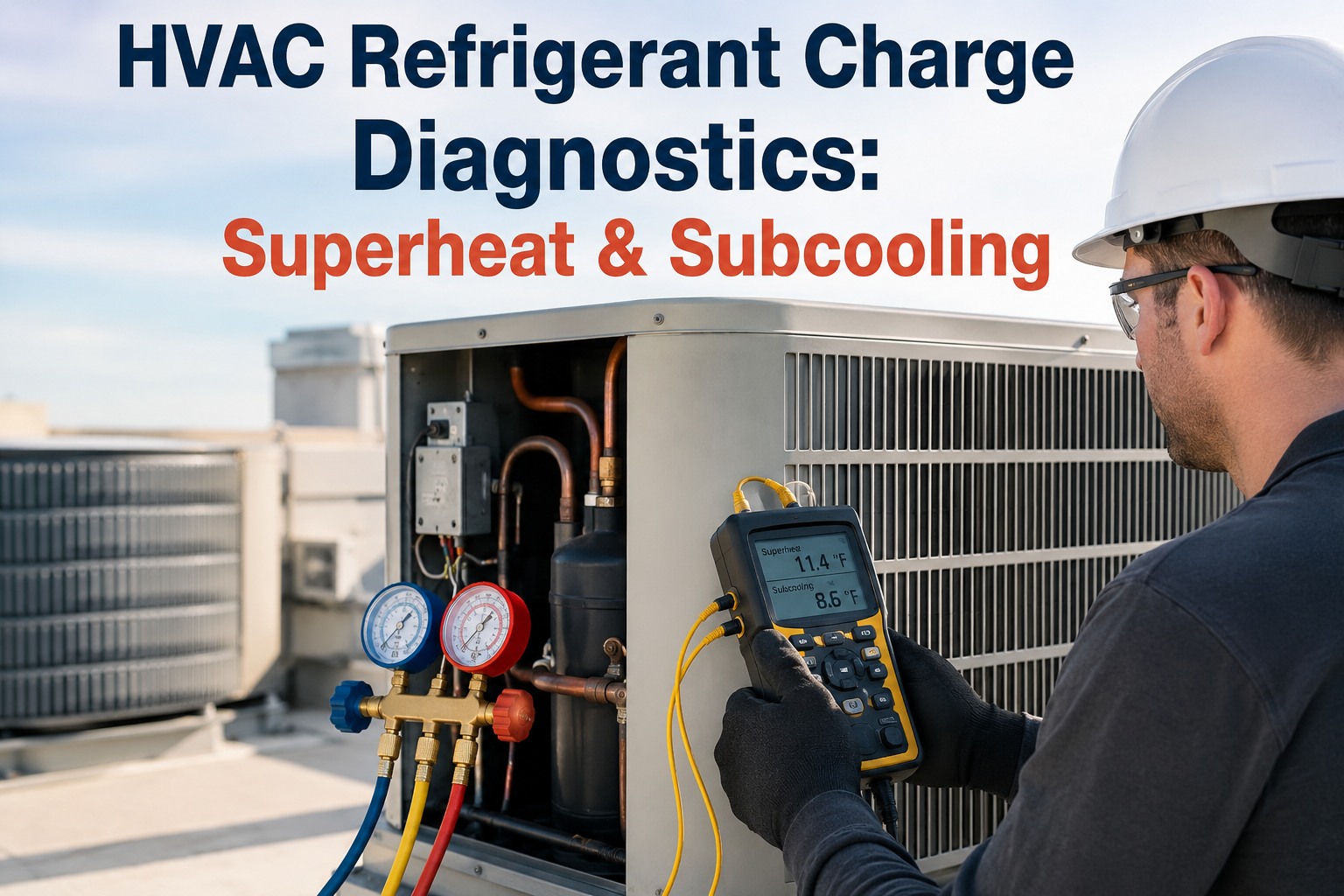
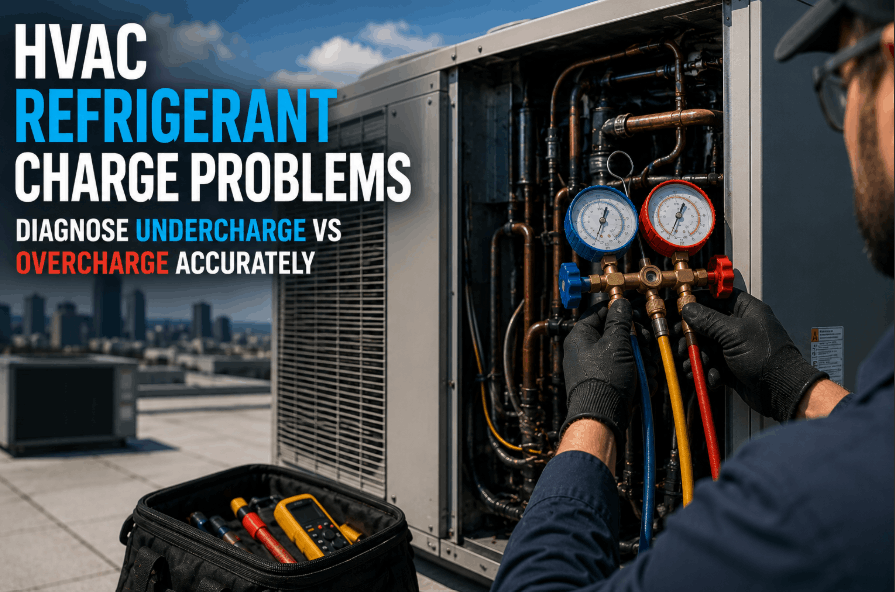
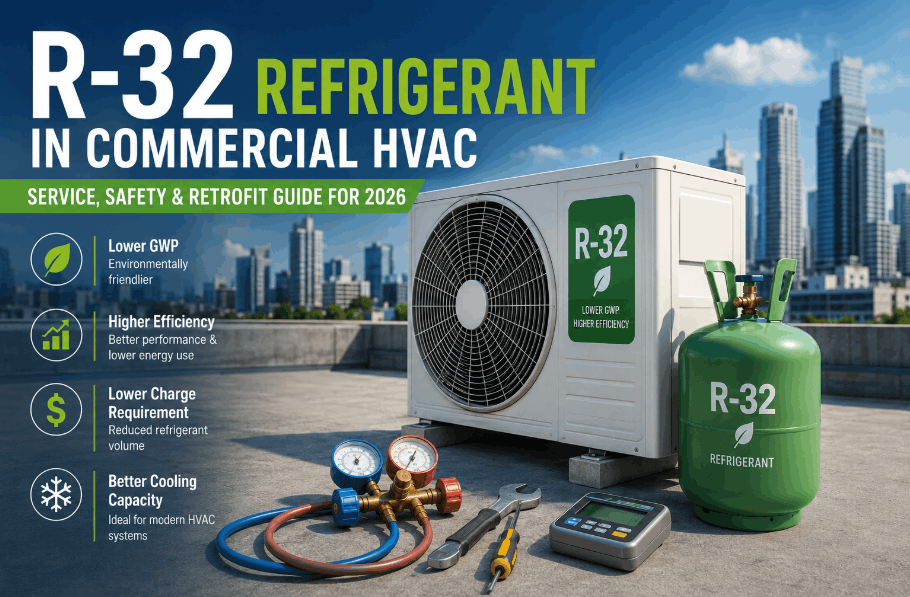
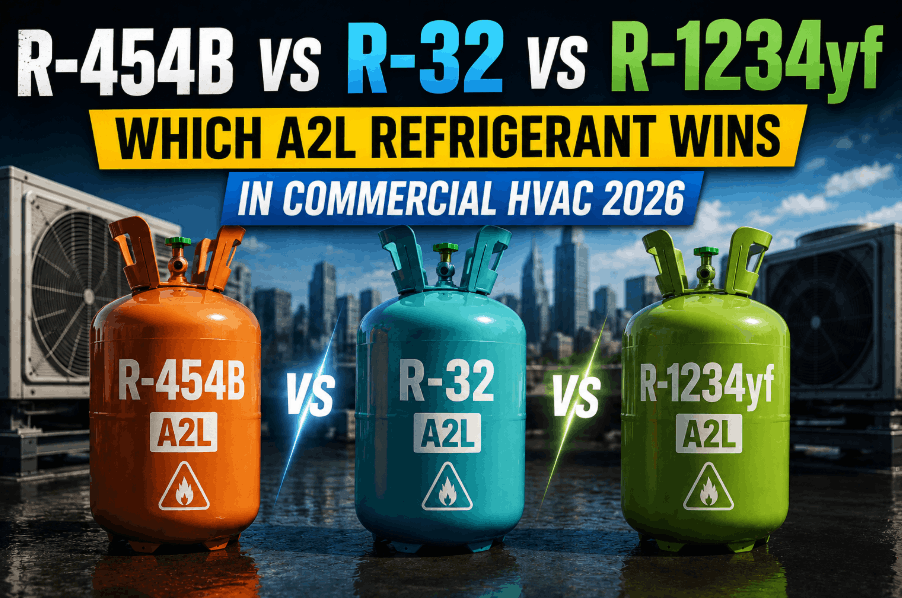
Reading a refrigerant pressure chart accurately is one of the most critical diagnostic skills an HVAC technician can master. With the industry transitioning from legacy HFC refrigerants like R-410A toward lower-GWP A2L alternatives like R-32 and R-454B, understanding pressure-temperature (PT) relationships, subcooling, and superheat across refrigerant classes is no longer optional — it's foundational to safe, efficient system diagnosis. Whether you're servicing a commercial rooftop unit or a residential mini-split, the right data paired with a Book a Demo of OxMaint's HVAC maintenance platform can eliminate guesswork from every refrigerant call. This guide breaks down how to read PT charts for HFC, HFO, and A2L systems, interpret subcooling and superheat values, and use digital diagnostics to make confident charging decisions. Sign Up Free to connect your HVAC inspection workflows with OxMaint's asset management platform and reduce diagnostic errors across your service fleet.
Digitize Your HVAC Refrigerant Diagnostics
OxMaint helps HVAC teams schedule refrigerant inspections, track system readings over time, and automate compliance documentation — from R-410A legacy systems to next-gen A2L units.
What Is a Refrigerant Pressure Chart and Why It Matters
A refrigerant pressure-temperature (PT) chart maps the saturation pressure of a refrigerant at a given temperature. When refrigerant is in a saturated state — part liquid, part vapor — pressure and temperature follow a predictable relationship. Reading this chart tells a technician exactly what suction and discharge pressures to expect at a given outdoor ambient or evaporator temperature, making it the primary tool for detecting undercharge, overcharge, restrictions, and system inefficiency. Book a Demo to see how OxMaint's HVAC work order system stores equipment-specific refrigerant data for faster field diagnostics.
The temperature at which a refrigerant changes phase at a given pressure. Reading saturation temp from suction pressure gives you evaporator coil temperature — essential for superheat calculation.
Measured at the compressor suction port. Cross-referenced on the PT chart to find evaporator saturation temperature. Low suction = low charge or restricted metering device.
Measured at the compressor discharge. Cross-referenced to find condenser saturation temperature. High discharge = high ambient, dirty condenser, or overcharge.
Temperature of suction gas above its saturation point. Calculated as: Actual Suction Line Temp − Saturated Suction Temp (from PT chart). Target: 10–18°F for most residential systems.
Temperature drop of liquid refrigerant below its condensing saturation point. Calculated as: Saturated Discharge Temp (from PT chart) − Actual Liquid Line Temp. Target: 10–15°F for TXV systems.
For blended refrigerants like R-454B and R-407C, the bubble and dew point differ. Always use the correct column (bubble for liquid, dew for vapor) to avoid diagnostic errors.
PT Chart Reference: Common HFC, A2L, and HFO Refrigerants
The table below covers the most commonly serviced refrigerant types. Pressures are listed at selected saturation temperatures for quick field reference. Always use the OEM-supplied PT chart for your specific system — especially for blended A2L refrigerants with significant temperature glide. Sign Up Free on OxMaint to attach PT charts and spec sheets directly to equipment records for instant technician access in the field.
| Sat. Temp (°F) | R-410A (PSIG) | R-32 / A2L (PSIG) | R-454B / A2L (PSIG) | R-22 HFC (PSIG) | R-1234yf HFO (PSIG) | R-407C Blend (PSIG) |
|---|---|---|---|---|---|---|
| 20°F | 100.5 | 106.3 | 87.4 | 37.0 | 30.2 | 41.5 / 50.2 |
| 30°F | 118.0 | 125.0 | 103.2 | 44.0 | 36.5 | 49.0 / 59.5 |
| 40°F | 138.3 | 146.5 | 120.9 | 51.7 | 43.6 | 57.8 / 70.3 |
| 50°F | 161.0 | 170.9 | 141.2 | 60.5 | 51.7 | 68.0 / 82.8 |
| 70°F | 213.3 | 226.8 | 188.0 | 82.1 | 70.8 | 93.2 / 113.0 |
| 100°F | 324.0 | 344.7 | 286.4 | 131.1 | 113.7 | 149.8 / 178.5 |
| 120°F | 410.9 | 437.2 | 365.3 | 168.3 | 146.3 | 192.5 / 228.1 |
| 130°F | 459.4 | 489.0 | 410.0 | 189.7 | 165.2 | 217.0 / 257.0 |
How to Calculate Superheat Step by Step
Connect your manifold gauge set or digital gauge to the low-side (suction) service port. Record the pressure reading in PSIG. Example: 138 PSIG on an R-410A system.
Look up 138 PSIG on the R-410A PT chart. The corresponding saturation temperature is approximately 40°F. This is your evaporator coil saturation temperature.
Clamp a temperature probe to the suction line as close to the evaporator outlet as possible (insulated from air). Example: 55°F actual suction line temperature.
Superheat = Actual Suction Temp − Saturation Temp. Example: 55°F − 40°F = 15°F superheat. Acceptable range for most fixed-orifice systems: 10–18°F. TXV systems: 8–12°F.
High superheat (>20°F): low charge, restricted metering device, or low airflow. Low superheat (<5°F): overcharge or flooding. Sign Up Free to log diagnostic readings in OxMaint work orders for longitudinal trend analysis.
How to Calculate Subcooling Step by Step
Connect to the high-side service port. Record the discharge pressure. Example: 410 PSIG on R-410A.
Look up 410 PSIG on the R-410A PT chart. Condensing saturation temperature ≈ 120°F.
Clamp a temperature probe to the liquid line at the condenser outlet (before the metering device). Example: 108°F actual liquid line temperature.
Subcooling = Condensing Sat. Temp − Actual Liquid Line Temp. Example: 120°F − 108°F = 12°F subcooling. Acceptable range for TXV systems: 10–15°F.
High subcooling (>18°F) with high discharge: overcharge. Low subcooling (<5°F): undercharge or refrigerant flashing in liquid line. Book a Demo to see how OxMaint tracks refrigerant readings per asset over time.
A2L Refrigerant Pressure Charts: R-32 and R-454B Key Differences
A2L refrigerants like R-32 and R-454B are now appearing in new equipment across North America as manufacturers respond to EPA AIM Act phase-down requirements. Understanding how their pressure-temperature behavior differs from R-410A is essential for safe, accurate diagnosis. Book a Demo to explore how OxMaint HVAC inspection templates are built to accommodate next-generation refrigerant types.
- Slightly higher operating pressures than R-410A at equivalent temperatures
- Single-component refrigerant — no temperature glide, one PT column
- GWP of 675 (vs 2088 for R-410A) — widely adopted in Asia-Pacific and European markets
- Higher discharge temperatures — critical for compressor protection monitoring
- Mildly flammable (A2L) — requires A2L-rated tools, manifolds, and recovery equipment
- Compatible with POE oils used in R-410A systems in many applications
- Primary drop-in replacement candidate for R-410A in North American new equipment
- Zeotropic blend — has temperature glide, requires bubble/dew PT columns
- GWP of 466 — meets EPA AIM Act low-GWP thresholds for new equipment
- Operating pressures approximately 10–12% lower than R-410A at same temps
- A2L safety classification — same handling precautions as R-32
- Requires lubricant verification — not all POE oils compatible with R-454B systems
Refrigerant Diagnostic Decision Chart: What Your Readings Mean
Likely Cause: Low refrigerant charge, restricted TXV/orifice, or reduced evaporator airflow. Action: Check charge level via subcooling (TXV) or target superheat chart (fixed orifice). Inspect air filter and blower.
Likely Cause: Overcharge or TXV stuck open — risk of liquid slugging the compressor. Action: Recover refrigerant to correct charge. Verify TXV operation and sensing bulb placement.
Likely Cause: Overcharge or non-condensables in system. Action: Recover excess refrigerant. If non-condensables suspected, isolate refrigerant and re-evacuate before recharging.
Likely Cause: Low charge or refrigerant flashing before metering device. Action: Check for liquid line restrictions, filter-drier condition, and add refrigerant to correct subcooling target.
Likely Cause: Dirty condenser coil, recirculated condenser air, high ambient temperature, or non-condensables. Action: Clean condenser, check for discharge air restrictions, verify refrigerant purity.
Likely Cause: Compressor valve failure or severe undercharge. Action: Perform compressor efficiency test (pump-down). If valves leaking, compressor replacement required.
Using OxMaint to Manage HVAC Refrigerant Inspections and Work Orders
Field diagnostic accuracy is only half the equation. The other half is ensuring that refrigerant readings are documented, trended, and acted on through structured work orders — not lost in technician notebooks or disconnected spreadsheets. OxMaint's HVAC maintenance platform connects refrigerant diagnostic data directly to equipment records, PM schedules, and compliance documentation. Sign Up Free to digitize your refrigerant inspection workflow and start trending system health across your entire HVAC asset fleet.
Manage Every HVAC Asset From One Platform
OxMaint gives HVAC service teams automated PM scheduling, refrigerant inspection tracking, and EPA-compliant documentation — with a free tier to start without budget risk.
Frequently Asked Questions
What refrigerant pressure chart should I use for R-454B systems?
Use an R-454B-specific PT chart that includes both bubble point and dew point columns, since R-454B is a zeotropic blend with temperature glide. Never substitute the R-410A chart — pressures are 10–12% lower at equivalent temperatures.
What is the correct superheat target for R-32 A2L systems?
Most R-32 mini-split systems target 8–12°F suction superheat and 10–15°F subcooling. Always verify with the OEM equipment documentation, as targets vary by system design and metering device type.
Can I use my R-410A manifold gauges on A2L refrigerants?
No. A2L refrigerants require listed A2L-rated manifold sets and recovery equipment. Standard R-410A gauges are not certified for A2L use and may present safety risks. Replace equipment before servicing A2L systems.
What causes high subcooling on an R-410A system?
High subcooling (above 18°F) combined with elevated discharge pressure typically indicates overcharge or the presence of non-condensable gases. Recover excess charge and verify system purity before recharging.
How does OxMaint help with refrigerant compliance documentation?
OxMaint auto-generates EPA Section 608-aligned service records, refrigerant leak check logs, and disposal documentation from completed work orders — eliminating manual paperwork and audit risk for HVAC contractors.
What is temperature glide and which refrigerants have it?
Temperature glide is the difference between a refrigerant blend's bubble point (liquid saturation) and dew point (vapor saturation) at the same pressure. Blends like R-454B, R-407C, and R-410A exhibit glide — single-component refrigerants like R-32 and R-22 do not.
Can I store refrigerant pressure readings in OxMaint?
Yes. OxMaint work orders support custom numeric fields for suction pressure, discharge pressure, superheat, subcooling, and ambient temperature — all linked to the specific equipment record for trending over time.
Ready to Bring Structure to Your HVAC Service Operations?
Join HVAC contractors and facility teams using OxMaint to schedule refrigerant inspections, log diagnostic readings, and maintain EPA compliance across every unit in their fleet.