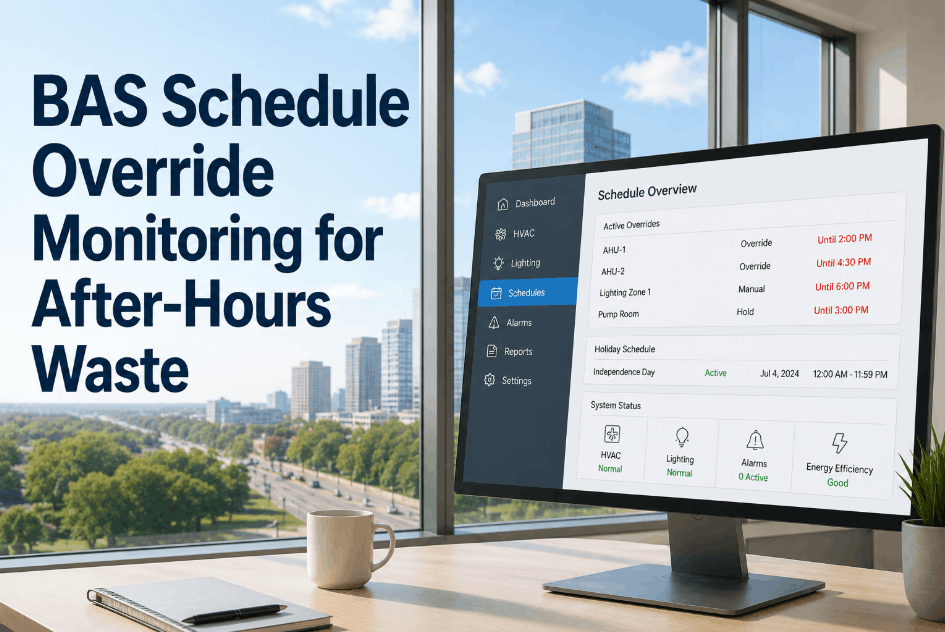
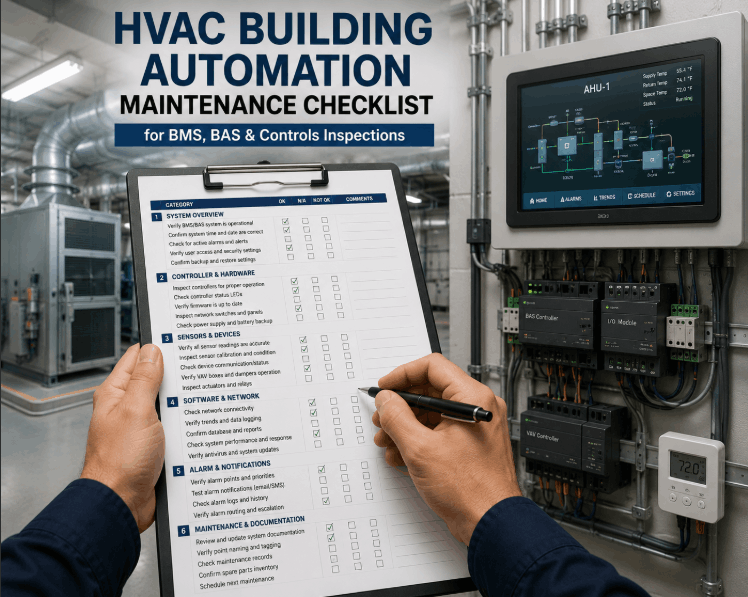
Building automation systems are only as effective as the schedules running inside them. When manual overrides accumulate — weekend holds left active, holiday settings missed, occupied modes running through the night — HVAC and lighting equipment keeps cycling long after the last person has left the building. Sign Up Free to start logging override events, tracking schedule deviation patterns, and linking after-hours runtime to measurable energy waste in OxMaint. Facility teams that operate without structured override monitoring routinely absorb energy costs that BAS data already contains the evidence to eliminate. Book a Demo to see how OxMaint structures BAS schedule monitoring for operations teams managing multiple buildings and variable occupancy patterns across the week.
Facility Operations · Energy Management · 2026
BAS Schedule Override Monitoring for After-Hours Waste
Monitor schedule overrides, holiday settings, and manual holds so BAS systems do not keep equipment running after people leave the building.
35%Of after-hours energy waste traces to uncleared manual schedule overrides
−22%Runtime reduction when override events are tracked and cleared on schedule
4×Faster override resolution with automated alert routing vs. manual BAS review
96%Schedule compliance when override documentation is required at incident close
Where BAS Override Waste Accumulates Undetected
Schedule overrides create energy exposure in operating windows that routine BAS audits never surface. The six override patterns below represent the most common gaps in building operations — and the points where OxMaint's fault detection and work order workflows give facility teams a structured view before after-hours runtime becomes a recurring cost. Sign Up Free to configure OxMaint's schedule monitoring for your building portfolio and begin mapping override frequency against actual occupancy data.
01
Weekend Manual Holds
Risk Window: Friday PM – Monday AM
High RiskOverrides entered Friday for late events or cleaning crews are routinely left active through the full weekend — running HVAC and lighting through 48 hours of unoccupied building time without any system alert.
02
Holiday Schedule Missed Updates
Risk Window: Public holidays
Transition RiskBAS holiday calendars are often outdated by one to two years — defaulting to occupied schedules on days when buildings are empty and no override correction is applied before equipment starts.
03
Occupied Mode Left Active Post-Event
Risk Window: After-hours events
Schedule GapTemporary event overrides — entered for conferences, building inspections, or late shifts — are frequently not cleared at event end, extending full HVAC operation several hours past occupancy.
04
Tenant Override Accumulation
Risk Window: Multi-tenant floors
Largest VariableIndividual tenant override requests accumulate across floors without a centralized log — creating runtime exposure that no single operator has full visibility into during normal shift reviews.
05
Setback Schedule Configuration Drift
Risk Window: Seasonal transitions
Control GapSetback temperature bands get widened during commissioning and narrowed again after complaints — with intermediate settings left unchecked between seasonal schedule reviews, causing unnecessary runtime at mild outdoor conditions.
06
Override Documentation Gap
Risk Window: Post-override
Prevention InputMost overrides are entered verbally or through BAS console without any CMMS record — making repeat override patterns invisible and preventing any structured follow-up on schedules that require permanent correction.
Override Management — Without vs. With OxMaint
The gap between informal override handling and a CMMS-supported schedule monitoring workflow is measurable in equipment runtime, energy cost, and schedule compliance. The comparison below shows what changes when OxMaint structures override tracking, escalation, and root cause documentation for building operations teams. Book a Demo to walk through your building's current BAS override management structure and identify the gaps OxMaint can close.
BAS Override Monitoring Maturity — Where Does Your Building Score?
Schedule override management in building operations ranges from entirely reactive — facilities teams discover waste after monthly utility bills arrive — to fully structured monitoring with automated alerts, override logs, and mandatory schedule correction workflows. The maturity framework below maps where your building's current control structure sits. Book a Demo to assess your BAS override management maturity with an OxMaint solutions engineer.
BAS Schedule Override Monitoring Maturity
Score 5 = CMMS-integrated automated override monitoring · Score 1 = fully reactive response
5
Full Override Map · CMMS-Integrated · Automated Alerts
All override events logged, time-limited, and linked to maintenance records. Automated alerts route uncleared overrides to responsible operators before after-hours runtime begins.
Profile: Override exposure is measured, documented, and converted into permanent schedule corrections. Energy performance is a systematic outcome, not an individual operator's awareness.
4
Structured Monitoring · Partial Override Capture
Major override events logged and major schedule gaps documented. Minor tenant overrides and weekend holds tracked informally. Holiday calendar reviewed but not linked to work orders.
Action: Enforce override logging for all events including minor tenant requests. Minor event documentation is where repeat waste prevention is built.
3
BAS Console Review · Manual Escalation
BAS data reviewed manually by building engineers. Override events escalated verbally. Schedule gaps not transferred to maintenance records or permanent correction workflows.
Gap: Manual escalation and informal override tracking are the primary energy waste gaps at this level. Automated alert routing and structured logging are highest-impact next steps.
2
Informal Response · Operator Observation Only
Override conditions identified through after-hours walkthrough or next-day BAS check. No structured logging. Same override patterns repeat without any schedule correction trigger.
Risk: Override waste accumulates invisibly. Energy cost is discovered in utility bills — not before.
1
No Override Monitoring Structure
BAS schedules not audited between annual commissioning reviews. Override events undocumented. Equipment runtime driven by accumulated manual holds, not occupancy reality.
Risk: Every uncleared override adds untracked energy waste. Schedule compliance is a function of individual operator memory, not maintenance design.
Stop After-Hours Waste Before the Next Override Goes Uncleared.
OxMaint structures BAS override tracking, schedule compliance alerts, and root cause documentation for facility teams managing variable occupancy across multiple buildings.
How OxMaint Structures BAS Schedule Override Management
OxMaint connects override event logging, automated alert routing, and maintenance planning into a single workflow for building operations teams. Every schedule deviation becomes a documented record — with root cause captured, permanent corrections triggered, and repeat override patterns surfaced before they become recurring energy waste. Sign Up Free to configure OxMaint's schedule monitoring for your building portfolio. Book a Demo to see how OxMaint adapts to your BAS platform, building layout, and operator shift structure.
Override Alert Routing
Threshold → Alert in 60s
Automated override detection and operator notification
Active overrides exceeding configured time limits trigger automatic work order creation and mobile notification — replacing the end-of-day BAS console check that misses after-hours waste entirely.
Holiday Calendar Sync
Advance Review Task
Upcoming holidays flagged against current BAS schedule
OxMaint flags upcoming public holidays against live BAS schedule settings — creating a review task for the responsible engineer before the holiday date, not after the energy waste has occurred.
Tenant Override Log
Per Request · Per Zone
All tenant override requests tracked as structured work orders
OxMaint logs each tenant override request with zone, duration, requestor, and energy impact — building a centralized record that reveals which floors and tenants drive the most after-hours runtime.
Schedule Correction Workflow
Every Repeat Pattern
Repeat override patterns trigger permanent correction tasks
CMMS closure requires root cause entry on every override work order. Recurring patterns automatically generate a schedule correction task — ensuring temporary overrides that become permanent are caught and fixed.
"
We were running full HVAC on three floors every Friday night because a cleaning crew override from six months earlier was never cleared. Nobody caught it because nobody was checking the BAS override log systematically. After setting up OxMaint's override alert workflow, we identified eleven active overrides in the first week — four of which had been running for over 30 days. Clearing those alone cut our weekend energy spend by almost 18 percent in the first month.
Facilities Manager — Commercial Office Tower, 28 floors, Singapore
Frequently Asked Questions
What causes after-hours energy waste in BAS-controlled buildings?
The most common causes are manual overrides entered for specific events that are never cleared, outdated holiday schedules defaulting to occupied mode, and tenant requests that accumulate without a centralized log. Each category runs equipment unnecessarily during unoccupied hours.
How does OxMaint detect active BAS schedule overrides?
OxMaint receives override status from BAS integrations or operator-logged events. Threshold-based alerts trigger automatic work orders when overrides exceed configured time limits — ensuring every event is documented and escalated before after-hours runtime accumulates.
Can OxMaint track override history per building zone or tenant?
Yes. OxMaint logs override events per asset, zone, and requestor — allowing teams to identify which areas drive the most schedule deviation and adjust permanent BAS schedules accordingly.
Why is root cause documentation important for override management?
Without root cause capture, repeated override events look like isolated incidents rather than a pattern requiring a permanent schedule fix. OxMaint enforces root cause entry at incident close, converting each event into a correction trigger.
Does OxMaint integrate with existing BAS platforms?
OxMaint supports integration with leading BAS platforms and accepts manual override inputs from technicians — deployable in buildings at any automation level without requiring hardware changes.
Turn Every Override Event Into a Structured Schedule Record — Not a Missed Energy Cost.
OxMaint tracks BAS schedule overrides, automates fault escalation, and enforces root cause documentation — eliminating after-hours waste at the operating windows that matter most.