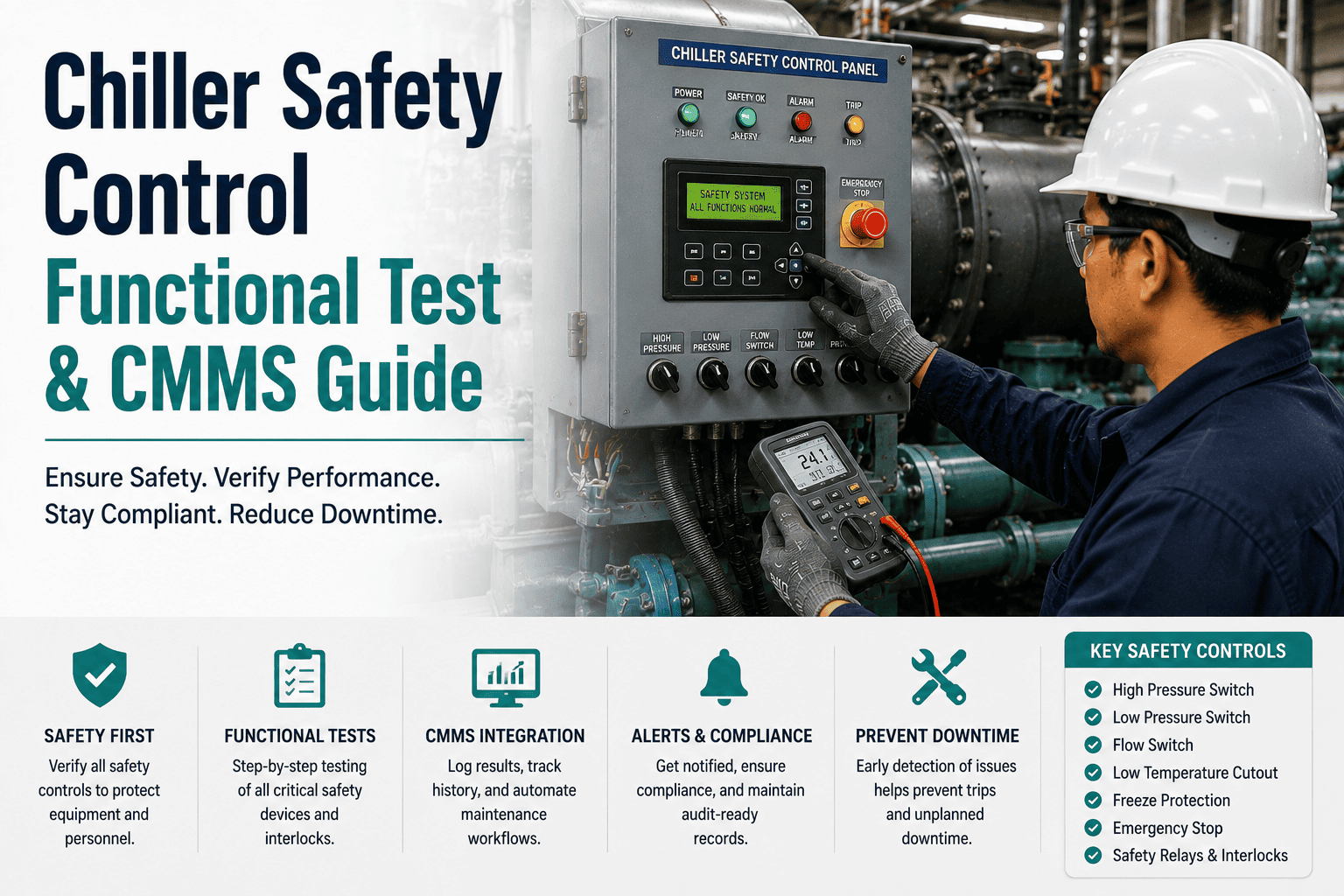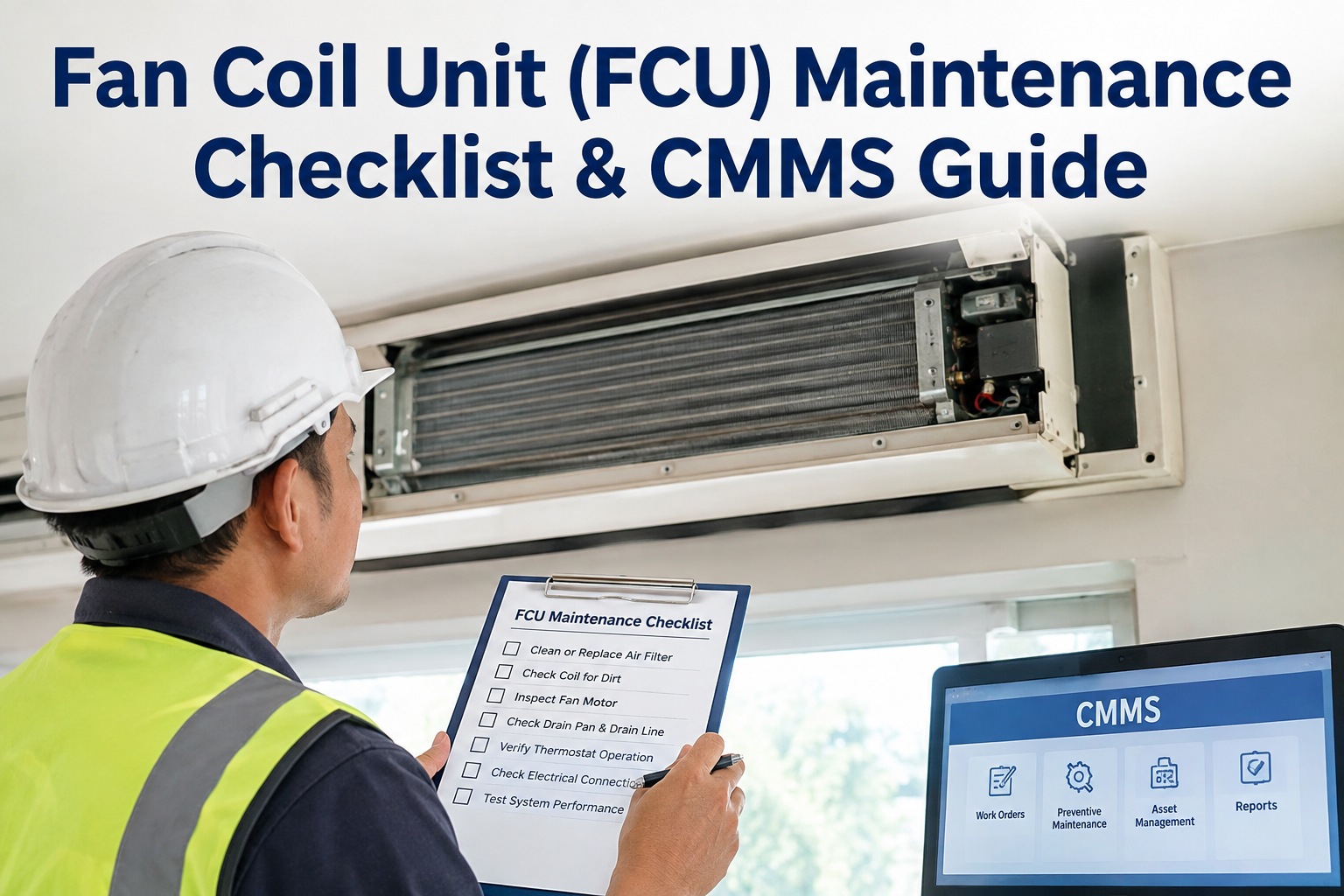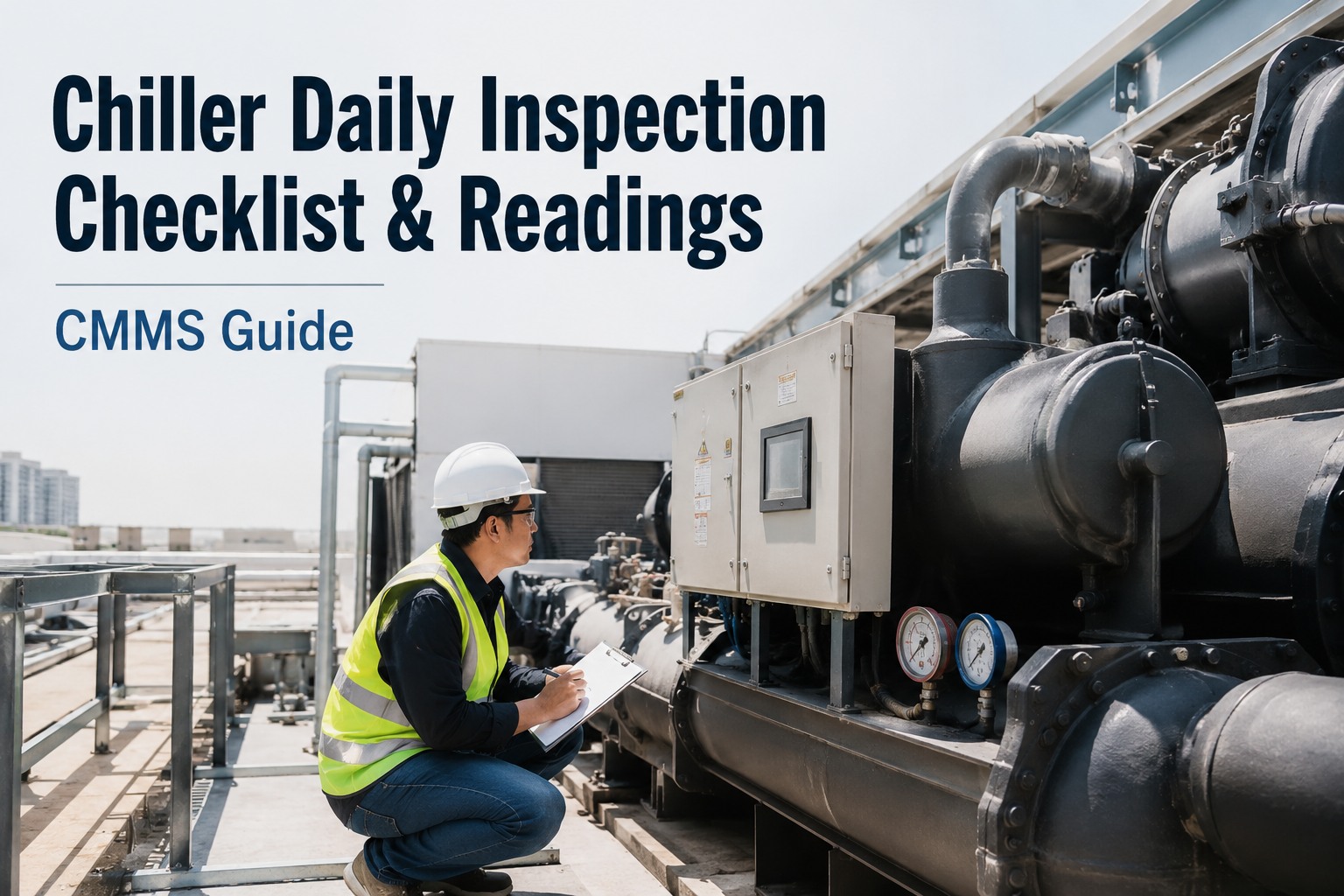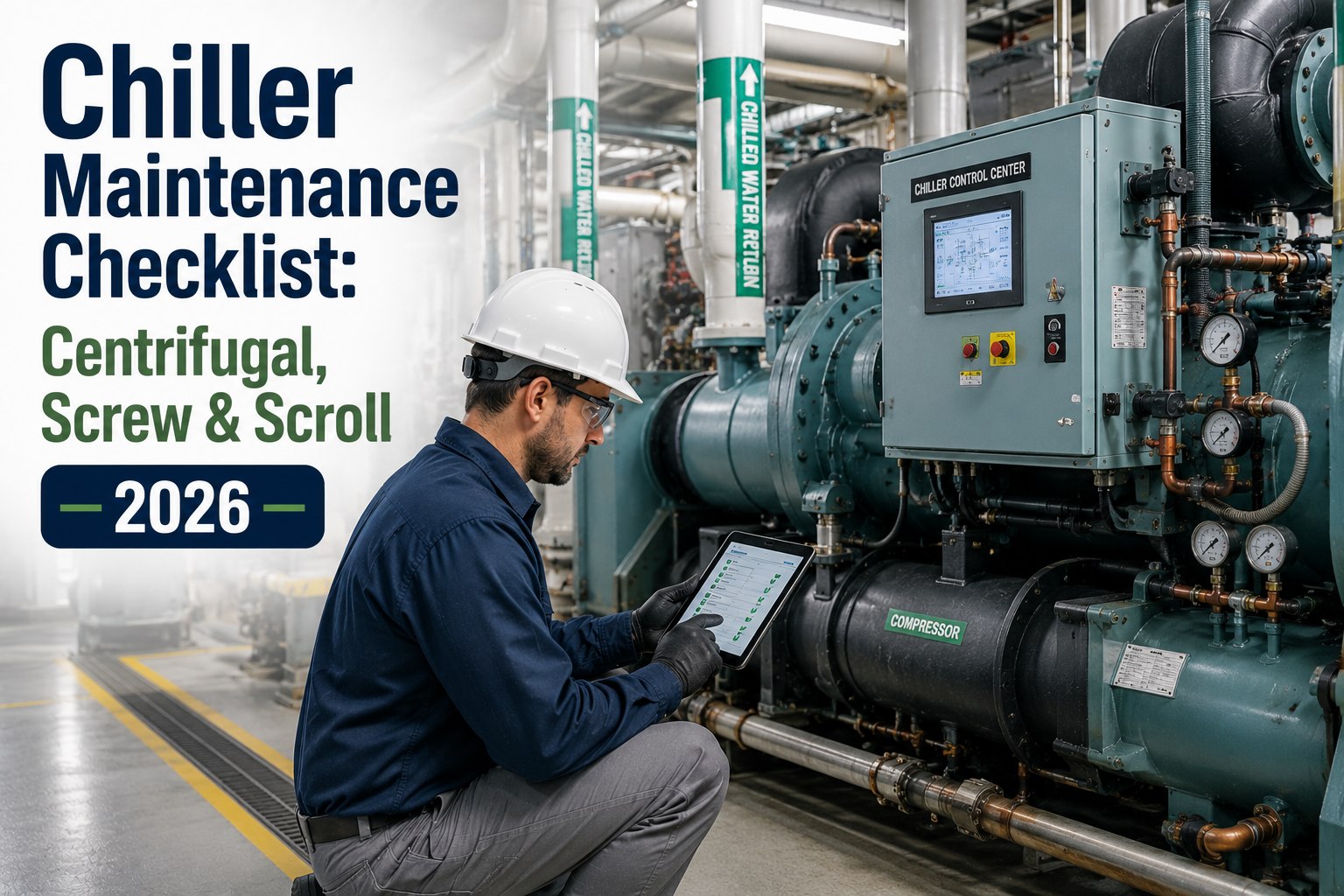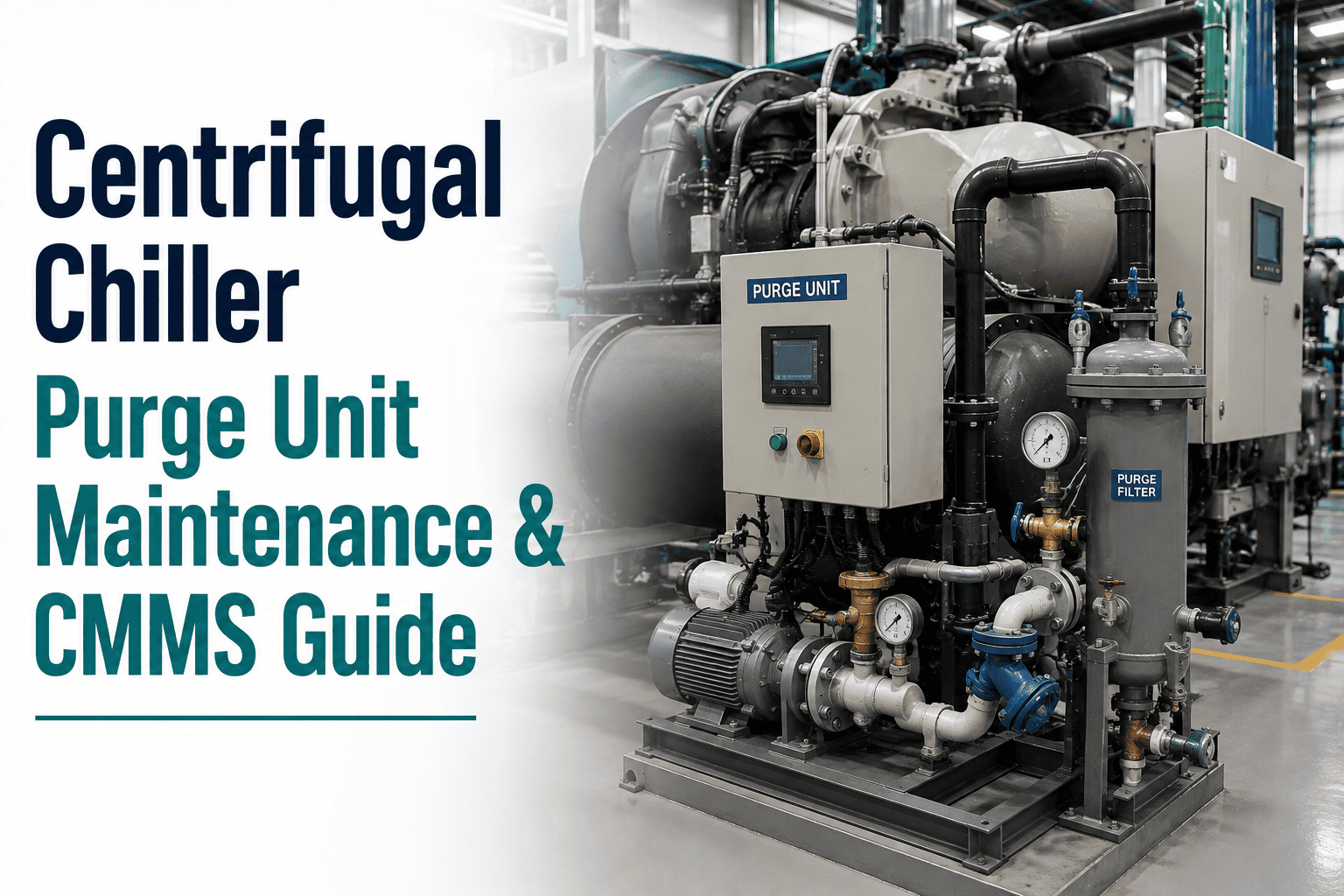
Centrifugal chiller maintenance hinges on one truth most teams learn the hard way: purge unit runtime is the earliest, most reliable indicator of a refrigerant leak. A well-structured centrifugal chiller PM program—covering purge runtime tracking, vane control inspection, and scheduled compressor maintenance—can cut unplanned downtime by 30–50% and extend equipment life well beyond the typical 15-year mark. This guide walks through the essential centrifugal chiller checklist, shows how CMMS-based tracking transforms purge units from a mystery into a leading KPI, and maps out how modern maintenance teams move from reactive firefighting to predictive reliability. Ready to replace spreadsheets with a system built for centrifugal chillers? Start Free Trial or read on for the full checklist.
Is your centrifugal chiller purge unit running more than 2 hours per week?
If purge runtime is climbing, you are losing refrigerant, burning energy, and heading toward an unplanned outage. A CMMS-built centrifugal chiller PM program catches the trend early — before a $40K+ compressor failure. Track every hour, trend every leak, and automate every inspection with OxMaint.
The Complete Centrifugal Chiller Inspection Checklist
A defensible centrifugal chiller checklist covers daily, monthly, and annual tasks across purge unit operation, vane control linkage, oil system, and refrigerant charge. These five tiers map directly to OEM recommendations and ASHRAE Guideline 36.
Daily Monitoring
- Log purge unit runtime hours and cycle count
- Record chiller supply & return chilled water temperatures
- Check oil pressure, oil temperature, and oil level sight glass
- Verify condenser & evaporator pressure readings
- Inspect for unusual noise or vibration at the compressor
Monthly PM
- Trend purge runtime — flag if weekly hours exceed 2
- Inspect inlet guide vane (IGV) linkage for backlash or binding
- Calibrate refrigerant level & leak-detection sensors
- Test oil sample for moisture, acid number (TAN), and metals
- Clean condenser tubes if approach temperature exceeds 3°F
Quarterly PM
- Perform electronic leak test on all flanges & valves
- Verify vane control actuator stroke and positioner feedback
- Inspect purge unit condenser coil and drying agent
- Check starter contactors, overloads, and VFD fault history
- Trend compressor motor current across full load range
Annual Overhaul
- Replace purge unit isolation valves & regenerate desiccant
- Eddy-current test condenser & evaporator tubes
- Replace oil filter cartridge & charge with OEM-spec oil
- Calibrate all pressure, temperature & flow transducers
- Rebuild inlet guide vane assembly if backlash exceeds OEM limit
Predictive Triggers
- Purge runtime trending up 3 consecutive weeks → leak search
- Oil TAN exceeds 0.1 mg KOH/g → oil change immediately
- Condenser approach > 3°F → tube cleaning scheduled
- Vibration velocity exceeds 0.15 in/sec → bearing analysis
- IGV position vs. load deviates > 5% → linkage rebuild
CMMS Tracking
- Auto-generate work orders when purge runtime exceeds threshold
- Attach OEM checklists to every PM trigger — paperless
- Track spare-parts inventory for oil, filter, desiccant & seals
- Trend all readings in dashboards for ISO 55000 audit trails
- Trigger predictive alerts from vibration & oil analysis feeds
Why Purge Runtime Tracking Is Your Best Leak-Detection Tool
Air and moisture infiltration is inevitable in low-pressure centrifugal chillers. The purge unit removes non-condensables — but every hour it runs tells you how much air is leaking in. Trend that number and you catch leaks weeks before they impact efficiency.
If purge runtime exceeds 2 hours per week (or increases 25% over the prior month's baseline), schedule an electronic leak search within 7 days. Each 1 lb of refrigerant lost costs ~$20 and reduces chiller efficiency by up to 2%.
A 1,000-ton centrifugal chiller losing 50 lb of refrigerant per year (undetected slow leak) wastes roughly $8,400 in excess energy annually — plus $1,000 in lost refrigerant. CMMS purge tracking catches it at 5 lb.
A 1,200-ton hospital chiller plant cuts refrigerant loss 80% with purge runtime tracking
A regional medical center operating three 1,200-ton centrifugal chillers was spending $31,500/year on refrigerant top-ups and excess energy. Their maintenance team logged purge hours on paper — inconsistently. After implementing OxMaint CMMS with automated purge runtime tracking and threshold alerts, the team caught two leaking flange seals within the first 60 days. Refrigerant loss dropped 80%, energy consumption fell 6%, and the purge unit PM cost paid for itself in under 4 months. The reliability team now trends purge data alongside oil analysis and vibration in a single dashboard.
How to Inspect Chiller Vane Control & Centrifugal Compressor Health
The inlet guide vane (IGV) assembly controls chiller capacity by pre-rotating refrigerant gas into the impeller. Linkage wear, actuator drift, and positioner calibration errors cause surge, inefficient loading, and premature bearing wear — yet vane inspection is the most commonly skipped PM task.
Inspect inlet guide vane linkage for backlash and binding
Disconnect the actuator and manually stroke the vanes from 0% to 100%. Any resistance, sticking, or free-play (backlash greater than OEM spec, typically 0.020") means worn bearings or corroded shafts. Lubricate with dry graphite — never grease, which attracts dirt and hardens. Log the stroke test result in your CMMS with a photo attachment.
Verify vane control actuator position against control signal
Command the actuator to 25%, 50%, 75%, and 100% and compare the actual vane position using a protractor or positioner feedback. Deviation greater than 5% indicates a failing actuator, loose linkage, or drifting positioner. Re-calibrate the positioner per OEM procedure and record the before/after values in the work order.
Check surge margin and capacity control response time
Run a capacity step-change test (load chiller from 40% to 80%). The IGV should respond smoothly within 30–60 seconds without surging. Repeated surge events during load changes indicate worn vane bearings or incorrect surge-line programming — schedule a compressor health assessment within 2 weeks.
Trend vibration and oil analysis for centrifugal compressor bearing wear
Take monthly vibration readings at the compressor thrust and journal bearings. Velocity exceeding 0.15 in/sec peak (per ISO 10816) or rising trend over 3 months triggers a bearing wear alert. Pair vibration data with quarterly oil analysis — copper, lead, or tin particles above 15 ppm signal bearing material loss.
How OxMaint CMMS Manages Your Centrifugal Chiller PM Program
OxMaint turns your centrifugal chiller maintenance program from a clipboard-and-spreadsheet exercise into a data-driven reliability system. Every purge hour, vane inspection, and oil sample feeds predictive alerts, automated work orders, and audit-ready dashboards.
Automated Purge Runtime Tracking
Set purge runtime thresholds (e.g., 2 hrs/week) and OxMaint auto-generates a leak-search work order the moment the trend is breached — no manual log review required.
Digital Chiller PM Checklists
Attach OEM-specific centrifugal chiller checklists to each PM trigger. Technicians complete them on mobile — with photo attachments, readings, and pass/fail logic built in.
Predictive Vibration & Oil Alerts
Integrate vibration sensors and oil analysis feeds. OxMaint's AI engine trends bearing wear and IGV position deviations, predicting failures before they escalate to unplanned outages.
Spare-Parts & Refrigerant Inventory
Track oil, filter cartridges, desiccant, seal kits, and refrigerant charge with min/max auto-reorder. Every chiller work order pulls parts from inventory automatically — no stockouts during a purge unit rebuild.
CMMS Centrifugal Chiller Maintenance vs. Spreadsheet Tracking
Most plants still track centrifugal chiller PM on spreadsheets or paper logs. Here is what changes when you move to a CMMS purpose-built for maintenance and reliability teams.
| Maintenance Activity | Spreadsheet / Paper | OxMaint CMMS |
|---|---|---|
| Purge runtime tracking | Manual log; reviewed monthly | Auto-tracked; threshold alerts in real time |
| Leak detection trigger | Reactive — after efficiency drops | Predictive — triggered at 2 hrs/week trend breach |
| Vane control inspection | Annual checklist, often skipped | Scheduled PM with pass/fail logic & photo proof |
| Work order generation | Manual entry, delays of days | Auto-generated from threshold or sensor breach |
| Spare parts for chiller PM | Physical count, frequent stockouts | Live inventory, auto-reorder at min/max |
| Compliance & audit trail | Scanned paper logs, gaps common | Full digital trail, ISO 55000-ready dashboards |
| Downtime impact | 30–50% unplanned outages typical | 30–50% reduction in unplanned downtime |
Book a 30-minute demo and see purge runtime tracking on your assets
We'll map your centrifugal chiller PM program into OxMaint live — purge alerts, vane inspection triggers, and predictive dashboards configured for your plant.
Centrifugal Chiller Purge Unit & CMMS — Frequently Asked Questions
What is a purge unit on a centrifugal chiller and why does runtime matter?
A purge unit removes non-condensable gases (air and moisture) from a low-pressure centrifugal chiller's refrigerant system. Runtime matters because it is the most reliable leading indicator of a refrigerant leak — the more air infiltrates, the longer the purge runs. If purge runtime exceeds 2 hours per week or trends upward over 3 consecutive weeks, a leak is likely developing and should be investigated within 7 days.
How often should centrifugal chiller preventive maintenance be performed?
Centrifugal chiller PM should follow a tiered schedule: daily monitoring of purge runtime, temperatures, and oil levels; monthly trending and vane control inspection; quarterly leak tests and actuator calibration; and an annual overhaul including eddy-current tube testing, oil replacement, and transducer calibration. A CMMS like OxMaint automates each tier and triggers work orders automatically — Start Free Trial to configure your schedule in minutes.
How does a CMMS improve centrifugal chiller maintenance?
A CMMS replaces manual logs and spreadsheets with automated purge runtime tracking, threshold-based work order generation, digital PM checklists with photo proof, and predictive alerts from vibration and oil analysis. The result is earlier leak detection, consistent PM completion, fewer unplanned outages (typically 30–50% reduction), and a full audit trail for ISO 55000 and compliance requirements.
What are the signs of inlet guide vane (IGV) problems on a centrifugal chiller?
Common signs of IGV problems include surge during load changes, sluggish capacity response (taking longer than 60 seconds to ramp), actuator position deviation greater than 5% from the control signal, and physical backlash or binding when the vane linkage is manually stroked. Quarterly inspection of the vane control linkage, actuator, and positioner is essential — log every reading in your CMMS to trend wear over time.
How much does CMMS-based centrifugal chiller maintenance cost vs. savings?
A typical 1,000-ton centrifugal chiller plant spending $30K+ annually on refrigerant top-ups, excess energy from inefficiency, and unplanned downtime can expect CMMS-driven purge tracking and PM automation to save $15K–$25K per year. Most plants see payback in 3–6 months. To see a savings estimate tailored to your plant, Book a Demo with our team.
Stop guessing about purge runtime. Start tracking it.
Join the maintenance and reliability teams using OxMaint to automate centrifugal chiller PM, catch leaks early, and cut unplanned downtime by up to 50%.
Free 14-day trial · No credit card