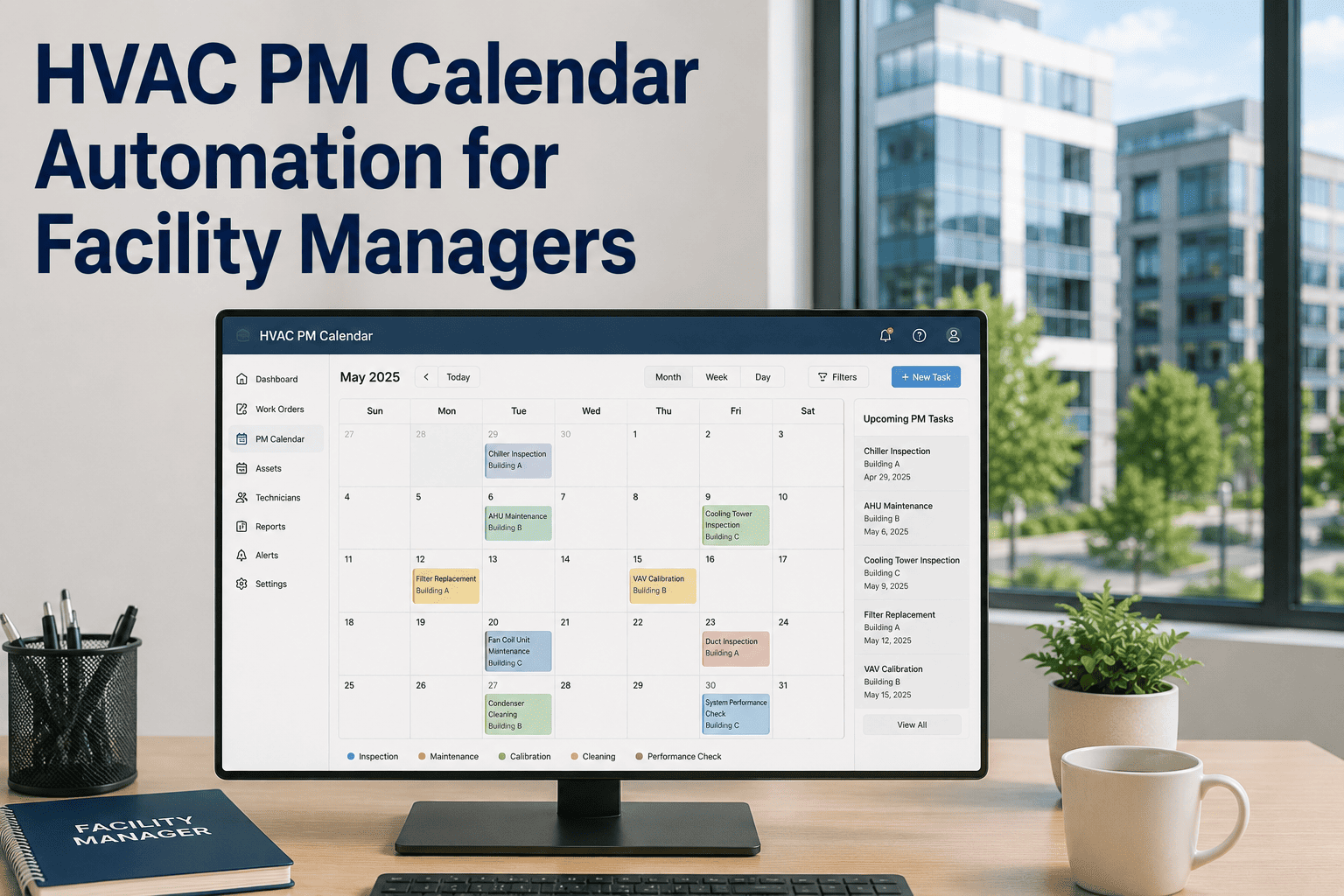
A preventive maintenance calendar designed around peak seasons places critical tasks ahead of demand surges rather than after failures expose gaps in readiness. Facility teams that build maintenance schedules around equipment age, usage history, and seasonal load cycles protect uptime during the periods where any unplanned downtime carries the highest operational cost. Sign Up Free on Oxmaint to build your peak-season PM calendar, assign work orders ahead of schedule, and track completion rates across every asset in your portfolio.
Why Standard PM Calendars Fail at Peak Season
Generic PM calendars distribute maintenance tasks evenly through the year without accounting for seasonal load increases, equipment stress patterns, or the lead time required to address findings before demand peaks. Book a Demo to see how Oxmaint helps maintenance teams front-load critical PM tasks before peak seasons and adjust schedules dynamically when completion falls behind.
PM tasks scheduled in the final weeks before peak season leave no time to act on findings. Deficiencies discovered days before a cooling or heating season onset cannot be remediated without emergency service rates and expedited parts procurement.
Even distribution of tasks creates PM bottlenecks when multiple systems require peak-season preparation simultaneously. Without workload leveling, technician capacity is exceeded and lower-priority tasks push out critical ones.
Assets with long lead time parts or complex multi-visit service requirements need PM scheduling windows that account for procurement and contractor availability — not just the calendar date of the task itself.
Calendars that don't incorporate prior-season failure history, repair frequency, and PM completion rates repeat the same scheduling errors each cycle. Data from Oxmaint work orders closes this feedback loop.
Seasonal PM Calendar Structure: Timing and Task Categories
| Pre-Season Window | Task Category | Lead Time Before Peak | Completion Gate | If Deferred Past Gate |
|---|---|---|---|---|
| Early Preparation | Equipment overhaul, coil replacement, motor rebuilds | 8–12 weeks | All work orders closed | Emergency procurement and overtime risk |
| Mid Preparation | Filter change, belt replacement, bearing lubrication | 4–6 weeks | All assets serviced | Reduced buffer for re-inspection |
| Final Readiness Check | Controls test, refrigerant charge, airflow verification | 2–3 weeks | System startup confirmed | Risk of peak startup failures |
| In-Season Monitoring | Runtime logging, temperature trending, alarm review | Ongoing | Weekly review cycle | Undetected degradation during peak |
| Post-Season Wrap | Condition assessment, corrective backlog, capital planning | Within 4 weeks post-peak | Asset condition documented | Deficiencies enter next peak unprepared |
Peak Season Readiness Tiers by Asset Priority
Chillers, primary air handlers, and process cooling equipment whose failure directly halts operations or creates safety risk. All PM tasks must be complete and verified before the 4-week pre-peak threshold.
Rooftop units, secondary air handlers, and exhaust systems serving primary occupied zones. Failure creates occupant comfort impact but doesn't immediately halt operations. PM completion should precede Tier A final verification.
Storage area conditioning, backup systems, and low-occupancy zone equipment. PM can be scheduled closer to peak without operational risk, preserving technician capacity for Tier A and Tier B completion during the critical preparation window.
Designing Your Peak-Season PM Calendar in Oxmaint
Oxmaint's CMMS platform gives maintenance managers the tools to build asset-tiered PM schedules, set completion gate alerts, and track workload distribution against technician capacity. Sign Up Free to configure your seasonal PM calendar and start the next peak season preparation cycle with every critical task tracked and assigned.
Classify Assets by Seasonal Priority Tier
Assign Tier A, B, and C priority classifications to every HVAC and mechanical asset in Oxmaint. Tier assignments drive PM scheduling logic — Tier A assets generate work orders first with the longest lead time windows before each seasonal peak.
Set Pre-Peak PM Trigger Dates by Asset Class
Configure PM schedules in Oxmaint to generate work orders at the correct lead time before each seasonal peak. Oxmaint's recurring PM triggers ensure work orders appear in technician queues at the right planning window — not the week before demand starts.
Level Technician Workload Across the Pre-Season Window
Use Oxmaint's work order assignment view to distribute PM tasks evenly across available technician capacity. Workload leveling prevents the pre-peak compression that causes critical tasks to be deferred or rushed.
Flag Findings that Require Lead-Time Parts or Contractor Work
When PM inspections identify deficiencies requiring parts procurement or specialized contractor visits, flag them immediately in Oxmaint as linked corrective work orders. Early flagging preserves procurement lead time before peak demand begins.
Review Prior Season Failure History Before Building Next Cycle
Query Oxmaint's work order history for assets that required corrective work during or immediately after the prior peak season. These assets should advance in tier priority or receive earlier PM windows in the next cycle's calendar.