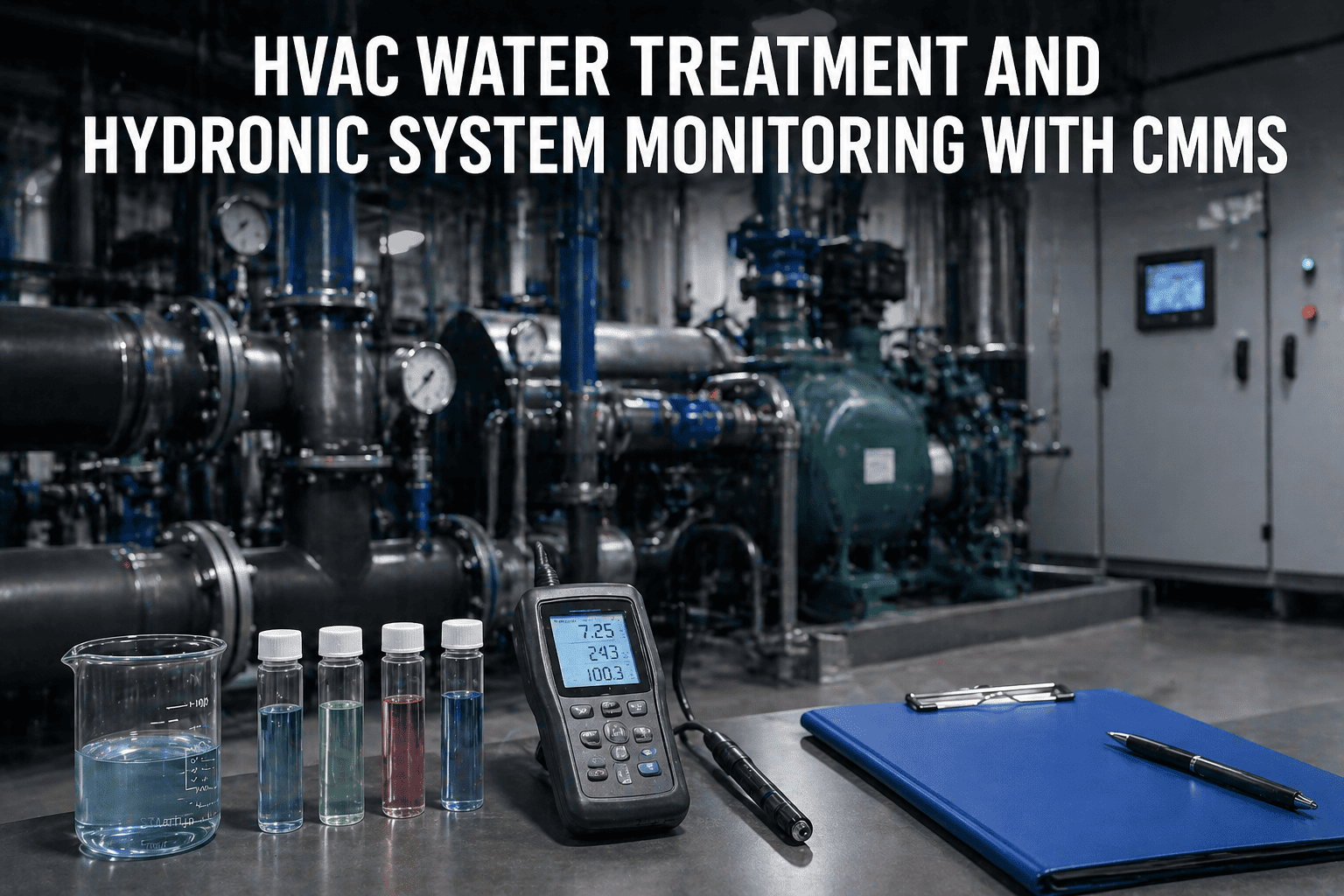
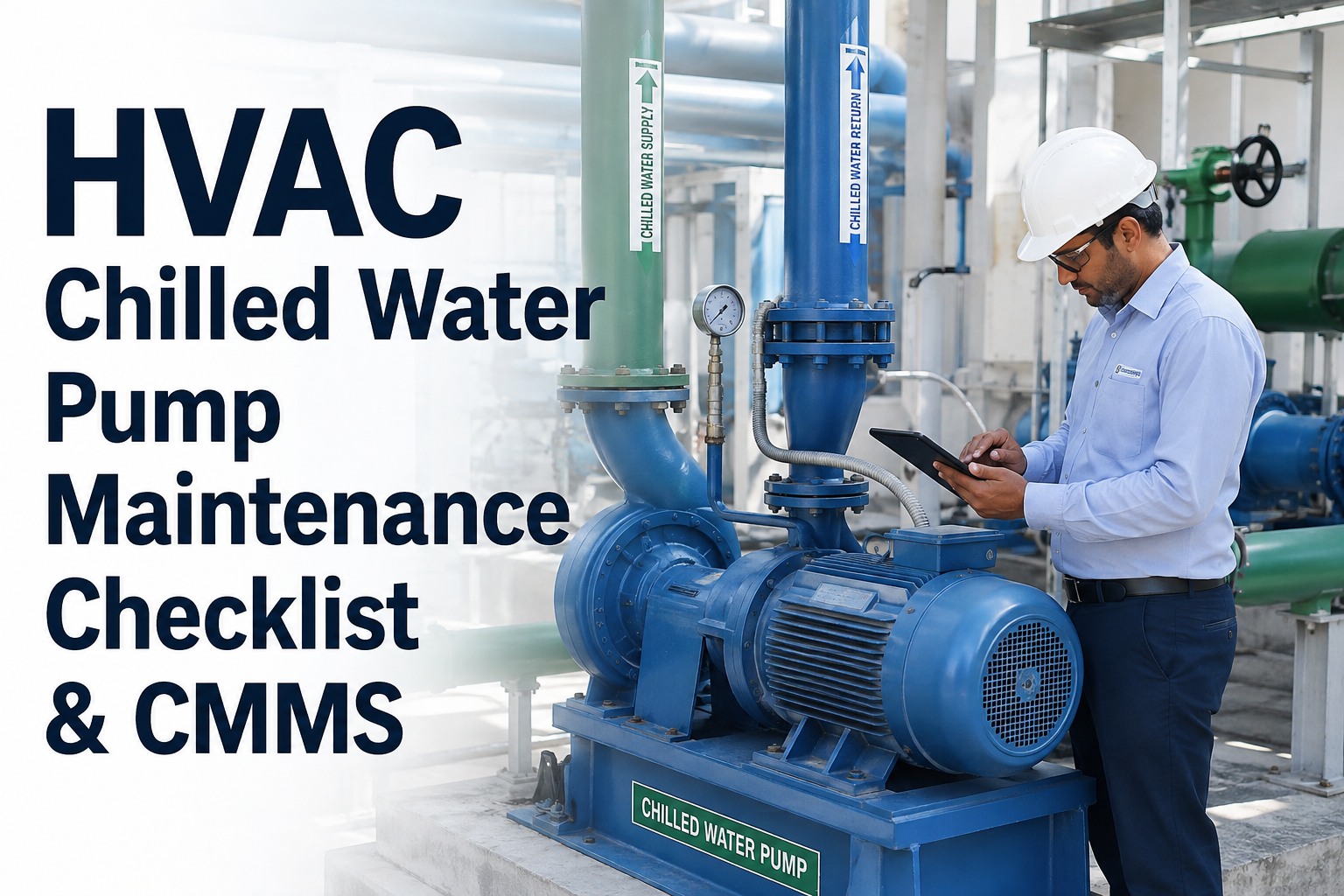
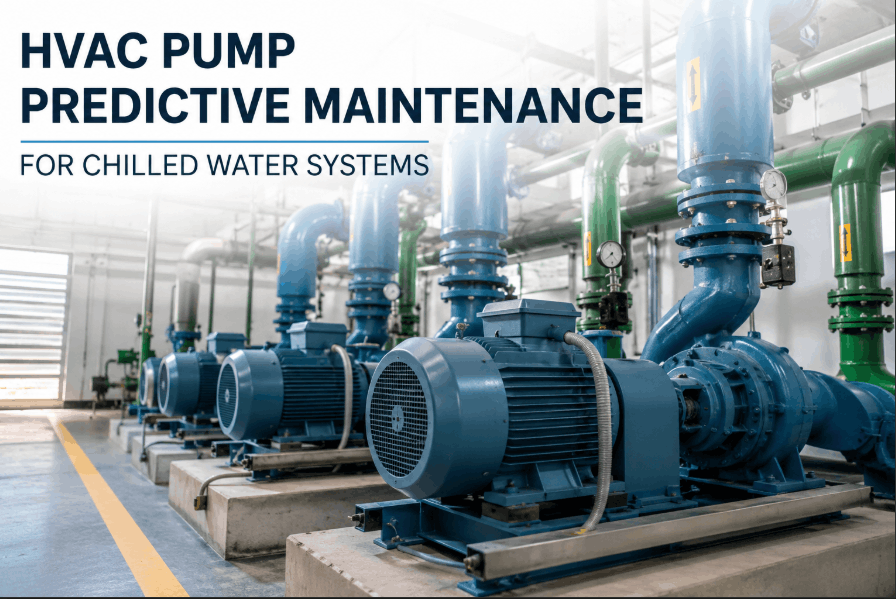
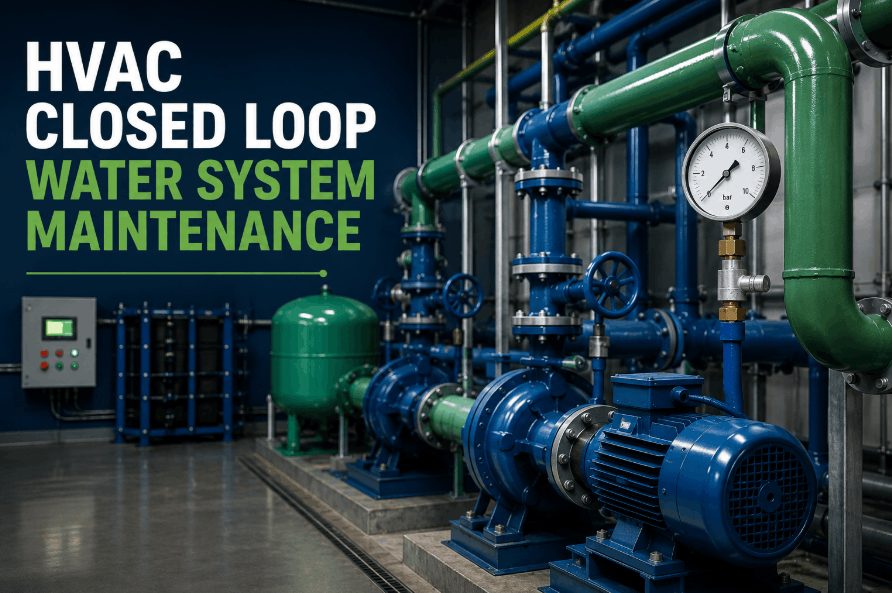
A 2.5 million square foot medical facility that reduced energy consumption by 1.3 million kWh annually — a 28% reduction — did so not through equipment upgrades but by implementing a structured water treatment programme for its chiller plant. Corrosion rates dropped from 12.7 mpy to 0.3 mpy. Heat exchanger approach temperatures that had drifted to 8°F above design returned to 2°F. The chemistry that had been degrading the system's efficiency for years was simply not being tracked with the frequency or precision required. HVAC water treatment is one of the most consistently underprioritised maintenance disciplines in commercial facility management — and it is the one where deterioration is invisible until it manifests as equipment failure, Legionella risk, or an energy audit finding that traces back to scale and corrosion that accumulated over months of inadequate monitoring. Book a demo to see how OxMaint's Compliance Tracking platform manages hydronic system water quality logs, cooling tower treatment records, glycol monitoring schedules, and ASHRAE 188-compliant Legionella management documentation across your HVAC water systems.
Hydronic Systems · HVAC Water Treatment · Compliance Tracking
HVAC Water Treatment & Hydronic System Monitoring Checklist
Closed loop chemistry targets, cooling tower treatment protocols, glycol concentration monitoring, corrosion coupon programme management, and ASHRAE 188 Legionella risk management — a complete water quality compliance framework for commercial HVAC systems.
28%Energy reduction achieved by a 2.5M sq ft medical facility after implementing structured chiller plant water treatment (KXD Chem case study)
8.0–9.5Target pH range for closed chilled water loops — alkaline conditions prevent iron and copper corrosion in steel and copper piping systems
QuarterlyMinimum Legionella culture testing frequency for higher-risk facilities per ASHRAE 188 / CDC Water Management Plan requirements
4–6xOptimal cycles of concentration for cooling towers — above 6 risks calcium carbonate precipitation; below 4 wastes make-up water
Zone 1 — Closed Loops
Zone 2 — Cooling Tower
Zone 3 — Glycol Systems
Zone 4 — Legionella / ASHRAE 188
Zone 5 — Documentation
Water Treatment Risk by System Type
Cooling Tower
Critical — open system; evaporation concentrates minerals; Legionella risk; ASHRAE 188 WMP mandatory
Legionella Hazards
Critical — health and legal liability; CDC / ASHRAE 188 compliance; quarterly culture testing in high-risk occupancies
Chilled Water Loop
High — pH drift causes corrosion; iron oxide sludge fouls heat exchangers; inhibitor depletion accelerates over time
Glycol Systems
High — degraded glycol forms acids; inhibitor depletion causes corrosion; wrong concentration causes burst or overheating risk
Hot Water Heating Loop
Medium — higher pH target (9–10) prevents corrosion; sludge buildup reduces circulation; annual inspection adequate for most systems
Zone 01
Closed Loop Chemistry — Chilled Water and Hot Water Systems
Closed hydronic loops — chilled water and hot water heating circuits — are often assumed to be low-maintenance because they are sealed systems. The assumption is incorrect. Oxygen and minerals introduced during initial fill, make-up water additions, and system repairs accumulate over time. Without a corrosion inhibitor programme maintained within target ranges, iron oxide sludge forms and circulates through the system, fouling heat exchangers, reducing pump efficiency, and damaging seal and valve surfaces. The key difference between a closed loop in year 5 that performs at design conditions and one that has degraded is the water chemistry log.
Chilled Water Loop
pH8.0–9.5Alkaline range prevents iron and copper corrosion; below 7.5 = immediate corrosion risk
Conductivity<2,500 µS/cmConductivity rise signals mineral accumulation or contamination ingress
Corrosion inhibitorPer product specNitrite, molybdate, or phosphate + polymer borate; verify residual quarterly
Dissolved iron<0.5 mg/LRising iron = active corrosion occurring; >1.0 mg/L requires immediate investigation
Total hardness<200 mg/LScale formation above 200 mg/L; deionised water preferred for initial fill
Hot Water Heating Loop
pH (all metals)9.0–10.0Higher alkalinity appropriate for iron and copper without aluminium components
pH (with aluminium)7.0–8.5Aluminium components require lower pH — high alkalinity dissolves aluminium
Corrosion inhibitorPer product specInhibitor for all system metals; confirm compatibility before topping up with different product
Dissolved iron<0.5 mg/LBlack sludge in heating systems = iron oxide magnetite; flush required if >2.0 mg/L
Test frequencyAnnual min; 2×/yr in hard water areasClosed loop but oxygen and minerals introduced each time the system is opened for repair
Closed Loop Water Quality — Inspection TasksASHRAE Standard 180 · Semi-Annual / Annual
Water sample taken from a flowing point after the circulating pump — not from a drain cock or dead leg; sample drawn during system operation after inhibitor has had adequate circulation time to mixRecord: Sample log with date, sample point, and system operating conditions · Role: Water Treatment Contractor
pH, conductivity, dissolved iron, and corrosion inhibitor residual measured against target ranges; results logged in OxMaint against the system asset record; any out-of-range result triggers corrective action work order within 5 business daysRecord: Water quality test report per system · Role: Water Treatment Contractor / Facilities Manager
Corrosion coupon inspection — remove corrosion coupon from system, measure corrosion rate in mils per year (mpy); target <2 mpy for steel, <0.5 mpy for copper; elevated rate triggers corrosion inhibitor programme reviewRecord: Corrosion coupon analysis report · Role: Water Treatment Contractor
Inhibitor top-up completed if residual below minimum — document product name, quantity added, and post-addition test result confirming residual returned to target range; never mix inhibitor products without flushing the system firstRecord: Chemical addition log · Role: Water Treatment Contractor
Zone 02
Cooling Tower Water Treatment — Open System Monitoring
Cooling towers are the highest-risk HVAC water system from both a chemistry and a biological standpoint. As an open evaporative system, the tower continuously concentrates dissolved minerals in the recirculating water — each cycle of concentration approximately doubling mineral content. At 4–6 cycles, calcium carbonate typically precipitates unless controlled with acid feed, scale inhibitors, or automated blowdown. Simultaneously, the warm, nutrient-rich water conditions are ideal for bacterial growth, including Legionella pneumophila.
Daily — Chemical Monitoring (Cooling Season)ASHRAE 188 WMP / Site Protocol
Oxidising biocide residual measured and logged — must show measurable residual throughout each day; free chlorine 0.5–1.0 ppm or bromine 1.0–2.0 ppm; zero residual for more than a few hours creates a biological control gapRecord: Daily chemical log · Role: Building Engineer / Water Treatment Operator
pH and conductivity logged — automated blowdown controllers verified against manual readings daily; controller malfunction allowing conductivity to rise above target range accelerates scale formation and triggers increased Legionella risk per NYC Local Law 77 requirementsRecord: Daily chemistry log with controller vs. manual comparison · Role: Building Engineer
Weekly — Expanded ChemistryASHRAE Guideline 12-2023
Total dissolved solids (TDS), total hardness, calcium hardness, alkalinity, and scale inhibitor residual measured and logged; cycles of concentration calculated from conductivity (or calcium/chloride ratio) and verified against blowdown setpointRecord: Weekly water analysis report · Role: Water Treatment Contractor
Heterotrophic plate count (HPC) culture collected — results above 10,000 CFU/mL indicate biofilm activity and trigger increased biocide frequency before Legionella culture confirmation is required; results logged against system asset in OxMaintRecord: Weekly HPC culture result · Role: Water Treatment Contractor
Quarterly — Inspection & Deep MonitoringASHRAE 188 / CDC Legionella Toolkit
Legionella-specific culture sample collected and submitted to accredited laboratory — results above 100 CFU/mL require documented corrective action; above 1,000 CFU/mL require regulatory notification in many jurisdictions; all results retained in OxMaint compliance moduleRecord: Legionella culture report per sample point · Role: Accredited Water Testing Laboratory
Drift eliminator inspection — check sections for damage, blockage, and missing elements; drift eliminator performance directly controls aerosol release rate; damaged sections cannot be compensated by improved water chemistry aloneRecord: Physical inspection report · Role: Building Engineer / Maintenance Technician
Annual — Deep Clean & CommissioningASHRAE 188 §7 — Minimum Annual Cleaning
Full basin drain, mechanical cleaning, and chemical disinfection — shock disinfect with documented biocide protocol achieving a minimum 5 ppm free chlorine contact time before refill; all work documented with contractor certification in OxMaintRecord: Annual cleaning certificate · Role: Water Treatment Contractor
Fill media inspection — fill sections inspected for scaling, biological fouling, and physical damage; fill media in service for more than 10 years typically shows sufficient degradation to justify replacement regardless of visual conditionRecord: Fill inspection report with condition assessment · Role: Water Treatment Contractor
OxMaint stores all cooling tower chemistry logs, Legionella culture results, and annual cleaning certificates as timestamped compliance records — retrievable on-demand for ASHRAE 188 audits, insurance assessments, and regulatory inspections.
Zone 03
Glycol System Monitoring — Concentration, Inhibitor, and Freeze Point
Glycol-based HVAC systems — low-temperature chilled water, outdoor hydronic loops, rink refrigeration secondary circuits, and solar thermal systems — require active chemistry management that goes beyond verifying the freeze point. Glycol degrades under heat and oxidation stress: the polyol molecules break down into organic acids (glycolic acid, oxalic acid) that lower system pH and accelerate corrosion of all metal components. A refractometer reading that shows adequate glycol concentration tells you nothing about inhibitor depletion or acid formation. Only a comprehensive chemistry test does.
Glycol System Monitoring TasksManufacturer Spec / ASTM E1269
Glycol concentration measured with calibrated refractometer — sample from flowing point after circulating pump; typical concentration target 25–50% depending on climate and freeze protection requirement; record both measured % and corresponding freeze pointRecord: Refractometer reading + freeze point calculation · Role: HVAC Technician
pH measured and logged — target range 8.0–9.5 for systems without aluminium, 7.0–8.5 for systems with aluminium components; pH below 7.0 in a glycol system indicates acid formation from glycol degradation — requires immediate flush and rechargeRecord: pH log · Role: HVAC Technician / Water Treatment Contractor
Inhibitor reserve alkalinity and corrosion inhibitor residual measured — specific to the glycol product in use; send sample to laboratory for full inhibitor package analysis annually; do not mix glycol brands without full system flush as inhibitor chemistry interaction can cause precipitate formationRecord: Annual laboratory analysis · Role: Water Treatment Laboratory
Colour and clarity inspection — fresh inhibited glycol is clear or pale green; dark brown or black colour indicates significant iron oxide contamination; orange or rusty appearance indicates active iron corrosion; visually degraded glycol requires immediate laboratory analysis and likely system flushRecord: Visual inspection log · Role: HVAC Technician
Glycol topping up or replacement — if concentration below target, top up with pre-mixed solution at target concentration (do not add neat glycol without calculating the resulting concentration); document product name, lot number, quantity added, and post-addition concentration measurementRecord: Chemical addition log · Role: HVAC Technician / Contractor
Zone 04
ASHRAE 188 Legionella Risk Management — Water Management Plan Requirements
ANSI/ASHRAE Standard 188-2021 establishes minimum legionellosis risk management requirements for building water systems. Buildings with cooling towers, evaporative condensers, decorative water features, or large domestic hot water systems must implement a formal Water Management Plan (WMP). The WMP must document the water system components, hazard analysis, control measures, monitoring schedule, and corrective action procedures. For HVAC water systems, the cooling tower is the primary ASHRAE 188 compliance obligation — but any water system that can generate and release aerosols to occupied areas requires coverage.
ASHRAE 188 Water Management Plan — Required ElementsANSI/ASHRAE 188-2021 §6
Water management plan document current and on file — includes team member list, flow diagrams for all covered water systems, hazard analysis for each system, and documented control measures; plan must be reviewed annually and updated after any system modification or Legionella positive resultRecord: WMP document in OxMaint compliance module · Role: Facility Manager / Water Management Plan Team
Monitoring schedule confirmed and being executed — temperature checks, chemical tests, biological tests at the frequencies specified in the WMP; all monitoring results recorded against the WMP control point in OxMaint; any result outside the control limits documented with corrective action taken and date correctedRecord: WMP monitoring log per control point · Role: Building Engineer / Water Treatment Contractor
Legionella culture testing per WMP schedule — minimum quarterly for higher-risk facilities; samples from representative sentinel points in cooling tower basin, distribution points, and any identified dead-leg or low-flow zones; laboratory must be accredited for Legionella culture (CDC BCYE method)Record: Culture results in OxMaint with threshold comparison · Role: Accredited Laboratory
Corrective action protocol documented for positive Legionella results — threshold-based escalation: >100 CFU/mL triggers enhanced disinfection; >1,000 CFU/mL triggers regulatory notification and hyperchlorination per CDC Cooling Tower Legionella Toolkit; all corrective actions documented in OxMaint with verification cultureRecord: Corrective action log per positive result · Role: Water Management Plan team lead / Facility Manager
Zone 05
Documentation & Compliance Records
← Swipe to see full table →
| Record Type |
Frequency |
Required Content |
Standard / Reference |
OxMaint Module |
| Closed loop chemistry log | Semi-annual minimum; quarterly for large chiller plants | pH, conductivity, inhibitor residual, dissolved iron, corrosion coupon rate, corrective actions | ASHRAE Standard 180; HVAC spec 23 25 00 | Water quality work order per system asset; auto-alert for out-of-range |
| Cooling tower daily chemistry | Daily during cooling season | Biocide residual, pH, conductivity, controller vs. manual comparison | ASHRAE 188 WMP; ASHRAE Guideline 12-2023 | Daily log work order; automated alert if biocide zero residual |
| Legionella culture results | Quarterly minimum (higher-risk); semi-annual (lower-risk) | Sample point, date, CFU/mL result, laboratory accreditation, corrective action if >100 CFU/mL | ASHRAE 188-2021 §6; CDC Legionella Toolkit | Culture result record per sample point; threshold comparison and escalation alert |
| Cooling tower annual cleaning certificate | Annual minimum | Date, cleaning method, disinfection protocol, post-clean culture | ASHRAE 188; Local Law 77 (NYC buildings) | PM work order with contractor certificate attachment |
| Glycol chemistry log | Semi-annual | Concentration, freeze point, pH, inhibitor residual, colour/clarity | Manufacturer specification; ASTM E1269 | Glycol system record; auto-alert on pH <7.0 |
| Water Management Plan (WMP) | Annual review; update after system change or positive Legionella | Flow diagrams, hazard analysis, control measures, monitoring schedule, corrective action procedures | ANSI/ASHRAE 188-2021 §6.2 | WMP document stored in compliance module; annual review work order |
"
The corrosion rate data from the medical facility case is the most instructive number in commercial HVAC water treatment: 12.7 mpy to 0.3 mpy — a 97% reduction — from implementing a structured treatment programme. At 12.7 mpy, the copper piping in that chiller plant was losing more than a millimetre of wall thickness every four years. Nobody noticed because the system was still circulating water, still making the setpoints, still passing the annual PM visit. Water chemistry failures are invisible on the surface and catastrophic at the endpoint. The chiller you are looking at today that appears to be running normally may be running on pipe walls that are half their original thickness because the inhibitor residual has been below minimum for two years. A semi-annual water sample costs a fraction of one emergency heat exchanger replacement. The programme that prevents the replacement pays back within 12 months of implementation, consistently, in every building type.
Senior Facilities Engineer, CEM, CPMM · Commercial HVAC Portfolio 1.8M sq ft · 21 Years Hydronic System Design and Operations · Specialist in HVAC water chemistry, cooling tower Legionella management, and ASHRAE 188 compliance programme implementation
FAQs
Frequently Asked Questions
QWhat pH range should a chilled water closed loop be maintained at, and what happens if it drifts?
For chilled water loops with copper and steel components (no aluminium), maintain pH between 8.0 and 9.5. This alkaline range inhibits iron corrosion in steel piping and copper corrosion in copper tubes and coils. Systems containing aluminium components require a lower pH range of 7.0–8.5, because aluminium dissolves in highly alkaline conditions. Below pH 7.5, corrosion accelerates rapidly — dissolved iron concentrations above 0.5 mg/L indicate active corrosion is occurring, and above 1.0 mg/L require immediate investigation of the inhibitor programme and corrosion rate. A pH that has drifted below target for more than 90 days requires both immediate corrective treatment and a corrosion coupon analysis to assess how much damage has occurred during the drift period. OxMaint's water quality tracking triggers a corrective action work order automatically when any parameter exits its configured target range.
Book a demo to see OxMaint's hydronic chemistry alert configuration.QWhen does an ASHRAE 188 Water Management Plan become mandatory, and what must it include?
Under ANSI/ASHRAE 188-2021, buildings with any of the following must implement a Water Management Plan: cooling towers or evaporative condensers, large domestic hot water systems, decorative water features, or other systems that can generate and aerosolise water in an occupied space. Hospitals, long-term care facilities, large hotels, and commercial office buildings over a certain size threshold all typically meet this threshold. The WMP must include at minimum: team member list, flow diagrams for all covered systems, a hazard analysis identifying where Legionella growth and transmission are possible, documented control measures, a monitoring schedule with frequency and parameter targets, and documented corrective action procedures. OxMaint stores the WMP document in the compliance module and schedules all monitoring tasks against the WMP frequency requirements.
See OxMaint's ASHRAE 188 WMP compliance tracking module.QWhat are the signs that glycol in a closed HVAC loop needs to be replaced rather than topped up?
Glycol that has degraded beyond correction with inhibitor top-up typically shows one or more of these signs: pH below 7.0 (acid formation from glycol breakdown), dark brown or black colour (heavy iron oxide contamination), orange or rusty appearance (active iron corrosion), laboratory analysis showing inhibitor package depletion to below minimum effective concentration, or corrosion rate above 2 mpy on steel or 0.5 mpy on copper measured by corrosion coupon. Topping up heavily degraded glycol with fresh solution dilutes the acid and adds some inhibitor — but the degradation products remain in the system and continue to accelerate corrosion. A full system flush and recharge is the appropriate response when any of the above signs are present. Record all flushing and recharge activity in OxMaint against the system asset to establish the chemistry reset baseline date for future monitoring.
Compliance Tracking · OxMaint · Hydronic Systems
Every Water Quality Test. Every Legionella Culture. Every Annual Cleaning Certificate. One Compliance Record.
OxMaint's Compliance Tracking stores closed loop chemistry logs, cooling tower treatment records, glycol analysis results, and ASHRAE 188 WMP monitoring data as timestamped, audit-ready compliance records — with automatic alerts when any parameter exits its configured target range and scheduled PM work orders at every required monitoring frequency.